Using Provider for Beginner-Friendly State Management
Dec 10, 2025


Summary
Summary
Summary
Summary
This tutorial introduces Provider for Flutter mobile development: why it works, how to set up ChangeNotifierProvider, how to read and update state via context.watch/read and Consumer, and best practices to avoid unnecessary rebuilds and lifecycle issues.
Key insights:
Key insights:
Key insights:
Key insights:
Why Provider Works: Provider wraps InheritedWidget to offer a simple, efficient way to expose and rebuild only widgets that depend on state.
Setting Up Provider: Use ChangeNotifierProvider (or MultiProvider) to supply state objects; create ChangeNotifier classes for mutable state.
Updating And Listening To State: Use context.watch to subscribe, context.read for one-off actions, Consumer for localized rebuilds, and Selector to optimize updates.
Best Practices And Common Pitfalls: Keep state classes focused, manage disposal, avoid side effects in build, and minimize rebuild scope with Selector/Consumer.
Performance Considerations: Select slices of state instead of whole objects to prevent large widget trees from rebuilding unnecessarily.
Introduction
State management is a core concern in Flutter mobile development. For beginners, Provider is an approachable, well-documented package that fits Flutter's reactive model without adding heavy ceremony. This tutorial explains why Provider is effective, how to set it up, how widgets read and update state, and practical recommendations to keep apps predictable and efficient.
Why Provider Works
Provider is a lightweight wrapper around InheritedWidget and offers a clear separation between state and UI. It supports several common patterns: exposing ChangeNotifier-based objects, providing value objects, or using more advanced providers (StreamProvider, FutureProvider). The primary benefits for beginners are simplicity, integration with Flutter’s build context, and minimal boilerplate. Provider encourages small, focused state classes and uses Flutter's efficient rebuild model: only widgets that depend on the provided object are rebuilt when it changes.
Setting Up Provider
Add provider to pubspec.yaml and import package: import 'package:provider/provider.dart'. The typical pattern for mutable state is ChangeNotifier. Create a simple ChangeNotifier to hold and mutate state; notifyListeners triggers dependent widgets to rebuild.
class Counter extends ChangeNotifier {
int _count = 0;
int get count => _count;
void increment() { _count++; notifyListeners(); }
}Wrap your app (or a subtree) with a provider in main.dart. Use ChangeNotifierProvider to expose an instance of Counter to descendants. Use MultiProvider when you have several providers.
void main() => runApp(
ChangeNotifierProvider(
create: (_) => Counter(),
child: const MyApp(),
),
);Updating And Listening To State
There are three common ways to consume provided objects: Provider.of(context), context.watch(), and Consumer. Each has use cases:
context.watch() or Provider.of(context) with listen:true rebuilds the calling widget when T changes. Use it when the whole widget depends on the value.
context.read() or Provider.of(context, listen:false) retrieves the object without subscribing to changes — good for event handlers.
Consumer is a widget that gives you granular control over rebuilds: wrap only the subtree that needs updating.
Example usage in a widget:
Read and display the counter with context.watch:
final count = context.watch<Counter>().count;
Text('Count: $count');Increment without subscribing with context.read inside a button handler:
ElevatedButton(
onPressed: () => context.read<Counter>().increment(),
child: const Text('Increment'),
)Use Selector when you want to listen to a specific field derived from T; this reduces rebuilds by comparing the selected value.
Best Practices And Common Pitfalls
Keep state classes focused: one area of responsibility per ChangeNotifier. Small classes are easier to test and reason about.
Expose immutable or read-only properties where possible. Mutating shared state directly can make bugs hard to track.
Avoid calling Provider methods (like context.watch) during build in ways that create side effects. Use event handlers or initState for side effects.
Use Selector or Consumer to minimize rebuild scope: placing a Consumer at the right subtree prevents whole screens from rebuilding.
Dispose resources in your ChangeNotifier when needed (override dispose), or use the provider's automatic disposal when create is used. If you provide an existing instance, manage its lifecycle yourself.
Be careful with async initialization: use FutureProvider for values that resolve later, or initialize async state inside the ChangeNotifier and expose a loading state.
Provider is not the only solution, but it scales well from small apps to medium-sized projects and pairs nicely with patterns like repository abstraction, dependency injection via providers, and testable state classes.
Vibe Studio
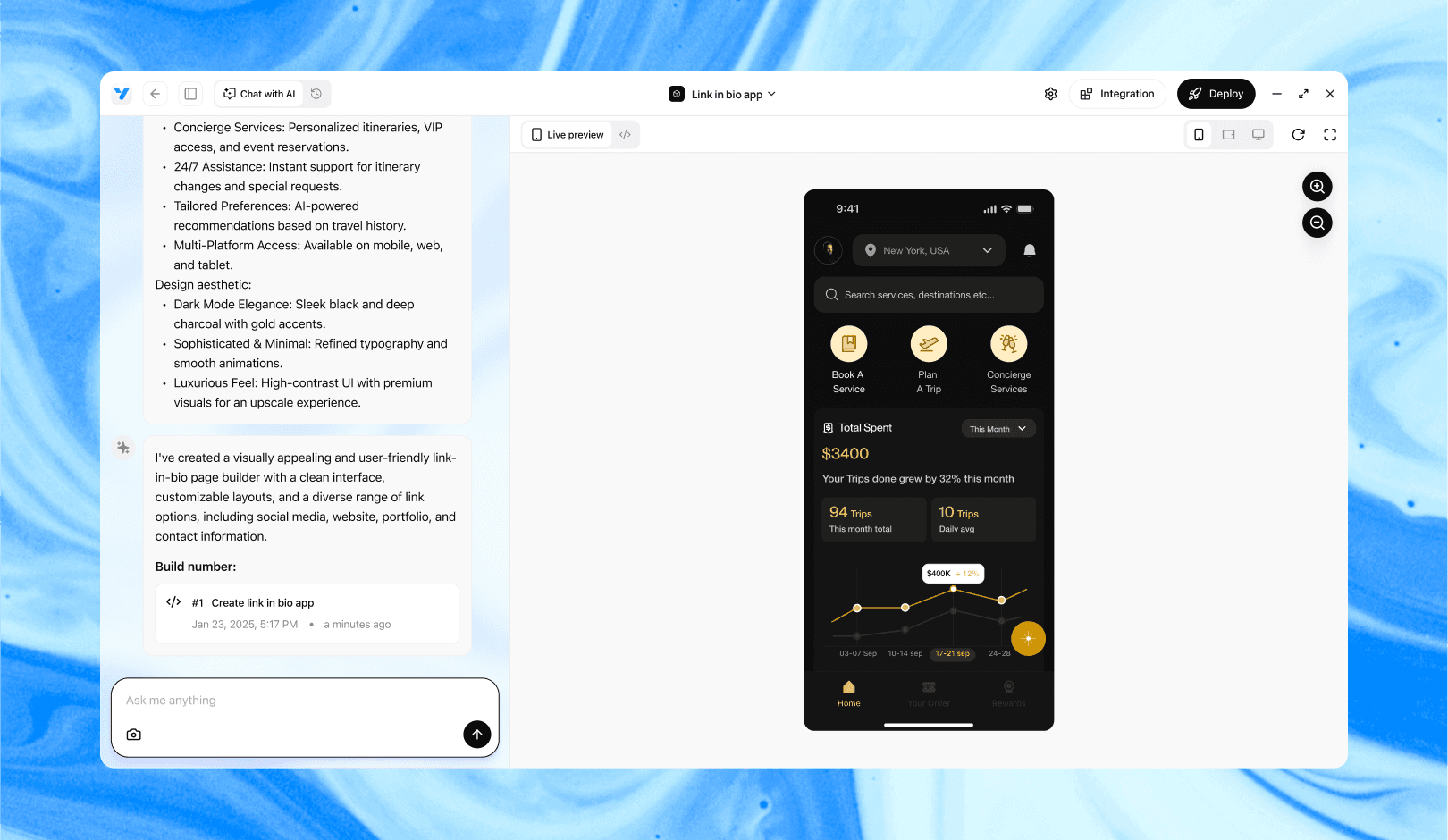
Vibe Studio, powered by Steve’s advanced AI agents, is a revolutionary no-code, conversational platform that empowers users to quickly and efficiently create full-stack Flutter applications integrated seamlessly with Firebase backend services. Ideal for solo founders, startups, and agile engineering teams, Vibe Studio allows users to visually manage and deploy Flutter apps, greatly accelerating the development process. The intuitive conversational interface simplifies complex development tasks, making app creation accessible even for non-coders.
Conclusion
Provider is a pragmatic, beginner-friendly choice for state management in Flutter mobile development. It maps naturally to Flutter's reactive UI, keeps code modular, and offers explicit APIs for reading and listening to state. Learn context.watch/read, Consumer, and Selector, keep state classes focused, and your app will remain responsive and maintainable as it grows.

Introduction
State management is a core concern in Flutter mobile development. For beginners, Provider is an approachable, well-documented package that fits Flutter's reactive model without adding heavy ceremony. This tutorial explains why Provider is effective, how to set it up, how widgets read and update state, and practical recommendations to keep apps predictable and efficient.
Why Provider Works
Provider is a lightweight wrapper around InheritedWidget and offers a clear separation between state and UI. It supports several common patterns: exposing ChangeNotifier-based objects, providing value objects, or using more advanced providers (StreamProvider, FutureProvider). The primary benefits for beginners are simplicity, integration with Flutter’s build context, and minimal boilerplate. Provider encourages small, focused state classes and uses Flutter's efficient rebuild model: only widgets that depend on the provided object are rebuilt when it changes.
Setting Up Provider
Add provider to pubspec.yaml and import package: import 'package:provider/provider.dart'. The typical pattern for mutable state is ChangeNotifier. Create a simple ChangeNotifier to hold and mutate state; notifyListeners triggers dependent widgets to rebuild.
class Counter extends ChangeNotifier {
int _count = 0;
int get count => _count;
void increment() { _count++; notifyListeners(); }
}Wrap your app (or a subtree) with a provider in main.dart. Use ChangeNotifierProvider to expose an instance of Counter to descendants. Use MultiProvider when you have several providers.
void main() => runApp(
ChangeNotifierProvider(
create: (_) => Counter(),
child: const MyApp(),
),
);Updating And Listening To State
There are three common ways to consume provided objects: Provider.of(context), context.watch(), and Consumer. Each has use cases:
context.watch() or Provider.of(context) with listen:true rebuilds the calling widget when T changes. Use it when the whole widget depends on the value.
context.read() or Provider.of(context, listen:false) retrieves the object without subscribing to changes — good for event handlers.
Consumer is a widget that gives you granular control over rebuilds: wrap only the subtree that needs updating.
Example usage in a widget:
Read and display the counter with context.watch:
final count = context.watch<Counter>().count;
Text('Count: $count');Increment without subscribing with context.read inside a button handler:
ElevatedButton(
onPressed: () => context.read<Counter>().increment(),
child: const Text('Increment'),
)Use Selector when you want to listen to a specific field derived from T; this reduces rebuilds by comparing the selected value.
Best Practices And Common Pitfalls
Keep state classes focused: one area of responsibility per ChangeNotifier. Small classes are easier to test and reason about.
Expose immutable or read-only properties where possible. Mutating shared state directly can make bugs hard to track.
Avoid calling Provider methods (like context.watch) during build in ways that create side effects. Use event handlers or initState for side effects.
Use Selector or Consumer to minimize rebuild scope: placing a Consumer at the right subtree prevents whole screens from rebuilding.
Dispose resources in your ChangeNotifier when needed (override dispose), or use the provider's automatic disposal when create is used. If you provide an existing instance, manage its lifecycle yourself.
Be careful with async initialization: use FutureProvider for values that resolve later, or initialize async state inside the ChangeNotifier and expose a loading state.
Provider is not the only solution, but it scales well from small apps to medium-sized projects and pairs nicely with patterns like repository abstraction, dependency injection via providers, and testable state classes.
Vibe Studio

Vibe Studio, powered by Steve’s advanced AI agents, is a revolutionary no-code, conversational platform that empowers users to quickly and efficiently create full-stack Flutter applications integrated seamlessly with Firebase backend services. Ideal for solo founders, startups, and agile engineering teams, Vibe Studio allows users to visually manage and deploy Flutter apps, greatly accelerating the development process. The intuitive conversational interface simplifies complex development tasks, making app creation accessible even for non-coders.
Conclusion
Provider is a pragmatic, beginner-friendly choice for state management in Flutter mobile development. It maps naturally to Flutter's reactive UI, keeps code modular, and offers explicit APIs for reading and listening to state. Learn context.watch/read, Consumer, and Selector, keep state classes focused, and your app will remain responsive and maintainable as it grows.
Build Flutter Apps Faster with Vibe Studio
Vibe Studio is your AI-powered Flutter development companion. Skip boilerplate, build in real-time, and deploy without hassle. Start creating apps at lightning speed with zero setup.