Using JSON Serialization for Clean Data Models in Flutter
Jan 15, 2026


Summary
Summary
Summary
Summary
This article explains why JSON serialization matters in Flutter mobile development, compares manual and generated strategies, and demonstrates how to implement json_serializable with build_runner. It concludes with best practices—use custom converters, prefer non-nullable types, test round trips, and keep models focused—to ensure clean, maintainable data models.
Key insights:
Key insights:
Key insights:
Key insights:
Why Use JSON Serialization: Centralizes parsing for type safety and better maintainability.
Choosing A Serialization Strategy: json_serializable is preferred for larger or evolving codebases.
Implementing JsonSerializable With Build_runner: Generated code yields efficient, inspectable serializers.
Best Practices For Clean Models: Use custom converters, explicit types, and unit tests for round trips.
Performance Considerations: Generated serializers avoid reflection and are faster than runtime parsing.
Introduction
Clean, maintainable data models are essential in Flutter mobile development. JSON is the lingua franca between REST APIs and client apps. How you serialize and deserialize JSON determines runtime safety, testability, and developer velocity. This tutorial focuses on using JSON serialization to keep your models concise, type-safe, and easy to evolve.
Why Use JSON Serialization
Manual JSON handling (Map lookups, dynamic typing) is quick for prototypes but brittle for production. JSON serialization transforms between Dart types and Map objects in predictable, testable ways. Benefits:
Type Safety: Proper models surface type mismatches at compile time or during controlled parsing.
Readability: Clear constructors and factory methods document data shape.
Performance: Generated code (via source_gen) avoids reflection and yields fast, small allocations.
By centralizing serialization logic within model classes, you reduce duplication across repositories and services.
Choosing a Serialization Strategy
You have two common choices:
Manual Serialization: Implement fromJson/toJson by hand. Good for small or highly custom cases.
Generated Serialization: Use packages like json_serializable to generate code automatically. Ideal when models are numerous or evolve frequently.
json_serializable + build_runner is the recommended route for most Flutter mobile development projects because it minimizes boilerplate while keeping generated code explicit and inspectable.
Implementing JsonSerializable With build_runner
Start by adding dependencies in pubspec.yaml:
json_annotation as a regular dependency
json_serializable and build_runner as dev_dependencies
Example model using json_serializable:
import 'package:json_annotation/json_annotation.dart'; part 'user.g.dart'; @JsonSerializable() class User { final int id; final String name; final String? email; User({required this.id, required this.name, this.email}); factory User.fromJson(Map<String, dynamic> json) => _$UserFromJson(json); Map<String, dynamic> toJson() => _$UserToJson(this); }
Run code generation:
flutter pub run build_runner build --delete-conflicting-outputs
This produces user.g.dart with efficient, type-safe serialization routines. Use the generated methods in repositories or services where you convert network responses into model instances.
Usage example:
final map = {'id': 1, 'name': 'Alice'}; final user = User.fromJson(map); final jsonOut = jsonEncode(user.toJson());
Keep models small and focused. If a field requires custom parsing (timestamps, enums), json_serializable supports custom JsonKey converters so you can place the conversion logic next to the field declaration.
Best Practices for Clean Models
Single Responsibility: Models should represent data structures. Keep business logic in services or domain classes.
Nullable vs Non-Nullable: Reflect API guarantees accurately. Prefer non-nullable fields when the server always returns values; use asserts or validation when constructing locally.
Default Values: Use defaultValue via JsonKey to provide sensible fallbacks for missing fields.
Custom Converters: Implement JsonConverter for repeated patterns (e.g., epoch timestamps or complex nested types) to avoid scattering parsing code.
Tests: Unit test fromJson/toJson round trips and edge cases (missing keys, nulls). Generated code is deterministic, which makes testing straightforward.
Avoid dynamic: Replace dynamic with explicit types. If a field can be multiple shapes, model each shape or use a discriminated union approach so consumers handle cases explicitly.
Keep Generated Code Out of Source Control: Commit the generated files only if your CI or build constraints require it; otherwise, prefer generating at build time.
Vibe Studio
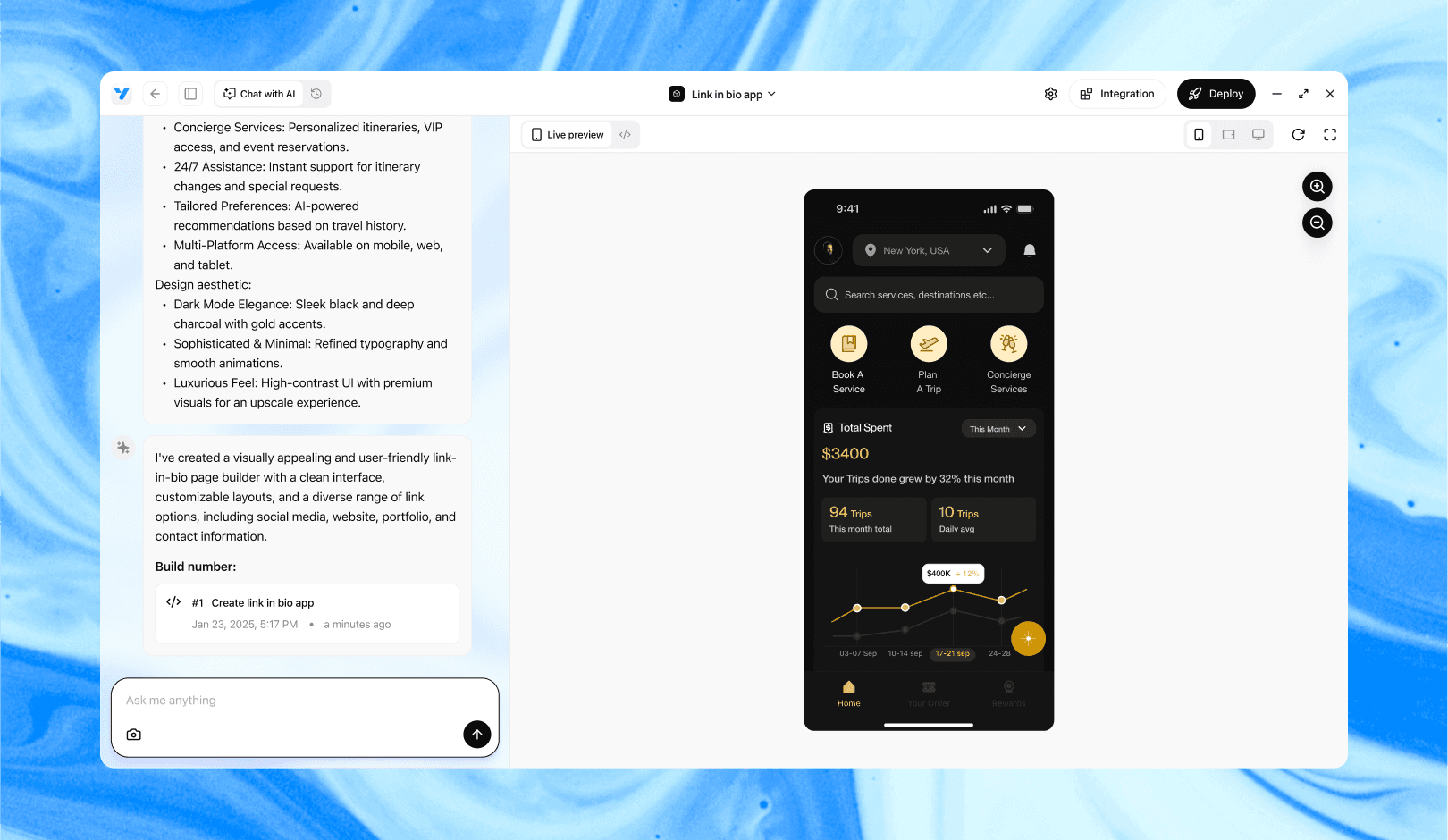
Vibe Studio, powered by Steve’s advanced AI agents, is a revolutionary no-code, conversational platform that empowers users to quickly and efficiently create full-stack Flutter applications integrated seamlessly with Firebase backend services. Ideal for solo founders, startups, and agile engineering teams, Vibe Studio allows users to visually manage and deploy Flutter apps, greatly accelerating the development process. The intuitive conversational interface simplifies complex development tasks, making app creation accessible even for non-coders.
Conclusion
Using JSON serialization correctly reduces boilerplate, improves safety, and makes your Flutter mobile development codebase easier to maintain. For production apps, prefer generated serializers (json_serializable + build_runner) and adopt a few pragmatic rules: keep models focused, use custom converters for recurring patterns, and cover serialization with unit tests. These steps will keep your data layer predictable and scalable as your app grows.

Introduction
Clean, maintainable data models are essential in Flutter mobile development. JSON is the lingua franca between REST APIs and client apps. How you serialize and deserialize JSON determines runtime safety, testability, and developer velocity. This tutorial focuses on using JSON serialization to keep your models concise, type-safe, and easy to evolve.
Why Use JSON Serialization
Manual JSON handling (Map lookups, dynamic typing) is quick for prototypes but brittle for production. JSON serialization transforms between Dart types and Map objects in predictable, testable ways. Benefits:
Type Safety: Proper models surface type mismatches at compile time or during controlled parsing.
Readability: Clear constructors and factory methods document data shape.
Performance: Generated code (via source_gen) avoids reflection and yields fast, small allocations.
By centralizing serialization logic within model classes, you reduce duplication across repositories and services.
Choosing a Serialization Strategy
You have two common choices:
Manual Serialization: Implement fromJson/toJson by hand. Good for small or highly custom cases.
Generated Serialization: Use packages like json_serializable to generate code automatically. Ideal when models are numerous or evolve frequently.
json_serializable + build_runner is the recommended route for most Flutter mobile development projects because it minimizes boilerplate while keeping generated code explicit and inspectable.
Implementing JsonSerializable With build_runner
Start by adding dependencies in pubspec.yaml:
json_annotation as a regular dependency
json_serializable and build_runner as dev_dependencies
Example model using json_serializable:
import 'package:json_annotation/json_annotation.dart'; part 'user.g.dart'; @JsonSerializable() class User { final int id; final String name; final String? email; User({required this.id, required this.name, this.email}); factory User.fromJson(Map<String, dynamic> json) => _$UserFromJson(json); Map<String, dynamic> toJson() => _$UserToJson(this); }
Run code generation:
flutter pub run build_runner build --delete-conflicting-outputs
This produces user.g.dart with efficient, type-safe serialization routines. Use the generated methods in repositories or services where you convert network responses into model instances.
Usage example:
final map = {'id': 1, 'name': 'Alice'}; final user = User.fromJson(map); final jsonOut = jsonEncode(user.toJson());
Keep models small and focused. If a field requires custom parsing (timestamps, enums), json_serializable supports custom JsonKey converters so you can place the conversion logic next to the field declaration.
Best Practices for Clean Models
Single Responsibility: Models should represent data structures. Keep business logic in services or domain classes.
Nullable vs Non-Nullable: Reflect API guarantees accurately. Prefer non-nullable fields when the server always returns values; use asserts or validation when constructing locally.
Default Values: Use defaultValue via JsonKey to provide sensible fallbacks for missing fields.
Custom Converters: Implement JsonConverter for repeated patterns (e.g., epoch timestamps or complex nested types) to avoid scattering parsing code.
Tests: Unit test fromJson/toJson round trips and edge cases (missing keys, nulls). Generated code is deterministic, which makes testing straightforward.
Avoid dynamic: Replace dynamic with explicit types. If a field can be multiple shapes, model each shape or use a discriminated union approach so consumers handle cases explicitly.
Keep Generated Code Out of Source Control: Commit the generated files only if your CI or build constraints require it; otherwise, prefer generating at build time.
Vibe Studio

Vibe Studio, powered by Steve’s advanced AI agents, is a revolutionary no-code, conversational platform that empowers users to quickly and efficiently create full-stack Flutter applications integrated seamlessly with Firebase backend services. Ideal for solo founders, startups, and agile engineering teams, Vibe Studio allows users to visually manage and deploy Flutter apps, greatly accelerating the development process. The intuitive conversational interface simplifies complex development tasks, making app creation accessible even for non-coders.
Conclusion
Using JSON serialization correctly reduces boilerplate, improves safety, and makes your Flutter mobile development codebase easier to maintain. For production apps, prefer generated serializers (json_serializable + build_runner) and adopt a few pragmatic rules: keep models focused, use custom converters for recurring patterns, and cover serialization with unit tests. These steps will keep your data layer predictable and scalable as your app grows.
Build Flutter Apps Faster with Vibe Studio
Vibe Studio is your AI-powered Flutter development companion. Skip boilerplate, build in real-time, and deploy without hassle. Start creating apps at lightning speed with zero setup.
Other Insights