Using Isolates To Handle Intensive Tasks in Flutter

Summary
Summary
Summary
Summary

Isolates let Flutter mobile development move CPU-intensive work off the main thread. Use compute for quick jobs, Isolate.spawn with SendPort/ReceivePort for persistent workers, and TransferableTypedData for large binaries. Adopt chunking, batching, and error handling to build responsive, reliable apps.

Isolates let Flutter mobile development move CPU-intensive work off the main thread. Use compute for quick jobs, Isolate.spawn with SendPort/ReceivePort for persistent workers, and TransferableTypedData for large binaries. Adopt chunking, batching, and error handling to build responsive, reliable apps.

Isolates let Flutter mobile development move CPU-intensive work off the main thread. Use compute for quick jobs, Isolate.spawn with SendPort/ReceivePort for persistent workers, and TransferableTypedData for large binaries. Adopt chunking, batching, and error handling to build responsive, reliable apps.

Isolates let Flutter mobile development move CPU-intensive work off the main thread. Use compute for quick jobs, Isolate.spawn with SendPort/ReceivePort for persistent workers, and TransferableTypedData for large binaries. Adopt chunking, batching, and error handling to build responsive, reliable apps.

Key insights:
Key insights:
Key insights:
Key insights:
  • When To Use Isolates: Use isolates for CPU-bound tasks like image processing, heavy parsing, or cryptography when async I/O isn't sufficient.

  • Spawning And Communicating With Isolates: Use compute for one-off tasks; use Isolate.spawn with SendPort/ReceivePort for bidirectional or long-lived workers.

  • Long-Running Work Patterns: Implement persistent workers, chunking, and batching to reduce overhead and provide progress updates.

  • Practical Example: Image Processing: Offload decoding/resizing and prefer TransferableTypedData for large byte transfers to minimize copying.

  • Transferable Data And Error Handling: Use TransferableTypedData for performance and propagate errors via messages or isolate listeners to maintain robustness.

Introduction

In Flutter mobile development, the UI runs on a single thread called the main isolate. Long-running or CPU-intensive operations on that thread will cause dropped frames, jank, or frozen UIs. Isolates are Dart's way to run work concurrently without shared memory, allowing you to offload heavy tasks and keep your Flutter app responsive. This tutorial explains when to use isolates, how to spawn and communicate with them, common patterns for long-running work, and a practical example for image processing.

When To Use Isolates

Not every background task needs an isolate. Use isolates for CPU-bound work where asynchronous I/O (Futures, async/await) cannot avoid blocking the event loop. Typical examples in mobile development: image decoding/resizing, complex JSON parsing on large payloads, cryptographic computations, audio processing, or heavy algorithmic tasks such as pathfinding or large matrix operations.

If the task is I/O-bound (network, file reads/writes) you can usually rely on Dart's async features without isolates. If a task is short (<50 ms) and infrequent, overhead of creating isolates might not be worth it. Consider using compute for simple, short-lived isolates; use raw Isolate APIs for more control and long-lived workers.

Spawning And Communicating With Isolates

There are two common approaches: the convenience compute function and manual Isolate.spawn with SendPort/ReceivePort. compute is fine for one-off, isolated functions. For persistent workers or bidirectional communication, use Isolate.spawn.

Key points:

  • Isolates do not share memory. Data is copied or transferred between isolates (transferables like TypedData can be zero-copy).

  • Communication uses SendPort and ReceivePort; send a message that can be serialized or a transferable buffer.

  • Clean up ports and kill isolates when work is done.

Example: using compute for a quick CPU task:

import 'dart:convert';
import 'package:flutter/foundation.dart';

String heavyParse(String jsonStr) => jsonDecode(jsonStr).toString();

// Usage: final result = await compute(heavyParse, largeJsonString);

For more control, spawn an isolate and use ports to send commands and get results.

Long-Running Work Patterns

Persistent Worker Isolate: Spawn a long-lived isolate that receives jobs and returns results. This reduces isolate spawn overhead when multiple tasks occur over time. Use a lifecycle message protocol (init, job, shutdown) and handle backpressure in your UI.

Batching And Chunking: Split large tasks into chunks that you send sequentially or in parallel to multiple isolates. Chunking lets you send intermediate progress updates back to the main isolate to update progress bars.

Transferable Data: For large binary blobs (image bytes, audio), use TransferableTypedData to avoid copying overhead between isolates. This is essential for high-throughput mobile development where memory and battery matter.

Error Handling: Wrap isolate work in try/catch and propagate error messages back to the main isolate. Also set up onError and onExit listeners on the spawned isolate to detect crashes and clean up resources.

Practical Example: Image Processing

A common mobile development scenario is decoding and resizing images off the main thread. Here is a minimal pattern using an isolate worker that receives bytes and returns resized bytes. This example uses a conceptual API — replace image processing calls with your chosen package's isolate-safe functions.

// Main isolate: send bytes and receive processed bytes
final receive = ReceivePort();
Isolate.spawn(imageWorkerEntry, receive.sendPort);
final sendPort = await receive.first as SendPort;

final response = ReceivePort();
sendPort.send([imageBytes, 800, response.sendPort]);
final processedBytes = await response.first as Uint8List;

On the worker isolate side, decode, resize, and send back bytes. Use TransferableTypedData when possible to avoid copying large buffers.

Best practices:

  • Avoid sending complex Flutter objects to isolates. Send primitive types, maps, lists, or TransferableTypedData.

  • Keep isolate entrypoints top-level or static functions.

  • Monitor memory usage and explicitly free large objects by letting them go out of scope; call Isolate.kill when done.

Vibe Studio
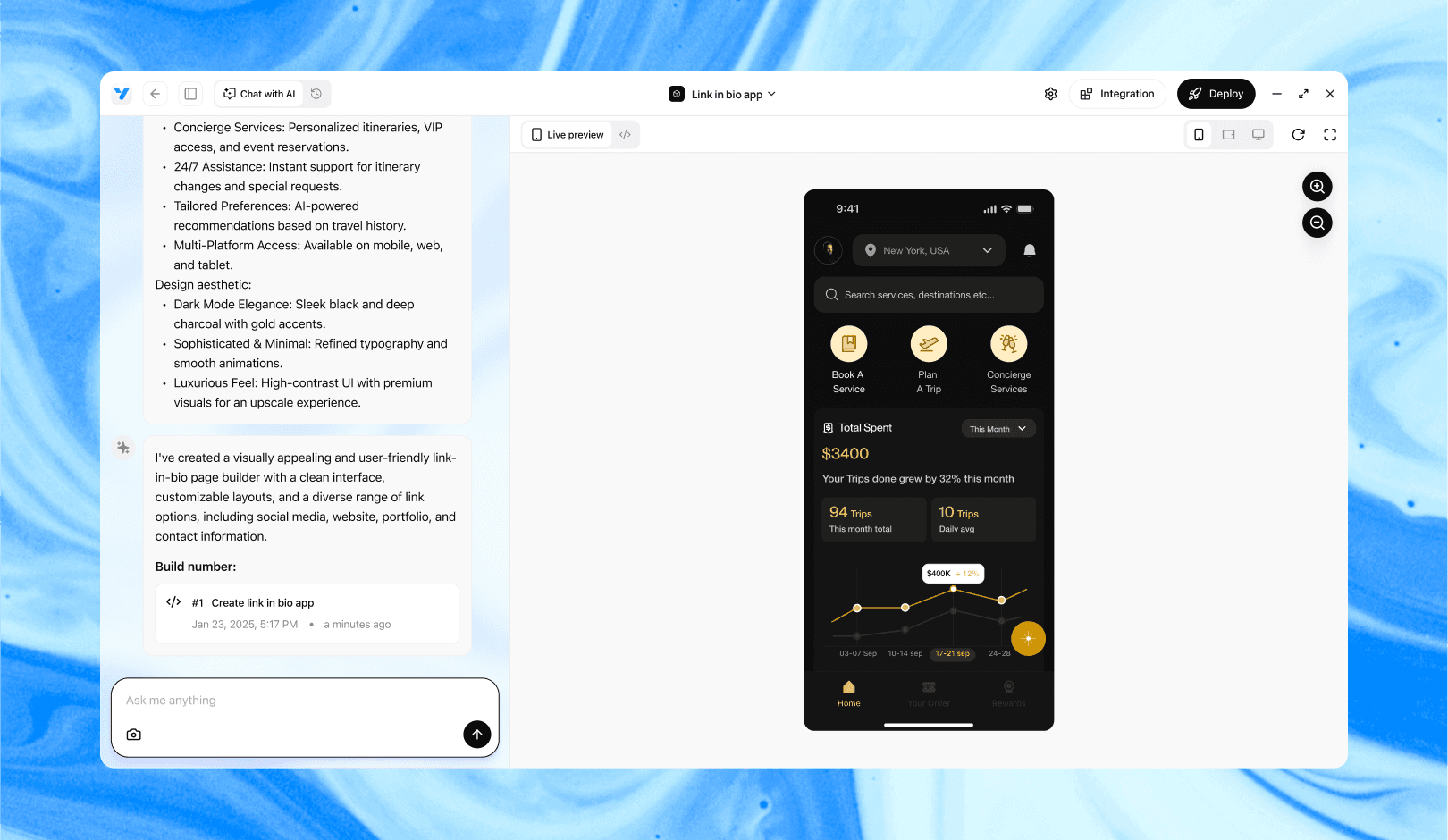
Vibe Studio, powered by Steve’s advanced AI agents, is a revolutionary no-code, conversational platform that empowers users to quickly and efficiently create full-stack Flutter applications integrated seamlessly with Firebase backend services. Ideal for solo founders, startups, and agile engineering teams, Vibe Studio allows users to visually manage and deploy Flutter apps, greatly accelerating the development process. The intuitive conversational interface simplifies complex development tasks, making app creation accessible even for non-coders.

Conclusion

Isolates are an essential tool in Flutter mobile development for keeping the UI smooth when handling CPU-bound, heavy tasks. Use compute for small one-off jobs and Isolate.spawn with SendPort/ReceivePort for persistent workers and complex communication. Leverage TransferableTypedData for large binary transfers, implement robust error handling, and choose chunking or batching to balance throughput and responsiveness. Applying these patterns will make CPU-intensive features like image manipulation, parsing, and signal processing practical on resource-constrained devices while preserving a responsive user experience.


Introduction

In Flutter mobile development, the UI runs on a single thread called the main isolate. Long-running or CPU-intensive operations on that thread will cause dropped frames, jank, or frozen UIs. Isolates are Dart's way to run work concurrently without shared memory, allowing you to offload heavy tasks and keep your Flutter app responsive. This tutorial explains when to use isolates, how to spawn and communicate with them, common patterns for long-running work, and a practical example for image processing.

When To Use Isolates

Not every background task needs an isolate. Use isolates for CPU-bound work where asynchronous I/O (Futures, async/await) cannot avoid blocking the event loop. Typical examples in mobile development: image decoding/resizing, complex JSON parsing on large payloads, cryptographic computations, audio processing, or heavy algorithmic tasks such as pathfinding or large matrix operations.

If the task is I/O-bound (network, file reads/writes) you can usually rely on Dart's async features without isolates. If a task is short (<50 ms) and infrequent, overhead of creating isolates might not be worth it. Consider using compute for simple, short-lived isolates; use raw Isolate APIs for more control and long-lived workers.

Spawning And Communicating With Isolates

There are two common approaches: the convenience compute function and manual Isolate.spawn with SendPort/ReceivePort. compute is fine for one-off, isolated functions. For persistent workers or bidirectional communication, use Isolate.spawn.

Key points:

  • Isolates do not share memory. Data is copied or transferred between isolates (transferables like TypedData can be zero-copy).

  • Communication uses SendPort and ReceivePort; send a message that can be serialized or a transferable buffer.

  • Clean up ports and kill isolates when work is done.

Example: using compute for a quick CPU task:

import 'dart:convert';
import 'package:flutter/foundation.dart';

String heavyParse(String jsonStr) => jsonDecode(jsonStr).toString();

// Usage: final result = await compute(heavyParse, largeJsonString);

For more control, spawn an isolate and use ports to send commands and get results.

Long-Running Work Patterns

Persistent Worker Isolate: Spawn a long-lived isolate that receives jobs and returns results. This reduces isolate spawn overhead when multiple tasks occur over time. Use a lifecycle message protocol (init, job, shutdown) and handle backpressure in your UI.

Batching And Chunking: Split large tasks into chunks that you send sequentially or in parallel to multiple isolates. Chunking lets you send intermediate progress updates back to the main isolate to update progress bars.

Transferable Data: For large binary blobs (image bytes, audio), use TransferableTypedData to avoid copying overhead between isolates. This is essential for high-throughput mobile development where memory and battery matter.

Error Handling: Wrap isolate work in try/catch and propagate error messages back to the main isolate. Also set up onError and onExit listeners on the spawned isolate to detect crashes and clean up resources.

Practical Example: Image Processing

A common mobile development scenario is decoding and resizing images off the main thread. Here is a minimal pattern using an isolate worker that receives bytes and returns resized bytes. This example uses a conceptual API — replace image processing calls with your chosen package's isolate-safe functions.

// Main isolate: send bytes and receive processed bytes
final receive = ReceivePort();
Isolate.spawn(imageWorkerEntry, receive.sendPort);
final sendPort = await receive.first as SendPort;

final response = ReceivePort();
sendPort.send([imageBytes, 800, response.sendPort]);
final processedBytes = await response.first as Uint8List;

On the worker isolate side, decode, resize, and send back bytes. Use TransferableTypedData when possible to avoid copying large buffers.

Best practices:

  • Avoid sending complex Flutter objects to isolates. Send primitive types, maps, lists, or TransferableTypedData.

  • Keep isolate entrypoints top-level or static functions.

  • Monitor memory usage and explicitly free large objects by letting them go out of scope; call Isolate.kill when done.

Vibe Studio

Vibe Studio, powered by Steve’s advanced AI agents, is a revolutionary no-code, conversational platform that empowers users to quickly and efficiently create full-stack Flutter applications integrated seamlessly with Firebase backend services. Ideal for solo founders, startups, and agile engineering teams, Vibe Studio allows users to visually manage and deploy Flutter apps, greatly accelerating the development process. The intuitive conversational interface simplifies complex development tasks, making app creation accessible even for non-coders.

Conclusion

Isolates are an essential tool in Flutter mobile development for keeping the UI smooth when handling CPU-bound, heavy tasks. Use compute for small one-off jobs and Isolate.spawn with SendPort/ReceivePort for persistent workers and complex communication. Leverage TransferableTypedData for large binary transfers, implement robust error handling, and choose chunking or batching to balance throughput and responsiveness. Applying these patterns will make CPU-intensive features like image manipulation, parsing, and signal processing practical on resource-constrained devices while preserving a responsive user experience.

Build Flutter Apps Faster with Vibe Studio

Build Flutter Apps Faster with Vibe Studio

Build Flutter Apps Faster with Vibe Studio

Build Flutter Apps Faster with Vibe Studio

Vibe Studio is your AI-powered Flutter development companion. Skip boilerplate, build in real-time, and deploy without hassle. Start creating apps at lightning speed with zero setup.

Vibe Studio is your AI-powered Flutter development companion. Skip boilerplate, build in real-time, and deploy without hassle. Start creating apps at lightning speed with zero setup.

Vibe Studio is your AI-powered Flutter development companion. Skip boilerplate, build in real-time, and deploy without hassle. Start creating apps at lightning speed with zero setup.

Vibe Studio is your AI-powered Flutter development companion. Skip boilerplate, build in real-time, and deploy without hassle. Start creating apps at lightning speed with zero setup.

Other Insights

Other Insights

Other Insights

Other Insights

Join a growing community of builders today

Join a growing community of builders today

Join a growing community of builders today

Join a growing community of builders today

Join a growing community of builders today

28-07 Jackson Ave

Walturn

New York NY 11101 United States

© Steve • All Rights Reserved 2025

28-07 Jackson Ave

Walturn

New York NY 11101 United States

© Steve • All Rights Reserved 2025

28-07 Jackson Ave

Walturn

New York NY 11101 United States

© Steve • All Rights Reserved 2025

28-07 Jackson Ave

Walturn

New York NY 11101 United States

© Steve • All Rights Reserved 2025

28-07 Jackson Ave

Walturn

New York NY 11101 United States

© Steve • All Rights Reserved 2025

28-07 Jackson Ave

Walturn

New York NY 11101 United States

© Steve • All Rights Reserved 2025