Using GestureDetector for Custom Motion and User Input
Summary
Summary
Summary
Summary

This tutorial shows how to use Flutter's GestureDetector to implement custom motion and user input: detect basic gestures, accumulate pan/drag deltas, clamp and snap motion, use velocity-fed animations for flings, and handle gesture conflicts and multi-touch. Focus on lightweight per-frame updates and leverage GestureArena or RawGestureDetector for complex arbitration.

This tutorial shows how to use Flutter's GestureDetector to implement custom motion and user input: detect basic gestures, accumulate pan/drag deltas, clamp and snap motion, use velocity-fed animations for flings, and handle gesture conflicts and multi-touch. Focus on lightweight per-frame updates and leverage GestureArena or RawGestureDetector for complex arbitration.

This tutorial shows how to use Flutter's GestureDetector to implement custom motion and user input: detect basic gestures, accumulate pan/drag deltas, clamp and snap motion, use velocity-fed animations for flings, and handle gesture conflicts and multi-touch. Focus on lightweight per-frame updates and leverage GestureArena or RawGestureDetector for complex arbitration.

This tutorial shows how to use Flutter's GestureDetector to implement custom motion and user input: detect basic gestures, accumulate pan/drag deltas, clamp and snap motion, use velocity-fed animations for flings, and handle gesture conflicts and multi-touch. Focus on lightweight per-frame updates and leverage GestureArena or RawGestureDetector for complex arbitration.

Key insights:
Key insights:
Key insights:
Key insights:
  • Detecting Basic Gestures: Prefer high-level callbacks (onTap, onPan, onScale) to get concise, conflict-resolved gesture handling.

  • Custom Motion With Pan And Drag: Accumulate delta in onPanUpdate, clamp to bounds, and use onPanEnd velocity to drive final animations.

  • Combining GestureDetector With Animations: Use AnimationController and physics simulations (animateWith) for natural flings and settling behavior.

  • Handling Complex Input And Edge Cases: Understand GestureArena; use RawGestureDetector for custom arbitration and avoid mixing incompatible recognizers.

  • Performance And Best Practices: Keep onPanUpdate lightweight, test on multiple platforms, and use hit-test behavior to control pointer routing.

Introduction

GestureDetector is the core Flutter widget for listening to pointer events and translating them into higher-level gestures. For custom motion and nuanced user input — dragging, swiping, long-pressing, or multi-touch interactions — GestureDetector gives you callbacks and event details to build precise, interactive UI. This tutorial shows practical patterns: basic detection, implementing custom motion with pan and drag, syncing gestures with animations, and handling complex input and edge cases.

Detecting Basic Gestures

GestureDetector exposes a concise API for common gestures: onTap, onDoubleTap, onLongPress, onPanStart, onPanUpdate, onPanEnd, onScaleStart, onScaleUpdate, and more. Use the simplest callback that satisfies your UX; prefer higher-level callbacks for common interactions because Flutter's GestureArena resolves conflicts for you.

Keep these rules in mind:

  • Use onTap for discrete taps, onTapDown if you need the exact position.

  • Use onPan* for single-finger dragging; onScale* supports pinch/rotate with scale and focal point.

  • Use velocity from DragEndDetails to implement momentum or fling gestures.

Small example: track a single drag offset and render a widget at that position.

// Simple stateful drag example
Offset _pos = Offset.zero;
GestureDetector(
  onPanUpdate: (d) => setState(() => _pos += d.delta),
  child: Transform.translate(offset: _pos, child: childWidget),
);

Custom Motion With Pan And Drag

When implementing custom motion you’ll combine pan callbacks with constraints and snapping logic. Consider these patterns:

  • Accumulate delta in onPanUpdate and clamp values to bounds.

  • On onPanEnd, read velocity to animate to a final resting position using an AnimationController or a physics simulation (e.g., FrictionSimulation).

  • For drag-to-reorder or drag-to-delete lists, detect long-press to start dragging, then use onPanUpdate to move a draggable placeholder while performing hit tests for drop targets.

Example pattern: clamp a draggable within a box and apply a spring animation to return to center when released.

// Pseudocode: clamp offset and animate back
onPanUpdate: (d) => setState(() => _offset = (_offset + d.delta).clamp(minOffset, maxOffset)),
onPanEnd: (e) => _controller.animateTo(0.0, curve: Curves.elasticOut);

Combining GestureDetector With Animations

Gestures feel best when paired with motion. Use AnimationController to convert user input into smooth transitions.

  • Use AnimatedBuilder or AnimatedWidget to keep rendering logic separate from gesture handling.

  • Drive animations on onPanEnd using velocity: create a simulation (ClampingScrollSimulation or FrictionSimulation) and animate your controller with animateWith().

  • For immediate feedback, update visual state directly during onPanUpdate, but trigger an animation for the final settling behavior.

Example: use velocity to continue motion after user releases:

  • Capture details.velocity.pixelsPerSecond in onPanEnd.

  • Create a simulation with that velocity and call controller.animateWith(simulation).

This lets you implement natural flings without blocking touch responsiveness.

Handling Complex Input And Edge Cases

When gestures overlap (e.g., horizontal swipe inside a vertical scroll), understand the GestureArena: gesture recognizers compete and the winner receives events. Strategies:

  • Use GestureDetector for local gestures and set behavior: HitTestBehavior.translucent or opaque affects pointer routing.

  • Use RawGestureDetector to configure gesture recognizers when you need custom gesture arbitration.

  • For multi-touch, use onScale* which bundles scale, rotation, and focal point; do not mix onPan* and onScale* on the same subtree unless you manage gesture disambiguation.

Edge cases to plan for:

  • Rapid successive gestures: debounce action triggers (e.g., double-tap vs single-tap) by using onDoubleTap and onTap with correct ordering.

  • Platform differences: iOS and Android differ in default touch slop and gesture expectations; test on both.

  • Performance: keep onPanUpdate lightweight (update state only) and do heavy work in post-frame callbacks.

Vibe Studio
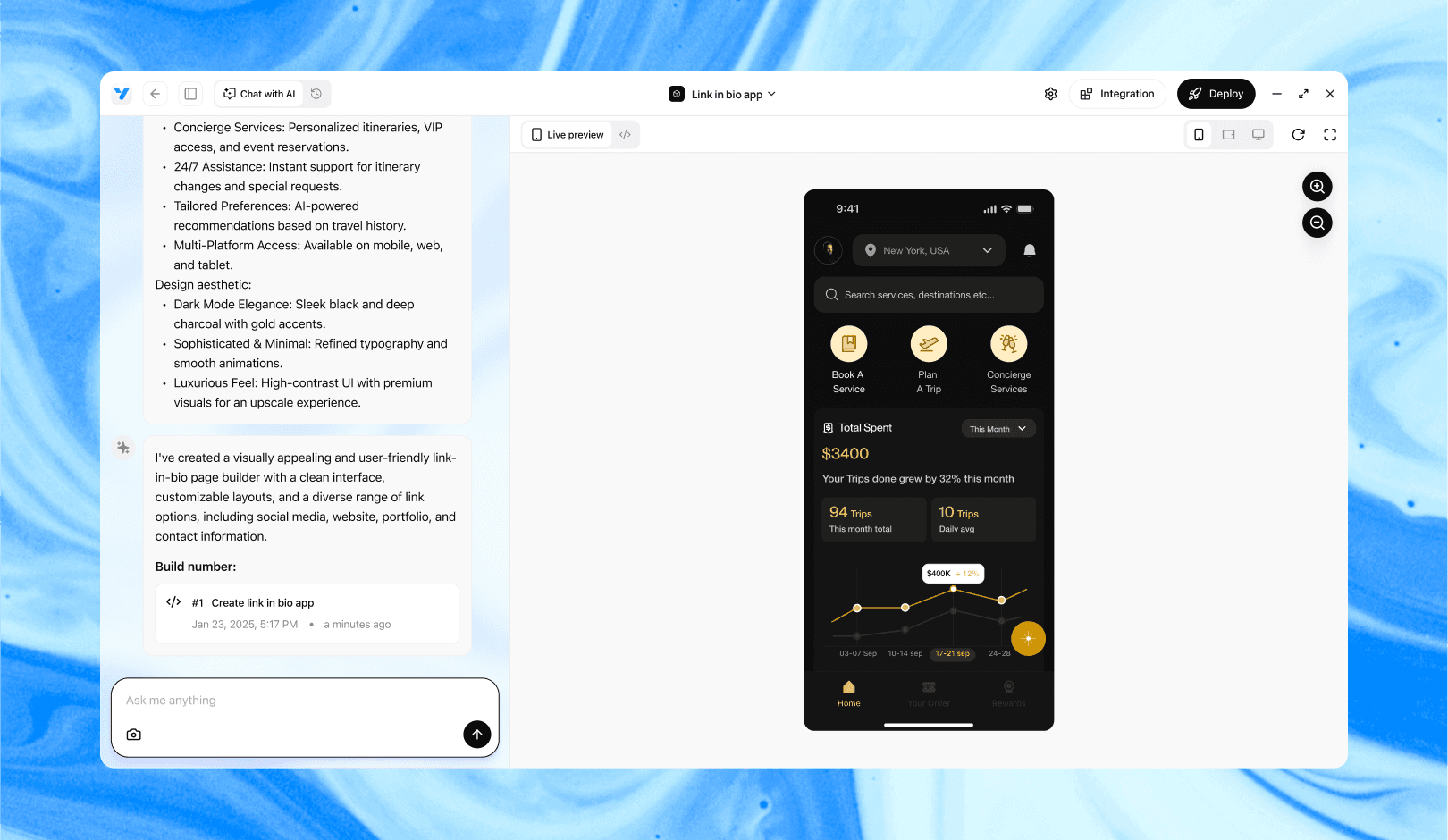
Vibe Studio, powered by Steve’s advanced AI agents, is a revolutionary no-code, conversational platform that empowers users to quickly and efficiently create full-stack Flutter applications integrated seamlessly with Firebase backend services. Ideal for solo founders, startups, and agile engineering teams, Vibe Studio allows users to visually manage and deploy Flutter apps, greatly accelerating the development process. The intuitive conversational interface simplifies complex development tasks, making app creation accessible even for non-coders.

Conclusion

GestureDetector is flexible: start with its high-level callbacks, accumulate motion in update callbacks, and hand off to animations on release for fluid motion. For complex interactions, understand the GestureArena, use RawGestureDetector when necessary, and always keep per-frame callbacks lean. Mastering these patterns lets you build responsive, natural-feeling touch experiences in Flutter mobile development.

Introduction

GestureDetector is the core Flutter widget for listening to pointer events and translating them into higher-level gestures. For custom motion and nuanced user input — dragging, swiping, long-pressing, or multi-touch interactions — GestureDetector gives you callbacks and event details to build precise, interactive UI. This tutorial shows practical patterns: basic detection, implementing custom motion with pan and drag, syncing gestures with animations, and handling complex input and edge cases.

Detecting Basic Gestures

GestureDetector exposes a concise API for common gestures: onTap, onDoubleTap, onLongPress, onPanStart, onPanUpdate, onPanEnd, onScaleStart, onScaleUpdate, and more. Use the simplest callback that satisfies your UX; prefer higher-level callbacks for common interactions because Flutter's GestureArena resolves conflicts for you.

Keep these rules in mind:

  • Use onTap for discrete taps, onTapDown if you need the exact position.

  • Use onPan* for single-finger dragging; onScale* supports pinch/rotate with scale and focal point.

  • Use velocity from DragEndDetails to implement momentum or fling gestures.

Small example: track a single drag offset and render a widget at that position.

// Simple stateful drag example
Offset _pos = Offset.zero;
GestureDetector(
  onPanUpdate: (d) => setState(() => _pos += d.delta),
  child: Transform.translate(offset: _pos, child: childWidget),
);

Custom Motion With Pan And Drag

When implementing custom motion you’ll combine pan callbacks with constraints and snapping logic. Consider these patterns:

  • Accumulate delta in onPanUpdate and clamp values to bounds.

  • On onPanEnd, read velocity to animate to a final resting position using an AnimationController or a physics simulation (e.g., FrictionSimulation).

  • For drag-to-reorder or drag-to-delete lists, detect long-press to start dragging, then use onPanUpdate to move a draggable placeholder while performing hit tests for drop targets.

Example pattern: clamp a draggable within a box and apply a spring animation to return to center when released.

// Pseudocode: clamp offset and animate back
onPanUpdate: (d) => setState(() => _offset = (_offset + d.delta).clamp(minOffset, maxOffset)),
onPanEnd: (e) => _controller.animateTo(0.0, curve: Curves.elasticOut);

Combining GestureDetector With Animations

Gestures feel best when paired with motion. Use AnimationController to convert user input into smooth transitions.

  • Use AnimatedBuilder or AnimatedWidget to keep rendering logic separate from gesture handling.

  • Drive animations on onPanEnd using velocity: create a simulation (ClampingScrollSimulation or FrictionSimulation) and animate your controller with animateWith().

  • For immediate feedback, update visual state directly during onPanUpdate, but trigger an animation for the final settling behavior.

Example: use velocity to continue motion after user releases:

  • Capture details.velocity.pixelsPerSecond in onPanEnd.

  • Create a simulation with that velocity and call controller.animateWith(simulation).

This lets you implement natural flings without blocking touch responsiveness.

Handling Complex Input And Edge Cases

When gestures overlap (e.g., horizontal swipe inside a vertical scroll), understand the GestureArena: gesture recognizers compete and the winner receives events. Strategies:

  • Use GestureDetector for local gestures and set behavior: HitTestBehavior.translucent or opaque affects pointer routing.

  • Use RawGestureDetector to configure gesture recognizers when you need custom gesture arbitration.

  • For multi-touch, use onScale* which bundles scale, rotation, and focal point; do not mix onPan* and onScale* on the same subtree unless you manage gesture disambiguation.

Edge cases to plan for:

  • Rapid successive gestures: debounce action triggers (e.g., double-tap vs single-tap) by using onDoubleTap and onTap with correct ordering.

  • Platform differences: iOS and Android differ in default touch slop and gesture expectations; test on both.

  • Performance: keep onPanUpdate lightweight (update state only) and do heavy work in post-frame callbacks.

Vibe Studio

Vibe Studio, powered by Steve’s advanced AI agents, is a revolutionary no-code, conversational platform that empowers users to quickly and efficiently create full-stack Flutter applications integrated seamlessly with Firebase backend services. Ideal for solo founders, startups, and agile engineering teams, Vibe Studio allows users to visually manage and deploy Flutter apps, greatly accelerating the development process. The intuitive conversational interface simplifies complex development tasks, making app creation accessible even for non-coders.

Conclusion

GestureDetector is flexible: start with its high-level callbacks, accumulate motion in update callbacks, and hand off to animations on release for fluid motion. For complex interactions, understand the GestureArena, use RawGestureDetector when necessary, and always keep per-frame callbacks lean. Mastering these patterns lets you build responsive, natural-feeling touch experiences in Flutter mobile development.

Build Flutter Apps Faster with Vibe Studio

Vibe Studio is your AI-powered Flutter development companion. Skip boilerplate, build in real-time, and deploy without hassle. Start creating apps at lightning speed with zero setup.

Other Insights

Join a growing community of builders today

Join a growing community of builders today

Join a growing community of builders today

Join a growing community of builders today

Join a growing community of builders today

28-07 Jackson Ave

Walturn

New York NY 11101 United States

© Steve • All Rights Reserved 2025

28-07 Jackson Ave

Walturn

New York NY 11101 United States

© Steve • All Rights Reserved 2025

28-07 Jackson Ave

Walturn

New York NY 11101 United States

© Steve • All Rights Reserved 2025

28-07 Jackson Ave

Walturn

New York NY 11101 United States

© Steve • All Rights Reserved 2025

28-07 Jackson Ave

Walturn

New York NY 11101 United States

© Steve • All Rights Reserved 2025

28-07 Jackson Ave

Walturn

New York NY 11101 United States

© Steve • All Rights Reserved 2025