Using Flutter to Build ChatGPT Plugin Interfaces

Summary
Summary
Summary
Summary

This tutorial explains how to build ChatGPT plugin interfaces with Flutter for mobile development. It covers UI patterns, secure API integration, state management strategies, streaming responses, testing, and deployment considerations. Included are concise code snippets for HTTP calls and message widgets, plus practical tips on performance, accessibility, and secure credential storage.

This tutorial explains how to build ChatGPT plugin interfaces with Flutter for mobile development. It covers UI patterns, secure API integration, state management strategies, streaming responses, testing, and deployment considerations. Included are concise code snippets for HTTP calls and message widgets, plus practical tips on performance, accessibility, and secure credential storage.

This tutorial explains how to build ChatGPT plugin interfaces with Flutter for mobile development. It covers UI patterns, secure API integration, state management strategies, streaming responses, testing, and deployment considerations. Included are concise code snippets for HTTP calls and message widgets, plus practical tips on performance, accessibility, and secure credential storage.

This tutorial explains how to build ChatGPT plugin interfaces with Flutter for mobile development. It covers UI patterns, secure API integration, state management strategies, streaming responses, testing, and deployment considerations. Included are concise code snippets for HTTP calls and message widgets, plus practical tips on performance, accessibility, and secure credential storage.

Key insights:
Key insights:
Key insights:
Key insights:
  • Plugin Interface Patterns: Design compact, accessible widgets for conversational flows and structured plugin outputs.

  • Integrating With Plugin API: Treat plugin endpoints as third-party APIs—authenticate, validate, and support streaming safely.

  • UI Patterns And State Management: Use Provider/Riverpod or Bloc; maintain message models and incremental updates during streaming.

  • Testing And Deployment: Mock network responses, add widget tests, and secure keys with platform-safe storage.

  • Performance And Security: Batch UI updates during streaming, key list items, use TLS and secure storage for API credentials.

Introduction

Building mobile interfaces for ChatGPT plugins with Flutter focuses on creating responsive, secure, and maintainable UI that communicates with plugin endpoints. This tutorial walks through design patterns, API integration, state handling, testing, and deployment considerations specific to mobile development with Flutter. Expect concrete code patterns and practical advice rather than server-side plugin implementation details.

Plugin Interface Patterns

Designing a plugin interface in Flutter begins with the user experience: conversational flows, tool invocation buttons, and structured responses. Common UI components include a scrollable message list, input composer, quick-action chips, and result cards for structured plugin outputs (tables, images, or forms).

Keep UI stateless where possible and encapsulate presentation logic in small widgets. For mobile, optimize for limited screen real estate: collapse verbose plugin responses into tappable summaries, use modal sheets for detailed forms, and prefer progressive disclosure.

Accessibility and internationalization are essential. Use semantic labels, dynamic type (MediaQuery.textScaleFactor), and localizable strings so plugin responses and controls work globally.

Integrating With Plugin API

Most plugin interactions happen over HTTPS with JSON payloads. Treat plugin endpoints like any third-party API: authenticate, validate schema, and handle rate limits and streaming responses.

Use package:http or dio for requests. Always wrap network calls with error handling and timeouts. If the plugin supports streaming responses (chunked JSON or server-sent events), integrate with Dart streams and update the UI incrementally for a responsive feel.

Example: a concise HTTP call and response parsing using package:http.

import 'package:http/http.dart' as http;
Future<String> callPlugin(String url, Map body, String apiKey) async {
  final res = await http.post(Uri.parse(url),
    headers: {'Authorization': 'Bearer $apiKey', 'Content-Type': 'application/json'},
    body: jsonEncode(body),
  ).timeout(Duration(seconds: 15));
  if (res.statusCode != 200) throw Exception('Plugin error ${res.statusCode}');
  return res.body;
}

Validate JSON responses before binding them to widgets. Use small data models and factory constructors to parse payloads safely and fail gracefully when fields are missing.

UI Patterns And State Management

Choose a state management approach aligned with the app complexity: Provider or Riverpod for most apps, Bloc for heavier, event-driven flows. Centralized state simplifies caching plugin results, managing streaming states, and persisting conversation history.

For chat UI, maintain a list of message models and a composition model for the current input. Render messages using a ListView.builder and separate widgets for user messages, assistant messages, and plugin result cards. When streaming, append incremental tokens to the assistant message model and call setState/notifyListeners to re-render.

Efficient rendering tips:

  • Use const constructors where possible.

  • Key list items to preserve scroll position.

  • Batch UI updates during streaming to avoid jank.

Example message widget skeleton:

class MessageBubble extends StatelessWidget {
  final String text; final bool isUser;
  const MessageBubble(this.text, {this.isUser = false});
  @override Widget build(BuildContext c) => Align(
    alignment: isUser ? Alignment.centerRight : Alignment.centerLeft,
    child: Container(padding: EdgeInsets.all(12), child: Text(text)),
  );
}

Testing And Deployment

Write unit tests for parsing logic and widget tests for key UI flows like composing a message, receiving a plugin response, and invoking actions from plugin cards. For network tests, use HTTP mocking (http_mock_adapter or mockito) to simulate success, error, and streaming scenarios.

On Android, ensure network security config allows TLS and certificate pinning if needed. On iOS, update Info.plist for required permissions and App Transport Security exceptions if a plugin uses non-standard endpoints (prefer avoiding this). Securely store API keys using flutter_secure_storage and never hard-code secrets.

For CI/CD: run flutter analyze, flutter test, and integration tests on emulators. Use code signing and follow Play Store / App Store guidelines for apps that integrate third-party AI tools.

Vibe Studio
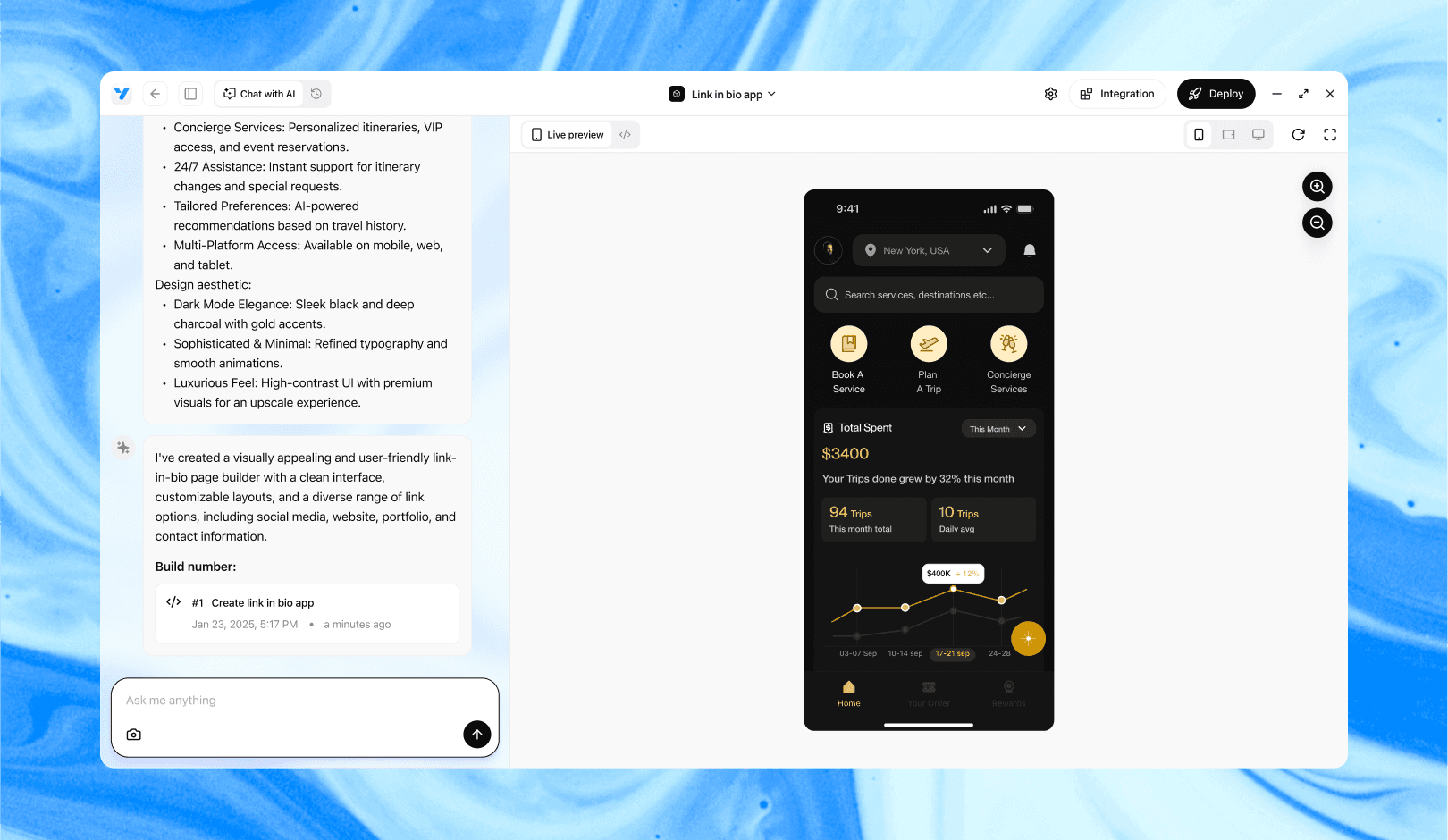
Vibe Studio, powered by Steve’s advanced AI agents, is a revolutionary no-code, conversational platform that empowers users to quickly and efficiently create full-stack Flutter applications integrated seamlessly with Firebase backend services. Ideal for solo founders, startups, and agile engineering teams, Vibe Studio allows users to visually manage and deploy Flutter apps, greatly accelerating the development process. The intuitive conversational interface simplifies complex development tasks, making app creation accessible even for non-coders.

Conclusion

Flutter is well suited for building ChatGPT plugin interfaces on mobile because it balances performant UI, cross-platform consistency, and a rich ecosystem for networking and state management. Focus on clear conversational patterns, robust API handling, responsive streaming UI, and secure storage of credentials. With modular widgets, careful state management, and automated tests, you can deliver plugin-enabled mobile experiences that are maintainable and user-friendly.

Introduction

Building mobile interfaces for ChatGPT plugins with Flutter focuses on creating responsive, secure, and maintainable UI that communicates with plugin endpoints. This tutorial walks through design patterns, API integration, state handling, testing, and deployment considerations specific to mobile development with Flutter. Expect concrete code patterns and practical advice rather than server-side plugin implementation details.

Plugin Interface Patterns

Designing a plugin interface in Flutter begins with the user experience: conversational flows, tool invocation buttons, and structured responses. Common UI components include a scrollable message list, input composer, quick-action chips, and result cards for structured plugin outputs (tables, images, or forms).

Keep UI stateless where possible and encapsulate presentation logic in small widgets. For mobile, optimize for limited screen real estate: collapse verbose plugin responses into tappable summaries, use modal sheets for detailed forms, and prefer progressive disclosure.

Accessibility and internationalization are essential. Use semantic labels, dynamic type (MediaQuery.textScaleFactor), and localizable strings so plugin responses and controls work globally.

Integrating With Plugin API

Most plugin interactions happen over HTTPS with JSON payloads. Treat plugin endpoints like any third-party API: authenticate, validate schema, and handle rate limits and streaming responses.

Use package:http or dio for requests. Always wrap network calls with error handling and timeouts. If the plugin supports streaming responses (chunked JSON or server-sent events), integrate with Dart streams and update the UI incrementally for a responsive feel.

Example: a concise HTTP call and response parsing using package:http.

import 'package:http/http.dart' as http;
Future<String> callPlugin(String url, Map body, String apiKey) async {
  final res = await http.post(Uri.parse(url),
    headers: {'Authorization': 'Bearer $apiKey', 'Content-Type': 'application/json'},
    body: jsonEncode(body),
  ).timeout(Duration(seconds: 15));
  if (res.statusCode != 200) throw Exception('Plugin error ${res.statusCode}');
  return res.body;
}

Validate JSON responses before binding them to widgets. Use small data models and factory constructors to parse payloads safely and fail gracefully when fields are missing.

UI Patterns And State Management

Choose a state management approach aligned with the app complexity: Provider or Riverpod for most apps, Bloc for heavier, event-driven flows. Centralized state simplifies caching plugin results, managing streaming states, and persisting conversation history.

For chat UI, maintain a list of message models and a composition model for the current input. Render messages using a ListView.builder and separate widgets for user messages, assistant messages, and plugin result cards. When streaming, append incremental tokens to the assistant message model and call setState/notifyListeners to re-render.

Efficient rendering tips:

  • Use const constructors where possible.

  • Key list items to preserve scroll position.

  • Batch UI updates during streaming to avoid jank.

Example message widget skeleton:

class MessageBubble extends StatelessWidget {
  final String text; final bool isUser;
  const MessageBubble(this.text, {this.isUser = false});
  @override Widget build(BuildContext c) => Align(
    alignment: isUser ? Alignment.centerRight : Alignment.centerLeft,
    child: Container(padding: EdgeInsets.all(12), child: Text(text)),
  );
}

Testing And Deployment

Write unit tests for parsing logic and widget tests for key UI flows like composing a message, receiving a plugin response, and invoking actions from plugin cards. For network tests, use HTTP mocking (http_mock_adapter or mockito) to simulate success, error, and streaming scenarios.

On Android, ensure network security config allows TLS and certificate pinning if needed. On iOS, update Info.plist for required permissions and App Transport Security exceptions if a plugin uses non-standard endpoints (prefer avoiding this). Securely store API keys using flutter_secure_storage and never hard-code secrets.

For CI/CD: run flutter analyze, flutter test, and integration tests on emulators. Use code signing and follow Play Store / App Store guidelines for apps that integrate third-party AI tools.

Vibe Studio

Vibe Studio, powered by Steve’s advanced AI agents, is a revolutionary no-code, conversational platform that empowers users to quickly and efficiently create full-stack Flutter applications integrated seamlessly with Firebase backend services. Ideal for solo founders, startups, and agile engineering teams, Vibe Studio allows users to visually manage and deploy Flutter apps, greatly accelerating the development process. The intuitive conversational interface simplifies complex development tasks, making app creation accessible even for non-coders.

Conclusion

Flutter is well suited for building ChatGPT plugin interfaces on mobile because it balances performant UI, cross-platform consistency, and a rich ecosystem for networking and state management. Focus on clear conversational patterns, robust API handling, responsive streaming UI, and secure storage of credentials. With modular widgets, careful state management, and automated tests, you can deliver plugin-enabled mobile experiences that are maintainable and user-friendly.

Build Flutter Apps Faster with Vibe Studio

Build Flutter Apps Faster with Vibe Studio

Build Flutter Apps Faster with Vibe Studio

Build Flutter Apps Faster with Vibe Studio

Vibe Studio is your AI-powered Flutter development companion. Skip boilerplate, build in real-time, and deploy without hassle. Start creating apps at lightning speed with zero setup.

Vibe Studio is your AI-powered Flutter development companion. Skip boilerplate, build in real-time, and deploy without hassle. Start creating apps at lightning speed with zero setup.

Vibe Studio is your AI-powered Flutter development companion. Skip boilerplate, build in real-time, and deploy without hassle. Start creating apps at lightning speed with zero setup.

Vibe Studio is your AI-powered Flutter development companion. Skip boilerplate, build in real-time, and deploy without hassle. Start creating apps at lightning speed with zero setup.

Other Insights

Other Insights

Other Insights

Other Insights

Join a growing community of builders today

Join a growing community of builders today

Join a growing community of builders today

Join a growing community of builders today

Join a growing community of builders today

28-07 Jackson Ave

Walturn

New York NY 11101 United States

© Steve • All Rights Reserved 2025

28-07 Jackson Ave

Walturn

New York NY 11101 United States

© Steve • All Rights Reserved 2025

28-07 Jackson Ave

Walturn

New York NY 11101 United States

© Steve • All Rights Reserved 2025

28-07 Jackson Ave

Walturn

New York NY 11101 United States

© Steve • All Rights Reserved 2025

28-07 Jackson Ave

Walturn

New York NY 11101 United States

© Steve • All Rights Reserved 2025

28-07 Jackson Ave

Walturn

New York NY 11101 United States

© Steve • All Rights Reserved 2025