Using Flutter’s CanvasKit for Web Animations
Nov 5, 2025


Summary
Summary
Summary
Summary
CanvasKit compiles Skia to WebAssembly and uses WebGL to deliver GPU-accelerated, consistent rendering for Flutter web. Use explicit renderer selection, CustomPainter with caching (PictureRecorder), and avoid per-frame allocations. Profile with Chrome DevTools and Flutter DevTools to find CPU, upload, or GPU bottlenecks. CanvasKit is ideal when you need fidelity and advanced paint features for web animations.
Key insights:
Key insights:
Key insights:
Key insights:
Skia-based GPU: CanvasKit provides Skia-based GPU acceleration via WebAssembly for consistent, mobile-like rendering on the web.
Explicit Renderer Configuration: Explicitly configure the renderer (flutter build/run --web-renderer canvaskit) to simplify debugging and performance testing.
CustomPainter and Caching: Use CustomPainter, PictureRecorder, and layer caching to minimize per-frame CPU work and leverage GPU compositing.
Avoid Allocations: Avoid allocations and frequent image uploads during paint; reuse Paint, Path, and pre-decode images.
Profiling Tools: Profile with Chrome DevTools and Flutter DevTools to separate framework, engine, and GPU bottlenecks.
Introduction
CanvasKit is Flutter’s Web rendering backend that brings Skia (the same 2D graphics engine used on mobile) to browsers via WebAssembly and WebGL. For mobile development teams targeting the web, CanvasKit offers more predictable paint results, richer blending/shader support, and generally higher-fidelity, GPU-accelerated animations compared to the HTML renderer. This article explains when to choose CanvasKit, how to configure it, and practical tips for building performant web animations with CustomPainter and Flutter’s animation APIs.
Why CanvasKit
CanvasKit compiles Skia to WebAssembly and uses WebGL for GPU acceleration. The benefits for animations are concrete:
Consistent rendering across platforms (same Skia pipeline as mobile).
Full Skia feature set: advanced blend modes, mask filters, ImageFilter, and shaders.
Better frame stability for complex vector or shader-driven animations.
Trade-offs: larger initial download (Wasm files), and some browser-to-browser variance in WebGL feature availability. Use CanvasKit when you need fidelity, complex paint effects, or performance under heavy GPU work.
Configuring CanvasKit for Web
During development and in CI, pick the renderer explicitly. Typical commands:
flutter run -d chrome --web-renderer canvaskit
flutter build web --web-renderer canvaskit --release
You can also allow the renderer to be chosen automatically at runtime, but explicit selection simplifies debugging. Be mindful of your index.html and hosting headers so the Wasm and JS artifacts are served with correct MIME types. Configure caching for the CanvasKit artifacts since they are relatively large.
Building GPU-Accelerated Animations
Use CustomPainter for frame-by-frame control of vector animations. With CanvasKit you can rely on consistent Skia behavior for paint primitives and shaders. Key tips:
Repaint only what changes: return shouldRepaint judiciously and scope CustomPaint size to the animated region.
Prefer GPU-friendly operations: transforms, composited layers, and draw calls that map to Skia primitives. Avoid frequent bitmap uploads.
Use PictureRecorder to cache static content as a Skia picture and replay it each frame.
Example: an AnimatedBuilder driving a CustomPainter that animates a radial gradient and a rotating path.
class SpinnerPainter extends CustomPainter {
final double t; // 0..1
SpinnerPainter(this.t);
@override void paint(Canvas canvas, Size size) {
final center = size.center(Offset.zero);
canvas.save();
canvas.translate(center.dx, center.dy);
canvas.rotate(2 * 3.14159 * t);
final paint = Paint()..shader = RadialGradient(colors: [Colors.blue, Colors.transparent]).createShader(Rect.fromCircle(center: Offset.zero, radius: 40));
canvas.drawCircle(Offset.zero, 40, paint);
canvas.restore();
}
@override bool shouldRepaint(covariant SpinnerPainter old) => old.t != t;
}This pattern keeps the animation logic in Dart and leverages CanvasKit’s fast compositing.
Debugging and Profiling CanvasKit
Chrome DevTools remains essential: use Performance and Memory tabs to inspect frame timings and JS/Wasm work. Additionally:
Use Flutter DevTools Timeline to see the engine vs framework work. Look for long frames (>16ms).
Watch for raster thread stalls: expensive image uploads or large garbage collections can block frames.
Enable Skia CPU raster debugging by running with software rendering in cases where diagnosing painting differences is necessary.
When profiling, isolate whether slowdowns are caused by Dart code (layout/rebuilds), texture uploads (decode and upload), or GPU contention (many overlapping blend ops). CanvasKit shifts more work to GPU and Wasm, so inspect both JS/Wasm timelines and GPU timings.
Performance Patterns and Best Practices
Use pictures and layers: cache static paint operations using PictureRecorder or manual layer caching to reduce per-frame CPU work.
Minimize allocations during paint: reuse Paint, Path, and other objects instead of creating them per frame.
Avoid frequent Image.network decode during animation: pre-decode and keep images in memory or use ImageProvider previews.
Test on target browsers and devices: WebGL capabilities and CPU performance vary across devices, and mobile browsers on low-end devices may have different bottlenecks than desktop.
Vibe Studio
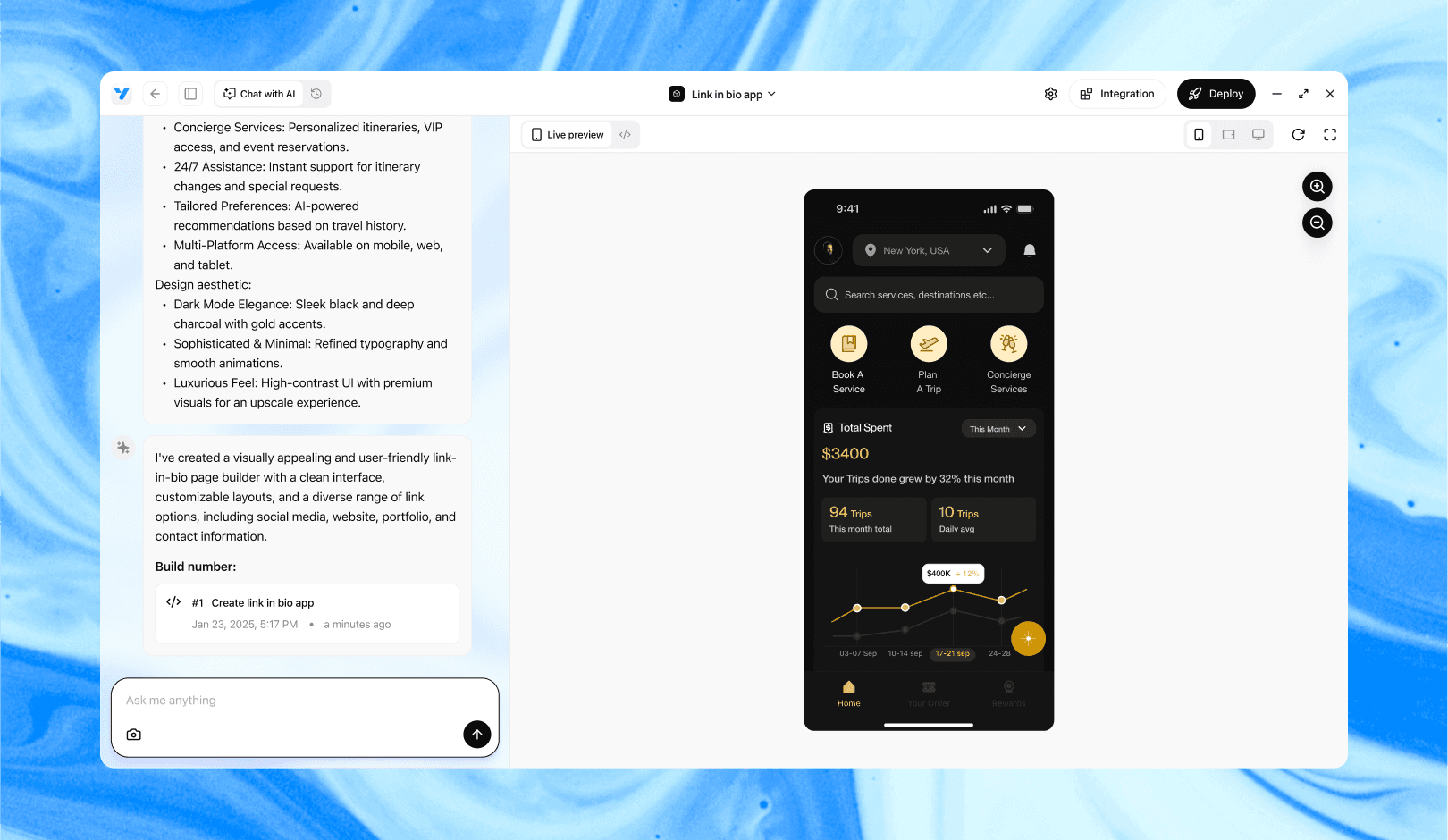
Vibe Studio, powered by Steve’s advanced AI agents, is a revolutionary no-code, conversational platform that empowers users to quickly and efficiently create full-stack Flutter applications integrated seamlessly with Firebase backend services. Ideal for solo founders, startups, and agile engineering teams, Vibe Studio allows users to visually manage and deploy Flutter apps, greatly accelerating the development process. The intuitive conversational interface simplifies complex development tasks, making app creation accessible even for non-coders.
Conclusion
CanvasKit brings Skia’s powerful, GPU-accelerated rendering pipeline to the web and is a strong choice when building high-fidelity, performant animations in Flutter for web. Configure the renderer explicitly, favor CustomPainter and cached Pictures for tight animation loops, and use Chrome DevTools plus Flutter DevTools to profile where the work happens. With these patterns you can achieve mobile-development-grade visuals and animation performance in the browser while keeping Flutter’s single codebase advantage.

Introduction
CanvasKit is Flutter’s Web rendering backend that brings Skia (the same 2D graphics engine used on mobile) to browsers via WebAssembly and WebGL. For mobile development teams targeting the web, CanvasKit offers more predictable paint results, richer blending/shader support, and generally higher-fidelity, GPU-accelerated animations compared to the HTML renderer. This article explains when to choose CanvasKit, how to configure it, and practical tips for building performant web animations with CustomPainter and Flutter’s animation APIs.
Why CanvasKit
CanvasKit compiles Skia to WebAssembly and uses WebGL for GPU acceleration. The benefits for animations are concrete:
Consistent rendering across platforms (same Skia pipeline as mobile).
Full Skia feature set: advanced blend modes, mask filters, ImageFilter, and shaders.
Better frame stability for complex vector or shader-driven animations.
Trade-offs: larger initial download (Wasm files), and some browser-to-browser variance in WebGL feature availability. Use CanvasKit when you need fidelity, complex paint effects, or performance under heavy GPU work.
Configuring CanvasKit for Web
During development and in CI, pick the renderer explicitly. Typical commands:
flutter run -d chrome --web-renderer canvaskit
flutter build web --web-renderer canvaskit --release
You can also allow the renderer to be chosen automatically at runtime, but explicit selection simplifies debugging. Be mindful of your index.html and hosting headers so the Wasm and JS artifacts are served with correct MIME types. Configure caching for the CanvasKit artifacts since they are relatively large.
Building GPU-Accelerated Animations
Use CustomPainter for frame-by-frame control of vector animations. With CanvasKit you can rely on consistent Skia behavior for paint primitives and shaders. Key tips:
Repaint only what changes: return shouldRepaint judiciously and scope CustomPaint size to the animated region.
Prefer GPU-friendly operations: transforms, composited layers, and draw calls that map to Skia primitives. Avoid frequent bitmap uploads.
Use PictureRecorder to cache static content as a Skia picture and replay it each frame.
Example: an AnimatedBuilder driving a CustomPainter that animates a radial gradient and a rotating path.
class SpinnerPainter extends CustomPainter {
final double t; // 0..1
SpinnerPainter(this.t);
@override void paint(Canvas canvas, Size size) {
final center = size.center(Offset.zero);
canvas.save();
canvas.translate(center.dx, center.dy);
canvas.rotate(2 * 3.14159 * t);
final paint = Paint()..shader = RadialGradient(colors: [Colors.blue, Colors.transparent]).createShader(Rect.fromCircle(center: Offset.zero, radius: 40));
canvas.drawCircle(Offset.zero, 40, paint);
canvas.restore();
}
@override bool shouldRepaint(covariant SpinnerPainter old) => old.t != t;
}This pattern keeps the animation logic in Dart and leverages CanvasKit’s fast compositing.
Debugging and Profiling CanvasKit
Chrome DevTools remains essential: use Performance and Memory tabs to inspect frame timings and JS/Wasm work. Additionally:
Use Flutter DevTools Timeline to see the engine vs framework work. Look for long frames (>16ms).
Watch for raster thread stalls: expensive image uploads or large garbage collections can block frames.
Enable Skia CPU raster debugging by running with software rendering in cases where diagnosing painting differences is necessary.
When profiling, isolate whether slowdowns are caused by Dart code (layout/rebuilds), texture uploads (decode and upload), or GPU contention (many overlapping blend ops). CanvasKit shifts more work to GPU and Wasm, so inspect both JS/Wasm timelines and GPU timings.
Performance Patterns and Best Practices
Use pictures and layers: cache static paint operations using PictureRecorder or manual layer caching to reduce per-frame CPU work.
Minimize allocations during paint: reuse Paint, Path, and other objects instead of creating them per frame.
Avoid frequent Image.network decode during animation: pre-decode and keep images in memory or use ImageProvider previews.
Test on target browsers and devices: WebGL capabilities and CPU performance vary across devices, and mobile browsers on low-end devices may have different bottlenecks than desktop.
Vibe Studio

Vibe Studio, powered by Steve’s advanced AI agents, is a revolutionary no-code, conversational platform that empowers users to quickly and efficiently create full-stack Flutter applications integrated seamlessly with Firebase backend services. Ideal for solo founders, startups, and agile engineering teams, Vibe Studio allows users to visually manage and deploy Flutter apps, greatly accelerating the development process. The intuitive conversational interface simplifies complex development tasks, making app creation accessible even for non-coders.
Conclusion
CanvasKit brings Skia’s powerful, GPU-accelerated rendering pipeline to the web and is a strong choice when building high-fidelity, performant animations in Flutter for web. Configure the renderer explicitly, favor CustomPainter and cached Pictures for tight animation loops, and use Chrome DevTools plus Flutter DevTools to profile where the work happens. With these patterns you can achieve mobile-development-grade visuals and animation performance in the browser while keeping Flutter’s single codebase advantage.
Build Flutter Apps Faster with Vibe Studio
Vibe Studio is your AI-powered Flutter development companion. Skip boilerplate, build in real-time, and deploy without hassle. Start creating apps at lightning speed with zero setup.