Using Flutter for Real-Time Collaboration Features

Summary
Summary
Summary
Summary

This tutorial explains how to add real-time collaboration to Flutter apps: choose a backend (WebSocket, Firestore, WebRTC), implement optimistic updates and reconciliation (CRDT/OT or merge rules), structure state with a dedicated sync layer, and address security, scaling, and offline persistence.

This tutorial explains how to add real-time collaboration to Flutter apps: choose a backend (WebSocket, Firestore, WebRTC), implement optimistic updates and reconciliation (CRDT/OT or merge rules), structure state with a dedicated sync layer, and address security, scaling, and offline persistence.

This tutorial explains how to add real-time collaboration to Flutter apps: choose a backend (WebSocket, Firestore, WebRTC), implement optimistic updates and reconciliation (CRDT/OT or merge rules), structure state with a dedicated sync layer, and address security, scaling, and offline persistence.

This tutorial explains how to add real-time collaboration to Flutter apps: choose a backend (WebSocket, Firestore, WebRTC), implement optimistic updates and reconciliation (CRDT/OT or merge rules), structure state with a dedicated sync layer, and address security, scaling, and offline persistence.

Key insights:
Key insights:
Key insights:
Key insights:
  • Choosing A Real-Time Backend: Select between WebSockets for control or managed services (Firestore, Ably) for convenience and built-in sync.

  • Handling Data Synchronization And Conflict Resolution: Use CRDTs or a server-backed reconciliation strategy and maintain operation queues for optimistic updates.

  • Designing Real-Time UI And State Management: Keep UI declarative; centralize sync and reconciliation in a state layer exposed via Streams or providers.

  • Security, Scalability, And Offline Support: Authenticate and authorize actions server-side, persist pending ops locally, and plan pub/sub scaling.

  • Designing Real-Time UI And State Management: Animate reconciled state changes and separate optimistic vs. confirmed state for smooth UX.

Introduction

Real-time collaboration is a common requirement for modern mobile apps: think shared cursors, live messaging, co-editing, and presence indicators. Flutter's reactive UI, single codebase, and strong ecosystem make it well suited for building these features on iOS and Android. This tutorial explains pragmatic architecture choices, synchronization strategies, UI patterns, and security considerations when adding real-time collaboration to a Flutter app.

Choosing A Real-Time Backend

Start by selecting a backend that matches your consistency, latency, and operational needs. Options include WebSocket-based servers, Firebase Realtime Database / Firestore, WebRTC (for peer-to-peer), and managed services like Ably or Pusher.

  • WebSockets (web_socket_channel) give you full control: low latency and custom protocol, but you manage scaling and message formats.

  • Firestore and Realtime Database provide offline sync, conflict resolution rules, and hosted scaling at the cost of some control.

  • WebRTC is useful for low-latency peer-to-peer data channels, e.g., collaborative whiteboards.

Integrate via platform-agnostic packages. For WebSocket streams use web_socket_channel to expose a Stream you can feed into StreamBuilder. For Firestore use the cloud_firestore package and leverage real-time listeners.

Example: a minimal WebSocket client that exposes incoming messages as a stream:

import 'package:web_socket_channel/web_socket_channel.dart';
final channel = WebSocketChannel.connect(Uri.parse('wss://example.com')); 
channel.sink.add('{"type":"join","room":"abc"}');
channel.stream.listen((msg) => handleMessage(msg));

Handling Data Synchronization And Conflict Resolution

Collaboration requires strategies for concurrent edits and eventual consistency. Choose between operational transformation (OT), conflict-free replicated data types (CRDTs), or last-write-wins with server arbitration.

  • CRDTs: Suitable for rich collaborative editors; they converge automatically without central locking. Libraries exist in JS/Go; on mobile you typically exchange CRDT ops via your real-time channel.

  • OT: Works for linear text editors but requires a transformation server component.

  • Simple Merges: For many apps (presence, cursor positions, chat), broadcasting changes and applying simple merge rules is sufficient.

Design a message envelope that supports: operation type, client id, server timestamp, and a version vector or sequence number. Maintain a lightweight operation queue on the client so you can apply optimistic updates and reconcile when the server acknowledges or returns corrections.

A simple optimistic update pattern in Flutter state management:

// apply local change
setState(() => doc = applyLocalOp(doc, op));
// send op
channel.sink.add(encodeOp(op));
// on server ack, remove from pending queue or reconcile

Designing Real-Time UI And State Management

Flutter's reactive widgets pair well with streams. Use StateNotifier, Riverpod, Provider, or Bloc to centralize collaboration state. Expose real-time incoming messages as Streams and let your state layer interpret operations into a canonical model.

  • StreamBuilder is useful for small widgets, but push heavy logic into a provider/state layer to keep widgets declarative.

  • Maintain separate models for local optimistic state and confirmed server state; reconcile deterministically.

  • For latency-sensitive UI (presence, typing indicators), apply ephemeral updates that expire if not reaffirmed by the server to avoid stale indicators.

Example architecture:

  • Networking layer: handles connection, backoff, and message serialization.

  • Sync layer: queues local ops, applies optimistic updates, handles acknowledgements.

  • Model layer: holds canonical document, exposes Streams/ChangeNotifiers.

  • UI: subscribes to model and renders diffs incrementally.

Animations and smooth movement benefit from interpolation: when a collaborator's cursor jumps because of reconciliation, animate between positions rather than teleporting.

Security, Scalability, And Offline Support

Security: authenticate users with tokens (OAuth/JWT). Authorize per-resource actions on the server. Never trust client-sent timestamps or permissions.

Scalability: use pub/sub layers (Redis streams, Kafka) and horizontal WebSocket servers behind a load balancer. For Firestore-style managed backends, rely on the provider’s scaling but watch out for read costs (subscribe to minimal subsets).

Offline: Flutter excels at offline-first apps. Persist pending operations in local storage (sqflite, hive) so they survive restarts. When connectivity returns, replay operations while honoring version constraints.

Testing: simulate high-latency, dropped packets, and reordering. Unit-test reconciliation logic deterministically.

Vibe Studio
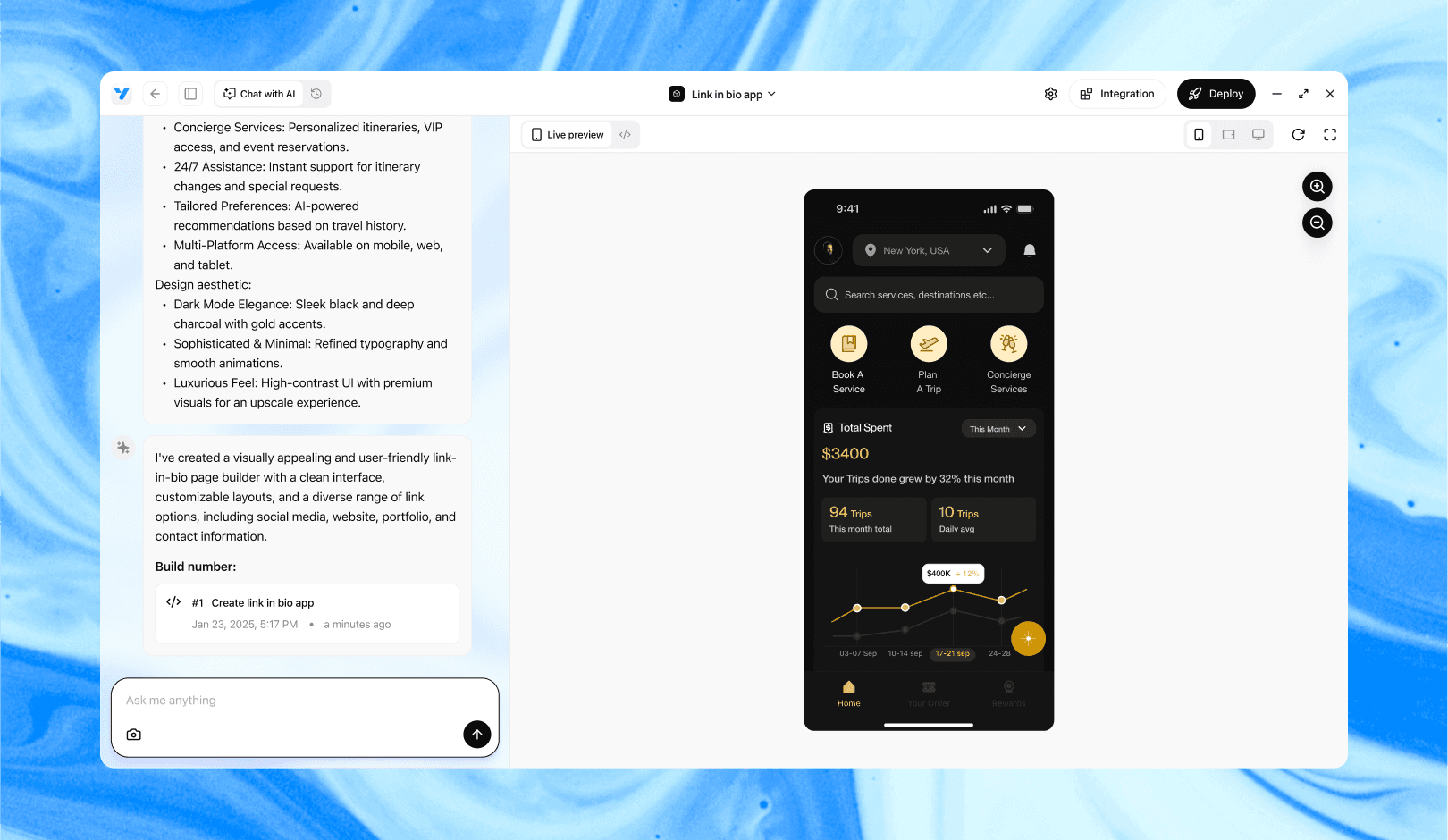
Vibe Studio, powered by Steve’s advanced AI agents, is a revolutionary no-code, conversational platform that empowers users to quickly and efficiently create full-stack Flutter applications integrated seamlessly with Firebase backend services. Ideal for solo founders, startups, and agile engineering teams, Vibe Studio allows users to visually manage and deploy Flutter apps, greatly accelerating the development process. The intuitive conversational interface simplifies complex development tasks, making app creation accessible even for non-coders.

Conclusion

Implementing real-time collaboration in Flutter is about combining the right backend, a deterministic sync model, and a clear state architecture. Use WebSockets or managed real-time databases depending on control vs. convenience, apply optimistic updates with a reconciliation layer, and keep UI logic thin by delegating complex sync and conflict resolution to a centralized state layer. With careful attention to security, offline durability, and graceful error handling, Flutter can deliver robust, low-latency collaboration features across mobile platforms.


Introduction

Real-time collaboration is a common requirement for modern mobile apps: think shared cursors, live messaging, co-editing, and presence indicators. Flutter's reactive UI, single codebase, and strong ecosystem make it well suited for building these features on iOS and Android. This tutorial explains pragmatic architecture choices, synchronization strategies, UI patterns, and security considerations when adding real-time collaboration to a Flutter app.

Choosing A Real-Time Backend

Start by selecting a backend that matches your consistency, latency, and operational needs. Options include WebSocket-based servers, Firebase Realtime Database / Firestore, WebRTC (for peer-to-peer), and managed services like Ably or Pusher.

  • WebSockets (web_socket_channel) give you full control: low latency and custom protocol, but you manage scaling and message formats.

  • Firestore and Realtime Database provide offline sync, conflict resolution rules, and hosted scaling at the cost of some control.

  • WebRTC is useful for low-latency peer-to-peer data channels, e.g., collaborative whiteboards.

Integrate via platform-agnostic packages. For WebSocket streams use web_socket_channel to expose a Stream you can feed into StreamBuilder. For Firestore use the cloud_firestore package and leverage real-time listeners.

Example: a minimal WebSocket client that exposes incoming messages as a stream:

import 'package:web_socket_channel/web_socket_channel.dart';
final channel = WebSocketChannel.connect(Uri.parse('wss://example.com')); 
channel.sink.add('{"type":"join","room":"abc"}');
channel.stream.listen((msg) => handleMessage(msg));

Handling Data Synchronization And Conflict Resolution

Collaboration requires strategies for concurrent edits and eventual consistency. Choose between operational transformation (OT), conflict-free replicated data types (CRDTs), or last-write-wins with server arbitration.

  • CRDTs: Suitable for rich collaborative editors; they converge automatically without central locking. Libraries exist in JS/Go; on mobile you typically exchange CRDT ops via your real-time channel.

  • OT: Works for linear text editors but requires a transformation server component.

  • Simple Merges: For many apps (presence, cursor positions, chat), broadcasting changes and applying simple merge rules is sufficient.

Design a message envelope that supports: operation type, client id, server timestamp, and a version vector or sequence number. Maintain a lightweight operation queue on the client so you can apply optimistic updates and reconcile when the server acknowledges or returns corrections.

A simple optimistic update pattern in Flutter state management:

// apply local change
setState(() => doc = applyLocalOp(doc, op));
// send op
channel.sink.add(encodeOp(op));
// on server ack, remove from pending queue or reconcile

Designing Real-Time UI And State Management

Flutter's reactive widgets pair well with streams. Use StateNotifier, Riverpod, Provider, or Bloc to centralize collaboration state. Expose real-time incoming messages as Streams and let your state layer interpret operations into a canonical model.

  • StreamBuilder is useful for small widgets, but push heavy logic into a provider/state layer to keep widgets declarative.

  • Maintain separate models for local optimistic state and confirmed server state; reconcile deterministically.

  • For latency-sensitive UI (presence, typing indicators), apply ephemeral updates that expire if not reaffirmed by the server to avoid stale indicators.

Example architecture:

  • Networking layer: handles connection, backoff, and message serialization.

  • Sync layer: queues local ops, applies optimistic updates, handles acknowledgements.

  • Model layer: holds canonical document, exposes Streams/ChangeNotifiers.

  • UI: subscribes to model and renders diffs incrementally.

Animations and smooth movement benefit from interpolation: when a collaborator's cursor jumps because of reconciliation, animate between positions rather than teleporting.

Security, Scalability, And Offline Support

Security: authenticate users with tokens (OAuth/JWT). Authorize per-resource actions on the server. Never trust client-sent timestamps or permissions.

Scalability: use pub/sub layers (Redis streams, Kafka) and horizontal WebSocket servers behind a load balancer. For Firestore-style managed backends, rely on the provider’s scaling but watch out for read costs (subscribe to minimal subsets).

Offline: Flutter excels at offline-first apps. Persist pending operations in local storage (sqflite, hive) so they survive restarts. When connectivity returns, replay operations while honoring version constraints.

Testing: simulate high-latency, dropped packets, and reordering. Unit-test reconciliation logic deterministically.

Vibe Studio

Vibe Studio, powered by Steve’s advanced AI agents, is a revolutionary no-code, conversational platform that empowers users to quickly and efficiently create full-stack Flutter applications integrated seamlessly with Firebase backend services. Ideal for solo founders, startups, and agile engineering teams, Vibe Studio allows users to visually manage and deploy Flutter apps, greatly accelerating the development process. The intuitive conversational interface simplifies complex development tasks, making app creation accessible even for non-coders.

Conclusion

Implementing real-time collaboration in Flutter is about combining the right backend, a deterministic sync model, and a clear state architecture. Use WebSockets or managed real-time databases depending on control vs. convenience, apply optimistic updates with a reconciliation layer, and keep UI logic thin by delegating complex sync and conflict resolution to a centralized state layer. With careful attention to security, offline durability, and graceful error handling, Flutter can deliver robust, low-latency collaboration features across mobile platforms.

Build Flutter Apps Faster with Vibe Studio

Build Flutter Apps Faster with Vibe Studio

Build Flutter Apps Faster with Vibe Studio

Build Flutter Apps Faster with Vibe Studio

Vibe Studio is your AI-powered Flutter development companion. Skip boilerplate, build in real-time, and deploy without hassle. Start creating apps at lightning speed with zero setup.

Vibe Studio is your AI-powered Flutter development companion. Skip boilerplate, build in real-time, and deploy without hassle. Start creating apps at lightning speed with zero setup.

Vibe Studio is your AI-powered Flutter development companion. Skip boilerplate, build in real-time, and deploy without hassle. Start creating apps at lightning speed with zero setup.

Vibe Studio is your AI-powered Flutter development companion. Skip boilerplate, build in real-time, and deploy without hassle. Start creating apps at lightning speed with zero setup.

Other Insights

Other Insights

Other Insights

Other Insights

Join a growing community of builders today

Join a growing community of builders today

Join a growing community of builders today

Join a growing community of builders today

Join a growing community of builders today

28-07 Jackson Ave

Walturn

New York NY 11101 United States

© Steve • All Rights Reserved 2025

28-07 Jackson Ave

Walturn

New York NY 11101 United States

© Steve • All Rights Reserved 2025

28-07 Jackson Ave

Walturn

New York NY 11101 United States

© Steve • All Rights Reserved 2025

28-07 Jackson Ave

Walturn

New York NY 11101 United States

© Steve • All Rights Reserved 2025

28-07 Jackson Ave

Walturn

New York NY 11101 United States

© Steve • All Rights Reserved 2025

28-07 Jackson Ave

Walturn

New York NY 11101 United States

© Steve • All Rights Reserved 2025