Using Flutter for Augmented Productivity Tools
Nov 13, 2025


Summary
Summary
Summary
Summary
This tutorial explains how to use Flutter for augmented productivity tools in mobile development: choose a clear architecture (Bloc/Provider/Riverpod), apply UI patterns (overlays, keyboard shortcuts), integrate native services (camera, notifications, native ML), and optimize performance with isolates, caching, and offline-first databases.
Key insights:
Key insights:
Key insights:
Key insights:
Choosing Architecture: Separate UI, domain services, and platform adapters so logic can run in isolates and be easily tested.
UI Patterns For Productivity: Use overlays, lightweight entry points, keyboard shortcuts, and virtualized lists to reduce friction.
Integrations And Native Services: Leverage plugins and MethodChannel for clipboard, camera/OCR, notifications, and local ML inference.
Performance And Offline: Adopt offline-first storage, move heavy work to compute/isolate, cache aggressively, and profile early.
Developer Tooling And Testing: Mock repositories, test state managers in isolation, and use profiling tools to catch UI jank.
Introduction
Augmented productivity tools extend core workflows on mobile devices: quick capture, context-aware actions, persistent overlays, background processing, and fast search. Flutter is an excellent choice for building these tools because it combines rapid UI iteration, performant rendering, and native integration capabilities that matter in mobile development. This tutorial outlines architecture, UI patterns, integrations, and performance practices to build practical productivity features with Flutter.
Choosing Architecture
Choose a predictable state architecture early. For productivity apps, consistent state handling reduces UI flakiness when dealing with background tasks and platform events. Use Bloc, Provider, or Riverpod depending on team preference. Separate concerns: UI widgets, domain services (sync, indexing), repositories (storage, network), and platform adapters for native capabilities.
Keep business logic pure so it can run in an isolate or on the server.
Use streams for ephemeral event flows (clipboard changes, external intents).
Persist indexable content to SQLite or sembast for fast local search.
Example pattern: a Repository exposes async methods and a Cubit/Notifier exposes view state. Tests then mock repositories to validate UI flows.
UI Patterns For Productivity
Productivity UIs rely on speed and minimal friction. Focus on these patterns:
Lightweight Entry Points: Floating Quick Actions, home screen shortcuts, and app shortcuts that take users directly to a minimal entry UI.
Overlays and Picture-in-Picture: Use OverlayEntry for in-app overlays and platform APIs for PiP where supported to keep tools accessible while multitasking.
Keyboard and Gesture First: Support hardware keyboard shortcuts, tab navigation, and swipe gestures to speed frequent tasks.
Dynamic Lists: Use ListView.builder, SliverList, and item virtualization for large result sets.
Keep widgets small and composable; prefer const constructors and value objects for predictable rebuilds.
Integrations And Native Services
Productivity features depend on platform integrations. Flutter shines with its plugin ecosystem and platform channels for custom native code.
Clipboard & Intents: Listen to clipboard changes via platform channels or plugins to offer quick actions.
Camera and OCR: Use camera and ML plugins (e.g., google_ml_kit) for capture-and-scan flows; process frames selectively to save battery.
Notifications & Background Tasks: Use flutter_local_notifications for actionable notifications and WorkManager (Android) or BackgroundTasks (iOS) via plugins for scheduled sync.
Local ML Inference: Use tflite_flutter for on-device inference to categorize or extract metadata without round trips.
Keep native calls batched and asynchronous. Use MethodChannel for bespoke native functionality and document contracts clearly.
Small code example: quick overlay entry that shows a compact note input.
import 'package:flutter/material.dart';
OverlayEntry buildQuickNoteOverlay(BuildContext ctx) => OverlayEntry(
builder: (_) => Positioned(top: 80, right: 16, child: Material(
elevation: 6,
child: SizedBox(width: 320, child: Padding(
padding: EdgeInsets.all(8), child: TextField(autofocus: true),
)),
)),
);Performance And Offline
Productivity tools must be fast, reliable offline, and robust under memory pressure.
Offline-First: Use a local database (SQLite) as the source of truth and sync changes in the background. Implement conflict resolution strategies that favor user intent timestamps.
Minimize Jank: Use const widgets, avoid expensive work on the UI thread, and leverage compute or isolates for CPU-heavy tasks (indexing, OCR post-processing).
Caching: Cache thumbnails, computed metadata, and search indices. Evict based on size and last access.
Instrumentation: Add simple telemetry for slow frames, long GC pauses, and battery-intensive features. Use flutter_devtools and profile builds early.
Example: offload heavy text indexing to compute to prevent UI stalls.
import 'package:flutter/foundation.dart';
Future<List<int>> buildIndex(List<String> docs) => compute(_indexWorker, docs);
List<int> _indexWorker(List<String> docs) { /* build compact index */ return [docs.length]; }Vibe Studio

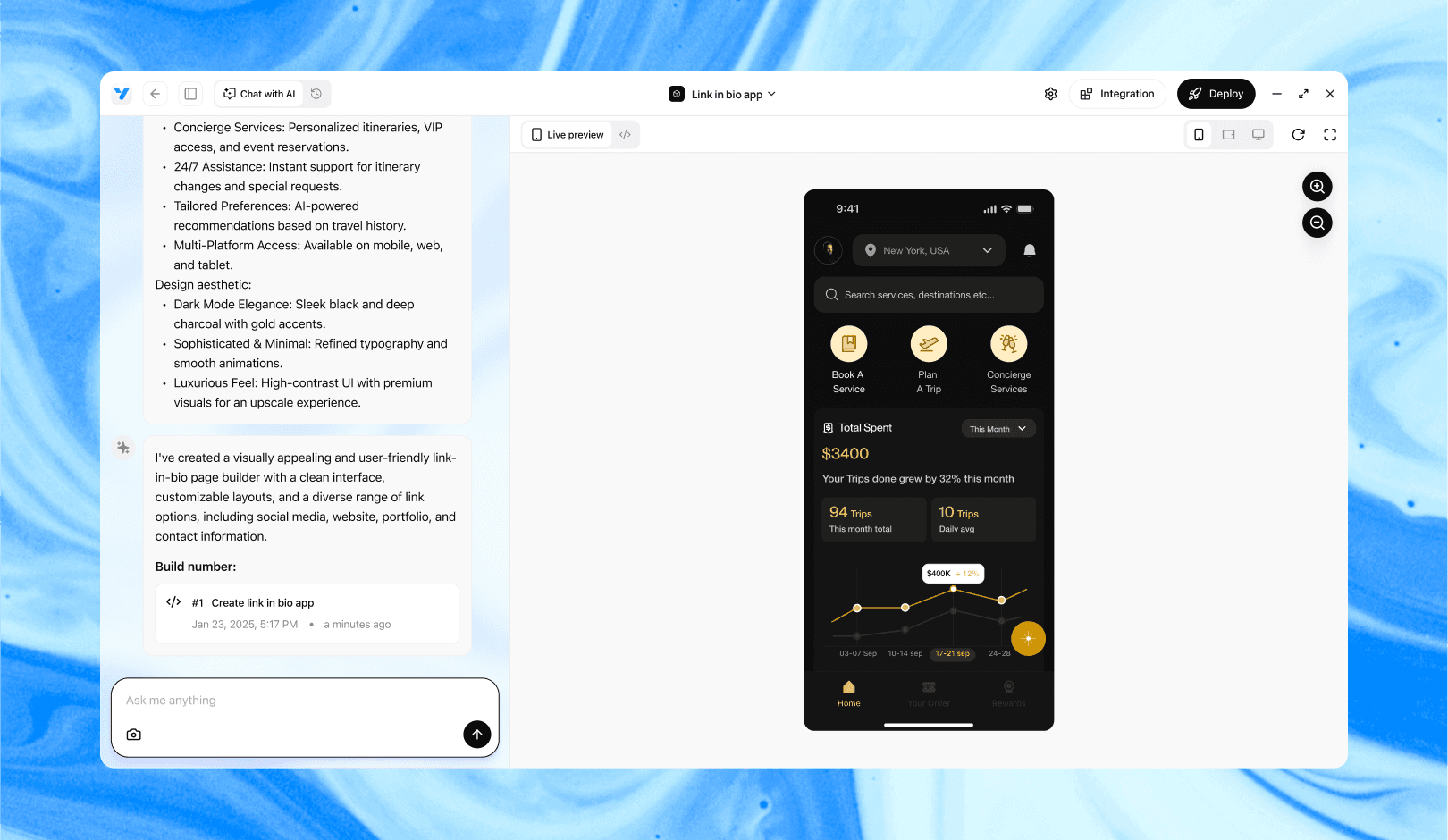
Vibe Studio, powered by Steve’s advanced AI agents, is a revolutionary no-code, conversational platform that empowers users to quickly and efficiently create full-stack Flutter applications integrated seamlessly with Firebase backend services. Ideal for solo founders, startups, and agile engineering teams, Vibe Studio allows users to visually manage and deploy Flutter apps, greatly accelerating the development process. The intuitive conversational interface simplifies complex development tasks, making app creation accessible even for non-coders.
Conclusion
Flutter provides a productive platform for building augmented productivity tools in mobile development. Prioritize a clear architecture, small composable widgets, tight native integrations, and background-capable, offline-first designs. Use isolates and efficient list patterns to keep UI responsiveness high. With these patterns, you can deliver tools that accelerate daily workflows while remaining maintainable and testable across platforms.

Introduction
Augmented productivity tools extend core workflows on mobile devices: quick capture, context-aware actions, persistent overlays, background processing, and fast search. Flutter is an excellent choice for building these tools because it combines rapid UI iteration, performant rendering, and native integration capabilities that matter in mobile development. This tutorial outlines architecture, UI patterns, integrations, and performance practices to build practical productivity features with Flutter.
Choosing Architecture
Choose a predictable state architecture early. For productivity apps, consistent state handling reduces UI flakiness when dealing with background tasks and platform events. Use Bloc, Provider, or Riverpod depending on team preference. Separate concerns: UI widgets, domain services (sync, indexing), repositories (storage, network), and platform adapters for native capabilities.
Keep business logic pure so it can run in an isolate or on the server.
Use streams for ephemeral event flows (clipboard changes, external intents).
Persist indexable content to SQLite or sembast for fast local search.
Example pattern: a Repository exposes async methods and a Cubit/Notifier exposes view state. Tests then mock repositories to validate UI flows.
UI Patterns For Productivity
Productivity UIs rely on speed and minimal friction. Focus on these patterns:
Lightweight Entry Points: Floating Quick Actions, home screen shortcuts, and app shortcuts that take users directly to a minimal entry UI.
Overlays and Picture-in-Picture: Use OverlayEntry for in-app overlays and platform APIs for PiP where supported to keep tools accessible while multitasking.
Keyboard and Gesture First: Support hardware keyboard shortcuts, tab navigation, and swipe gestures to speed frequent tasks.
Dynamic Lists: Use ListView.builder, SliverList, and item virtualization for large result sets.
Keep widgets small and composable; prefer const constructors and value objects for predictable rebuilds.
Integrations And Native Services
Productivity features depend on platform integrations. Flutter shines with its plugin ecosystem and platform channels for custom native code.
Clipboard & Intents: Listen to clipboard changes via platform channels or plugins to offer quick actions.
Camera and OCR: Use camera and ML plugins (e.g., google_ml_kit) for capture-and-scan flows; process frames selectively to save battery.
Notifications & Background Tasks: Use flutter_local_notifications for actionable notifications and WorkManager (Android) or BackgroundTasks (iOS) via plugins for scheduled sync.
Local ML Inference: Use tflite_flutter for on-device inference to categorize or extract metadata without round trips.
Keep native calls batched and asynchronous. Use MethodChannel for bespoke native functionality and document contracts clearly.
Small code example: quick overlay entry that shows a compact note input.
import 'package:flutter/material.dart';
OverlayEntry buildQuickNoteOverlay(BuildContext ctx) => OverlayEntry(
builder: (_) => Positioned(top: 80, right: 16, child: Material(
elevation: 6,
child: SizedBox(width: 320, child: Padding(
padding: EdgeInsets.all(8), child: TextField(autofocus: true),
)),
)),
);Performance And Offline
Productivity tools must be fast, reliable offline, and robust under memory pressure.
Offline-First: Use a local database (SQLite) as the source of truth and sync changes in the background. Implement conflict resolution strategies that favor user intent timestamps.
Minimize Jank: Use const widgets, avoid expensive work on the UI thread, and leverage compute or isolates for CPU-heavy tasks (indexing, OCR post-processing).
Caching: Cache thumbnails, computed metadata, and search indices. Evict based on size and last access.
Instrumentation: Add simple telemetry for slow frames, long GC pauses, and battery-intensive features. Use flutter_devtools and profile builds early.
Example: offload heavy text indexing to compute to prevent UI stalls.
import 'package:flutter/foundation.dart';
Future<List<int>> buildIndex(List<String> docs) => compute(_indexWorker, docs);
List<int> _indexWorker(List<String> docs) { /* build compact index */ return [docs.length]; }Vibe Studio

Vibe Studio, powered by Steve’s advanced AI agents, is a revolutionary no-code, conversational platform that empowers users to quickly and efficiently create full-stack Flutter applications integrated seamlessly with Firebase backend services. Ideal for solo founders, startups, and agile engineering teams, Vibe Studio allows users to visually manage and deploy Flutter apps, greatly accelerating the development process. The intuitive conversational interface simplifies complex development tasks, making app creation accessible even for non-coders.
Conclusion
Flutter provides a productive platform for building augmented productivity tools in mobile development. Prioritize a clear architecture, small composable widgets, tight native integrations, and background-capable, offline-first designs. Use isolates and efficient list patterns to keep UI responsiveness high. With these patterns, you can deliver tools that accelerate daily workflows while remaining maintainable and testable across platforms.
Build Flutter Apps Faster with Vibe Studio
Vibe Studio is your AI-powered Flutter development companion. Skip boilerplate, build in real-time, and deploy without hassle. Start creating apps at lightning speed with zero setup.