Using Flutter DevTools To Debug Rendering Issues

Summary
Summary
Summary
Summary

This tutorial explains how to use Flutter DevTools to debug rendering issues in mobile development. It covers the Widget Inspector and Layout Explorer for layout problems, the Performance tab and Repaint Rainbow for frame and repaint diagnosis, debug painting flags and render tree dumps for visual and textual inspection, and a repeatable workflow for locating and fixing overflows and jank.

This tutorial explains how to use Flutter DevTools to debug rendering issues in mobile development. It covers the Widget Inspector and Layout Explorer for layout problems, the Performance tab and Repaint Rainbow for frame and repaint diagnosis, debug painting flags and render tree dumps for visual and textual inspection, and a repeatable workflow for locating and fixing overflows and jank.

This tutorial explains how to use Flutter DevTools to debug rendering issues in mobile development. It covers the Widget Inspector and Layout Explorer for layout problems, the Performance tab and Repaint Rainbow for frame and repaint diagnosis, debug painting flags and render tree dumps for visual and textual inspection, and a repeatable workflow for locating and fixing overflows and jank.

This tutorial explains how to use Flutter DevTools to debug rendering issues in mobile development. It covers the Widget Inspector and Layout Explorer for layout problems, the Performance tab and Repaint Rainbow for frame and repaint diagnosis, debug painting flags and render tree dumps for visual and textual inspection, and a repeatable workflow for locating and fixing overflows and jank.

Key insights:
Key insights:
Key insights:
Key insights:
  • Getting Started With DevTools: Open DevTools from your IDE, reproduce the issue, and enable tracking to make widget trees and creation locations easier to read.

  • Inspecting Layouts With The Widget Inspector: Use the inspector and Layout Explorer to inspect sizes, constraints, and parent-child relationships to find overflow causes.

  • Profiling Frame Rendering And Repaints: Capture a performance trace to separate build vs raster costs and use Repaint Rainbow to find excessive repaints.

  • Using Debug Painting And Dumps: Toggle debugPaintSizeEnabled and call debugDumpRenderTree for visual overlays and textual render-tree snapshots.

  • Practical Debugging Workflow: Reproduce, select, measure (Inspector/Performance), apply targeted fixes (ConstrainedBox, RepaintBoundary), and verify with new traces.

Introduction

Rendering issues—overflows, unexpected layout, janky frames—are common friction points in Flutter mobile development. Flutter DevTools provides visual and programmatic tools that make these problems diagnosable without guesswork. This tutorial focuses on practical, code-forward techniques to find and fix rendering problems using DevTools plus a few quick debug helpers inside your app.

Getting Started With DevTools

Open DevTools from Android Studio, VS Code, or by running flutter run and clicking the Observatory/DevTools link in the console. DevTools’ two panels you will use most are the Inspector and the Performance tools. Before digging in, reproduce the rendering problem so DevTools captures the faulty state.

Enable "Track widget creation" in your IDE or in DevTools if you need historical context about where widgets were created — this improves tree readability. Run the app in debug mode when you need layout diagnostics; for performance traces, use profile mode to avoid debug overhead.

Inspecting Layouts With The Widget Inspector

The Widget Inspector is the first stop. Use the select widget mode (tap-select on device or click in the tree) to pick the exact widget that looks wrong. Key properties to inspect:

  • Size and constraints: DevTools shows the computed size and incoming constraints. A mismatch (tight constraints but a child asking for infinite size) is a common cause of overflow.

  • Parent and child relationships: Ascend the tree to see if a parent’s layout (e.g., Row, Column, ListView) is forcing unexpected behavior.

  • Render object type: Sometimes a widget is replaced by a RenderObject that behaves differently — DevTools shows the underlying render object.

Use the Layout Explorer (in the Inspector) to see exact padding, margin, alignment, and layout constraints. When a Row or Column overflows, the Layout Explorer shows which child exceeded the space or which constraints were unbounded.

Profiling Frame Rendering And Repaints

If the UI is janky or frames are dropped, capture a trace in the Performance tab. Record while reproducing the animation or scroll. Look for:

  • Frame build vs raster times: Excessive build time indicates expensive widget rebuilds or heavy layout work. High raster time points to expensive painting or large texture uploads.

  • Skipped frames and peaks: Expand long frames to inspect timeline events: layout, paint, compositing, GPU upload.

  • Repaint frequency: Use the "Repaint Rainbow" (in-app debug flag or via DevTools) to see areas that repaint excessively. Frequent repaints on large areas mean you should optimize to repaint smaller regions or cache via RepaintBoundary.

Tip: In code, wrap expensive subtrees with RepaintBoundary and verify effect in DevTools: you should see fewer repaint highlights and lower raster cost for subsequent frames.

Using Debug Painting And Dumps

When layout visuals are unclear, turn on debug painting. You can toggle debug paint flags from DevTools or inside code for quick testing. These expose padding boxes, baselines, clip regions, and more.

Example: Enable debug painting at runtime for quick diagnostics.

import 'package:flutter/rendering.dart';

void enableDebugPaint() {
  debugPaintSizeEnabled = true; // shows boxes for each render object
}

Use the debug dump helpers to produce a textual snapshot of the render tree in the console. This is useful for automated tests or when you cannot attach DevTools.

import 'package:flutter/widgets.dart';

void dumpTree() {
  debugDumpRenderTree();
}

Run these functions from a button or dev-only code path. Inspect the console output to see which render object has constraints that lead to overflow or which widget has unbounded size requests.

Practical Debugging Workflow

  1. Reproduce the issue and select the offending widget in the Inspector. Confirm size and constraint mismatch.

  2. If the problem is layout, use the Layout Explorer and debugPaintSizeEnabled to reveal padding/margins and alignments.

  3. If performance is the problem, record a Performance trace, inspect frame breakdown, and use Repaint Rainbow to identify repaint hot spots.

  4. Apply targeted fixes: constrain an unbounded child (e.g., give a ListView a size or wrap in Expanded/ConstrainedBox), insert RepaintBoundary, or reduce expensive build/paint work.

  5. Re-run the trace and inspector checks to verify the issue is resolved.

Vibe Studio
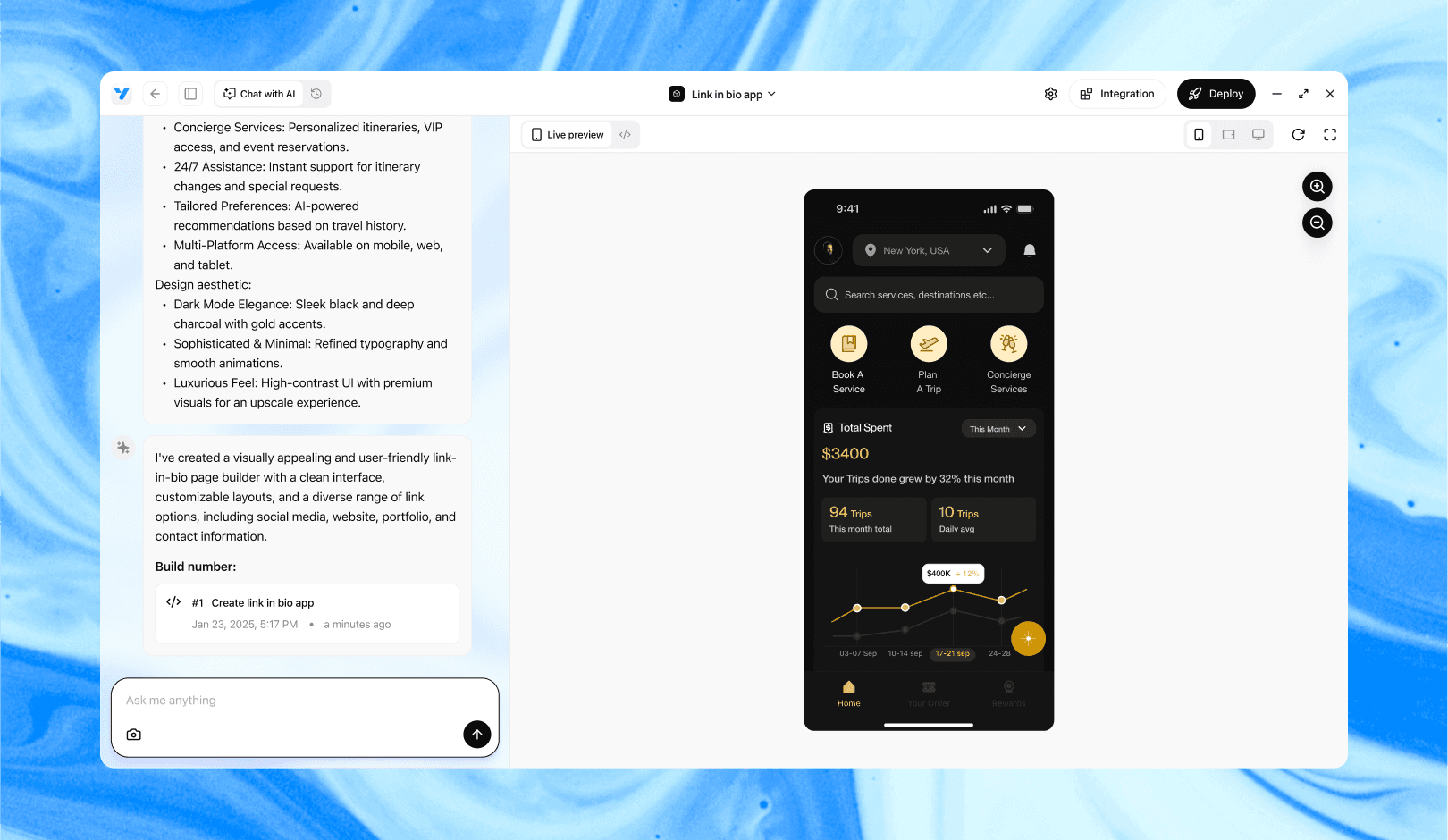
Vibe Studio, powered by Steve’s advanced AI agents, is a revolutionary no-code, conversational platform that empowers users to quickly and efficiently create full-stack Flutter applications integrated seamlessly with Firebase backend services. Ideal for solo founders, startups, and agile engineering teams, Vibe Studio allows users to visually manage and deploy Flutter apps, greatly accelerating the development process. The intuitive conversational interface simplifies complex development tasks, making app creation accessible even for non-coders.

Conclusion

DevTools gives you a precise feedback loop: select, inspect, measure, and verify. Combining the Widget Inspector, Layout Explorer, Performance traces, and debug paints helps you find the root cause of overflows, misalignment, and jank. Use debug dumps for headless diagnostics and always validate fixes with a fresh DevTools capture in the same run-mode (debug for layout, profile for performance).


Introduction

Rendering issues—overflows, unexpected layout, janky frames—are common friction points in Flutter mobile development. Flutter DevTools provides visual and programmatic tools that make these problems diagnosable without guesswork. This tutorial focuses on practical, code-forward techniques to find and fix rendering problems using DevTools plus a few quick debug helpers inside your app.

Getting Started With DevTools

Open DevTools from Android Studio, VS Code, or by running flutter run and clicking the Observatory/DevTools link in the console. DevTools’ two panels you will use most are the Inspector and the Performance tools. Before digging in, reproduce the rendering problem so DevTools captures the faulty state.

Enable "Track widget creation" in your IDE or in DevTools if you need historical context about where widgets were created — this improves tree readability. Run the app in debug mode when you need layout diagnostics; for performance traces, use profile mode to avoid debug overhead.

Inspecting Layouts With The Widget Inspector

The Widget Inspector is the first stop. Use the select widget mode (tap-select on device or click in the tree) to pick the exact widget that looks wrong. Key properties to inspect:

  • Size and constraints: DevTools shows the computed size and incoming constraints. A mismatch (tight constraints but a child asking for infinite size) is a common cause of overflow.

  • Parent and child relationships: Ascend the tree to see if a parent’s layout (e.g., Row, Column, ListView) is forcing unexpected behavior.

  • Render object type: Sometimes a widget is replaced by a RenderObject that behaves differently — DevTools shows the underlying render object.

Use the Layout Explorer (in the Inspector) to see exact padding, margin, alignment, and layout constraints. When a Row or Column overflows, the Layout Explorer shows which child exceeded the space or which constraints were unbounded.

Profiling Frame Rendering And Repaints

If the UI is janky or frames are dropped, capture a trace in the Performance tab. Record while reproducing the animation or scroll. Look for:

  • Frame build vs raster times: Excessive build time indicates expensive widget rebuilds or heavy layout work. High raster time points to expensive painting or large texture uploads.

  • Skipped frames and peaks: Expand long frames to inspect timeline events: layout, paint, compositing, GPU upload.

  • Repaint frequency: Use the "Repaint Rainbow" (in-app debug flag or via DevTools) to see areas that repaint excessively. Frequent repaints on large areas mean you should optimize to repaint smaller regions or cache via RepaintBoundary.

Tip: In code, wrap expensive subtrees with RepaintBoundary and verify effect in DevTools: you should see fewer repaint highlights and lower raster cost for subsequent frames.

Using Debug Painting And Dumps

When layout visuals are unclear, turn on debug painting. You can toggle debug paint flags from DevTools or inside code for quick testing. These expose padding boxes, baselines, clip regions, and more.

Example: Enable debug painting at runtime for quick diagnostics.

import 'package:flutter/rendering.dart';

void enableDebugPaint() {
  debugPaintSizeEnabled = true; // shows boxes for each render object
}

Use the debug dump helpers to produce a textual snapshot of the render tree in the console. This is useful for automated tests or when you cannot attach DevTools.

import 'package:flutter/widgets.dart';

void dumpTree() {
  debugDumpRenderTree();
}

Run these functions from a button or dev-only code path. Inspect the console output to see which render object has constraints that lead to overflow or which widget has unbounded size requests.

Practical Debugging Workflow

  1. Reproduce the issue and select the offending widget in the Inspector. Confirm size and constraint mismatch.

  2. If the problem is layout, use the Layout Explorer and debugPaintSizeEnabled to reveal padding/margins and alignments.

  3. If performance is the problem, record a Performance trace, inspect frame breakdown, and use Repaint Rainbow to identify repaint hot spots.

  4. Apply targeted fixes: constrain an unbounded child (e.g., give a ListView a size or wrap in Expanded/ConstrainedBox), insert RepaintBoundary, or reduce expensive build/paint work.

  5. Re-run the trace and inspector checks to verify the issue is resolved.

Vibe Studio

Vibe Studio, powered by Steve’s advanced AI agents, is a revolutionary no-code, conversational platform that empowers users to quickly and efficiently create full-stack Flutter applications integrated seamlessly with Firebase backend services. Ideal for solo founders, startups, and agile engineering teams, Vibe Studio allows users to visually manage and deploy Flutter apps, greatly accelerating the development process. The intuitive conversational interface simplifies complex development tasks, making app creation accessible even for non-coders.

Conclusion

DevTools gives you a precise feedback loop: select, inspect, measure, and verify. Combining the Widget Inspector, Layout Explorer, Performance traces, and debug paints helps you find the root cause of overflows, misalignment, and jank. Use debug dumps for headless diagnostics and always validate fixes with a fresh DevTools capture in the same run-mode (debug for layout, profile for performance).

Build Flutter Apps Faster with Vibe Studio

Build Flutter Apps Faster with Vibe Studio

Build Flutter Apps Faster with Vibe Studio

Build Flutter Apps Faster with Vibe Studio

Vibe Studio is your AI-powered Flutter development companion. Skip boilerplate, build in real-time, and deploy without hassle. Start creating apps at lightning speed with zero setup.

Vibe Studio is your AI-powered Flutter development companion. Skip boilerplate, build in real-time, and deploy without hassle. Start creating apps at lightning speed with zero setup.

Vibe Studio is your AI-powered Flutter development companion. Skip boilerplate, build in real-time, and deploy without hassle. Start creating apps at lightning speed with zero setup.

Vibe Studio is your AI-powered Flutter development companion. Skip boilerplate, build in real-time, and deploy without hassle. Start creating apps at lightning speed with zero setup.

Other Insights

Other Insights

Other Insights

Other Insights

Join a growing community of builders today

Join a growing community of builders today

Join a growing community of builders today

Join a growing community of builders today

Join a growing community of builders today

28-07 Jackson Ave

Walturn

New York NY 11101 United States

© Steve • All Rights Reserved 2025

28-07 Jackson Ave

Walturn

New York NY 11101 United States

© Steve • All Rights Reserved 2025

28-07 Jackson Ave

Walturn

New York NY 11101 United States

© Steve • All Rights Reserved 2025

28-07 Jackson Ave

Walturn

New York NY 11101 United States

© Steve • All Rights Reserved 2025

28-07 Jackson Ave

Walturn

New York NY 11101 United States

© Steve • All Rights Reserved 2025

28-07 Jackson Ave

Walturn

New York NY 11101 United States

© Steve • All Rights Reserved 2025