Using Firebase Remote Config To Control UI and Features
Dec 2, 2025


Summary
Summary
Summary
Summary
This tutorial covers using Firebase Remote Config with Flutter for mobile development: setup, initialization, fetch/activate flows, patterns to control UI and features, caching strategies, and best practices for safe rollouts and testing.
Key insights:
Key insights:
Key insights:
Key insights:
Setting Up Remote Config In Flutter: Install firebase_core and firebase_remote_config, set local defaults, and initialize early in main().
Initializing, Fetching, And Activating Config: Use fetchAndActivate with appropriate minimum fetch intervals and handle failures with fallbacks.
Using Remote Config To Control UI And Features: Use booleans, strings, numbers, or JSON to toggle features, vary UI copy, and switch layouts dynamically.
Caching, Safety, And Best Practices: Set production-friendly fetch intervals, validate remote values, and never store secrets in Remote Config.
Rollouts And Instrumentation: Target segments with conditions, preview on devices, log activations, and combine with A/B testing for data-driven decisions.
Introduction
Firebase Remote Config is a lightweight, scalable way to change the behavior and appearance of a Flutter app without shipping a new binary. For mobile development teams that want rapid iteration, server-driven flags and UI parameters let you run experiments, toggle features, or tailor content per audience. This tutorial shows setup, common patterns, and safe practices to control UI and features from Remote Config in Flutter.
Setting Up Remote Config In Flutter
Prerequisites: a Firebase project, Android/iOS app registration, and the FlutterFire CLI. Add firebase_core and firebase_remote_config to pubspec.yaml and follow platform-specific installation steps (Google Services files, plist changes).
After installing packages, initialize Firebase early in your app (typically in main()). Then obtain the RemoteConfig instance. Provide sensible defaults locally so the app has a deterministic UI when the network is unavailable.
Initializing, Fetching, And Activating Config
Initialization should: 1) set default parameter values, 2) fetch remote values with an appropriate minimum fetch interval, and 3) activate fetched configs. During development you can set a short fetch interval; in production increase it to reduce backend and battery impact.
Example initialization in main():
import 'package:firebase_core/firebase_core.dart';
import 'package:firebase_remote_config/firebase_remote_config.dart';
void main() async {
WidgetsFlutterBinding.ensureInitialized();
await Firebase.initializeApp();
final rc = FirebaseRemoteConfig.instance;
await rc.setDefaults({
'show_promo_banner': false,
'promo_text': 'Welcome!'
});
runApp(MyApp(remoteConfig: rc));
}To fetch and activate values at runtime, call fetchAndActivate and handle errors. Use try/catch and fallback to defaults to avoid crashes.
final updated = await remoteConfig.fetchAndActivate();
if (updated) {
// remote values are now active and can be read
}
final showBanner = remoteConfig.getBool('show_promo_banner');Using Remote Config To Control UI And Features
Remote Config parameters map to values your code reads to decide what to display or whether to enable a feature. Common parameter types: boolean flags (feature toggles), strings (UI text), numbers (thresholds), and JSON (rich configuration).
Examples of UI and feature control:
Feature Flag: Toggle a new payment flow by reading a boolean and routing users conditionally.
UI Copy: Change button labels or onboarding message using string parameters to avoid submitting new builds for copy updates.
Layout Variants: Provide a parameter like layout_version with values "A" or "B" to run server-side experiments and adjust widgets accordingly.
Remote Thresholds: Change cache sizes, poll intervals, or other numeric limits without re-releasing.
Implementation tips:
Read params in a top-level state or provider so UI widgets can reactively rebuild when values change.
For critical flows, gate access with local validation; treat remote config as advisory unless you need hard enforcement.
Use descriptive parameter names and document types and default values in your team repo.
Code pattern (simplified): fetch on app resume or cold start, then notify listeners:
Store RemoteConfig values in a ChangeNotifier or Riverpod provider.
Widget tree reads provider and rebuilds when values change.
Caching, Safety, And Best Practices
Minimum Fetch Interval: In development, use a small interval (e.g., 0 for immediate testing). In production, set minutes or hours to avoid excessive calls.
Defaults And Fallbacks: Always set defaults locally and validate remote values (type checks, bounds). Never assume remote config contains valid JSON or within-range numbers.
Rollouts And Segments: Use Remote Config conditions to target segments (app version, user language, audience) for staged rollouts.
Logging And Telemetry: Log when a new config is activated; correlate behavior changes in analytics to diagnose production issues.
Security: Remote Config should not be used for secrets or access control. Treat it as non-sensitive configuration only.
Testing: Use the Firebase console to create conditional values and preview specific devices. Combine Remote Config with A/B testing for statistically backed UI decisions.
Vibe Studio
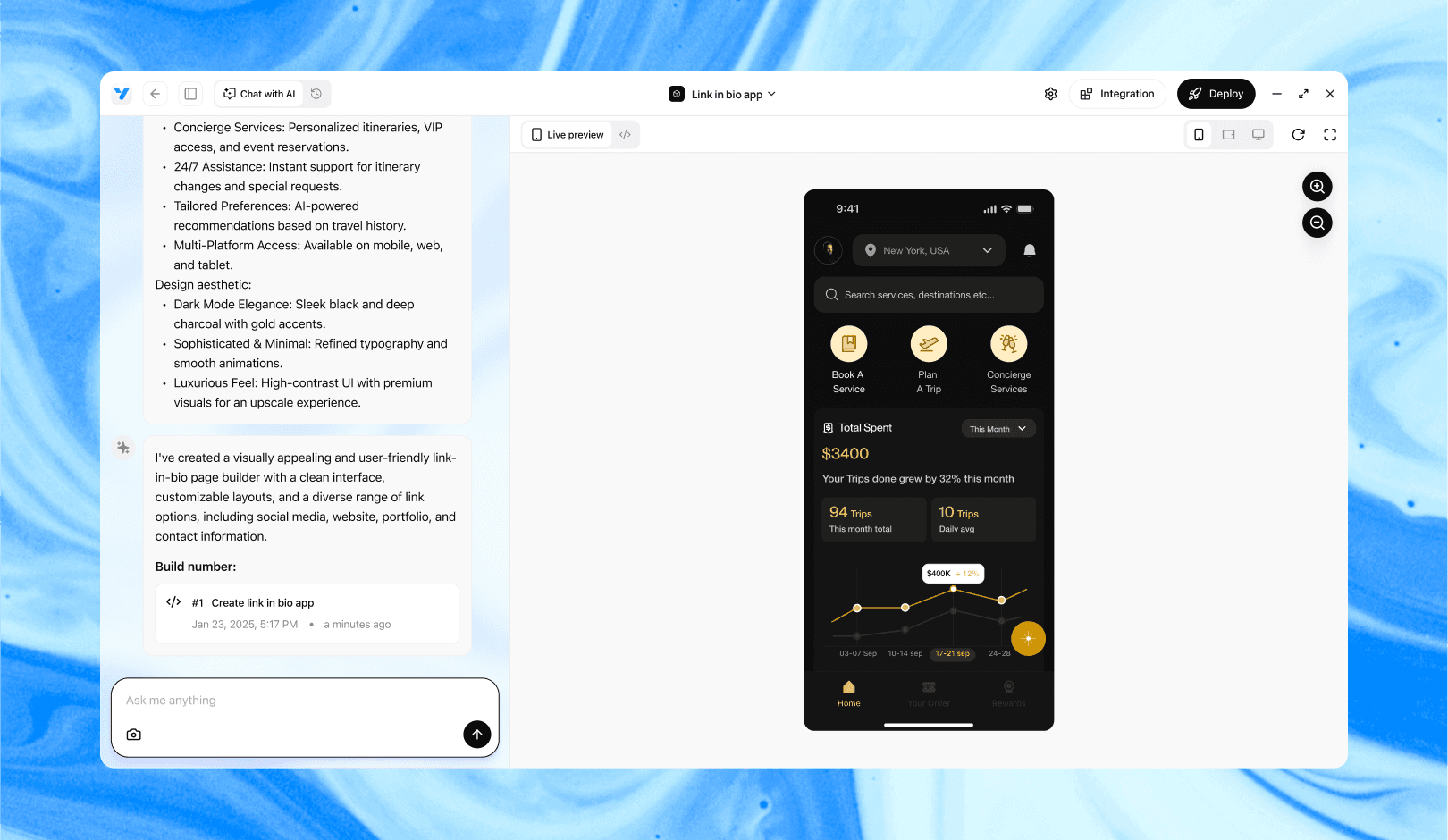
Vibe Studio, powered by Steve’s advanced AI agents, is a revolutionary no-code, conversational platform that empowers users to quickly and efficiently create full-stack Flutter applications integrated seamlessly with Firebase backend services. Ideal for solo founders, startups, and agile engineering teams, Vibe Studio allows users to visually manage and deploy Flutter apps, greatly accelerating the development process. The intuitive conversational interface simplifies complex development tasks, making app creation accessible even for non-coders.
Conclusion
Firebase Remote Config enables powerful server-driven control over UI and features for Flutter mobile development. Initialize with sensible defaults, fetch and activate responsibly, and integrate values into a reactive state system. Use feature flags, targeted rollouts, and careful validation to iterate quickly without frequent app releases. Remote Config is ideal for copy changes, UI experiments, and controlled feature launches, but avoid storing secrets or critical enforcement logic in it.

Introduction
Firebase Remote Config is a lightweight, scalable way to change the behavior and appearance of a Flutter app without shipping a new binary. For mobile development teams that want rapid iteration, server-driven flags and UI parameters let you run experiments, toggle features, or tailor content per audience. This tutorial shows setup, common patterns, and safe practices to control UI and features from Remote Config in Flutter.
Setting Up Remote Config In Flutter
Prerequisites: a Firebase project, Android/iOS app registration, and the FlutterFire CLI. Add firebase_core and firebase_remote_config to pubspec.yaml and follow platform-specific installation steps (Google Services files, plist changes).
After installing packages, initialize Firebase early in your app (typically in main()). Then obtain the RemoteConfig instance. Provide sensible defaults locally so the app has a deterministic UI when the network is unavailable.
Initializing, Fetching, And Activating Config
Initialization should: 1) set default parameter values, 2) fetch remote values with an appropriate minimum fetch interval, and 3) activate fetched configs. During development you can set a short fetch interval; in production increase it to reduce backend and battery impact.
Example initialization in main():
import 'package:firebase_core/firebase_core.dart';
import 'package:firebase_remote_config/firebase_remote_config.dart';
void main() async {
WidgetsFlutterBinding.ensureInitialized();
await Firebase.initializeApp();
final rc = FirebaseRemoteConfig.instance;
await rc.setDefaults({
'show_promo_banner': false,
'promo_text': 'Welcome!'
});
runApp(MyApp(remoteConfig: rc));
}To fetch and activate values at runtime, call fetchAndActivate and handle errors. Use try/catch and fallback to defaults to avoid crashes.
final updated = await remoteConfig.fetchAndActivate();
if (updated) {
// remote values are now active and can be read
}
final showBanner = remoteConfig.getBool('show_promo_banner');Using Remote Config To Control UI And Features
Remote Config parameters map to values your code reads to decide what to display or whether to enable a feature. Common parameter types: boolean flags (feature toggles), strings (UI text), numbers (thresholds), and JSON (rich configuration).
Examples of UI and feature control:
Feature Flag: Toggle a new payment flow by reading a boolean and routing users conditionally.
UI Copy: Change button labels or onboarding message using string parameters to avoid submitting new builds for copy updates.
Layout Variants: Provide a parameter like layout_version with values "A" or "B" to run server-side experiments and adjust widgets accordingly.
Remote Thresholds: Change cache sizes, poll intervals, or other numeric limits without re-releasing.
Implementation tips:
Read params in a top-level state or provider so UI widgets can reactively rebuild when values change.
For critical flows, gate access with local validation; treat remote config as advisory unless you need hard enforcement.
Use descriptive parameter names and document types and default values in your team repo.
Code pattern (simplified): fetch on app resume or cold start, then notify listeners:
Store RemoteConfig values in a ChangeNotifier or Riverpod provider.
Widget tree reads provider and rebuilds when values change.
Caching, Safety, And Best Practices
Minimum Fetch Interval: In development, use a small interval (e.g., 0 for immediate testing). In production, set minutes or hours to avoid excessive calls.
Defaults And Fallbacks: Always set defaults locally and validate remote values (type checks, bounds). Never assume remote config contains valid JSON or within-range numbers.
Rollouts And Segments: Use Remote Config conditions to target segments (app version, user language, audience) for staged rollouts.
Logging And Telemetry: Log when a new config is activated; correlate behavior changes in analytics to diagnose production issues.
Security: Remote Config should not be used for secrets or access control. Treat it as non-sensitive configuration only.
Testing: Use the Firebase console to create conditional values and preview specific devices. Combine Remote Config with A/B testing for statistically backed UI decisions.
Vibe Studio

Vibe Studio, powered by Steve’s advanced AI agents, is a revolutionary no-code, conversational platform that empowers users to quickly and efficiently create full-stack Flutter applications integrated seamlessly with Firebase backend services. Ideal for solo founders, startups, and agile engineering teams, Vibe Studio allows users to visually manage and deploy Flutter apps, greatly accelerating the development process. The intuitive conversational interface simplifies complex development tasks, making app creation accessible even for non-coders.
Conclusion
Firebase Remote Config enables powerful server-driven control over UI and features for Flutter mobile development. Initialize with sensible defaults, fetch and activate responsibly, and integrate values into a reactive state system. Use feature flags, targeted rollouts, and careful validation to iterate quickly without frequent app releases. Remote Config is ideal for copy changes, UI experiments, and controlled feature launches, but avoid storing secrets or critical enforcement logic in it.

Build Flutter Apps Faster with Vibe Studio
Vibe Studio is your AI-powered Flutter development companion. Skip boilerplate, build in real-time, and deploy without hassle. Start creating apps at lightning speed with zero setup.