Using Dart FFI to Access Native GPU APIs
Nov 10, 2025


Summary
Summary
Summary
Summary
Practical guide for using Dart FFI to call native GPU APIs in Flutter mobile development: design a small C-friendly bridge, match FFI signatures, manage memory and lifetimes, enforce context-thread affinity, and use enqueue patterns and native threads to avoid blocking the UI thread.
Key insights:
Key insights:
Key insights:
Key insights:
Validate Platform Constraints: Validate platform-specific linking and enforce thread affinity for GPU contexts to prevent crashes.
Design a Minimal API: Design a minimal, stable C-friendly API that uses integer handles and explicit create/destroy semantics.
Manage Memory Safely: Use Pointer/Uint8 allocations and clear ownership contracts for uploads; avoid dangling pointers.
Offload Heavy Work: Offload heavy GPU work to native threads or queues; keep FFI calls short to protect the UI thread.
Implement Synchronization: Implement explicit synchronization primitives (fences/semaphores) and use message ports for safe Dart callbacks.
Introduction
Accessing native GPU APIs from Flutter using Dart FFI lets mobile developers integrate advanced rendering paths, custom compute kernels, or low-latency image pipelines while staying in a Flutter app. This tutorial focuses on practical patterns for bridging Dart to native GPU libraries (OpenGL ES, Metal, Vulkan) in mobile development, covering safety, the FFI bridge design, native call implementation, and performance/threading considerations.
Prerequisites And Safety
Before using Dart FFI with GPU APIs, ensure you understand platform constraints. On Android you link against .so libraries (or include an AAR). On iOS you use frameworks or static/dynamic libs. GPU APIs are often bound to thread-local contexts: OpenGL ES requires calls on the thread that owns the GL context; Metal encourages command queue usage on threads managed by the native layer. Violating these rules causes crashes or undefined behavior.
Security and stability checklist:
Use the C ABI and ensure function signatures match exactly (types and calling convention).
Avoid calling heavy-native GPU setup on Dart's UI thread. Use isolates or native threads that you control.
Validate pointer sizes and alignment (32/64-bit differences on devices).
Provide clear lifecycle functions (create/destroy) and call them deterministically.
Designing The FFI Bridge
Design a small, stable native surface API that Dart can call. Keep the API C-friendly and minimal: functions to initialize the GPU context, create resources (textures, buffers), enqueue commands, and destroy handles. Use integer handles (uint64) to represent native resources rather than raw pointers where possible; this simplifies safe passing to Dart and helps with lifetime tracking.
Example C-like API surface (conceptual):
gpu_init(): returns a context handle
gpu_create_texture(ctx, width, height, format): returns texture handle
gpu_upload_texture(ctx, texture, Pointer pixels, size)
gpu_submit(ctx)
gpu_destroy(ctx_or_resource)
On the Dart side, load the library and declare FFI types that mirror the native signatures. Use typedefs for clarity and wrap low-level calls in a thin Dart class that manages handles and memory. Use Finalizer from dart:ffi or manual free methods to ensure native resources get freed.
import 'dart:ffi';
final dylib = DynamicLibrary.open('libgpu_bridge.so');
final gpuInit = dylib
.lookupFunction<Int64 Function(), int Function()>('gpu_init');
int ctx = gpuInit();Implementing Native GPU Calls
On Android, compile your native code with the NDK and produce an .so. On iOS, produce a framework exposing C functions. Keep these functions thin: perform context creation and resource allocation natively; accept raw pointers from Dart to upload pixel data.
Memory flow example:
Allocate pixel buffer on Dart side using calloc or Uint8List.
Pass Pointer to native upload call. The native side copies or uses the pointer immediately according to your API contract.
Free the Dart-side allocation after upload returns (or transfer ownership contract where native frees).
A safe Dart upload wrapper:
final gpuUpload = dylib.lookupFunction<
Void Function(Int64, Int64, Pointer<Uint8>, IntPtr),
void Function(int, int, Pointer<Uint8>, int)>
('gpu_upload_texture');
// Allocate, call, free
final pixels = calloc<Uint8>(width * height * 4);
gpuUpload(ctx, textureHandle, pixels, width * height * 4);
calloc.free(pixels);Be explicit about whether the native code expects the pointer to remain valid after return.
Performance And Threading Considerations
Performance is the primary reason to go FFI for GPU work. To avoid UI stalls:
Keep FFI calls short and non-blocking. For long-running native GPU work, have native threads or a command queue and use a small FFI call to enqueue work.
Use isolates only for CPU work. Isolates cannot share native thread-local GPU contexts, so native code must own and manage GPU threads if context affinity is required.
Minimize copies: prefer zero-copy paths where Dart hands memory to native and native consumes it on the same thread.
Synchronization:
Use fences or semaphores in the native API to signal completion back to Dart (e.g., a callback or a small poll function). Avoid Dart callbacks invoked from arbitrary native threads; instead schedule a completion poll on an isolate that owns the callback registration.
If you must call into Dart from native, register a NativePort and use post messages to a ReceivePort to ensure thread-safety.
Profiling and debugging:
Use platform-specific GPU debuggers (Xcode Metal frame capture, Android GPU Inspector) for native-side problems.
Keep an eye on memory allocation patterns and use scoped allocations on native side where possible.
Vibe Studio
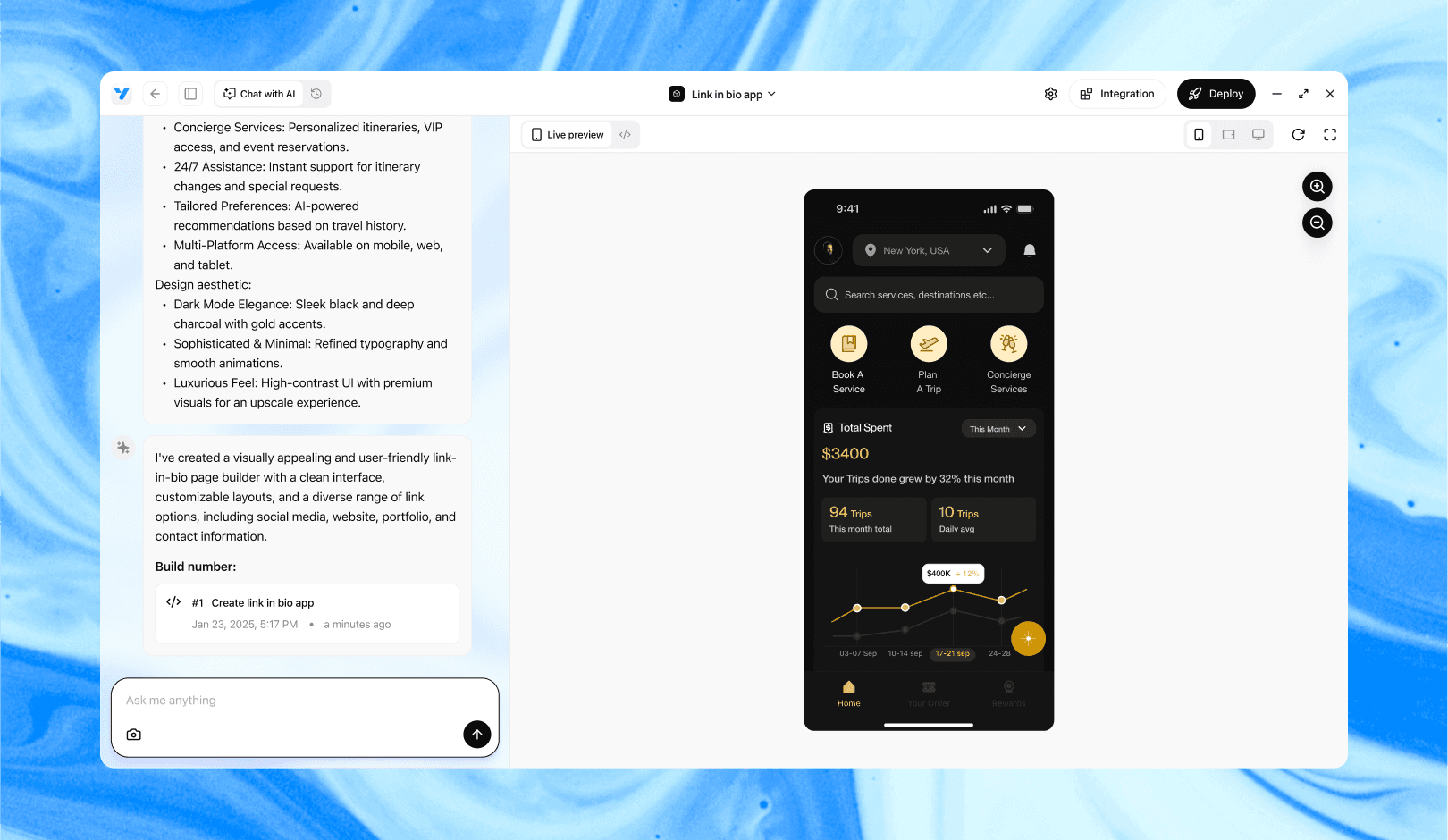
Vibe Studio, powered by Steve’s advanced AI agents, is a revolutionary no-code, conversational platform that empowers users to quickly and efficiently create full-stack Flutter applications integrated seamlessly with Firebase backend services. Ideal for solo founders, startups, and agile engineering teams, Vibe Studio allows users to visually manage and deploy Flutter apps, greatly accelerating the development process. The intuitive conversational interface simplifies complex development tasks, making app creation accessible even for non-coders.
Conclusion
Using Dart FFI to access native GPU APIs enables powerful, high-performance rendering and compute workflows in Flutter mobile development when designed carefully. Build a minimal, C-friendly native surface API, manage resource lifetimes explicitly, respect context-thread affinity, and adopt a non-blocking enqueue pattern for heavy GPU work. With these patterns you can integrate Metal, Vulkan, or OpenGL ES into your Flutter app while keeping Dart code clean and safe.

Introduction
Accessing native GPU APIs from Flutter using Dart FFI lets mobile developers integrate advanced rendering paths, custom compute kernels, or low-latency image pipelines while staying in a Flutter app. This tutorial focuses on practical patterns for bridging Dart to native GPU libraries (OpenGL ES, Metal, Vulkan) in mobile development, covering safety, the FFI bridge design, native call implementation, and performance/threading considerations.
Prerequisites And Safety
Before using Dart FFI with GPU APIs, ensure you understand platform constraints. On Android you link against .so libraries (or include an AAR). On iOS you use frameworks or static/dynamic libs. GPU APIs are often bound to thread-local contexts: OpenGL ES requires calls on the thread that owns the GL context; Metal encourages command queue usage on threads managed by the native layer. Violating these rules causes crashes or undefined behavior.
Security and stability checklist:
Use the C ABI and ensure function signatures match exactly (types and calling convention).
Avoid calling heavy-native GPU setup on Dart's UI thread. Use isolates or native threads that you control.
Validate pointer sizes and alignment (32/64-bit differences on devices).
Provide clear lifecycle functions (create/destroy) and call them deterministically.
Designing The FFI Bridge
Design a small, stable native surface API that Dart can call. Keep the API C-friendly and minimal: functions to initialize the GPU context, create resources (textures, buffers), enqueue commands, and destroy handles. Use integer handles (uint64) to represent native resources rather than raw pointers where possible; this simplifies safe passing to Dart and helps with lifetime tracking.
Example C-like API surface (conceptual):
gpu_init(): returns a context handle
gpu_create_texture(ctx, width, height, format): returns texture handle
gpu_upload_texture(ctx, texture, Pointer pixels, size)
gpu_submit(ctx)
gpu_destroy(ctx_or_resource)
On the Dart side, load the library and declare FFI types that mirror the native signatures. Use typedefs for clarity and wrap low-level calls in a thin Dart class that manages handles and memory. Use Finalizer from dart:ffi or manual free methods to ensure native resources get freed.
import 'dart:ffi';
final dylib = DynamicLibrary.open('libgpu_bridge.so');
final gpuInit = dylib
.lookupFunction<Int64 Function(), int Function()>('gpu_init');
int ctx = gpuInit();Implementing Native GPU Calls
On Android, compile your native code with the NDK and produce an .so. On iOS, produce a framework exposing C functions. Keep these functions thin: perform context creation and resource allocation natively; accept raw pointers from Dart to upload pixel data.
Memory flow example:
Allocate pixel buffer on Dart side using calloc or Uint8List.
Pass Pointer to native upload call. The native side copies or uses the pointer immediately according to your API contract.
Free the Dart-side allocation after upload returns (or transfer ownership contract where native frees).
A safe Dart upload wrapper:
final gpuUpload = dylib.lookupFunction<
Void Function(Int64, Int64, Pointer<Uint8>, IntPtr),
void Function(int, int, Pointer<Uint8>, int)>
('gpu_upload_texture');
// Allocate, call, free
final pixels = calloc<Uint8>(width * height * 4);
gpuUpload(ctx, textureHandle, pixels, width * height * 4);
calloc.free(pixels);Be explicit about whether the native code expects the pointer to remain valid after return.
Performance And Threading Considerations
Performance is the primary reason to go FFI for GPU work. To avoid UI stalls:
Keep FFI calls short and non-blocking. For long-running native GPU work, have native threads or a command queue and use a small FFI call to enqueue work.
Use isolates only for CPU work. Isolates cannot share native thread-local GPU contexts, so native code must own and manage GPU threads if context affinity is required.
Minimize copies: prefer zero-copy paths where Dart hands memory to native and native consumes it on the same thread.
Synchronization:
Use fences or semaphores in the native API to signal completion back to Dart (e.g., a callback or a small poll function). Avoid Dart callbacks invoked from arbitrary native threads; instead schedule a completion poll on an isolate that owns the callback registration.
If you must call into Dart from native, register a NativePort and use post messages to a ReceivePort to ensure thread-safety.
Profiling and debugging:
Use platform-specific GPU debuggers (Xcode Metal frame capture, Android GPU Inspector) for native-side problems.
Keep an eye on memory allocation patterns and use scoped allocations on native side where possible.
Vibe Studio

Vibe Studio, powered by Steve’s advanced AI agents, is a revolutionary no-code, conversational platform that empowers users to quickly and efficiently create full-stack Flutter applications integrated seamlessly with Firebase backend services. Ideal for solo founders, startups, and agile engineering teams, Vibe Studio allows users to visually manage and deploy Flutter apps, greatly accelerating the development process. The intuitive conversational interface simplifies complex development tasks, making app creation accessible even for non-coders.
Conclusion
Using Dart FFI to access native GPU APIs enables powerful, high-performance rendering and compute workflows in Flutter mobile development when designed carefully. Build a minimal, C-friendly native surface API, manage resource lifetimes explicitly, respect context-thread affinity, and adopt a non-blocking enqueue pattern for heavy GPU work. With these patterns you can integrate Metal, Vulkan, or OpenGL ES into your Flutter app while keeping Dart code clean and safe.

Build Flutter Apps Faster with Vibe Studio
Vibe Studio is your AI-powered Flutter development companion. Skip boilerplate, build in real-time, and deploy without hassle. Start creating apps at lightning speed with zero setup.