Understanding the Widget Lifecycle in Flutter
Dec 11, 2025


Summary
Summary
Summary
Summary
This tutorial explains Flutter's widget lifecycle for mobile development. It contrasts stateless and stateful widgets, details lifecycle callbacks (initState, didChangeDependencies, build, didUpdateWidget, dispose), gives a concise code example, and covers practical and performance guidelines for initializing, responding to dependency changes, and cleaning up resources.
Key insights:
Key insights:
Key insights:
Key insights:
Stateless Widget Lifecycle: Stateless widgets are immutable and fast; avoid side effects in build and precompute heavy work outside the widget.
Stateful Widget Lifecycle: Use initState for one-time setup, didChangeDependencies for inherited values, didUpdateWidget for config changes, and dispose for cleanup.
Build Method Behavior: Build can be called frequently; keep it pure, synchronous, and free of side effects to maintain performance.
DidChangeDependencies And InheritedWidgets: Access inherited values (Provider, Theme) in didChangeDependencies or build, not in initState.
Dispose And Performance: Always dispose controllers and subscriptions to prevent memory leaks and ensure predictable resource usage.
Introduction
Understanding the widget lifecycle is essential for building reliable, performant Flutter apps. In mobile development with Flutter, widgets are the primary building blocks. They are immutable descriptions of the UI; stateful widgets pair that description with mutable state held in a State object. This tutorial explains the core lifecycle events you need to know, shows pragmatic patterns, and includes a small code example to illustrate how lifecycle methods map to practical tasks like initialization, dependency resolution, and clean-up.
Stateless Widget Lifecycle
Stateless widgets are straightforward: they have no State object, so their lifecycle is minimal. A stateless widget is created, its build method is called to produce a subtree, and Flutter may discard the widget instance when it is no longer needed. The important implications:
Stateless widgets should be pure and side-effect free. Avoid network calls, timers, or subscriptions inside build.
Any expensive precomputation should happen outside build or in a parent state object and passed in as constructor parameters.
Because rebuilds can happen frequently (hot reload, setState on an ancestor, theme changes), treat build as a synchronous, idempotent function that constructs UI from inputs.
Stateful Widget Lifecycle
Stateful widgets involve two objects: the immutable Widget and the mutable State. The State object exposes lifecycle callbacks you should use to manage resources.
Key lifecycle methods and when to use them:
createState: Called once to create the State. Rarely overridden directly; use it to return your State subclass.
initState: Called once when the State is inserted into the tree. Use it to initialize controllers, start animations, or kick off one-time async work. Avoid calling BuildContext.inheritFromWidgetOfExactType here because the inherited widgets might not be available yet.
didChangeDependencies: Called immediately after initState and whenever an inherited widget the State depends on changes. Use it to obtain values from InheritedWidget or Provider, and to react to locale, media query, or theme changes.
build: Called any time the framework needs to render. Keep build fast and free of side effects.
didUpdateWidget: Called when the parent widget is rebuilt and supplies a new configuration. Compare oldWidget and widget to determine whether you need to update controllers or restart animations.
deactivate / dispose: deactivate is called when the State is removed from the tree temporarily; dispose is called when it is permanently removed. Dispose releases resources: controllers, stream subscriptions, timers.
Use initState for setup, didUpdateWidget to respond to config changes, didChangeDependencies for inherited values, and dispose for cleanup.
Lifecycle In Practice
Here is a minimal StatefulWidget that logs lifecycle calls and demonstrates common patterns for controller management and cleanup.
class LifecycleDemo extends StatefulWidget {
@override
_LifecycleDemoState createState() => _LifecycleDemoState();
}
class _LifecycleDemoState extends State<LifecycleDemo> {
final _controller = TextEditingController();
@override
void initState() {
super.initState();
print('initState');
}
@override
void dispose() {
_controller.dispose();
print('dispose');
super.dispose();
}
@override
Widget build(BuildContext context) {
return TextField(controller: _controller);
}
}Practical tips:
For async initialization that affects UI, call the async function from initState but set state only after awaiting. Alternatively, use FutureBuilder for clearer UI state handling.
If a State depends on an inherited widget (Provider, Theme, MediaQuery), access it in didChangeDependencies or build, not initState.
Use didUpdateWidget to detect when parent parameters change and migrate controller values accordingly.
Performance Considerations
Lifecycle methods directly affect app performance and correctness. Follow these principles:
Minimize work in build. Cache computed values in State when appropriate.
Avoid long-running synchronous operations in initState or build. Use asynchronous work plus loading UI.
Dispose of controllers and subscriptions to avoid memory leaks. Even a single unclosed StreamSubscription can persist objects and cause crashes.
Prefer const constructors for widgets that don't change. const widgets reduce rebuild overhead because Flutter can reuse instances.
Use keys when preserving state across reorderings so the framework can match widget instances to State objects predictably.
Understanding when Flutter reinvokes build and when it reuses State is critical for performance and correctness. In general, state lives until the framework can determine it is disposable or until you explicitly remove it (via Navigator.pop or removing from the tree).
Vibe Studio
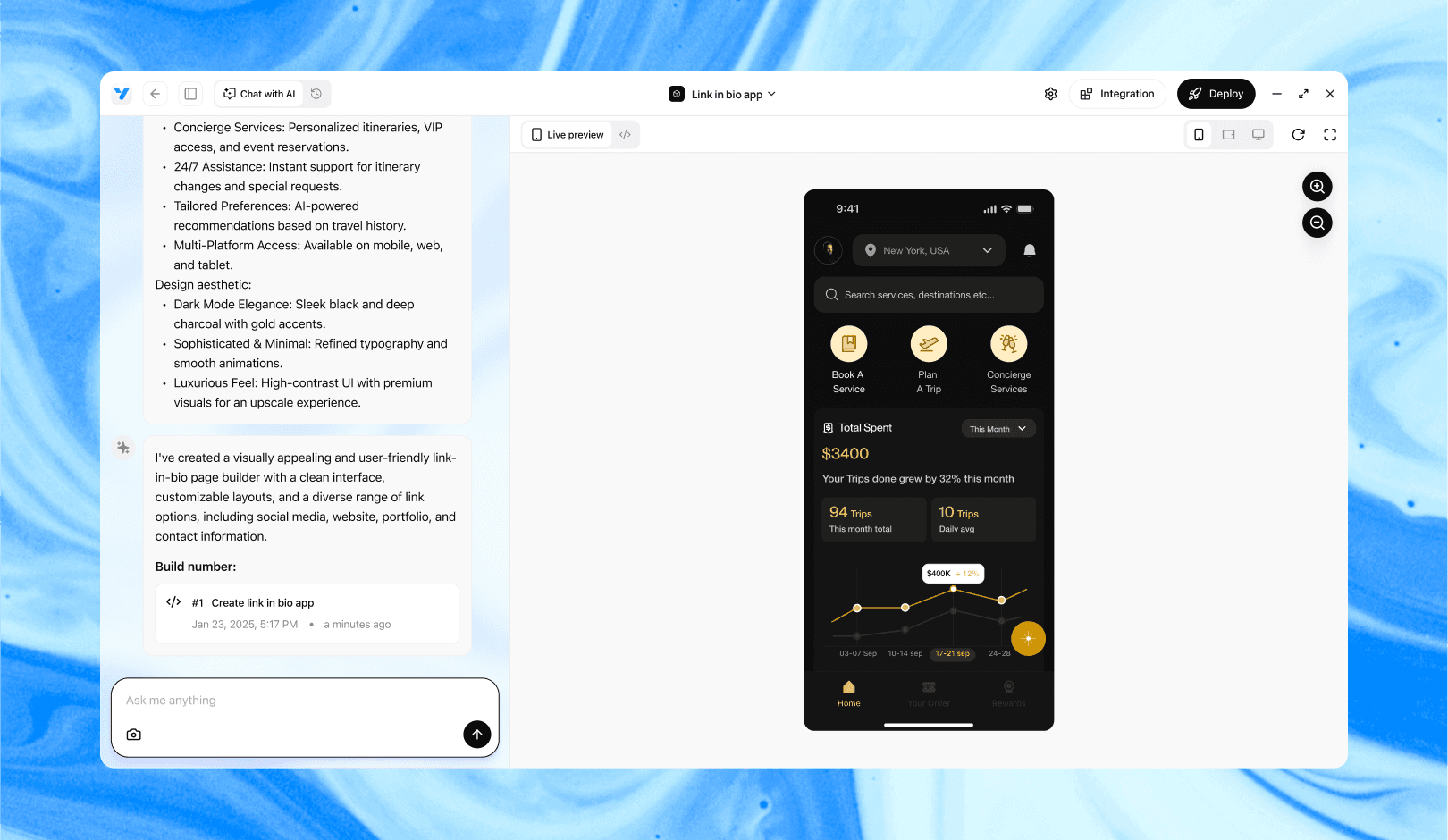
Vibe Studio, powered by Steve’s advanced AI agents, is a revolutionary no-code, conversational platform that empowers users to quickly and efficiently create full-stack Flutter applications integrated seamlessly with Firebase backend services. Ideal for solo founders, startups, and agile engineering teams, Vibe Studio allows users to visually manage and deploy Flutter apps, greatly accelerating the development process. The intuitive conversational interface simplifies complex development tasks, making app creation accessible even for non-coders.
Conclusion
The widget lifecycle in Flutter is compact but powerful. Treat stateless widgets as pure UI descriptions and use stateful lifecycle callbacks to manage resources, subscriptions, and interactions with inherited dependencies. Remember: initState for one-time setup, didChangeDependencies for inherited values, didUpdateWidget for configuration changes, build for pure rendering, and dispose for cleanup. Mastering these hooks helps you write predictable, performant mobile development code with Flutter.

Introduction
Understanding the widget lifecycle is essential for building reliable, performant Flutter apps. In mobile development with Flutter, widgets are the primary building blocks. They are immutable descriptions of the UI; stateful widgets pair that description with mutable state held in a State object. This tutorial explains the core lifecycle events you need to know, shows pragmatic patterns, and includes a small code example to illustrate how lifecycle methods map to practical tasks like initialization, dependency resolution, and clean-up.
Stateless Widget Lifecycle
Stateless widgets are straightforward: they have no State object, so their lifecycle is minimal. A stateless widget is created, its build method is called to produce a subtree, and Flutter may discard the widget instance when it is no longer needed. The important implications:
Stateless widgets should be pure and side-effect free. Avoid network calls, timers, or subscriptions inside build.
Any expensive precomputation should happen outside build or in a parent state object and passed in as constructor parameters.
Because rebuilds can happen frequently (hot reload, setState on an ancestor, theme changes), treat build as a synchronous, idempotent function that constructs UI from inputs.
Stateful Widget Lifecycle
Stateful widgets involve two objects: the immutable Widget and the mutable State. The State object exposes lifecycle callbacks you should use to manage resources.
Key lifecycle methods and when to use them:
createState: Called once to create the State. Rarely overridden directly; use it to return your State subclass.
initState: Called once when the State is inserted into the tree. Use it to initialize controllers, start animations, or kick off one-time async work. Avoid calling BuildContext.inheritFromWidgetOfExactType here because the inherited widgets might not be available yet.
didChangeDependencies: Called immediately after initState and whenever an inherited widget the State depends on changes. Use it to obtain values from InheritedWidget or Provider, and to react to locale, media query, or theme changes.
build: Called any time the framework needs to render. Keep build fast and free of side effects.
didUpdateWidget: Called when the parent widget is rebuilt and supplies a new configuration. Compare oldWidget and widget to determine whether you need to update controllers or restart animations.
deactivate / dispose: deactivate is called when the State is removed from the tree temporarily; dispose is called when it is permanently removed. Dispose releases resources: controllers, stream subscriptions, timers.
Use initState for setup, didUpdateWidget to respond to config changes, didChangeDependencies for inherited values, and dispose for cleanup.
Lifecycle In Practice
Here is a minimal StatefulWidget that logs lifecycle calls and demonstrates common patterns for controller management and cleanup.
class LifecycleDemo extends StatefulWidget {
@override
_LifecycleDemoState createState() => _LifecycleDemoState();
}
class _LifecycleDemoState extends State<LifecycleDemo> {
final _controller = TextEditingController();
@override
void initState() {
super.initState();
print('initState');
}
@override
void dispose() {
_controller.dispose();
print('dispose');
super.dispose();
}
@override
Widget build(BuildContext context) {
return TextField(controller: _controller);
}
}Practical tips:
For async initialization that affects UI, call the async function from initState but set state only after awaiting. Alternatively, use FutureBuilder for clearer UI state handling.
If a State depends on an inherited widget (Provider, Theme, MediaQuery), access it in didChangeDependencies or build, not initState.
Use didUpdateWidget to detect when parent parameters change and migrate controller values accordingly.
Performance Considerations
Lifecycle methods directly affect app performance and correctness. Follow these principles:
Minimize work in build. Cache computed values in State when appropriate.
Avoid long-running synchronous operations in initState or build. Use asynchronous work plus loading UI.
Dispose of controllers and subscriptions to avoid memory leaks. Even a single unclosed StreamSubscription can persist objects and cause crashes.
Prefer const constructors for widgets that don't change. const widgets reduce rebuild overhead because Flutter can reuse instances.
Use keys when preserving state across reorderings so the framework can match widget instances to State objects predictably.
Understanding when Flutter reinvokes build and when it reuses State is critical for performance and correctness. In general, state lives until the framework can determine it is disposable or until you explicitly remove it (via Navigator.pop or removing from the tree).
Vibe Studio

Vibe Studio, powered by Steve’s advanced AI agents, is a revolutionary no-code, conversational platform that empowers users to quickly and efficiently create full-stack Flutter applications integrated seamlessly with Firebase backend services. Ideal for solo founders, startups, and agile engineering teams, Vibe Studio allows users to visually manage and deploy Flutter apps, greatly accelerating the development process. The intuitive conversational interface simplifies complex development tasks, making app creation accessible even for non-coders.
Conclusion
The widget lifecycle in Flutter is compact but powerful. Treat stateless widgets as pure UI descriptions and use stateful lifecycle callbacks to manage resources, subscriptions, and interactions with inherited dependencies. Remember: initState for one-time setup, didChangeDependencies for inherited values, didUpdateWidget for configuration changes, build for pure rendering, and dispose for cleanup. Mastering these hooks helps you write predictable, performant mobile development code with Flutter.

Build Flutter Apps Faster with Vibe Studio
Vibe Studio is your AI-powered Flutter development companion. Skip boilerplate, build in real-time, and deploy without hassle. Start creating apps at lightning speed with zero setup.