Understanding Keys In Flutter When And Why They Matter
Jan 19, 2026


Summary
Summary
Summary
Summary
Keys in Flutter define widget identity during rebuilds. They matter when lists or trees change shape, when you need to preserve per-item state, or when you must access a child's State. Prefer ValueKey/ObjectKey for stable identifiers, avoid index-based keys, and reserve GlobalKey for rare cases.
Key insights:
Key insights:
Key insights:
Key insights:
Heading 1: Keys control how Flutter matches widgets to elements and thus whether state is reused.
Heading 2: In lists, use stable keys (ValueKey) derived from model IDs to preserve item state across reorderings.
Heading 3: UniqueKey forces widget recreation; use it to restart animations or clear state.
Heading 4: GlobalKey grants access to State but should be used sparingly due to performance and coupling.
Heading 5: Avoid index-based keys and mutable-key values; debug with logs or temporary UniqueKeys.
Introduction
Keys are a small but powerful concept in Flutter that control how the framework matches widgets with their underlying elements and state. For mobile development with Flutter, misunderstanding keys often leads to subtle bugs: lost form input, wrong animations, or state landing on the wrong list item. This tutorial explains what keys are, when they matter, and how to choose the right one.
What Is A Key And How Flutter Uses It
A Key is an identity token attached to a Widget. During a rebuild Flutter compares the new widget tree to the previous element tree and decides whether to update an existing Element (reuse state) or create a new one. If two widgets are of the same runtime type and neither has a key, Flutter will try to reuse the existing element by position. Keys override or refine that matching behavior so you can ensure the correct widget matches the correct element and state.
Keys matter when widget position or identity changes between builds. Examples: reordering list items, conditional swaps of subtree types, or when you must retrieve a State object.
When Keys Matter In Lists And Trees
List and tree mutations are the most common places that require keys. Consider a ListView where items can be inserted, removed, or reordered. Without keys, Flutter will match widgets by index — moving an item in the underlying data may leave the visible state (text in a TextField, animation progress) attached to the wrong visual item.
Use keys to preserve item identity across structural changes. For data-driven lists prefer stable keys derived from the data (an ID field) so the widget representing a data entry stays associated with that entry, not with the row index.
Example: preserving TextField input across reorder.
ListView.builder( itemCount: items.length, itemBuilder: (_, i) => ListTile( key: ValueKey(items[i].id), title: TextField(controller: items[i].controller), ), )
Here ValueKey(items[i].id) ties the tile to the item id so when items are shuffled, the correct controller remains with its input.
Types Of Keys And Practical Uses
ValueKey: Compares using the provided value (commonly a string or numeric ID). Use when you have a stable, unique identifier in your model.
ObjectKey: Uses object identity (==) for comparison.
UniqueKey: Always unequal to any other key. Use to force Flutter to treat the widget as brand new on every rebuild (use sparingly).
GlobalKey: Provides a global identity across the entire widget tree and enables access to the associated State, context, or RenderObject. Use only when necessary, as GlobalKeys affect performance and coupling.
Examples of practical uses:
Preserve form field state in a list (ValueKey).
Force recreation of a subtree to restart an animation (UniqueKey).
Access a child State to call methods (GlobalKey).
GlobalKey example to access State:
final GlobalKey<FormState> _formKey = GlobalKey<FormState>();
Common Mistakes And Debugging Techniques
Common mistakes:
Overusing GlobalKey: leads to slow rebuilds and tighter coupling. Prefer callbacks or scoped state management when possible.
Using indices as keys: assigning Key(index.toString()) is fragile because index changes during insert/delete and will not preserve identity.
Using mutable values: a ValueKey built from a mutable field that changes will confuse identity matching.
Debugging tips:
Read the Flutter error message: when widgets unexpectedly reuse state, Flutter sometimes suggests key usage.
Add temporary UniqueKeys to see where the rebuild behavior changes.
Log build or initState calls to track which item lost or gained state.
A mental checklist: if a child widget holds state (like a TextEditingController, animation controller, or selected flag) and the parent can reorder, insert, or replace children, then give those children stable keys.
Vibe Studio
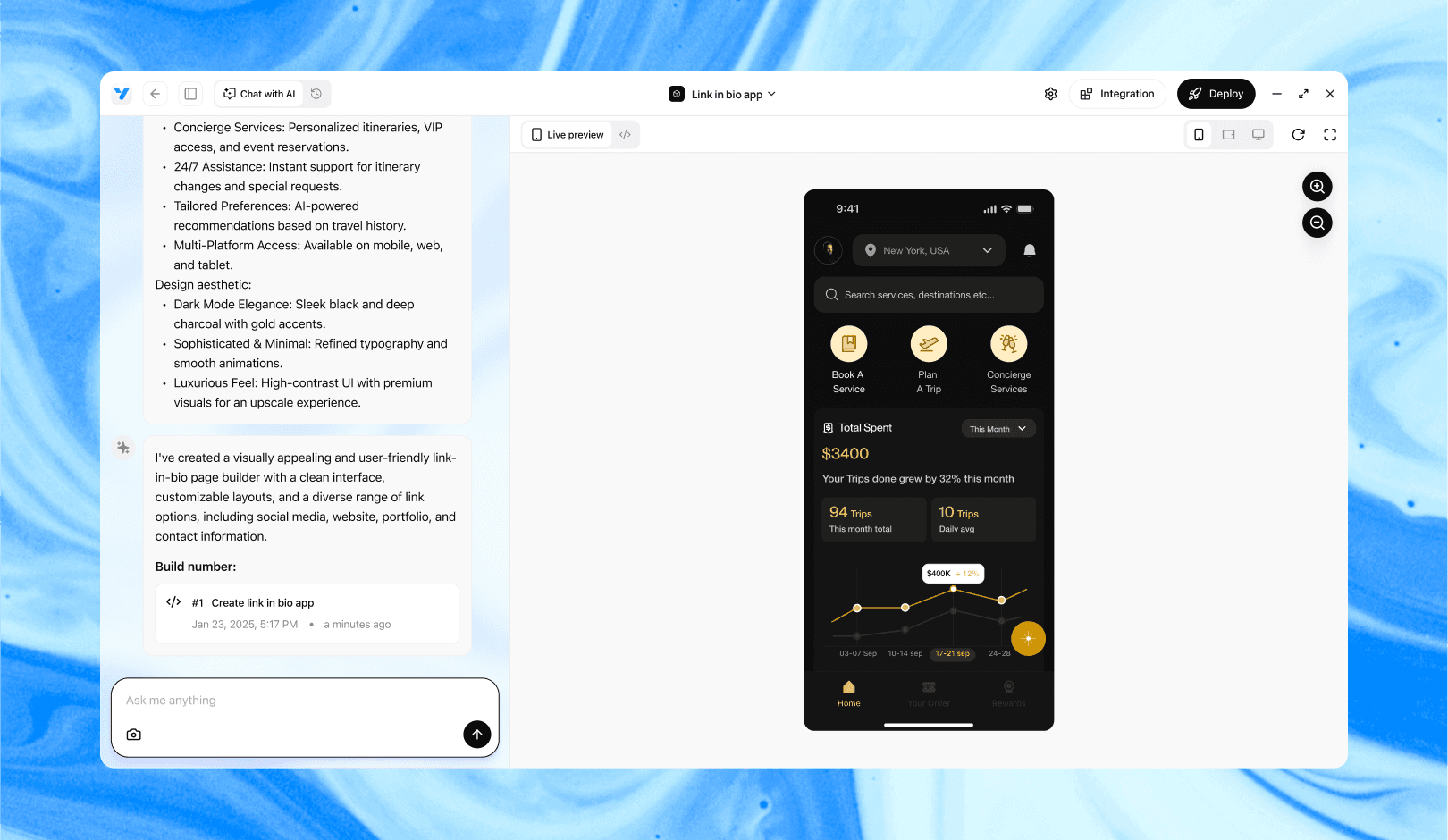
Vibe Studio, powered by Steve’s advanced AI agents, is a revolutionary no-code, conversational platform that empowers users to quickly and efficiently create full-stack Flutter applications integrated seamlessly with Firebase backend services. Ideal for solo founders, startups, and agile engineering teams, Vibe Studio allows users to visually manage and deploy Flutter apps, greatly accelerating the development process. The intuitive conversational interface simplifies complex development tasks, making app creation accessible even for non-coders.
Conclusion
Keys are essential when you need explicit control over widget identity in Flutter mobile development. Use ValueKey or ObjectKey to tie widgets to stable model identifiers, UniqueKey to force recreation, and GlobalKey sparingly when you must access child state. Correctly applied keys prevent subtle bugs in lists, animations, and dynamic UIs—improving correctness and user experience without extra complexity.

Introduction
Keys are a small but powerful concept in Flutter that control how the framework matches widgets with their underlying elements and state. For mobile development with Flutter, misunderstanding keys often leads to subtle bugs: lost form input, wrong animations, or state landing on the wrong list item. This tutorial explains what keys are, when they matter, and how to choose the right one.
What Is A Key And How Flutter Uses It
A Key is an identity token attached to a Widget. During a rebuild Flutter compares the new widget tree to the previous element tree and decides whether to update an existing Element (reuse state) or create a new one. If two widgets are of the same runtime type and neither has a key, Flutter will try to reuse the existing element by position. Keys override or refine that matching behavior so you can ensure the correct widget matches the correct element and state.
Keys matter when widget position or identity changes between builds. Examples: reordering list items, conditional swaps of subtree types, or when you must retrieve a State object.
When Keys Matter In Lists And Trees
List and tree mutations are the most common places that require keys. Consider a ListView where items can be inserted, removed, or reordered. Without keys, Flutter will match widgets by index — moving an item in the underlying data may leave the visible state (text in a TextField, animation progress) attached to the wrong visual item.
Use keys to preserve item identity across structural changes. For data-driven lists prefer stable keys derived from the data (an ID field) so the widget representing a data entry stays associated with that entry, not with the row index.
Example: preserving TextField input across reorder.
ListView.builder( itemCount: items.length, itemBuilder: (_, i) => ListTile( key: ValueKey(items[i].id), title: TextField(controller: items[i].controller), ), )
Here ValueKey(items[i].id) ties the tile to the item id so when items are shuffled, the correct controller remains with its input.
Types Of Keys And Practical Uses
ValueKey: Compares using the provided value (commonly a string or numeric ID). Use when you have a stable, unique identifier in your model.
ObjectKey: Uses object identity (==) for comparison.
UniqueKey: Always unequal to any other key. Use to force Flutter to treat the widget as brand new on every rebuild (use sparingly).
GlobalKey: Provides a global identity across the entire widget tree and enables access to the associated State, context, or RenderObject. Use only when necessary, as GlobalKeys affect performance and coupling.
Examples of practical uses:
Preserve form field state in a list (ValueKey).
Force recreation of a subtree to restart an animation (UniqueKey).
Access a child State to call methods (GlobalKey).
GlobalKey example to access State:
final GlobalKey<FormState> _formKey = GlobalKey<FormState>();
Common Mistakes And Debugging Techniques
Common mistakes:
Overusing GlobalKey: leads to slow rebuilds and tighter coupling. Prefer callbacks or scoped state management when possible.
Using indices as keys: assigning Key(index.toString()) is fragile because index changes during insert/delete and will not preserve identity.
Using mutable values: a ValueKey built from a mutable field that changes will confuse identity matching.
Debugging tips:
Read the Flutter error message: when widgets unexpectedly reuse state, Flutter sometimes suggests key usage.
Add temporary UniqueKeys to see where the rebuild behavior changes.
Log build or initState calls to track which item lost or gained state.
A mental checklist: if a child widget holds state (like a TextEditingController, animation controller, or selected flag) and the parent can reorder, insert, or replace children, then give those children stable keys.
Vibe Studio

Vibe Studio, powered by Steve’s advanced AI agents, is a revolutionary no-code, conversational platform that empowers users to quickly and efficiently create full-stack Flutter applications integrated seamlessly with Firebase backend services. Ideal for solo founders, startups, and agile engineering teams, Vibe Studio allows users to visually manage and deploy Flutter apps, greatly accelerating the development process. The intuitive conversational interface simplifies complex development tasks, making app creation accessible even for non-coders.
Conclusion
Keys are essential when you need explicit control over widget identity in Flutter mobile development. Use ValueKey or ObjectKey to tie widgets to stable model identifiers, UniqueKey to force recreation, and GlobalKey sparingly when you must access child state. Correctly applied keys prevent subtle bugs in lists, animations, and dynamic UIs—improving correctness and user experience without extra complexity.

Build Flutter Apps Faster with Vibe Studio
Vibe Studio is your AI-powered Flutter development companion. Skip boilerplate, build in real-time, and deploy without hassle. Start creating apps at lightning speed with zero setup.
Other Insights