Understanding Flutter State Management Through Real Examples
Nov 19, 2025


Summary
Summary
Summary
Summary
This tutorial explains Flutter state management with real examples: setState for local state, Provider/InheritedWidget for shared models, and Streams/Bloc for reactive, testable logic. It gives code snippets, when to choose each pattern, and practical testing and performance tips to guide design decisions in mobile development.
Key insights:
Key insights:
Key insights:
Key insights:
Local State With setState: Best for widget-scoped, ephemeral UI state; minimal boilerplate and fast updates.
Shared State With InheritedWidget And Provider: Provider simplifies shared models across the tree and supports fine-grained listeners.
Reactive State With Streams And Bloc: Use for complex async flows and strict separation of UI and business logic; excellent for testing.
Tips For Choosing And Testing State: Base the choice on scope and complexity; unit-test models and widget-test UI reactions.
Performance And Scalability Considerations: Minimize rebuilds with selectors, const widgets, and granular providers.
Introduction
State management is the backbone of any non-trivial Flutter app. “State” describes data that can change over time and that affects UI. Choosing how to manage that state affects code clarity, testability, and performance. This tutorial uses concrete examples to explain common Flutter patterns: local state with setState, shared state with InheritedWidget/Provider, reactive state with Streams/Bloc, and practical selection/testing tips.
Local State With setState
Use setState for ephemeral UI state that lives only in a single widget: toggles, animations, form field focus, or temporary UI flags. It's simple, low-overhead, and aligns with Flutter's rebuild model: calling setState marks the widget subtree dirty and triggers a rebuild.
Example: a compact counter using setState.
class CounterWidget extends StatefulWidget { @override State createState() => _CounterWidgetState(); }
class _CounterWidgetState extends State<CounterWidget> {
int _count = 0;
@override Widget build(BuildContext c) => ElevatedButton(
onPressed: () => setState(() => _count++),
child: Text('Count: $_count'),
);
}When to prefer setState:
State is tightly coupled to a single widget.
You need minimal ceremony and fastest path to working UI.
Tests can exercise widget behavior directly using widget tests.
Avoid setState when state must be shared across unrelated widgets or when you need advanced features like middle-layer business logic or undo/redo.
Shared State With InheritedWidget And Provider
For app-wide or cross-tree shared state, InheritedWidget is the core mechanism. Provider is a lightweight, community-standard wrapper that simplifies access and lifecycle. A common pattern: expose a ChangeNotifier or immutable model via Provider and read it where needed.
Provider advantages:
Minimal boilerplate compared with custom InheritedWidgets.
Works with ChangeNotifier, ValueNotifier, or immutable objects.
Fine-grained listeners using Consumer or context.select to avoid unnecessary rebuilds.
Example ChangeNotifier with Provider (abbreviated):
class CartModel extends ChangeNotifier {
final List<String> items = [];
void add(String item) { items.add(item); notifyListeners(); }
}
// Wrap MaterialApp with ChangeNotifierProvider(create: (_) => CartModel())Use Provider when multiple widgets across the tree need read/write access to the same model. Use selectors or Consumers to limit rebuild scope.
Reactive State With Streams And Bloc
Reactive approaches using Streams or the Bloc pattern (Business Logic Component) are ideal when you want strong separation of UI and logic, or when handling asynchronous event-driven flows (networking, websockets, user events). Bloc uses streams (or subjects) to accept events and emit new states; it encourages immutable state objects and pure transformation logic, which improves testability.
When to choose reactive/Bloc:
Complex state transitions and side effects.
Need for time-based logic, throttling, or cancellation.
Teams that value explicit event/state flows and comprehensive unit tests.
Performance-wise, Blocs minimize UI rebuilds by emitting only when state actually changes. Many libraries (rxdart, flutter_bloc) add utilities to compose streams, debounce, and transform events.
Tips For Choosing And Testing State
Choose pragmatically: scope, complexity, and team familiarity matter more than fashionable choices.
Small widget-local state: setState.
Shared mutable models with light complexity: Provider + ChangeNotifier.
Complex async flows and strict separation: Bloc/Streams or Riverpod with async providers.
Testing guidance:
Unit test models, ChangeNotifiers, or Blocs in isolation.
Use widget tests to validate UI reacts correctly to state changes.
For integration tests, simulate real flows and assert end state.
Performance and maintenance tips:
Avoid rebuilding large subtrees; use const widgets and granular providers/selectors.
Prefer immutable state objects where possible to simplify change detection.
Document the chosen pattern in the project README so new contributors follow the same approach.
Vibe Studio
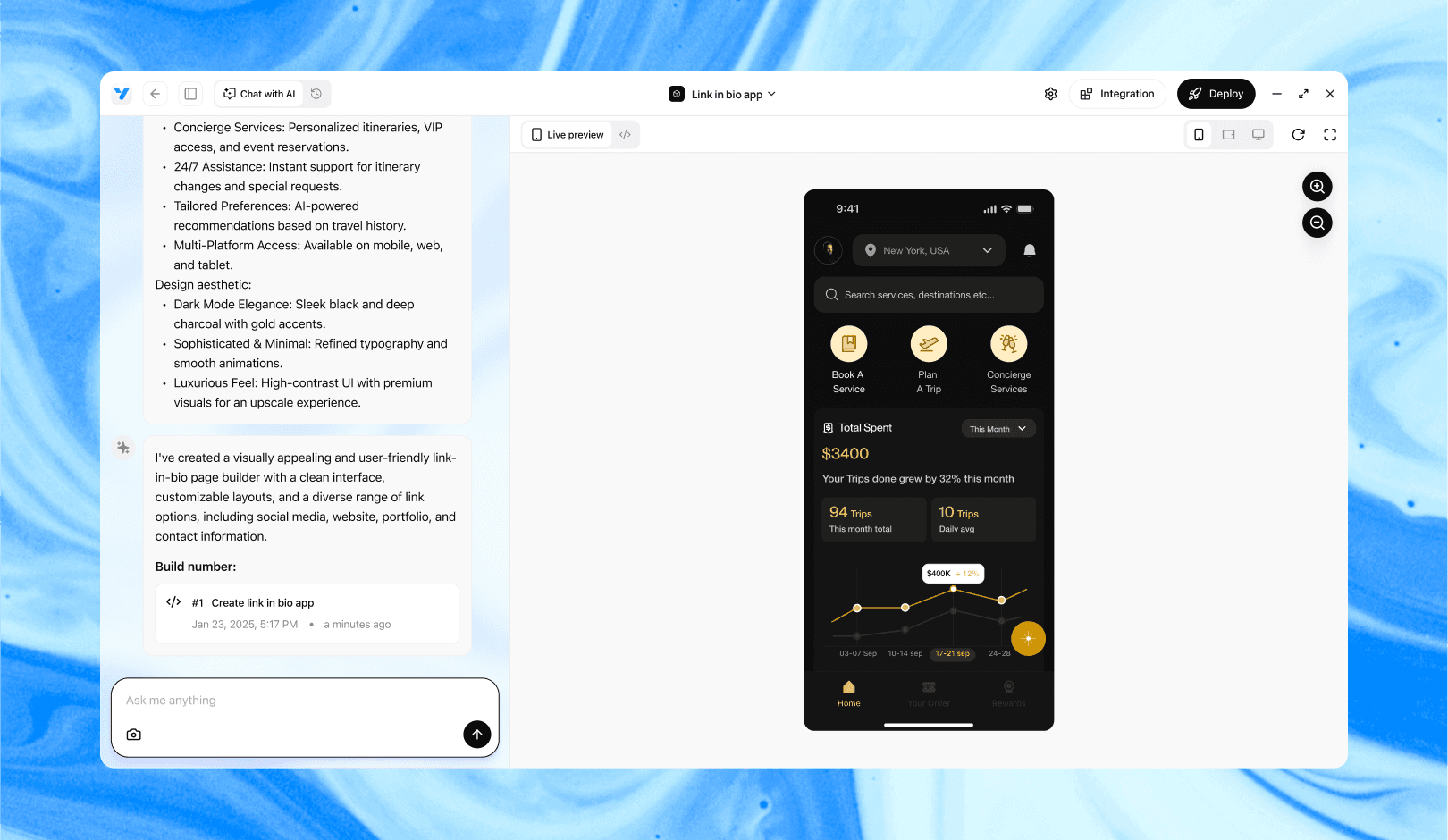
Vibe Studio, powered by Steve’s advanced AI agents, is a revolutionary no-code, conversational platform that empowers users to quickly and efficiently create full-stack Flutter applications integrated seamlessly with Firebase backend services. Ideal for solo founders, startups, and agile engineering teams, Vibe Studio allows users to visually manage and deploy Flutter apps, greatly accelerating the development process. The intuitive conversational interface simplifies complex development tasks, making app creation accessible even for non-coders.
Conclusion
State management is not a one-size-fits-all problem. Start with the simplest tool that solves the problem: setState for local UI, Provider for shared app models, and Streams/Bloc for complex asynchronous flows. Focus on clarity, testability, and minimizing unnecessary rebuilds. With these concrete patterns and practical tips, you can design Flutter state that scales with your app and team.

Introduction
State management is the backbone of any non-trivial Flutter app. “State” describes data that can change over time and that affects UI. Choosing how to manage that state affects code clarity, testability, and performance. This tutorial uses concrete examples to explain common Flutter patterns: local state with setState, shared state with InheritedWidget/Provider, reactive state with Streams/Bloc, and practical selection/testing tips.
Local State With setState
Use setState for ephemeral UI state that lives only in a single widget: toggles, animations, form field focus, or temporary UI flags. It's simple, low-overhead, and aligns with Flutter's rebuild model: calling setState marks the widget subtree dirty and triggers a rebuild.
Example: a compact counter using setState.
class CounterWidget extends StatefulWidget { @override State createState() => _CounterWidgetState(); }
class _CounterWidgetState extends State<CounterWidget> {
int _count = 0;
@override Widget build(BuildContext c) => ElevatedButton(
onPressed: () => setState(() => _count++),
child: Text('Count: $_count'),
);
}When to prefer setState:
State is tightly coupled to a single widget.
You need minimal ceremony and fastest path to working UI.
Tests can exercise widget behavior directly using widget tests.
Avoid setState when state must be shared across unrelated widgets or when you need advanced features like middle-layer business logic or undo/redo.
Shared State With InheritedWidget And Provider
For app-wide or cross-tree shared state, InheritedWidget is the core mechanism. Provider is a lightweight, community-standard wrapper that simplifies access and lifecycle. A common pattern: expose a ChangeNotifier or immutable model via Provider and read it where needed.
Provider advantages:
Minimal boilerplate compared with custom InheritedWidgets.
Works with ChangeNotifier, ValueNotifier, or immutable objects.
Fine-grained listeners using Consumer or context.select to avoid unnecessary rebuilds.
Example ChangeNotifier with Provider (abbreviated):
class CartModel extends ChangeNotifier {
final List<String> items = [];
void add(String item) { items.add(item); notifyListeners(); }
}
// Wrap MaterialApp with ChangeNotifierProvider(create: (_) => CartModel())Use Provider when multiple widgets across the tree need read/write access to the same model. Use selectors or Consumers to limit rebuild scope.
Reactive State With Streams And Bloc
Reactive approaches using Streams or the Bloc pattern (Business Logic Component) are ideal when you want strong separation of UI and logic, or when handling asynchronous event-driven flows (networking, websockets, user events). Bloc uses streams (or subjects) to accept events and emit new states; it encourages immutable state objects and pure transformation logic, which improves testability.
When to choose reactive/Bloc:
Complex state transitions and side effects.
Need for time-based logic, throttling, or cancellation.
Teams that value explicit event/state flows and comprehensive unit tests.
Performance-wise, Blocs minimize UI rebuilds by emitting only when state actually changes. Many libraries (rxdart, flutter_bloc) add utilities to compose streams, debounce, and transform events.
Tips For Choosing And Testing State
Choose pragmatically: scope, complexity, and team familiarity matter more than fashionable choices.
Small widget-local state: setState.
Shared mutable models with light complexity: Provider + ChangeNotifier.
Complex async flows and strict separation: Bloc/Streams or Riverpod with async providers.
Testing guidance:
Unit test models, ChangeNotifiers, or Blocs in isolation.
Use widget tests to validate UI reacts correctly to state changes.
For integration tests, simulate real flows and assert end state.
Performance and maintenance tips:
Avoid rebuilding large subtrees; use const widgets and granular providers/selectors.
Prefer immutable state objects where possible to simplify change detection.
Document the chosen pattern in the project README so new contributors follow the same approach.
Vibe Studio

Vibe Studio, powered by Steve’s advanced AI agents, is a revolutionary no-code, conversational platform that empowers users to quickly and efficiently create full-stack Flutter applications integrated seamlessly with Firebase backend services. Ideal for solo founders, startups, and agile engineering teams, Vibe Studio allows users to visually manage and deploy Flutter apps, greatly accelerating the development process. The intuitive conversational interface simplifies complex development tasks, making app creation accessible even for non-coders.
Conclusion
State management is not a one-size-fits-all problem. Start with the simplest tool that solves the problem: setState for local UI, Provider for shared app models, and Streams/Bloc for complex asynchronous flows. Focus on clarity, testability, and minimizing unnecessary rebuilds. With these concrete patterns and practical tips, you can design Flutter state that scales with your app and team.

Build Flutter Apps Faster with Vibe Studio
Vibe Studio is your AI-powered Flutter development companion. Skip boilerplate, build in real-time, and deploy without hassle. Start creating apps at lightning speed with zero setup.