Understanding Flutter Performance Profiling With DevTools
Dec 4, 2025


Summary
Summary
Summary
Summary
This tutorial explains how to profile Flutter apps with DevTools: prepare the app in profile mode, record concise timeline traces, interpret frame breakdowns and CPU flame charts, analyze allocations, and apply fixes like reducing rebuilds, offloading work to isolates, and caching to improve performance in mobile development.
Key insights:
Key insights:
Key insights:
Key insights:
Preparing The App For Profiling: Use profile builds and Timeline markers to produce realistic, instrumented traces you can analyze in DevTools.
Using The Performance View: Record short captures and inspect frame lanes, CPU flame charts, and raster threads to locate jank precisely.
Interpreting CPU And Frame Data: Identify whether build/layout/paint or synchronous work on the main isolate causes long frames and target the responsible functions.
Memory And Allocation Profiling: Allocation spikes and frequent GC indicate churn—profile by class and reduce temporary object creation or cache heavy assets.
Practical Fixes And Strategies: Reduce rebuild scope, offload CPU work with compute/Isolates, use const widgets, and measure changes iteratively.
Introduction
Performance profiling is essential in Flutter mobile development to find jank, high CPU use, memory spikes, and wasted rebuilds. DevTools provides an integrated Performance view that exposes frame timings, CPU profiles, rasterizer behavior, and allocation samples. This tutorial explains how to prepare your app, record and interpret traces, and act on the most common findings.
Preparing The App For Profiling
Use the profile build when measuring real-world performance: flutter run --profile or flutter build apk --profile. Profile mode compiles with optimizations and retains observability—unlike release mode, it keeps timeline events and service ports open for DevTools.
Before recording, reproduce the problematic scenario (scrolling, animation, cold start). Minimize background noise: close other apps and ensure the device is connected via USB (or Wi-Fi debugging) and recognized by adb / flutter devices.
If you need to mark regions in code for easier interpretation, use dart:developer's Timeline API:
import 'dart:developer'; void expensiveOperation() { Timeline.startSync('expensiveOperation'); // expensive sync work Timeline.finishSync(); }
Also consider moving heavy synchronous work off the main isolate using compute or explicit Isolates.
Using The Performance View
Launch DevTools from your IDE or run flutter pub global run devtools and open the Performance tab. Key UI elements:
Timeline: records UI, GPU, and asynchronous events across time.
Frame chart: shows frame build and raster durations; red bars indicate frames over the target (16ms for 60fps).
CPU profiler / Flame Chart: shows call stacks for selected time ranges.
Memory view: tracks allocations and GC events (in profile mode).
Recording workflow: start recording, perform the interaction, stop recording. Focus on a short capture window around the jank to reduce noise and make the flame chart readable.
Tip: enable Show raster thread and Show GPU events to separate engine vs framework work. Use the Frame Rendering lane to see which part of the frame cost time (build, layout, paint, compositing).
Interpreting CPU And Frame Data
Open a janky frame in the timeline: expand its frame to view sub-events. If build/layout/paint times are large, inspect the widget tree for rebuild hotspots. DevTools lets you jump from a timeline event to the source to see which method caused the time.
Use the CPU flame chart to identify which functions are dominant. Long stacks rooted in framework methods often indicate app code driving the work (e.g., expensive setState handlers, synchronous decoding, or complex layout traversals).
Common culprits:
Unnecessary rebuilds: widgets rebuilding too often; use const constructors and scoped rebuilding.
Heavy synchronous computation on main isolate: move to
compute()or an Isolate.Expensive layout: deep or unconstrained layout passes; use simpler constraints or cache sizes.
Example: offload JSON parsing or complex calculations:
import 'package:flutter/foundation.dart'; Future<void> parseLargeJson(String jsonString) async { final result = await compute(_parse, jsonString); } Map _parse(String s) => /* parsing logic */ {};
Memory And Allocation Profiling
The memory timeline in DevTools shows allocation spikes and GC events. Frequent alloc/GC cycles during interaction are a sign of churn: short-lived objects created repeatedly (strings, temporary lists, images).
Look at the Allocation profile to see which classes are dominating allocations. If Widgets or RenderObjects are allocating frequently, consider reusing objects (use const widgets, reuse controllers, cache images with precacheImage).
Image decoding can produce large allocations; prefer ResizeImage, cached network images, or decode on background threads where possible. Repaint boundaries reduce painting churn but add layers; profile to ensure they yield benefit.
Practical Fixes And Strategies
Minimize Rebuilds: use const widgets, ValueListenableBuilders, or Provider/Bloc selectors to narrow rebuild scopes.
Avoid Work In Build: keep build methods fast; do not run heavy computations there.
Use RepaintBoundary Judiciously: isolate heavy painting subtrees.
Offload Work: use
computeor Isolates for CPU-bound work.Reduce Allocations: reuse lists, use object pools when appropriate, and stream large data instead of materializing it.
Measure every change: after applying a fix, record another trace. Use small targeted tests (e.g., single scroll gesture) so you can compare before/after quantitatively.
Vibe Studio
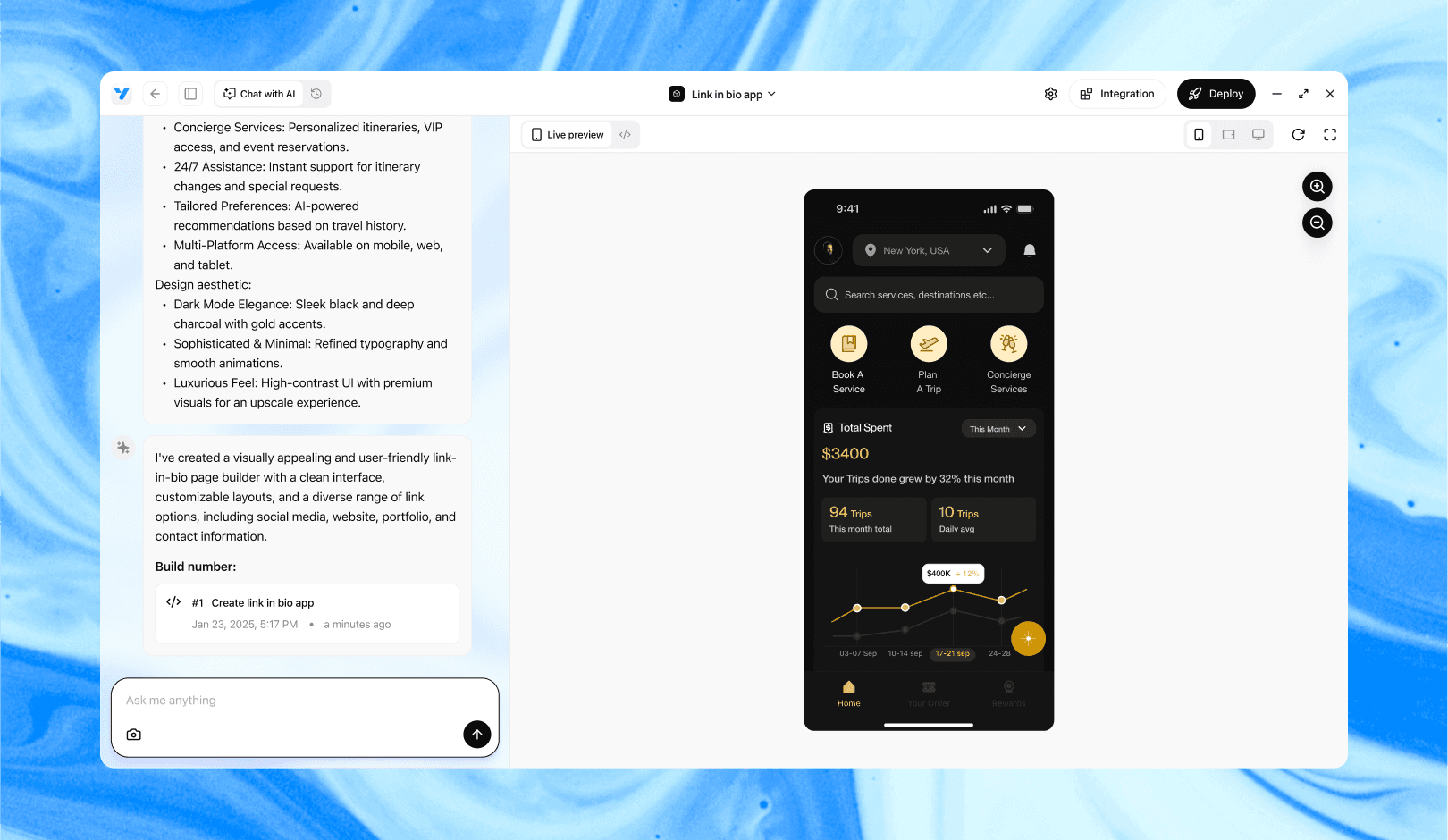
Vibe Studio, powered by Steve’s advanced AI agents, is a revolutionary no-code, conversational platform that empowers users to quickly and efficiently create full-stack Flutter applications integrated seamlessly with Firebase backend services. Ideal for solo founders, startups, and agile engineering teams, Vibe Studio allows users to visually manage and deploy Flutter apps, greatly accelerating the development process. The intuitive conversational interface simplifies complex development tasks, making app creation accessible even for non-coders.
Conclusion
DevTools gives a clear path from symptom (jank, memory spike) to cause (function or widget) through timeline captures, flame charts, and allocations. In flutter mobile development, profiling is iterative: prepare the app in profile mode, capture a concise trace, inspect frame breakdowns and the CPU flame chart, then apply targeted fixes (reduce rebuilds, offload work, cut allocations). Repeat until the frame budget and memory behavior are satisfactory.

Introduction
Performance profiling is essential in Flutter mobile development to find jank, high CPU use, memory spikes, and wasted rebuilds. DevTools provides an integrated Performance view that exposes frame timings, CPU profiles, rasterizer behavior, and allocation samples. This tutorial explains how to prepare your app, record and interpret traces, and act on the most common findings.
Preparing The App For Profiling
Use the profile build when measuring real-world performance: flutter run --profile or flutter build apk --profile. Profile mode compiles with optimizations and retains observability—unlike release mode, it keeps timeline events and service ports open for DevTools.
Before recording, reproduce the problematic scenario (scrolling, animation, cold start). Minimize background noise: close other apps and ensure the device is connected via USB (or Wi-Fi debugging) and recognized by adb / flutter devices.
If you need to mark regions in code for easier interpretation, use dart:developer's Timeline API:
import 'dart:developer'; void expensiveOperation() { Timeline.startSync('expensiveOperation'); // expensive sync work Timeline.finishSync(); }
Also consider moving heavy synchronous work off the main isolate using compute or explicit Isolates.
Using The Performance View
Launch DevTools from your IDE or run flutter pub global run devtools and open the Performance tab. Key UI elements:
Timeline: records UI, GPU, and asynchronous events across time.
Frame chart: shows frame build and raster durations; red bars indicate frames over the target (16ms for 60fps).
CPU profiler / Flame Chart: shows call stacks for selected time ranges.
Memory view: tracks allocations and GC events (in profile mode).
Recording workflow: start recording, perform the interaction, stop recording. Focus on a short capture window around the jank to reduce noise and make the flame chart readable.
Tip: enable Show raster thread and Show GPU events to separate engine vs framework work. Use the Frame Rendering lane to see which part of the frame cost time (build, layout, paint, compositing).
Interpreting CPU And Frame Data
Open a janky frame in the timeline: expand its frame to view sub-events. If build/layout/paint times are large, inspect the widget tree for rebuild hotspots. DevTools lets you jump from a timeline event to the source to see which method caused the time.
Use the CPU flame chart to identify which functions are dominant. Long stacks rooted in framework methods often indicate app code driving the work (e.g., expensive setState handlers, synchronous decoding, or complex layout traversals).
Common culprits:
Unnecessary rebuilds: widgets rebuilding too often; use const constructors and scoped rebuilding.
Heavy synchronous computation on main isolate: move to
compute()or an Isolate.Expensive layout: deep or unconstrained layout passes; use simpler constraints or cache sizes.
Example: offload JSON parsing or complex calculations:
import 'package:flutter/foundation.dart'; Future<void> parseLargeJson(String jsonString) async { final result = await compute(_parse, jsonString); } Map _parse(String s) => /* parsing logic */ {};
Memory And Allocation Profiling
The memory timeline in DevTools shows allocation spikes and GC events. Frequent alloc/GC cycles during interaction are a sign of churn: short-lived objects created repeatedly (strings, temporary lists, images).
Look at the Allocation profile to see which classes are dominating allocations. If Widgets or RenderObjects are allocating frequently, consider reusing objects (use const widgets, reuse controllers, cache images with precacheImage).
Image decoding can produce large allocations; prefer ResizeImage, cached network images, or decode on background threads where possible. Repaint boundaries reduce painting churn but add layers; profile to ensure they yield benefit.
Practical Fixes And Strategies
Minimize Rebuilds: use const widgets, ValueListenableBuilders, or Provider/Bloc selectors to narrow rebuild scopes.
Avoid Work In Build: keep build methods fast; do not run heavy computations there.
Use RepaintBoundary Judiciously: isolate heavy painting subtrees.
Offload Work: use
computeor Isolates for CPU-bound work.Reduce Allocations: reuse lists, use object pools when appropriate, and stream large data instead of materializing it.
Measure every change: after applying a fix, record another trace. Use small targeted tests (e.g., single scroll gesture) so you can compare before/after quantitatively.
Vibe Studio

Vibe Studio, powered by Steve’s advanced AI agents, is a revolutionary no-code, conversational platform that empowers users to quickly and efficiently create full-stack Flutter applications integrated seamlessly with Firebase backend services. Ideal for solo founders, startups, and agile engineering teams, Vibe Studio allows users to visually manage and deploy Flutter apps, greatly accelerating the development process. The intuitive conversational interface simplifies complex development tasks, making app creation accessible even for non-coders.
Conclusion
DevTools gives a clear path from symptom (jank, memory spike) to cause (function or widget) through timeline captures, flame charts, and allocations. In flutter mobile development, profiling is iterative: prepare the app in profile mode, capture a concise trace, inspect frame breakdowns and the CPU flame chart, then apply targeted fixes (reduce rebuilds, offload work, cut allocations). Repeat until the frame budget and memory behavior are satisfactory.

Build Flutter Apps Faster with Vibe Studio
Vibe Studio is your AI-powered Flutter development companion. Skip boilerplate, build in real-time, and deploy without hassle. Start creating apps at lightning speed with zero setup.