Introduction
Smooth, context-preserving page transitions elevate mobile apps. In Flutter, shared element animations—also called shared element transitions or Hero animations—let a widget appear to travel between routes, creating continuity and polish. This tutorial focuses on practical techniques to implement and customize shared element animations in Flutter for robust mobile development.
Understanding Shared Element Animations
A shared element animation connects a visual element on one route to its counterpart on another route. Flutter's built-in Hero widget is the primary tool for this pattern: it captures the source widget, creates a flying “hero” during the route transition, and morphs it into the target widget.
Key properties to understand:
tag: an identifier that pairs source and destination widgets.
flightShuttleBuilder: optional builder to control the in-flight appearance.
placeholderBuilder: controls what shows in the originating route while the hero flies.
Hero works best when the source and destination match visually (size, shape, and visual hierarchy). When they don't, use flightShuttleBuilder or matching ClipRect/ClipRRect to preserve shape and clipping.
Implementing Hero Widgets
Start by wrapping the shared widget in a Hero and using identical tags on both routes. Use simple imagery or an avatar for clear visual continuity. Keep tags unique within the app scope where pairs are expected.
Example: list item navigates to a detail page with a shared image.
Hero(
tag: 'item-42',
child: Image.network(url, width: 80, height: 80, fit: BoxFit.cover),
)
Hero(
tag: 'item-42',
child: Image.network(url, fit: BoxFit.cover),
)
When Navigator.push is called, Flutter animates the image between the routes. For complex children, wrap the child with Material and ClipRRect to match elevation and border radius.
Customizing Transitions With PageRouteBuilder
By default, Hero plays alongside the route transition. To control overall route animation, use PageRouteBuilder and provide a transitionsBuilder. Keep Hero usage unchanged—Hero isolates its flight animation—but best results come from combining subtle route animations with strong hero motion.
Example: slide-and-fade route while preserving Hero behavior.
Navigator.of(context).push(PageRouteBuilder(
  pageBuilder: (_, __, ___) => DetailPage(item: item),
  transitionsBuilder: (_, anim, __, child) {
    final offset = Tween(begin: Offset(0, 0.05), end: Offset.zero).animate(anim);
    return FadeTransition(opacity: anim, child: SlideTransition(position: offset, child: child));
  },
));
Use flightShuttleBuilder when the in-flight widget should differ (for example, morphing a circular avatar into a rectangular header). flightShuttleBuilder gives you the animation, fromHeroContext, toHeroContext and a boolean for direction. Render an AnimatedBuilder or Transform within it to animate shape, scale, or elevation.
Performance And Best Practices
Smooth transitions are as much about performance as design. Keep these rules in mind for efficient Flutter mobile development:
Keep Hero children lightweight: avoid rebuilding large widget trees during flight.
Supply semantics and excludedFromSemantics where appropriate to avoid accessibility duplication.
Use const where possible and avoid expensive layout work in flightShuttleBuilder.
Match clipping and shape to avoid jarring cropping artifacts—wrap both hero widgets in identical Clip widgets.
Avoid complex network image decode during transitions: pre-cache images with precacheImage before navigation to eliminate frame jank.
Testing on lower-end devices is essential—what’s smooth on a development phone may stutter in real-world conditions. Use the Performance overlay and the Timeline events to spot frame drops caused by rasterization or shader compilation.
Vibe Studio
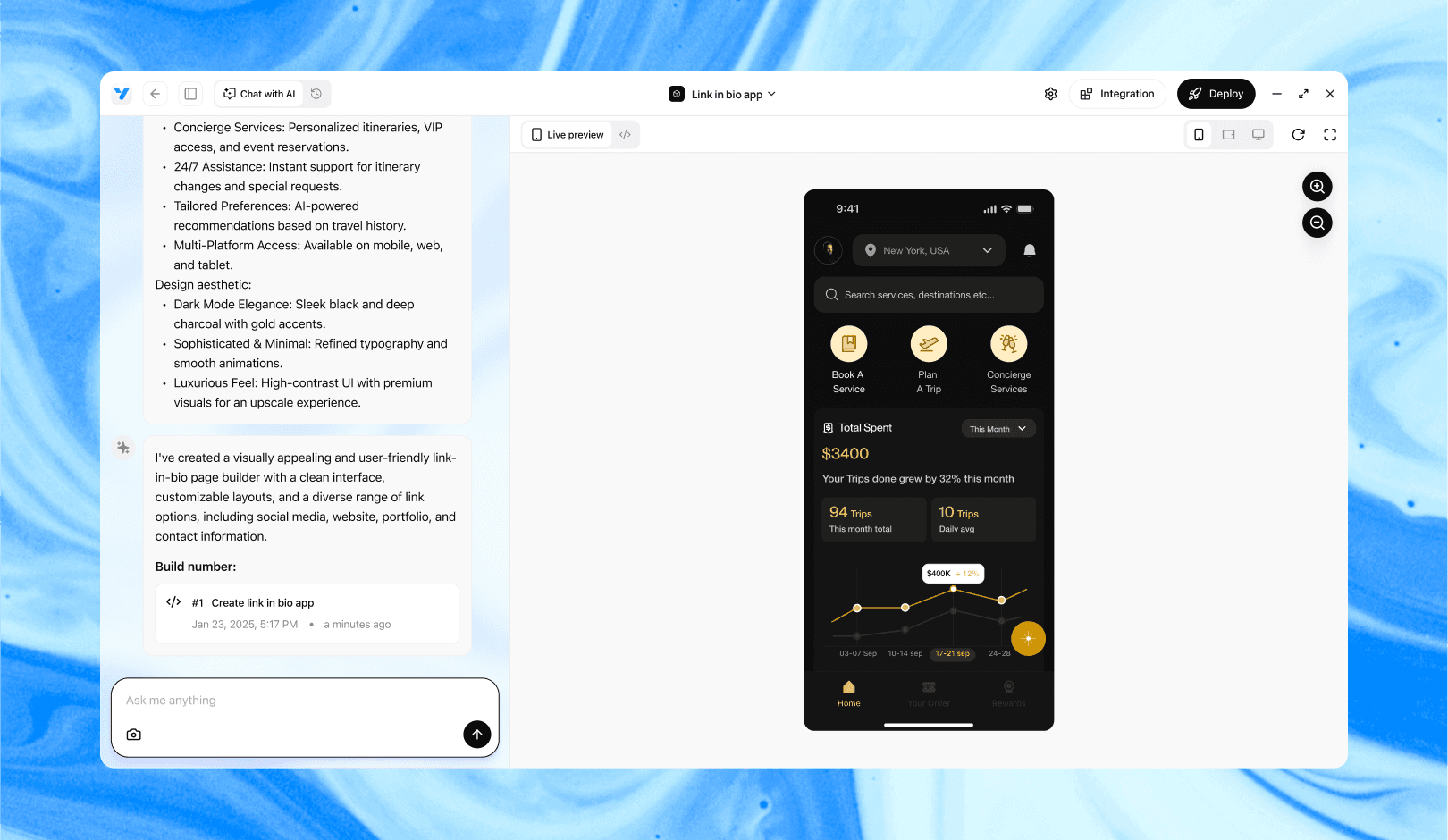
Vibe Studio, powered by Steve’s advanced AI agents, is a revolutionary no-code, conversational platform that empowers users to quickly and efficiently create full-stack Flutter applications integrated seamlessly with Firebase backend services. Ideal for solo founders, startups, and agile engineering teams, Vibe Studio allows users to visually manage and deploy Flutter apps, greatly accelerating the development process. The intuitive conversational interface simplifies complex development tasks, making app creation accessible even for non-coders.
Conclusion
Shared element animations in Flutter are high-impact, low-effort ways to make mobile development feel intentional and fluid. Use Hero for quick wins, add PageRouteBuilder for route-level polish, and customize with flightShuttleBuilder when you need morphing behavior. Prioritize performance: pre-cache assets, keep in-flight widgets simple, and match visual properties between source and destination. With these patterns you’ll create transitions that are not only beautiful but reliable across devices.