Introduction
Server-driven experiments let you change UI and behavior remotely without redeploying mobile apps. For Flutter mobile development teams, this enables rapid A/B testing, personalization, and rollback. But shipping UI definitions from servers introduces risks: malformed schemas, unsafe behavior, and performance regressions. This tutorial covers practical patterns to render UI from remote schemas safely: design principles, schema constraints, validation, rendering strategies, and observability.
Why Use Server-Driven Experiments
Server-driven experiments decouple UX configuration from app releases. You can test typography, layout choices, feature toggles, or whole flows by delivering JSON-based schemas. For Flutter, the approach reduces build frequency and supports multi-platform parity.
Benefits:
Faster iteration for experiments.
Targeted rollouts and immediate rollbacks.
Centralized analytics and control for feature exposure.
Risks to mitigate:
Arbitrary widget creation or code execution.
Schema injection and malformed payloads causing crashes.
Latency and rendering jank.
Designing A Safe Remote Schema
Start with a constrained DSL (domain-specific language) rather than arbitrary widget trees. Define a small set of primitive components (text, button, image, column, row, container) and a limited set of props. Use explicit types and enums; avoid embedding logic or script.
Schema best practices:
Version your schema. Include a required schema_version field and maintain compatibility rules.
Use enums for component types and style names; reject unknown values.
Restrict actions to named intents (navigate, track, fetch) instead of arbitrary code.
Attach capability metadata (maxItems, maxDepth) to prevent deep or huge trees.
Example minimal schema shape:
type: string (enum)
props: object (typed fields)
children: array (limited depth)
actions: object (referenced by name)
Validate on the server and again in the client. Server validation reduces noise and client-side validation is the last defense against malformed responses.
Rendering And Validation Strategies
Implement a two-step pipeline: validate, then render. Validation should be strict and fail-safe. If validation fails, fall back to a safe default UI or cached version.
Client-side validation checklist:
Check schema_version and reject unsupported versions.
Validate component types against the allowed list.
Enforce constraint limits: maxDepth, maxChildren, size bounds on assets.
Sanitize strings used in text or URLs to avoid injection attacks.
Use a factory pattern to map schema nodes to widgets. The factory should only expose permitted constructors and should never evaluate expressions from the schema. Isolate side-effecting operations (network calls, navigation) behind well-audited handlers.
Dart example: simple validator and safe factory mapping
bool isAllowedType(String type, Set<String> allowed) => allowed.contains(type);
Widget buildNode(Map node) {
final type = node['type'] as String;
if (!isAllowedType(type, {'text','button','row','column'})) return SizedBox();
switch (type) {
case 'text': return Text(node['props']['text'] ?? '');
case 'button': return ElevatedButton(onPressed: null, child: Text(node['props']['label']));
default: return SizedBox();
}
}Action handling must go through a dispatcher that enforces intent-level permissions and logs events. Never serialize callbacks; use identifiers that map to app-side handlers.
Performance And Observability
Remote schemas add network and parsing overhead. Mitigate performance risks with these strategies:
Cache validated schema blobs and compiled widget trees where possible.
Parse and validate on background isolates to avoid frame stalls in Flutter.
Limit payload size and number of assets per experiment.
Pre-fetch critical assets with prioritized loading.
Observability is crucial for experiments: track schema versions, validation errors, render times, and fallsbacks. Capture metrics:
Schema fetch latency and success rate.
Validation failure reasons and counts.
Render time and frames missed when rendering dynamic UI.
Centralized dashboards help correlate experiment exposure with crashes or UX regressions so you can roll back quickly.
Vibe Studio
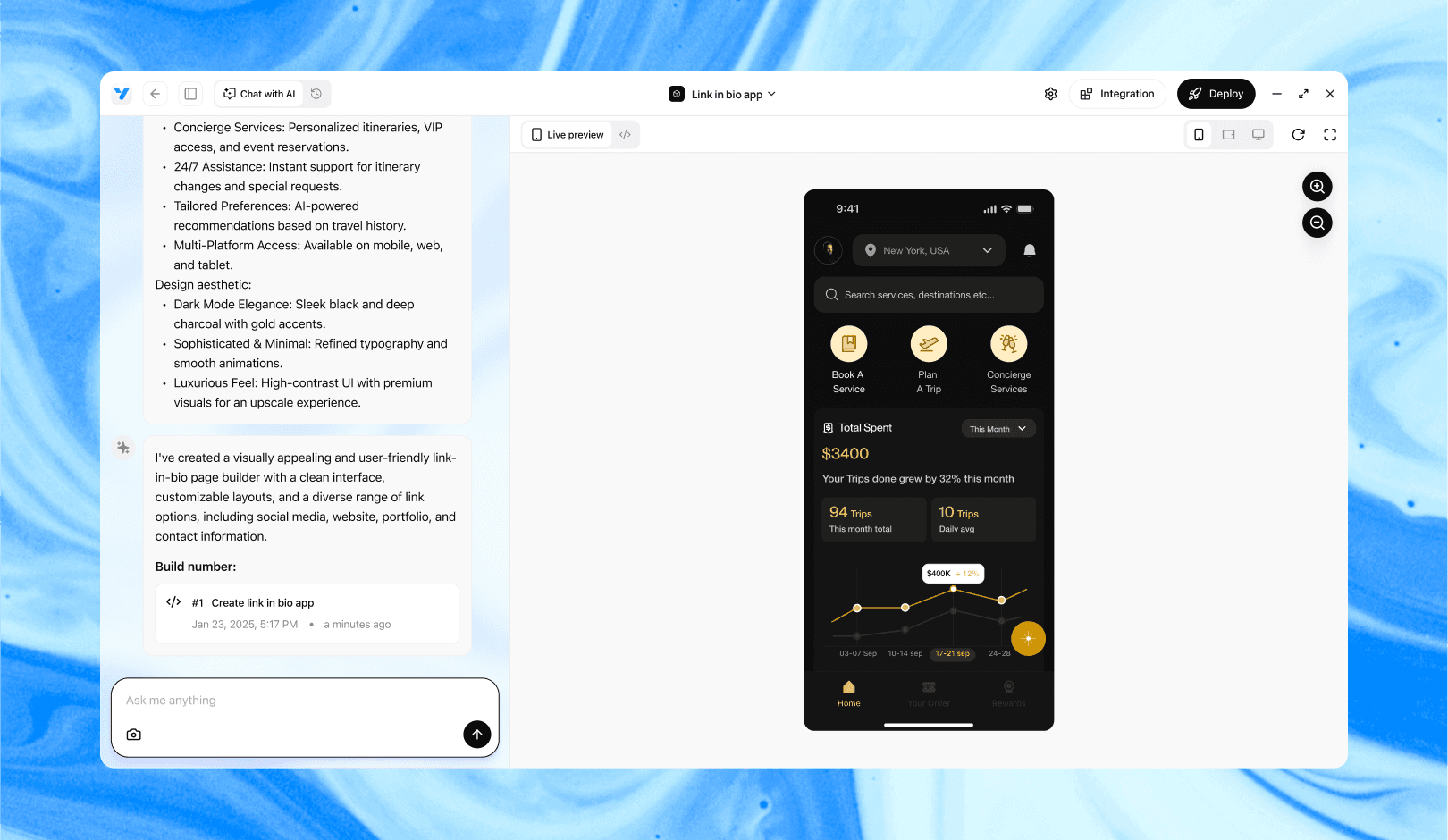
Vibe Studio, powered by Steve’s advanced AI agents, is a revolutionary no-code, conversational platform that empowers users to quickly and efficiently create full-stack Flutter applications integrated seamlessly with Firebase backend services. Ideal for solo founders, startups, and agile engineering teams, Vibe Studio allows users to visually manage and deploy Flutter apps, greatly accelerating the development process. The intuitive conversational interface simplifies complex development tasks, making app creation accessible even for non-coders.
Conclusion
Server-driven experiments are powerful for rapid iteration in Flutter mobile development, but success depends on safety and discipline. Define a small, well-typed schema, validate at both server and client, map nodes with a constrained factory, and isolate side effects. Invest in caching, background parsing, and thorough observability. When implemented correctly, you gain fast experimentation while keeping apps robust and performant.