Securing API Calls with mTLS in Flutter
Nov 5, 2025


Summary
Summary
Summary
Summary
This tutorial shows how to secure API calls in Flutter with mTLS: generate and provision client certificates, store private keys securely (prefer platform keystores), create a SecurityContext from certificate/key material, and use it with Dart's HttpClient or adapt Dio. Follow best practices for rotation, error handling, and minimizing key exposure in mobile development.
Key insights:
Key insights:
Key insights:
Key insights:
Preparing Certificates: Generate client certs from a trusted CA and configure the server to require client authentication.
Integrating Certificates In Flutter: Use platform keystores for private keys; only use bundled assets for testing with strong protections.
Implementing mTLS With HttpClient: Build a SecurityContext with certificate/key bytes and supply it to Dart's HttpClient for mutual TLS handshakes.
Best Practices And Error Handling: Avoid logging sensitive material, implement rotation and clear error telemetry, and reuse connections to reduce handshakes.
Operational Considerations: Design provisioning and rotation workflows to minimize in-app key exposure and support short-lived credentials for production.
Introduction
Mutual TLS (mTLS) provides both server and client authentication using X.509 certificates. For mobile development with Flutter, mTLS raises the security bar beyond standard TLS by proving the client identity to the API server. This tutorial explains how to prepare certificates, integrate them securely in a Flutter app, build an mTLS-capable HttpClient, and apply best practices for certificate rotation and error handling.
Preparing Certificates
Before coding, generate a client certificate signed by a CA that your API server trusts. Typical steps:
Create a private key and certificate signing request (CSR) for the mobile client.
Have your CA sign the CSR and provide a client certificate (PEM or P12/PFX).
Export the client certificate with its private key into a PKCS#12 (.p12/.pfx) file if you prefer a single artifact, or keep PEM files for separate chain and key.
On the server side, configure TLS to require client certificates and to trust the CA that issued the client certs. For production, use a secure CA process, strong key sizes (2048+ RSA or ECDSA), and short certificate lifetimes with rotation.
Integrating Certificates In Flutter
Store certificates and keys carefully. Avoid hardcoding private keys in source. Preferred approaches:
Use platform keystore/keychain (Android Keystore / iOS Keychain) to store private keys and reference them from Flutter using platform channels or packages.
If using a bundled p12 for initial provisioning, encrypt it and require a user-specific passphrase. Use secure storage for that passphrase.
For development and testing, you'll often load a PEM or P12 from assets. Example loading a P12 from assets and adding it to a SecurityContext (not suitable for production key management):
import 'dart:io';
import 'package:flutter/services.dart' show rootBundle;
Future<SecurityContext> buildContext() async {
final context = SecurityContext(withTrustedRoots: true);
final p12 = await rootBundle.load('assets/client_cert.p12');
context.usePrivateKeyBytes(p12.buffer.asUint8List(), password: 'p12password');
context.useCertificateChainBytes(p12.buffer.asUint8List());
return context;
}This demonstrates the API: SecurityContext can accept certificate and private key bytes for client auth. Remember: keep passwords out of code and protect asset files.
Implementing mTLS With HttpClient
Dart's HttpClient supports providing a SecurityContext to perform client authentication. Use the SecurityContext you created when instantiating the client.
import 'dart:io';
HttpClient createMtlsClient(SecurityContext ctx) {
final client = HttpClient(context: ctx);
client.connectionTimeout = const Duration(seconds: 15);
return client;
}Make requests using the client via client.getUrl or by wrapping it in an IOClient (package:http) that accepts a custom HttpClient. Avoid bypassing certificate validation; do not use badCertificateCallback to accept all certs in production.
If you use higher-level HTTP libraries like Dio, configure the underlying HttpClientAdapter to use an HttpClient constructed with your SecurityContext. For example, customize DefaultHttpClientAdapter on Dio to supply your mTLS-enabled HttpClient.
Best Practices And Error Handling
Use platform keystores when possible: Android Keystore and iOS Keychain provide stronger protection for private keys than app storage.
Limit in-app exposure: if you must ship a certificate, make it short-lived and require re-provisioning with user/device attestation.
Handle certificate errors explicitly: timeouts, handshake failures, and validation errors should map to clear user or telemetry events so you can detect rotation issues quickly.
Implement retry/backoff for transient network failures, but avoid retrying on authentication failures (handshake or certificate rejections) without refreshing credentials.
Log securely: do not log private key material or full certificate content. Log structured errors indicating failure type (handshake, expired cert, untrusted issuer).
Support certificate rotation: your server should accept both old and new client certs for a short transition window. The app should be able to fetch updated certificates or seeds from a secure provisioning endpoint when needed.
Performance note: mTLS handshake is heavier than standard TLS. Reuse connections (keep-alive) and avoid creating a new client per request to reduce handshake overhead.
Vibe Studio
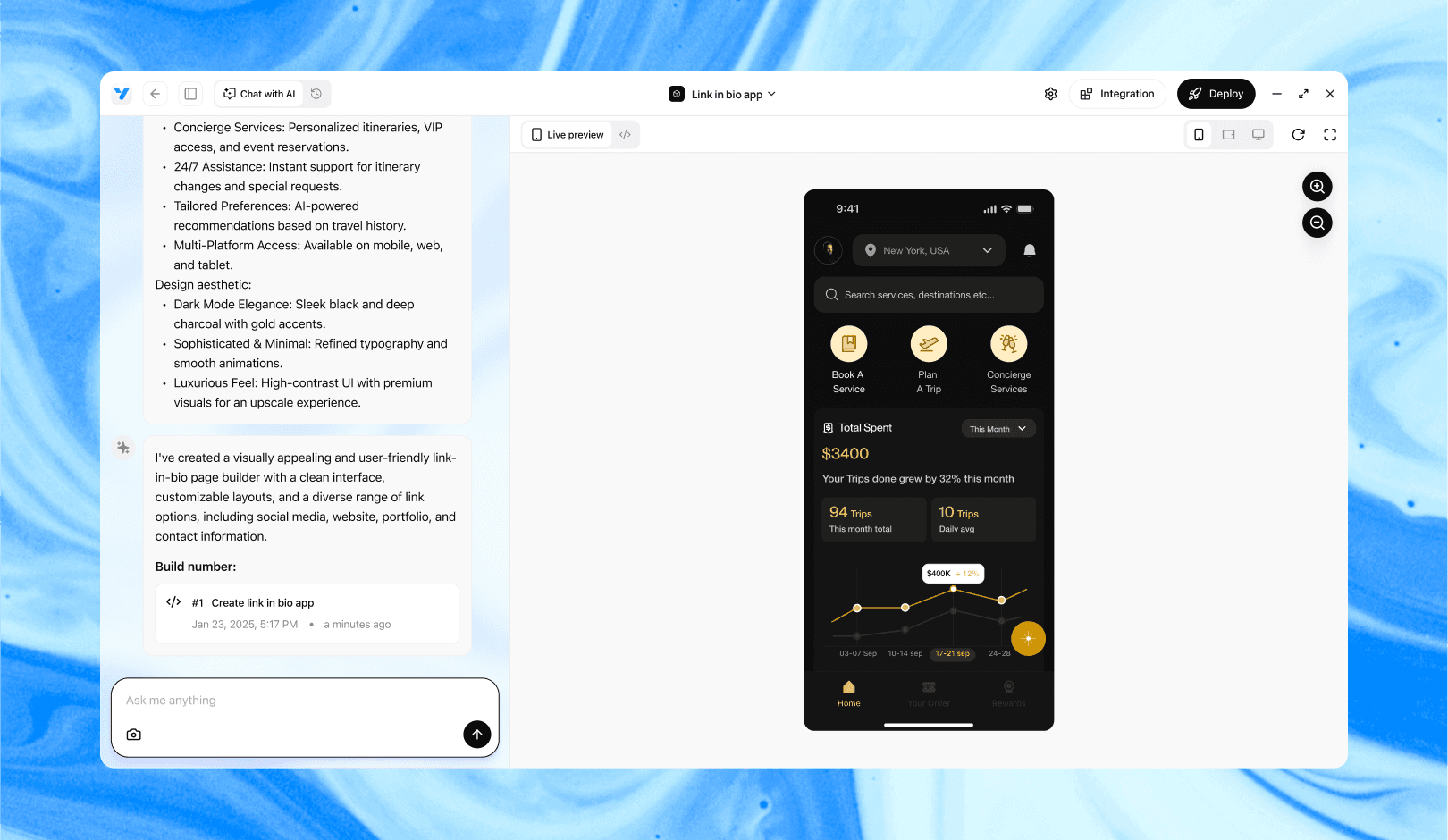
Vibe Studio, powered by Steve’s advanced AI agents, is a revolutionary no-code, conversational platform that empowers users to quickly and efficiently create full-stack Flutter applications integrated seamlessly with Firebase backend services. Ideal for solo founders, startups, and agile engineering teams, Vibe Studio allows users to visually manage and deploy Flutter apps, greatly accelerating the development process. The intuitive conversational interface simplifies complex development tasks, making app creation accessible even for non-coders.
Conclusion
Implementing mTLS in Flutter provides strong client authentication for APIs in mobile development. The workflow is: provision and sign client certificates, store private keys securely using platform keystores, wire up a SecurityContext into the Dart HttpClient (or adapt third-party HTTP libraries), and follow best practices for rotation, error handling, and logging. Properly implemented, mTLS adds a robust layer of defense for sensitive APIs accessed by mobile apps.

Introduction
Mutual TLS (mTLS) provides both server and client authentication using X.509 certificates. For mobile development with Flutter, mTLS raises the security bar beyond standard TLS by proving the client identity to the API server. This tutorial explains how to prepare certificates, integrate them securely in a Flutter app, build an mTLS-capable HttpClient, and apply best practices for certificate rotation and error handling.
Preparing Certificates
Before coding, generate a client certificate signed by a CA that your API server trusts. Typical steps:
Create a private key and certificate signing request (CSR) for the mobile client.
Have your CA sign the CSR and provide a client certificate (PEM or P12/PFX).
Export the client certificate with its private key into a PKCS#12 (.p12/.pfx) file if you prefer a single artifact, or keep PEM files for separate chain and key.
On the server side, configure TLS to require client certificates and to trust the CA that issued the client certs. For production, use a secure CA process, strong key sizes (2048+ RSA or ECDSA), and short certificate lifetimes with rotation.
Integrating Certificates In Flutter
Store certificates and keys carefully. Avoid hardcoding private keys in source. Preferred approaches:
Use platform keystore/keychain (Android Keystore / iOS Keychain) to store private keys and reference them from Flutter using platform channels or packages.
If using a bundled p12 for initial provisioning, encrypt it and require a user-specific passphrase. Use secure storage for that passphrase.
For development and testing, you'll often load a PEM or P12 from assets. Example loading a P12 from assets and adding it to a SecurityContext (not suitable for production key management):
import 'dart:io';
import 'package:flutter/services.dart' show rootBundle;
Future<SecurityContext> buildContext() async {
final context = SecurityContext(withTrustedRoots: true);
final p12 = await rootBundle.load('assets/client_cert.p12');
context.usePrivateKeyBytes(p12.buffer.asUint8List(), password: 'p12password');
context.useCertificateChainBytes(p12.buffer.asUint8List());
return context;
}This demonstrates the API: SecurityContext can accept certificate and private key bytes for client auth. Remember: keep passwords out of code and protect asset files.
Implementing mTLS With HttpClient
Dart's HttpClient supports providing a SecurityContext to perform client authentication. Use the SecurityContext you created when instantiating the client.
import 'dart:io';
HttpClient createMtlsClient(SecurityContext ctx) {
final client = HttpClient(context: ctx);
client.connectionTimeout = const Duration(seconds: 15);
return client;
}Make requests using the client via client.getUrl or by wrapping it in an IOClient (package:http) that accepts a custom HttpClient. Avoid bypassing certificate validation; do not use badCertificateCallback to accept all certs in production.
If you use higher-level HTTP libraries like Dio, configure the underlying HttpClientAdapter to use an HttpClient constructed with your SecurityContext. For example, customize DefaultHttpClientAdapter on Dio to supply your mTLS-enabled HttpClient.
Best Practices And Error Handling
Use platform keystores when possible: Android Keystore and iOS Keychain provide stronger protection for private keys than app storage.
Limit in-app exposure: if you must ship a certificate, make it short-lived and require re-provisioning with user/device attestation.
Handle certificate errors explicitly: timeouts, handshake failures, and validation errors should map to clear user or telemetry events so you can detect rotation issues quickly.
Implement retry/backoff for transient network failures, but avoid retrying on authentication failures (handshake or certificate rejections) without refreshing credentials.
Log securely: do not log private key material or full certificate content. Log structured errors indicating failure type (handshake, expired cert, untrusted issuer).
Support certificate rotation: your server should accept both old and new client certs for a short transition window. The app should be able to fetch updated certificates or seeds from a secure provisioning endpoint when needed.
Performance note: mTLS handshake is heavier than standard TLS. Reuse connections (keep-alive) and avoid creating a new client per request to reduce handshake overhead.
Vibe Studio

Vibe Studio, powered by Steve’s advanced AI agents, is a revolutionary no-code, conversational platform that empowers users to quickly and efficiently create full-stack Flutter applications integrated seamlessly with Firebase backend services. Ideal for solo founders, startups, and agile engineering teams, Vibe Studio allows users to visually manage and deploy Flutter apps, greatly accelerating the development process. The intuitive conversational interface simplifies complex development tasks, making app creation accessible even for non-coders.
Conclusion
Implementing mTLS in Flutter provides strong client authentication for APIs in mobile development. The workflow is: provision and sign client certificates, store private keys securely using platform keystores, wire up a SecurityContext into the Dart HttpClient (or adapt third-party HTTP libraries), and follow best practices for rotation, error handling, and logging. Properly implemented, mTLS adds a robust layer of defense for sensitive APIs accessed by mobile apps.

Build Flutter Apps Faster with Vibe Studio
Vibe Studio is your AI-powered Flutter development companion. Skip boilerplate, build in real-time, and deploy without hassle. Start creating apps at lightning speed with zero setup.