Securely Storing Secrets In Flutter And Avoiding Leaks In Git
Summary
Summary

Practical guide for Flutter mobile development: store secrets in platform-backed secure storage (flutter_secure_storage), keep them out of Git with .gitignore and pre-commit scans, inject secrets via CI or dart-define for builds, and rotate plus audit secrets when necessary. If a secret is committed, revoke and remove it from history immediately.

Practical guide for Flutter mobile development: store secrets in platform-backed secure storage (flutter_secure_storage), keep them out of Git with .gitignore and pre-commit scans, inject secrets via CI or dart-define for builds, and rotate plus audit secrets when necessary. If a secret is committed, revoke and remove it from history immediately.

Key insights:
Key insights:
  • Use Platform-Specific Secure Storage: Use OS-backed stores (Android Keystore, iOS Keychain) via flutter_secure_storage and avoid plaintext or logs.

  • Avoid Committing Secrets To Git: Add sensitive files to .gitignore, use templates for config, and enforce pre-commit scanning to stop leaks.

  • Manage Environment Configuration Safely: Use CI secret stores and dart-define for non-sensitive values; fetch high-sensitivity secrets at runtime from a backend.

  • Rotate And Audit Secrets: Rotate keys after exposure, use short-lived tokens, and audit usage and Git history regularly.

  • Secure CI And Scanning: Store secrets in CI providers’ vaults, inject at build time, and run scheduled scans to detect accidental commits.

Introduction

Secrets—API keys, OAuth client secrets, and service credentials—are a recurring need in mobile development. In Flutter apps they unlock third-party APIs, analytics, and backend services. Storing these secrets improperly or committing them to Git risks abuse, costly incidents, and revoked keys. This article gives practical, code-forward guidance to store secrets securely on-device, keep them out of Git, and recover if a leak happens.

Use Platform-Specific Secure Storage

Never store secrets in plain text files or in source code. Use platform-backed secure storage that protects data with hardware or OS-level protections.

  • Use package:flutter_secure_storage to access Android Keystore and iOS Keychain from Dart.

  • On Android prefer EncryptedSharedPreferences (used by flutter_secure_storage under the hood when available). On iOS rely on Keychain accessibility flags.

  • Use biometrics or device authentication for additional protection when required.

Example: write and read a token securely.

import 'package:flutter_secure_storage/flutter_secure_storage.dart';
final storage = FlutterSecureStorage();

Future<void> saveToken(String token) async {
  await storage.write(key: 'api_token', value: token);
}

Future<String?> readToken() async => await storage.read(key: 'api_token');

Design notes: keep secrets in memory only as long as needed. Zero out references when done and avoid logging secrets. Treat any value read from secure storage as sensitive.

Avoid Committing Secrets To Git

Prevent leaks by stopping secrets before they reach the repo.

  • Use .gitignore for local files that contain secrets (e.g., .env.local, keys/). Commit a template (.env.example) without secrets.

  • Prefer build-time injection (dart-define) or CI-managed secrets rather than storing credentials in files under source control.

  • Add pre-commit hooks to scan for secrets. Tools: detect-secrets, truffleHog, git-secrets. A lightweight approach: add a hook that rejects commits with patterns like private keys or long base64 strings.

  • If a secret is accidentally committed: treat it as compromised, rotate the secret immediately, and remove it from history with git filter-repo or BFG Repo-Cleaner. Note that removing history from a public repo will force collaborators to re-clone.

Example .gitignore lines:

.env.local

secrets.json

keys/


Manage Environment Configuration Safely

Choose a configuration strategy appropriate for the sensitivity and lifecycle of the secret.

  • Non-sensitive flags: use Dart environment variables with --dart-define for compile-time values. These are baked into the app binary and are discoverable in distributed builds if included—so only use for non-critical flags.

// Access compile-time define
const apiBase = String.fromEnvironment('API_BASE', defaultValue: 'https://api.example.com');
  • Sensitive runtime secrets: obtain from a backend at first run, or rely on secure storage populated by a provisioning process. Never embed server-side secrets (DB credentials, service account keys) in the mobile app.

  • CI/CD: store secrets in the CI provider’s secret store (GitHub Actions Secrets, GitLab CI Variables, Bitrise Secrets). Inject them into the build environment at runtime and avoid echoing them in logs.

  • Use a configuration provider pattern in your app so that how a secret is supplied is abstracted (e.g., SecretProvider interface with implementations for local dev, CI, and runtime fetch).

Rotate And Audit Secrets

Assume secrets will leak eventually—design for detection and recovery.

  • Rotate keys regularly and after any suspicious event. Use short-lived tokens where possible; issue refresh tokens from a backend with revocation capability.

  • Maintain an audit trail for key issuance and use. On the backend, log token usage and monitor for anomalies (IP, geolocation, rate spikes).

  • Automate scanning of your Git history and branches for accidental secrets. Add scheduled scans in CI to detect secrets introduced in feature branches.

  • Implement least privilege: mobile app secrets should be scoped and limited (for example, use an API key limited to read-only endpoints).

Vibe Studio
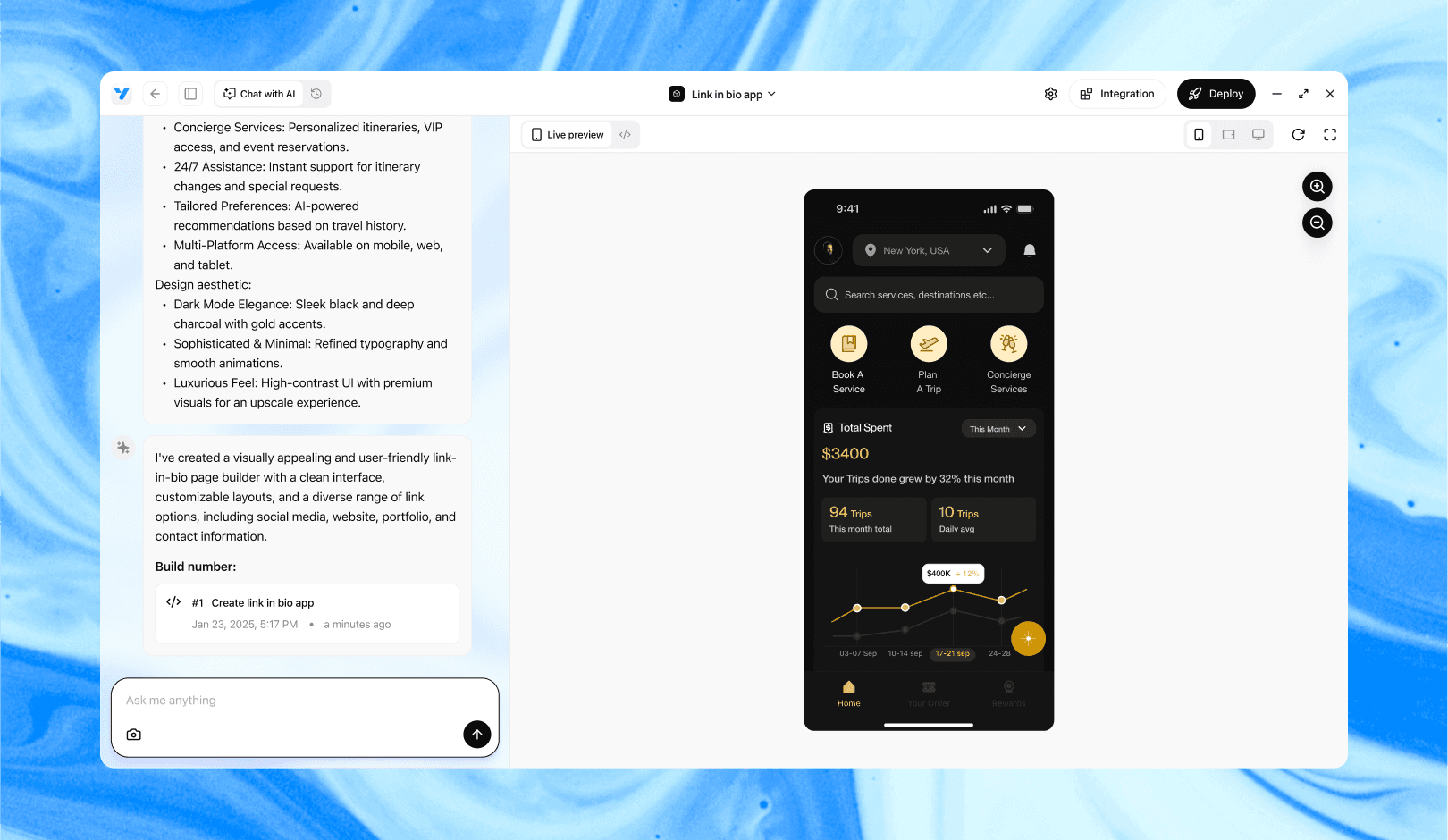
Vibe Studio, powered by Steve’s advanced AI agents, is a revolutionary no-code, conversational platform that empowers users to quickly and efficiently create full-stack Flutter applications integrated seamlessly with Firebase backend services. Ideal for solo founders, startups, and agile engineering teams, Vibe Studio allows users to visually manage and deploy Flutter apps, greatly accelerating the development process. The intuitive conversational interface simplifies complex development tasks, making app creation accessible even for non-coders.

Conclusion

Secure secret handling in Flutter requires using OS-backed secure storage, preventing commits to Git, safely managing environment configuration, and planning for rotation and detection. Combine secure storage libraries like flutter_secure_storage, CI secret stores, pre-commit scanning, and runtime provisioning to reduce exposure. If a leak occurs, rotate keys immediately and scrub history. These practices protect users and ensure your mobile development lifecycle remains resilient to credential exposure.


Introduction

Secrets—API keys, OAuth client secrets, and service credentials—are a recurring need in mobile development. In Flutter apps they unlock third-party APIs, analytics, and backend services. Storing these secrets improperly or committing them to Git risks abuse, costly incidents, and revoked keys. This article gives practical, code-forward guidance to store secrets securely on-device, keep them out of Git, and recover if a leak happens.

Use Platform-Specific Secure Storage

Never store secrets in plain text files or in source code. Use platform-backed secure storage that protects data with hardware or OS-level protections.

  • Use package:flutter_secure_storage to access Android Keystore and iOS Keychain from Dart.

  • On Android prefer EncryptedSharedPreferences (used by flutter_secure_storage under the hood when available). On iOS rely on Keychain accessibility flags.

  • Use biometrics or device authentication for additional protection when required.

Example: write and read a token securely.

import 'package:flutter_secure_storage/flutter_secure_storage.dart';
final storage = FlutterSecureStorage();

Future<void> saveToken(String token) async {
  await storage.write(key: 'api_token', value: token);
}

Future<String?> readToken() async => await storage.read(key: 'api_token');

Design notes: keep secrets in memory only as long as needed. Zero out references when done and avoid logging secrets. Treat any value read from secure storage as sensitive.

Avoid Committing Secrets To Git

Prevent leaks by stopping secrets before they reach the repo.

  • Use .gitignore for local files that contain secrets (e.g., .env.local, keys/). Commit a template (.env.example) without secrets.

  • Prefer build-time injection (dart-define) or CI-managed secrets rather than storing credentials in files under source control.

  • Add pre-commit hooks to scan for secrets. Tools: detect-secrets, truffleHog, git-secrets. A lightweight approach: add a hook that rejects commits with patterns like private keys or long base64 strings.

  • If a secret is accidentally committed: treat it as compromised, rotate the secret immediately, and remove it from history with git filter-repo or BFG Repo-Cleaner. Note that removing history from a public repo will force collaborators to re-clone.

Example .gitignore lines:

.env.local

secrets.json

keys/


Manage Environment Configuration Safely

Choose a configuration strategy appropriate for the sensitivity and lifecycle of the secret.

  • Non-sensitive flags: use Dart environment variables with --dart-define for compile-time values. These are baked into the app binary and are discoverable in distributed builds if included—so only use for non-critical flags.

// Access compile-time define
const apiBase = String.fromEnvironment('API_BASE', defaultValue: 'https://api.example.com');
  • Sensitive runtime secrets: obtain from a backend at first run, or rely on secure storage populated by a provisioning process. Never embed server-side secrets (DB credentials, service account keys) in the mobile app.

  • CI/CD: store secrets in the CI provider’s secret store (GitHub Actions Secrets, GitLab CI Variables, Bitrise Secrets). Inject them into the build environment at runtime and avoid echoing them in logs.

  • Use a configuration provider pattern in your app so that how a secret is supplied is abstracted (e.g., SecretProvider interface with implementations for local dev, CI, and runtime fetch).

Rotate And Audit Secrets

Assume secrets will leak eventually—design for detection and recovery.

  • Rotate keys regularly and after any suspicious event. Use short-lived tokens where possible; issue refresh tokens from a backend with revocation capability.

  • Maintain an audit trail for key issuance and use. On the backend, log token usage and monitor for anomalies (IP, geolocation, rate spikes).

  • Automate scanning of your Git history and branches for accidental secrets. Add scheduled scans in CI to detect secrets introduced in feature branches.

  • Implement least privilege: mobile app secrets should be scoped and limited (for example, use an API key limited to read-only endpoints).

Vibe Studio

Vibe Studio, powered by Steve’s advanced AI agents, is a revolutionary no-code, conversational platform that empowers users to quickly and efficiently create full-stack Flutter applications integrated seamlessly with Firebase backend services. Ideal for solo founders, startups, and agile engineering teams, Vibe Studio allows users to visually manage and deploy Flutter apps, greatly accelerating the development process. The intuitive conversational interface simplifies complex development tasks, making app creation accessible even for non-coders.

Conclusion

Secure secret handling in Flutter requires using OS-backed secure storage, preventing commits to Git, safely managing environment configuration, and planning for rotation and detection. Combine secure storage libraries like flutter_secure_storage, CI secret stores, pre-commit scanning, and runtime provisioning to reduce exposure. If a leak occurs, rotate keys immediately and scrub history. These practices protect users and ensure your mobile development lifecycle remains resilient to credential exposure.

Build Flutter Apps Faster with Vibe Studio

Vibe Studio is your AI-powered Flutter development companion. Skip boilerplate, build in real-time, and deploy without hassle. Start creating apps at lightning speed with zero setup.

Other Insights

Join a growing community of builders today

Join a growing community of builders today

Join a growing community of builders today

Join a growing community of builders today

Join a growing community of builders today

28-07 Jackson Ave

Walturn

New York NY 11101 United States

© Steve • All Rights Reserved 2025

28-07 Jackson Ave

Walturn

New York NY 11101 United States

© Steve • All Rights Reserved 2025

28-07 Jackson Ave

Walturn

New York NY 11101 United States

© Steve • All Rights Reserved 2025

28-07 Jackson Ave

Walturn

New York NY 11101 United States

© Steve • All Rights Reserved 2025

28-07 Jackson Ave

Walturn

New York NY 11101 United States

© Steve • All Rights Reserved 2025

28-07 Jackson Ave

Walturn

New York NY 11101 United States

© Steve • All Rights Reserved 2025