Refactoring A Prototype Into Maintainable Flutter Code In Weeks
Summary
Summary

Refactor a Flutter prototype into maintainable mobile development code by auditing and prioritizing flows, extracting reusable widgets, moving logic to a state/data layer, and adding tests and CI. Use small, scoped changes and dependency injection to enable fast iteration and reliable unit/widget tests.

Refactor a Flutter prototype into maintainable mobile development code by auditing and prioritizing flows, extracting reusable widgets, moving logic to a state/data layer, and adding tests and CI. Use small, scoped changes and dependency injection to enable fast iteration and reliable unit/widget tests.

Key insights:
Key insights:
  • Assess And Plan: Target the highest-risk user flow and define small, scoped refactor tasks to reduce risk and deliver value fast.

  • Modularize UI And Reuse Widgets: Extract single-responsibility widgets with minimal APIs to improve readability and testability.

  • Establish State Management And Data Layer: Move business logic into view models and repositories with constructor injection for testability.

  • Testing Automation And CI: Add unit and widget tests early and run them in CI to prevent regressions and enforce architecture boundaries.

  • Incremental Iteration: Small, reversible refactors across a few sprints convert prototypes into predictable production-ready code.

Introduction

Refactoring a fast prototype into maintainable Flutter code is a practical skill for any mobile development team. Prototypes prioritize speed; production apps need structure. In weeks, not months, you can convert throwaway screens and spaghetti callbacks into a testable, reusable codebase by applying disciplined patterns: plan the refactor, extract widgets, define a clear state and data layer, and add tests and CI. This tutorial focuses on actionable steps and small, repeatable refactors you can do across a codebase.

Assess And Plan

Start with a focused audit. Identify the most unstable areas that block shipping: large screens, duplicated UI, and direct network calls inside widgets. Create a short backlog of targeted tasks, each with a small scope: extract widget, remove business logic from UI, add a model, or add a test. Prioritize by impact and risk—pick a single user flow and make that flow clean and repeatable.

Tips:

  • Measure duplication: find UI patterns that repeat across screens.

  • Flag widgets that directly call APIs or perform heavy logic; these are first-class candidates for extraction.

  • Define simple success criteria: unit-test coverage for a flow, or replacing UI callbacks with a provider.

Modularize UI And Reuse Widgets

Replace long build methods with small, composable widgets. A single responsibility per widget makes the UI tree readable and testable. When extracting, keep the API minimal: accept data and callbacks, avoid accessing global state inside the new widget.

Small consistent widgets reduce merge conflicts and speed up development. Use clear folder conventions: feature_name/ui, feature_name/state, feature_name/models. Example refactor: extract a profile header into a stateless widget.

class ProfileHeader extends StatelessWidget {
  final String name;
  final VoidCallback onEdit;

  const ProfileHeader({required this.name, required this.onEdit, Key? key}) : super(key: key);

  @override
  Widget build(BuildContext context) => Row(
    children: [Text(name), IconButton(icon: Icon(Icons.edit), onPressed: onEdit)],
  );
}

After extraction, tests can instantiate ProfileHeader with mocked callbacks. Keep widgets free of business logic: if a widget needs data transformation, do that in the parent or a view model.

Establish State Management And Data Layer

Move business logic and network calls out of widgets into a clear state layer. Choose a pattern consistent with your team: Provider+ChangeNotifier, Riverpod, BLoC, or plain ValueNotifier. The goal is predictability and easily testable units.

Create a thin interface for repositories and inject them. Replace direct API calls in widgets with calls to a view model. Example: a compact ChangeNotifier that fetches profile data.

class ProfileModel extends ChangeNotifier {
  final ProfileRepository repo;
  Profile? profile;
  bool loading = false;

  ProfileModel(this.repo);
  Future<void> load() async {
    loading = true; notifyListeners();
    profile = await repo.fetchProfile();
    loading = false; notifyListeners();
  }
}

Use constructor injection for the repository so unit tests can use a fake implementation. For mobile development projects, keeping data fetching and caching policies in the repository layer makes it simpler to swap implementations later.

Testing Automation And CI

Add tests in parallel with refactors. Unit tests for view models and widget tests for extracted widgets provide rapid feedback. Start with the flow you prioritized during planning and keep tests granular. Automate the checks in CI so regressions are caught before merge.

Practical CI setup steps:

  • Run dart analyze and format checks.

  • Run unit and widget tests with coverage gating for critical modules.

  • Optionally run a small integration test on an emulator for the main user path.

Testing forces better boundaries: when UI is hard to test, that signals an architecture problem to fix. Use mocks and dependency injection to keep tests fast.

Vibe Studio
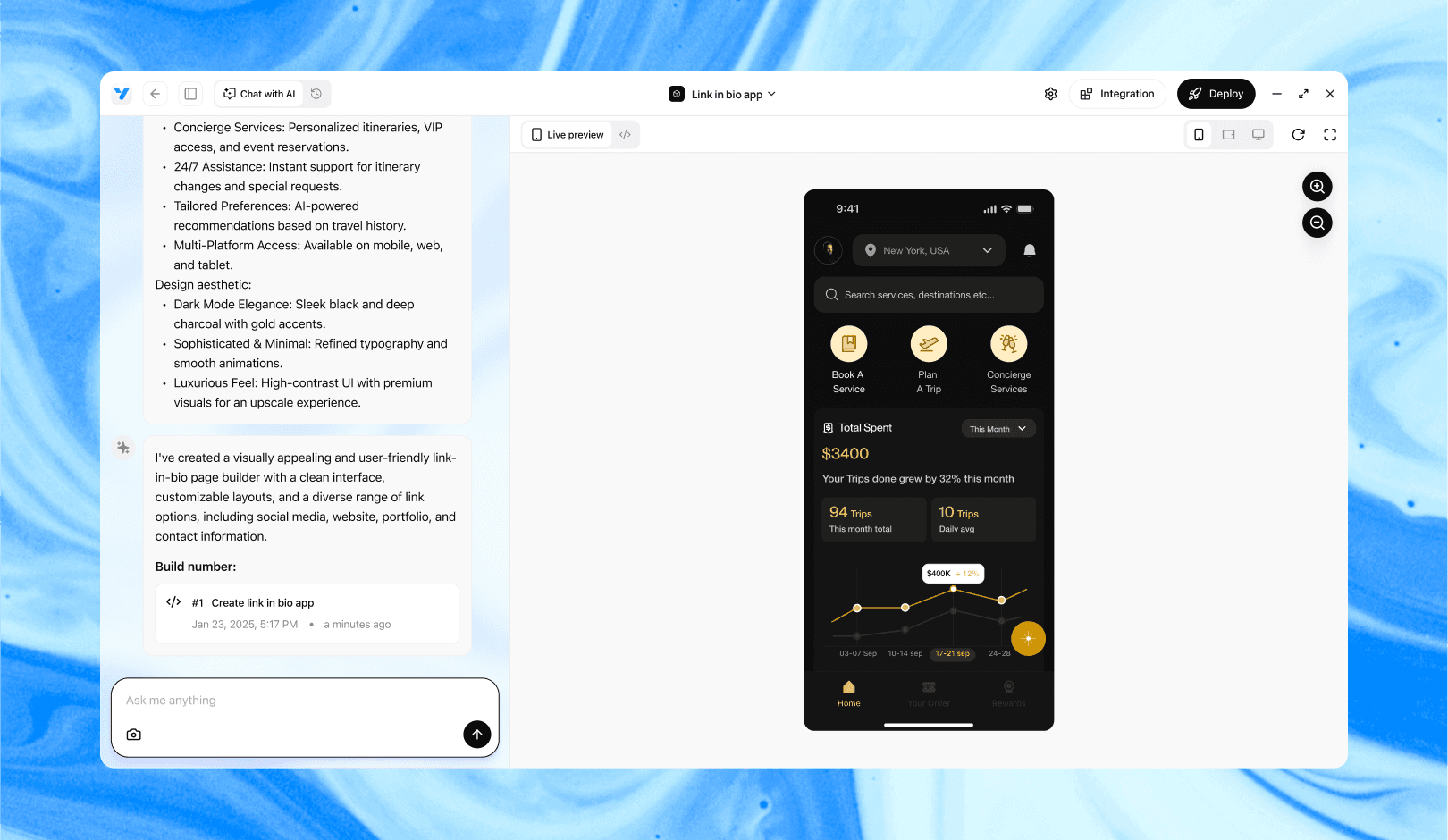
Vibe Studio, powered by Steve’s advanced AI agents, is a revolutionary no-code, conversational platform that empowers users to quickly and efficiently create full-stack Flutter applications integrated seamlessly with Firebase backend services. Ideal for solo founders, startups, and agile engineering teams, Vibe Studio allows users to visually manage and deploy Flutter apps, greatly accelerating the development process. The intuitive conversational interface simplifies complex development tasks, making app creation accessible even for non-coders.

Conclusion

A planned, iterative approach turns a prototype into maintainable Flutter code within weeks. Focus on one flow, extract widgets, move logic to a dedicated state/data layer, and secure the work with tests and CI. Keep changes small, reversible, and well-scoped. Over a few iterations you’ll replace fragile prototype code with a predictable, testable codebase that accelerates future mobile development without blocking releases.

Introduction

Refactoring a fast prototype into maintainable Flutter code is a practical skill for any mobile development team. Prototypes prioritize speed; production apps need structure. In weeks, not months, you can convert throwaway screens and spaghetti callbacks into a testable, reusable codebase by applying disciplined patterns: plan the refactor, extract widgets, define a clear state and data layer, and add tests and CI. This tutorial focuses on actionable steps and small, repeatable refactors you can do across a codebase.

Assess And Plan

Start with a focused audit. Identify the most unstable areas that block shipping: large screens, duplicated UI, and direct network calls inside widgets. Create a short backlog of targeted tasks, each with a small scope: extract widget, remove business logic from UI, add a model, or add a test. Prioritize by impact and risk—pick a single user flow and make that flow clean and repeatable.

Tips:

  • Measure duplication: find UI patterns that repeat across screens.

  • Flag widgets that directly call APIs or perform heavy logic; these are first-class candidates for extraction.

  • Define simple success criteria: unit-test coverage for a flow, or replacing UI callbacks with a provider.

Modularize UI And Reuse Widgets

Replace long build methods with small, composable widgets. A single responsibility per widget makes the UI tree readable and testable. When extracting, keep the API minimal: accept data and callbacks, avoid accessing global state inside the new widget.

Small consistent widgets reduce merge conflicts and speed up development. Use clear folder conventions: feature_name/ui, feature_name/state, feature_name/models. Example refactor: extract a profile header into a stateless widget.

class ProfileHeader extends StatelessWidget {
  final String name;
  final VoidCallback onEdit;

  const ProfileHeader({required this.name, required this.onEdit, Key? key}) : super(key: key);

  @override
  Widget build(BuildContext context) => Row(
    children: [Text(name), IconButton(icon: Icon(Icons.edit), onPressed: onEdit)],
  );
}

After extraction, tests can instantiate ProfileHeader with mocked callbacks. Keep widgets free of business logic: if a widget needs data transformation, do that in the parent or a view model.

Establish State Management And Data Layer

Move business logic and network calls out of widgets into a clear state layer. Choose a pattern consistent with your team: Provider+ChangeNotifier, Riverpod, BLoC, or plain ValueNotifier. The goal is predictability and easily testable units.

Create a thin interface for repositories and inject them. Replace direct API calls in widgets with calls to a view model. Example: a compact ChangeNotifier that fetches profile data.

class ProfileModel extends ChangeNotifier {
  final ProfileRepository repo;
  Profile? profile;
  bool loading = false;

  ProfileModel(this.repo);
  Future<void> load() async {
    loading = true; notifyListeners();
    profile = await repo.fetchProfile();
    loading = false; notifyListeners();
  }
}

Use constructor injection for the repository so unit tests can use a fake implementation. For mobile development projects, keeping data fetching and caching policies in the repository layer makes it simpler to swap implementations later.

Testing Automation And CI

Add tests in parallel with refactors. Unit tests for view models and widget tests for extracted widgets provide rapid feedback. Start with the flow you prioritized during planning and keep tests granular. Automate the checks in CI so regressions are caught before merge.

Practical CI setup steps:

  • Run dart analyze and format checks.

  • Run unit and widget tests with coverage gating for critical modules.

  • Optionally run a small integration test on an emulator for the main user path.

Testing forces better boundaries: when UI is hard to test, that signals an architecture problem to fix. Use mocks and dependency injection to keep tests fast.

Vibe Studio

Vibe Studio, powered by Steve’s advanced AI agents, is a revolutionary no-code, conversational platform that empowers users to quickly and efficiently create full-stack Flutter applications integrated seamlessly with Firebase backend services. Ideal for solo founders, startups, and agile engineering teams, Vibe Studio allows users to visually manage and deploy Flutter apps, greatly accelerating the development process. The intuitive conversational interface simplifies complex development tasks, making app creation accessible even for non-coders.

Conclusion

A planned, iterative approach turns a prototype into maintainable Flutter code within weeks. Focus on one flow, extract widgets, move logic to a dedicated state/data layer, and secure the work with tests and CI. Keep changes small, reversible, and well-scoped. Over a few iterations you’ll replace fragile prototype code with a predictable, testable codebase that accelerates future mobile development without blocking releases.

Build Flutter Apps Faster with Vibe Studio

Vibe Studio is your AI-powered Flutter development companion. Skip boilerplate, build in real-time, and deploy without hassle. Start creating apps at lightning speed with zero setup.

Other Insights

Join a growing community of builders today

Join a growing community of builders today

Join a growing community of builders today

Join a growing community of builders today

Join a growing community of builders today

28-07 Jackson Ave

Walturn

New York NY 11101 United States

© Steve • All Rights Reserved 2025

28-07 Jackson Ave

Walturn

New York NY 11101 United States

© Steve • All Rights Reserved 2025

28-07 Jackson Ave

Walturn

New York NY 11101 United States

© Steve • All Rights Reserved 2025

28-07 Jackson Ave

Walturn

New York NY 11101 United States

© Steve • All Rights Reserved 2025

28-07 Jackson Ave

Walturn

New York NY 11101 United States

© Steve • All Rights Reserved 2025

28-07 Jackson Ave

Walturn

New York NY 11101 United States

© Steve • All Rights Reserved 2025