Real-Time Flutter Dashboards with Supabase and Streams

Summary
Summary
Summary
Summary

Build real-time Flutter dashboards by converting Supabase realtime events into Dart Streams. Use a repository layer to emit incremental updates, consume with StreamBuilder or a state manager, debounce bursts for performance, and secure data with RLS and anon keys. Cache for offline UX and ensure proper subscription cleanup.

Build real-time Flutter dashboards by converting Supabase realtime events into Dart Streams. Use a repository layer to emit incremental updates, consume with StreamBuilder or a state manager, debounce bursts for performance, and secure data with RLS and anon keys. Cache for offline UX and ensure proper subscription cleanup.

Build real-time Flutter dashboards by converting Supabase realtime events into Dart Streams. Use a repository layer to emit incremental updates, consume with StreamBuilder or a state manager, debounce bursts for performance, and secure data with RLS and anon keys. Cache for offline UX and ensure proper subscription cleanup.

Build real-time Flutter dashboards by converting Supabase realtime events into Dart Streams. Use a repository layer to emit incremental updates, consume with StreamBuilder or a state manager, debounce bursts for performance, and secure data with RLS and anon keys. Cache for offline UX and ensure proper subscription cleanup.

Key insights:
Key insights:
Key insights:
Key insights:
  • Convert Supabase Events to Streams: Convert Supabase realtime events into broadcast Streams for multiple listeners.

  • Incremental Updates: Prefer incremental updates over full reloads to keep UI performant.

  • Simple vs Complex Dashboards: Use StreamBuilder for simple consumption or a state manager for complex dashboards.

  • High Frequency Updates: Debounce high-frequency updates and batch changes to preserve frame rate.

  • Row Level Security: Enforce Row Level Security and avoid service_role keys on mobile clients.

Introduction

Real-time dashboards are a common requirement in modern mobile development. Flutter's reactive UI and Supabase's realtime capabilities form a strong combination for building dashboards that reflect live data with minimal boilerplate. This tutorial shows how to wire Supabase realtime into a Flutter app using Streams, how to model a reactive data layer, and best practices for performance and security.

Setting Up Supabase

Start by creating a Supabase project and defining a table (for example: metrics). Enable Realtime on that table (Supabase enables this by default for public tables). In Flutter, use the supabase_flutter package to initialize the client. Store your anon key and URL in secure environment variables for mobile deployments.

Initialize the client once (typically in main):

// main.dart (initialization snippet)
await Supabase.initialize(
  url: 'https://your-project.supabase.co',
  anonKey: 'public-anon-key',
);
runApp(MyApp());

You will use Supabase's realtime subscription APIs to receive Postgres changes as events. These events map naturally to Dart Streams.

Building A Reactive Data Layer

Abstraction is key. Build a repository that exposes a Stream of your dashboard model. Convert Supabase realtime events into a StreamController that emits a complete model or incremental updates depending on your UI needs.

Example repository pattern to stream rows from a metrics table:

final client = Supabase.instance.client;
final controller = StreamController<List<Metric>>.broadcast();

void startSubscription() {
  client.from('metrics').on(SupabaseEventTypes.insert, (e) => _reload()).subscribe();
}

Future<void> _reload() async {
  final res = await client.from('metrics').select().execute();
  controller.add((res.data as List).map((d) => Metric.fromMap(d)).toList());
}

This example reloads the full dataset on insert events. For larger datasets, parse the event payload and apply incremental changes to a local collection, then emit only the updated state. Prefer broadcast streams so multiple widgets can listen without creating duplicate subscriptions.

Dashboard UI Patterns

In Flutter, consume your repository Stream using StreamBuilder or a state management layer (Bloc, Riverpod, Provider). StreamBuilder keeps things simple for small dashboards, while a layered state manager gives more control (caching, debouncing, and transformation).

Minimal StreamBuilder consumption:

StreamBuilder<List<Metric>>(
  stream: repo.metricsStream,
  builder: (context, snap) {
    if (snap.connectionState == ConnectionState.waiting) return CircularProgressIndicator();
    final metrics = snap.data ?? [];
    return ListView.builder(
      itemCount: metrics.length,
      itemBuilder: (_, i) => MetricCard(metrics[i]),
    );
  },
)

Design notes:

  • Use lightweight widgets for each metric to keep rebuild cost small. Prefer const constructors and avoid heavy layout inside itemBuilder.

  • If you push a lot of frequent updates, consider grouping UI updates (debounce on the stream) to preserve 60fps.

  • For charts, update only the underlying data series and call setState minimally; many chart libraries accept new data points rather than full rebuilds.

Performance And Security Considerations

Performance

  • Incremental updates are more efficient than full reloads. Use the event payload (insert/update/delete) to mutate the local list and emit smaller diffs.

  • Debounce bursts of events: use RxDart's debounceTime or a manual timer to batch updates every 100–500ms depending on your update frequency.

  • Avoid memory leaks: cancel Supabase subscriptions and close StreamControllers in dispose methods or app lifecycle events.

Security

  • Use Row Level Security (RLS) to enforce per-user data constraints. Never embed service_role keys in mobile clients. Use anon keys with proper policies.

  • Authenticate users via Supabase auth (OAuth or email) and use the auth session token automatically handled by supabase_flutter.

Offline and Error Handling

  • Cache the last known state locally (Hive, SharedPreferences) and show it while reconnecting.

  • Reconnect logic: supabase client handles websocket reconnects, but implement graceful UI states and retries for initial fetch failures.

Vibe Studio
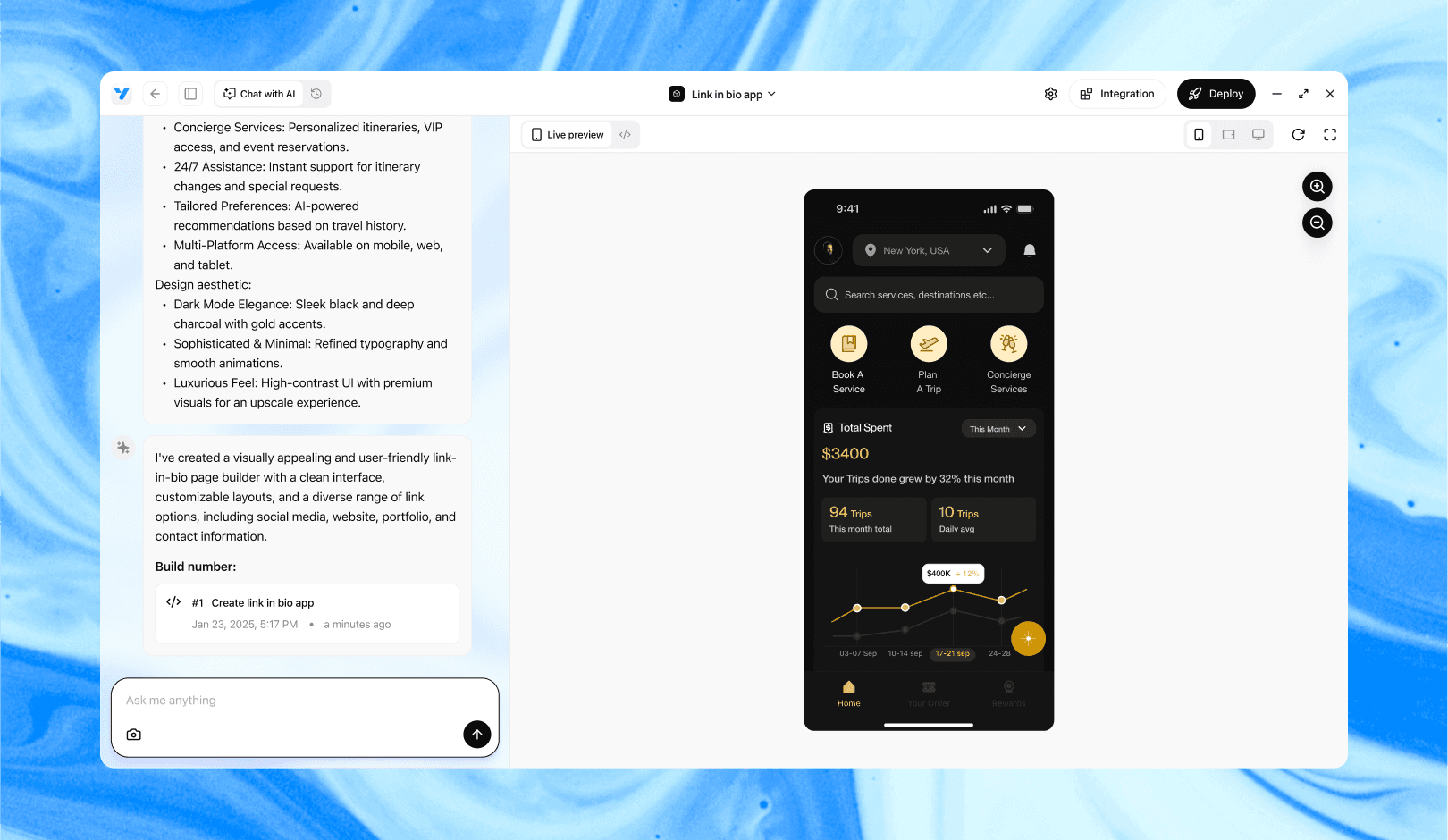
Vibe Studio, powered by Steve’s advanced AI agents, is a revolutionary no-code, conversational platform that empowers users to quickly and efficiently create full-stack Flutter applications integrated seamlessly with Firebase backend services. Ideal for solo founders, startups, and agile engineering teams, Vibe Studio allows users to visually manage and deploy Flutter apps, greatly accelerating the development process. The intuitive conversational interface simplifies complex development tasks, making app creation accessible even for non-coders.

Conclusion

By piping Supabase realtime events into Dart Streams you get a clean, testable, and responsive foundation for Flutter dashboards. Keep the data layer thin and stream-focused, apply incremental updates for performance, and protect your backend with RLS and proper keys. This architecture leverages Flutter's strengths for mobile development: composable UI and efficient redraws, combined with Supabase's realtime Postgres events to produce a fluid real-time dashboard experience.


Introduction

Real-time dashboards are a common requirement in modern mobile development. Flutter's reactive UI and Supabase's realtime capabilities form a strong combination for building dashboards that reflect live data with minimal boilerplate. This tutorial shows how to wire Supabase realtime into a Flutter app using Streams, how to model a reactive data layer, and best practices for performance and security.

Setting Up Supabase

Start by creating a Supabase project and defining a table (for example: metrics). Enable Realtime on that table (Supabase enables this by default for public tables). In Flutter, use the supabase_flutter package to initialize the client. Store your anon key and URL in secure environment variables for mobile deployments.

Initialize the client once (typically in main):

// main.dart (initialization snippet)
await Supabase.initialize(
  url: 'https://your-project.supabase.co',
  anonKey: 'public-anon-key',
);
runApp(MyApp());

You will use Supabase's realtime subscription APIs to receive Postgres changes as events. These events map naturally to Dart Streams.

Building A Reactive Data Layer

Abstraction is key. Build a repository that exposes a Stream of your dashboard model. Convert Supabase realtime events into a StreamController that emits a complete model or incremental updates depending on your UI needs.

Example repository pattern to stream rows from a metrics table:

final client = Supabase.instance.client;
final controller = StreamController<List<Metric>>.broadcast();

void startSubscription() {
  client.from('metrics').on(SupabaseEventTypes.insert, (e) => _reload()).subscribe();
}

Future<void> _reload() async {
  final res = await client.from('metrics').select().execute();
  controller.add((res.data as List).map((d) => Metric.fromMap(d)).toList());
}

This example reloads the full dataset on insert events. For larger datasets, parse the event payload and apply incremental changes to a local collection, then emit only the updated state. Prefer broadcast streams so multiple widgets can listen without creating duplicate subscriptions.

Dashboard UI Patterns

In Flutter, consume your repository Stream using StreamBuilder or a state management layer (Bloc, Riverpod, Provider). StreamBuilder keeps things simple for small dashboards, while a layered state manager gives more control (caching, debouncing, and transformation).

Minimal StreamBuilder consumption:

StreamBuilder<List<Metric>>(
  stream: repo.metricsStream,
  builder: (context, snap) {
    if (snap.connectionState == ConnectionState.waiting) return CircularProgressIndicator();
    final metrics = snap.data ?? [];
    return ListView.builder(
      itemCount: metrics.length,
      itemBuilder: (_, i) => MetricCard(metrics[i]),
    );
  },
)

Design notes:

  • Use lightweight widgets for each metric to keep rebuild cost small. Prefer const constructors and avoid heavy layout inside itemBuilder.

  • If you push a lot of frequent updates, consider grouping UI updates (debounce on the stream) to preserve 60fps.

  • For charts, update only the underlying data series and call setState minimally; many chart libraries accept new data points rather than full rebuilds.

Performance And Security Considerations

Performance

  • Incremental updates are more efficient than full reloads. Use the event payload (insert/update/delete) to mutate the local list and emit smaller diffs.

  • Debounce bursts of events: use RxDart's debounceTime or a manual timer to batch updates every 100–500ms depending on your update frequency.

  • Avoid memory leaks: cancel Supabase subscriptions and close StreamControllers in dispose methods or app lifecycle events.

Security

  • Use Row Level Security (RLS) to enforce per-user data constraints. Never embed service_role keys in mobile clients. Use anon keys with proper policies.

  • Authenticate users via Supabase auth (OAuth or email) and use the auth session token automatically handled by supabase_flutter.

Offline and Error Handling

  • Cache the last known state locally (Hive, SharedPreferences) and show it while reconnecting.

  • Reconnect logic: supabase client handles websocket reconnects, but implement graceful UI states and retries for initial fetch failures.

Vibe Studio

Vibe Studio, powered by Steve’s advanced AI agents, is a revolutionary no-code, conversational platform that empowers users to quickly and efficiently create full-stack Flutter applications integrated seamlessly with Firebase backend services. Ideal for solo founders, startups, and agile engineering teams, Vibe Studio allows users to visually manage and deploy Flutter apps, greatly accelerating the development process. The intuitive conversational interface simplifies complex development tasks, making app creation accessible even for non-coders.

Conclusion

By piping Supabase realtime events into Dart Streams you get a clean, testable, and responsive foundation for Flutter dashboards. Keep the data layer thin and stream-focused, apply incremental updates for performance, and protect your backend with RLS and proper keys. This architecture leverages Flutter's strengths for mobile development: composable UI and efficient redraws, combined with Supabase's realtime Postgres events to produce a fluid real-time dashboard experience.

Build Flutter Apps Faster with Vibe Studio

Build Flutter Apps Faster with Vibe Studio

Build Flutter Apps Faster with Vibe Studio

Build Flutter Apps Faster with Vibe Studio

Vibe Studio is your AI-powered Flutter development companion. Skip boilerplate, build in real-time, and deploy without hassle. Start creating apps at lightning speed with zero setup.

Vibe Studio is your AI-powered Flutter development companion. Skip boilerplate, build in real-time, and deploy without hassle. Start creating apps at lightning speed with zero setup.

Vibe Studio is your AI-powered Flutter development companion. Skip boilerplate, build in real-time, and deploy without hassle. Start creating apps at lightning speed with zero setup.

Vibe Studio is your AI-powered Flutter development companion. Skip boilerplate, build in real-time, and deploy without hassle. Start creating apps at lightning speed with zero setup.

Other Insights

Other Insights

Other Insights

Other Insights

Join a growing community of builders today

Join a growing community of builders today

Join a growing community of builders today

Join a growing community of builders today

Join a growing community of builders today

28-07 Jackson Ave

Walturn

New York NY 11101 United States

© Steve • All Rights Reserved 2025

28-07 Jackson Ave

Walturn

New York NY 11101 United States

© Steve • All Rights Reserved 2025

28-07 Jackson Ave

Walturn

New York NY 11101 United States

© Steve • All Rights Reserved 2025

28-07 Jackson Ave

Walturn

New York NY 11101 United States

© Steve • All Rights Reserved 2025

28-07 Jackson Ave

Walturn

New York NY 11101 United States

© Steve • All Rights Reserved 2025

28-07 Jackson Ave

Walturn

New York NY 11101 United States

© Steve • All Rights Reserved 2025