Prompting Techniques That Produce Cleaner Flutter Code In Vibe Studio
Summary
Summary

Teach Vibe Studio to produce cleaner Flutter code by using minimal reproducible prompts, enforcing idiomatic patterns (const constructors, composition), specifying architecture and separation of concerns, and requesting lint/readability compliance. These targeted prompts yield testable, maintainable mobile development outputs that integrate directly into your codebase.

Teach Vibe Studio to produce cleaner Flutter code by using minimal reproducible prompts, enforcing idiomatic patterns (const constructors, composition), specifying architecture and separation of concerns, and requesting lint/readability compliance. These targeted prompts yield testable, maintainable mobile development outputs that integrate directly into your codebase.

Key insights:
Key insights:
  • Crafting Minimal Reproducible Prompts: Small, runnable prompts reduce assumptions and produce compile-ready Dart files.

  • Requesting Idiomatic Flutter Patterns: Specify const usage, composition, and short build methods to enforce idiomatic widgets.

  • Enforcing Architecture And Separation Of Concerns: Ask for services, repositories, and constructor DI to keep logic testable and isolated.

  • Prompting For Readability And Lint Compliance: Demand effective_dart rules, doc comments, and formatting to avoid style churn.

  • Include Example Inputs And Expected Outputs: Providing input/output examples guides the model to predictable, integration-ready code.

Introduction

Vibe Studio can accelerate code generation for Flutter, but without disciplined prompting you get verbose, inconsistent, or non-idiomatic output. This article shows concise prompting techniques that produce cleaner Flutter code in Vibe Studio so your mobile development workflow yields readable, maintainable widgets and services.

Crafting Minimal Reproducible Prompts

Start prompts with the smallest runnable problem. Ask Vibe Studio to output a single file or widget that compiles, rather than a long project scaffold. Minimal prompts reduce hallucinations and unnecessary dependencies.

Example prompt pattern to include in Vibe Studio:

  • State the target SDK and packages. Use the exact Flutter channel if relevant.

  • Provide existing types and function signatures if the snippet must integrate with your codebase.

  • Ask explicitly for a single complete Dart file.

Prompt example (concise): "Generate a single Dart file that defines a reusable 'ProfileCard' StatelessWidget using only material and provider. Target Flutter 3.7. Include imports and a simple main method to preview it."

This tells Vibe Studio scope, dependencies, and the requirement for a compile-ready file. The model will prioritize fewer assumptions and cleaner code.

Requesting Idiomatic Flutter Patterns

Tell the assistant to follow specific Flutter idioms: prefer const constructors, use Widgets with small build methods, prefer composition over inheritance, and avoid excessive nesting by extracting methods.

Prompt examples:

  • Ask: "Use const constructors where possible and keep build methods under 20 lines. Extract repeated UI into private helper widgets."

  • Require state handling patterns: "Use ChangeNotifier for simple state or Riverpod hooks if requested. Do not invent new state solutions."

Small code directive to prefer composition:

class SimpleButton extends StatelessWidget {
  final VoidCallback onTap;
  const SimpleButton({required this.onTap, Key? key}) : super(key: key);

  @override
  Widget build(BuildContext context) => TextButton(onPressed: onTap, child: const Text('Action'));
}

This level of specificity yields idiomatic, predictable Flutter code suitable for mobile development.

Enforcing Architecture And Separation Of Concerns

Ask Vibe Studio to produce code following your architecture: MVC, MVVM, Clean Architecture, or feature-based structure. Explicitly request where logic belongs.

Good prompt clauses:

  • "Put UI in widgets, business logic in a service class, and network calls in a repository. Return immutable models."

  • "Include DI via constructor injection. Do not use global singletons."

When you require testable code, ask for interfaces and unit-testable functions. That encourages pure functions and small classes. Example directive: "Return Future> from repositories and avoid side effects in constructors."

Prompting For Readability And Lint Compliance

Request specific formatting and lint rules. Vibe Studio can be instructed to obey effective dart, file naming conventions, and to include documentation comments.

Useful prompts:

  • "Format output to follow effective_dart and include doc comments for public classes. Use 2-space indentation and const where possible."

  • "Run static analysis mentally: avoid unused imports, prefer final over var where type is clear, and keep methods under 50 lines."

Also ask for small, focused commit-sized diffs instead of huge files. Example: "Provide only the changed Dart file and the minimal main to run it." This prevents bloated outputs and makes integration predictable.

Vibe Studio
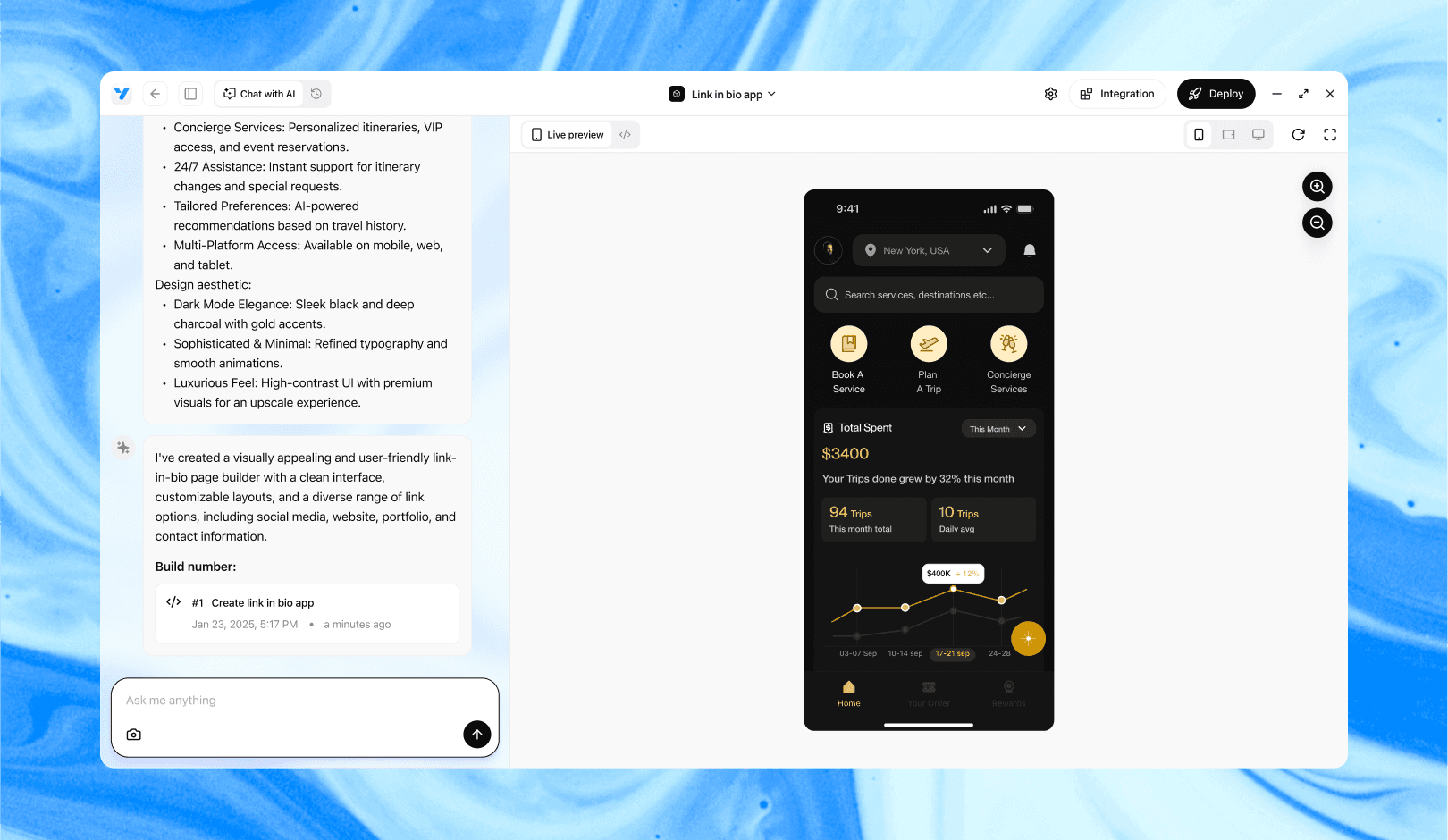
Vibe Studio, powered by Steve’s advanced AI agents, is a revolutionary no-code, conversational platform that empowers users to quickly and efficiently create full-stack Flutter applications integrated seamlessly with Firebase backend services. Ideal for solo founders, startups, and agile engineering teams, Vibe Studio allows users to visually manage and deploy Flutter apps, greatly accelerating the development process. The intuitive conversational interface simplifies complex development tasks, making app creation accessible even for non-coders.

Conclusion

Vibe Studio becomes a reliable partner for flutter mobile development when you structure prompts around minimal reproducible examples, idiomatic patterns, clear architecture boundaries, and lint/readability rules. Be explicit about dependencies, state management, and file scope. Use short runnable prompts, request const and composition, separate concerns into services and repositories, and demand adherence to effective_dart. These prompting techniques will produce cleaner, more maintainable Flutter code and reduce iteration time in Vibe Studio.


Introduction

Vibe Studio can accelerate code generation for Flutter, but without disciplined prompting you get verbose, inconsistent, or non-idiomatic output. This article shows concise prompting techniques that produce cleaner Flutter code in Vibe Studio so your mobile development workflow yields readable, maintainable widgets and services.

Crafting Minimal Reproducible Prompts

Start prompts with the smallest runnable problem. Ask Vibe Studio to output a single file or widget that compiles, rather than a long project scaffold. Minimal prompts reduce hallucinations and unnecessary dependencies.

Example prompt pattern to include in Vibe Studio:

  • State the target SDK and packages. Use the exact Flutter channel if relevant.

  • Provide existing types and function signatures if the snippet must integrate with your codebase.

  • Ask explicitly for a single complete Dart file.

Prompt example (concise): "Generate a single Dart file that defines a reusable 'ProfileCard' StatelessWidget using only material and provider. Target Flutter 3.7. Include imports and a simple main method to preview it."

This tells Vibe Studio scope, dependencies, and the requirement for a compile-ready file. The model will prioritize fewer assumptions and cleaner code.

Requesting Idiomatic Flutter Patterns

Tell the assistant to follow specific Flutter idioms: prefer const constructors, use Widgets with small build methods, prefer composition over inheritance, and avoid excessive nesting by extracting methods.

Prompt examples:

  • Ask: "Use const constructors where possible and keep build methods under 20 lines. Extract repeated UI into private helper widgets."

  • Require state handling patterns: "Use ChangeNotifier for simple state or Riverpod hooks if requested. Do not invent new state solutions."

Small code directive to prefer composition:

class SimpleButton extends StatelessWidget {
  final VoidCallback onTap;
  const SimpleButton({required this.onTap, Key? key}) : super(key: key);

  @override
  Widget build(BuildContext context) => TextButton(onPressed: onTap, child: const Text('Action'));
}

This level of specificity yields idiomatic, predictable Flutter code suitable for mobile development.

Enforcing Architecture And Separation Of Concerns

Ask Vibe Studio to produce code following your architecture: MVC, MVVM, Clean Architecture, or feature-based structure. Explicitly request where logic belongs.

Good prompt clauses:

  • "Put UI in widgets, business logic in a service class, and network calls in a repository. Return immutable models."

  • "Include DI via constructor injection. Do not use global singletons."

When you require testable code, ask for interfaces and unit-testable functions. That encourages pure functions and small classes. Example directive: "Return Future> from repositories and avoid side effects in constructors."

Prompting For Readability And Lint Compliance

Request specific formatting and lint rules. Vibe Studio can be instructed to obey effective dart, file naming conventions, and to include documentation comments.

Useful prompts:

  • "Format output to follow effective_dart and include doc comments for public classes. Use 2-space indentation and const where possible."

  • "Run static analysis mentally: avoid unused imports, prefer final over var where type is clear, and keep methods under 50 lines."

Also ask for small, focused commit-sized diffs instead of huge files. Example: "Provide only the changed Dart file and the minimal main to run it." This prevents bloated outputs and makes integration predictable.

Vibe Studio

Vibe Studio, powered by Steve’s advanced AI agents, is a revolutionary no-code, conversational platform that empowers users to quickly and efficiently create full-stack Flutter applications integrated seamlessly with Firebase backend services. Ideal for solo founders, startups, and agile engineering teams, Vibe Studio allows users to visually manage and deploy Flutter apps, greatly accelerating the development process. The intuitive conversational interface simplifies complex development tasks, making app creation accessible even for non-coders.

Conclusion

Vibe Studio becomes a reliable partner for flutter mobile development when you structure prompts around minimal reproducible examples, idiomatic patterns, clear architecture boundaries, and lint/readability rules. Be explicit about dependencies, state management, and file scope. Use short runnable prompts, request const and composition, separate concerns into services and repositories, and demand adherence to effective_dart. These prompting techniques will produce cleaner, more maintainable Flutter code and reduce iteration time in Vibe Studio.

Build Flutter Apps Faster with Vibe Studio

Vibe Studio is your AI-powered Flutter development companion. Skip boilerplate, build in real-time, and deploy without hassle. Start creating apps at lightning speed with zero setup.

Other Insights

Join a growing community of builders today

Join a growing community of builders today

Join a growing community of builders today

Join a growing community of builders today

Join a growing community of builders today

28-07 Jackson Ave

Walturn

New York NY 11101 United States

© Steve • All Rights Reserved 2025

28-07 Jackson Ave

Walturn

New York NY 11101 United States

© Steve • All Rights Reserved 2025

28-07 Jackson Ave

Walturn

New York NY 11101 United States

© Steve • All Rights Reserved 2025

28-07 Jackson Ave

Walturn

New York NY 11101 United States

© Steve • All Rights Reserved 2025

28-07 Jackson Ave

Walturn

New York NY 11101 United States

© Steve • All Rights Reserved 2025

28-07 Jackson Ave

Walturn

New York NY 11101 United States

© Steve • All Rights Reserved 2025