Packaging Flutter Desktop Apps For macOS Windows And Linux
Jan 29, 2026


Summary
Summary
Summary
Summary
This tutorial explains how to prepare, build, sign, and package Flutter desktop apps for macOS, Windows, and Linux. It covers environment setup, platform-specific metadata and icons, release build commands (flutter build macos/windows/linux), creating installers (DMG, Inno Setup, AppImage/.deb), and signing/notarization steps for secure distribution.
Key insights:
Key insights:
Key insights:
Key insights:
Preparing Your Environment: Verify toolchains, set platform metadata and icons in each platform folder before building.
Building For macOS: Use flutter build macos --release, codesign with Developer ID, notarize with notarytool, and distribute as DMG or ZIP.
Building For Windows: Use flutter build windows --release, update Runner.rc, and create an installer (InnoSetup or MSIX) with signtool signing.
Building For Linux: Use flutter build linux --release and package as AppImage, .deb, or .rpm; include a .desktop file and test across distros.
Code Signing And Notarization: Sign artifacts on each platform to avoid warnings; automate signing in CI and use platform-specific CA certificates.
Introduction
Packaging Flutter apps for desktop targets—macOS, Windows, and Linux—turns a working debug build into a distributable product users can install and run. This guide focuses on practical steps: preparing your environment, producing release builds, bundling into platform installers, handling icons and metadata, and meeting signing/notarization requirements. The instructions assume a Flutter project already configured for desktop (flutter config --enable-macos-desktop, --enable-windows-desktop, --enable-linux-desktop on older SDKs).
Preparing Your Environment
Verify Flutter supports desktop on your channel (stable or higher) and run flutter doctor to confirm host toolchains. For macOS you need Xcode and command-line tools; for Windows you need Visual Studio (Desktop development with C++ workload); for Linux you need GTK development headers. Keep Flutter SDK up to date: flutter upgrade.
Set application metadata early: update macOS Info.plist (macos/Runner/Info.plist), Windows resource file (windows/runner/Runner.rc), and Linux desktop file (linux/desktop/your_app.desktop). Provide high-resolution icons for each platform (ICNS for macOS, ICO for Windows, PNG/SVG for Linux). Use flutter_launcher_icons or manually replace files in each platform folder.
Small Flutter example that sets a platform-aware title (useful to check packaging):
import 'dart:io' show Platform; import 'package:flutter/material.dart'; void main() => runApp(MyApp()); class MyApp extends StatelessWidget { @override Widget build(BuildContext context) { final title = Platform.isMacOS ? 'My macOS App' : Platform.isWindows ? 'My Windows App' : 'My Linux App'; return MaterialApp(title: title, home: Scaffold(body: Center(child: Text(title)))); } }
Building For macOS
Build a release bundle: flutter build macos --release. The result is in build/macos/Build/Products/Release/YourApp.app.
Set bundle identifier and version in macos/Runner/Info.plist. Adjust entitlements if using hardened runtime features.
Code sign the .app: codesign --deep --force --verify --options runtime --sign "Developer ID Application: Your Name (TEAMID)" YourApp.app
Notarize with Apple notarization (notarytool recommended): xcrun notarytool submit --team-id TEAMID --apple-id you@apple.com --wait YourApp.zip. After notarization staple the ticket: xcrun stapler staple YourApp.app.
Package as DMG or ZIP. Tools: create-dmg for DMG creation or hdiutil.
macOS-specific tips: test on a clean VM to ensure no hidden development dependencies remain. If your app embeds frameworks, ensure all nested code is signed and entitlements are correct.
Building For Windows
Build a release bundle: flutter build windows --release. The binary and supporting files are under build\windows\runner\Release.
Update version and metadata in windows/runner/Runner.rc.
Create an installer: common choices are Inno Setup, NSIS, or MSIX packaging. For wide compatibility, create an installer (InnoSetup) that places the EXE and supporting DLLs in Program Files and creates shortcuts.
Code sign the EXE and installer using signtool with a code signing certificate (preferably EV for reputation): signtool sign /a /tr http://timestamp.digicert.com /td sha256 /fd sha256 /f yourCert.pfx YourApp.exe
Windows-specific tips: test on systems that do not have Visual Studio runtime installed—if your app requires CRT, include the redistributables or link statically if possible.
Building For Linux
Build a release bundle: flutter build linux --release. The output is in build/linux/x64/release/bundle containing an executable and data folder.
Choose packaging format: AppImage for broad desktop distribution, .deb for Debian/Ubuntu, .rpm for Fedora. AppImage tends to be simplest: tools like appimagetool wrap your bundle into a portable image.
Create a .desktop file and include icons at appropriate sizes. For distributions, create a deb using dpkg-deb or a debhelper workflow.
Test on target distributions and architectures (x86_64 vs arm64). For Snap or Flatpak, follow those sandboxing guidelines and manifest formats.
Linux-specific tips: be explicit about linked libraries and ensure you bundle or depend on stable system libs. Use ldd to inspect runtime dependencies.
Code Signing And Notarization
Signing protects integrity and enables smoother user installs. macOS requires notarization for gatekeeper to allow distribution outside the App Store. Windows code signing improves SmartScreen reputation and reduces warning dialogs. Linux signing is less standardized—distribute via distro repositories or use package signing where possible (.deb signing, RPM GPG signatures).
Obtain platform certificates from trusted authorities: Apple Developer ID for macOS, a trusted code signing CA for Windows (EV recommended), and GPG keys or repository signing for Linux packages. Automate signing in CI: set up environment secrets for private keys and run signing steps post-build.
Vibe Studio
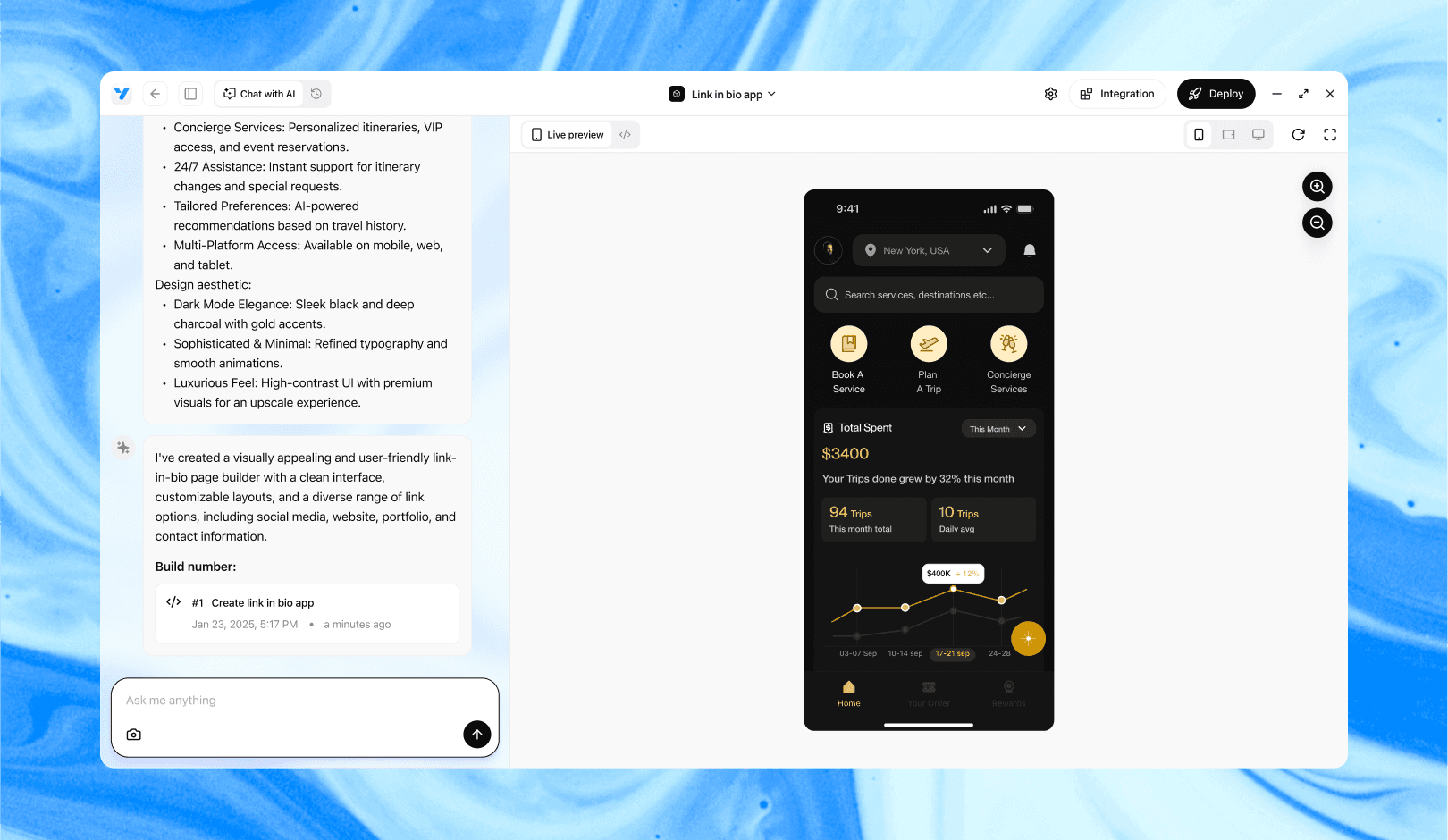
Vibe Studio, powered by Steve’s advanced AI agents, is a revolutionary no-code, conversational platform that empowers users to quickly and efficiently create full-stack Flutter applications integrated seamlessly with Firebase backend services. Ideal for solo founders, startups, and agile engineering teams, Vibe Studio allows users to visually manage and deploy Flutter apps, greatly accelerating the development process. The intuitive conversational interface simplifies complex development tasks, making app creation accessible even for non-coders.
Conclusion
Packaging Flutter desktop apps requires producing optimized release builds and wrapping them in native distribution formats: DMG/ZIP for macOS (with notarization), installer/MSIX for Windows (with code signing), and AppImage/.deb/.rpm for Linux. Prepare metadata and icons in platform folders, sign artifacts, and test on clean target systems. Automate these steps in CI to produce reliable, repeatable deliverables that your users can install with confidence.

Introduction
Packaging Flutter apps for desktop targets—macOS, Windows, and Linux—turns a working debug build into a distributable product users can install and run. This guide focuses on practical steps: preparing your environment, producing release builds, bundling into platform installers, handling icons and metadata, and meeting signing/notarization requirements. The instructions assume a Flutter project already configured for desktop (flutter config --enable-macos-desktop, --enable-windows-desktop, --enable-linux-desktop on older SDKs).
Preparing Your Environment
Verify Flutter supports desktop on your channel (stable or higher) and run flutter doctor to confirm host toolchains. For macOS you need Xcode and command-line tools; for Windows you need Visual Studio (Desktop development with C++ workload); for Linux you need GTK development headers. Keep Flutter SDK up to date: flutter upgrade.
Set application metadata early: update macOS Info.plist (macos/Runner/Info.plist), Windows resource file (windows/runner/Runner.rc), and Linux desktop file (linux/desktop/your_app.desktop). Provide high-resolution icons for each platform (ICNS for macOS, ICO for Windows, PNG/SVG for Linux). Use flutter_launcher_icons or manually replace files in each platform folder.
Small Flutter example that sets a platform-aware title (useful to check packaging):
import 'dart:io' show Platform; import 'package:flutter/material.dart'; void main() => runApp(MyApp()); class MyApp extends StatelessWidget { @override Widget build(BuildContext context) { final title = Platform.isMacOS ? 'My macOS App' : Platform.isWindows ? 'My Windows App' : 'My Linux App'; return MaterialApp(title: title, home: Scaffold(body: Center(child: Text(title)))); } }
Building For macOS
Build a release bundle: flutter build macos --release. The result is in build/macos/Build/Products/Release/YourApp.app.
Set bundle identifier and version in macos/Runner/Info.plist. Adjust entitlements if using hardened runtime features.
Code sign the .app: codesign --deep --force --verify --options runtime --sign "Developer ID Application: Your Name (TEAMID)" YourApp.app
Notarize with Apple notarization (notarytool recommended): xcrun notarytool submit --team-id TEAMID --apple-id you@apple.com --wait YourApp.zip. After notarization staple the ticket: xcrun stapler staple YourApp.app.
Package as DMG or ZIP. Tools: create-dmg for DMG creation or hdiutil.
macOS-specific tips: test on a clean VM to ensure no hidden development dependencies remain. If your app embeds frameworks, ensure all nested code is signed and entitlements are correct.
Building For Windows
Build a release bundle: flutter build windows --release. The binary and supporting files are under build\windows\runner\Release.
Update version and metadata in windows/runner/Runner.rc.
Create an installer: common choices are Inno Setup, NSIS, or MSIX packaging. For wide compatibility, create an installer (InnoSetup) that places the EXE and supporting DLLs in Program Files and creates shortcuts.
Code sign the EXE and installer using signtool with a code signing certificate (preferably EV for reputation): signtool sign /a /tr http://timestamp.digicert.com /td sha256 /fd sha256 /f yourCert.pfx YourApp.exe
Windows-specific tips: test on systems that do not have Visual Studio runtime installed—if your app requires CRT, include the redistributables or link statically if possible.
Building For Linux
Build a release bundle: flutter build linux --release. The output is in build/linux/x64/release/bundle containing an executable and data folder.
Choose packaging format: AppImage for broad desktop distribution, .deb for Debian/Ubuntu, .rpm for Fedora. AppImage tends to be simplest: tools like appimagetool wrap your bundle into a portable image.
Create a .desktop file and include icons at appropriate sizes. For distributions, create a deb using dpkg-deb or a debhelper workflow.
Test on target distributions and architectures (x86_64 vs arm64). For Snap or Flatpak, follow those sandboxing guidelines and manifest formats.
Linux-specific tips: be explicit about linked libraries and ensure you bundle or depend on stable system libs. Use ldd to inspect runtime dependencies.
Code Signing And Notarization
Signing protects integrity and enables smoother user installs. macOS requires notarization for gatekeeper to allow distribution outside the App Store. Windows code signing improves SmartScreen reputation and reduces warning dialogs. Linux signing is less standardized—distribute via distro repositories or use package signing where possible (.deb signing, RPM GPG signatures).
Obtain platform certificates from trusted authorities: Apple Developer ID for macOS, a trusted code signing CA for Windows (EV recommended), and GPG keys or repository signing for Linux packages. Automate signing in CI: set up environment secrets for private keys and run signing steps post-build.
Vibe Studio

Vibe Studio, powered by Steve’s advanced AI agents, is a revolutionary no-code, conversational platform that empowers users to quickly and efficiently create full-stack Flutter applications integrated seamlessly with Firebase backend services. Ideal for solo founders, startups, and agile engineering teams, Vibe Studio allows users to visually manage and deploy Flutter apps, greatly accelerating the development process. The intuitive conversational interface simplifies complex development tasks, making app creation accessible even for non-coders.
Conclusion
Packaging Flutter desktop apps requires producing optimized release builds and wrapping them in native distribution formats: DMG/ZIP for macOS (with notarization), installer/MSIX for Windows (with code signing), and AppImage/.deb/.rpm for Linux. Prepare metadata and icons in platform folders, sign artifacts, and test on clean target systems. Automate these steps in CI to produce reliable, repeatable deliverables that your users can install with confidence.

Build Flutter Apps Faster with Vibe Studio
Vibe Studio is your AI-powered Flutter development companion. Skip boilerplate, build in real-time, and deploy without hassle. Start creating apps at lightning speed with zero setup.
Other Insights