Optimizing Startup Time with Deferred Imports

Summary
Summary
Summary
Summary

Deferred imports in Flutter let you split code into on-demand units. Apply them to heavy features or services, call loadLibrary() before use, cache loads, and measure real-device startup improvements. Balance deferred loading with preloading and observe platform-specific behavior.

Deferred imports in Flutter let you split code into on-demand units. Apply them to heavy features or services, call loadLibrary() before use, cache loads, and measure real-device startup improvements. Balance deferred loading with preloading and observe platform-specific behavior.

Deferred imports in Flutter let you split code into on-demand units. Apply them to heavy features or services, call loadLibrary() before use, cache loads, and measure real-device startup improvements. Balance deferred loading with preloading and observe platform-specific behavior.

Deferred imports in Flutter let you split code into on-demand units. Apply them to heavy features or services, call loadLibrary() before use, cache loads, and measure real-device startup improvements. Balance deferred loading with preloading and observe platform-specific behavior.

Key insights:
Key insights:
Key insights:
Key insights:
  • How Deferred Imports Save Startup Time: Deferred imports move large modules out of the initial loading unit so the app can reach first frame faster.

  • Practical Patterns For Lazy Loading: Use route-based loading, lazy singletons, and background preloading while showing an interactive shell.

  • Measuring And Diagnosing Startup Cost: Combine Flutter DevTools with platform tools (adb, Instruments) and stopwatch timing to validate gains.

  • Limitations And Best Practices: Group related code, avoid too many small deferred units, and provide graceful fallbacks for load failures.

  • Preloading And Caching Strategies: Preload during idle time and cache loaded libraries to prevent repeated loadLibrary() overhead and runtime jank.

Introduction

Startup time is a critical metric for Flutter mobile development. Users abandon apps that take too long to become interactive. One effective technique to reduce perceived and actual cold-start latency is deferred imports (a.k.a. deferred loading). This tutorial explains how deferred imports work in Flutter, practical patterns to apply them, how to measure impact, and important limitations so you can safely optimize startup time.

How Deferred Imports Save Startup Time

Deferred imports tell the Dart runtime to load a library only when you explicitly request it. Instead of bundling every class and function into the initial loading unit, you mark some modules as deferred and invoke loadLibrary() before first use. For Flutter on mobile, this reduces the initial bytecode and initialization work the engine must process at cold start, shifting nonessential work to later, on-demand moments (for example, when the user navigates to a feature screen).

Syntax example:

import 'package:my_app/feature_screen.dart' deferred as feature;

// before using feature.SomeWidget:
await feature.loadLibrary();
Navigator.push(context, MaterialPageRoute(builder: (_) => feature.SomeWidget()));

Use deferred imports for large, infrequently used features: heavy UI trees, large packages (image processing, maps), or big initialization logic (ML models). Keep small utilities in the main unit so you don't increase runtime overhead with unnecessary loadLibrary calls.

Practical Patterns For Lazy Loading

1) Route-Based Loading: Attach a deferred import to a route. When the user navigates to that route, call loadLibrary() and then push the deferred widget. This keeps the main app minimal while still providing a seamless transition.

2) Lazy Singleton or Service: For services used only in certain flows (e.g., analytics, complex caching), expose factory functions that call loadLibrary() once and cache the loaded module.

3) Progressive Reveal: Show an interactive shell immediately and load large feature widgets in the background. Use FutureBuilder or you can prewarm by firing loadLibrary() after runApp if the user is likely to use the feature.

Example of caching the loaded module:

import 'package:my_app/heavy_feature.dart' deferred as heavy;
bool _heavyLoaded = false;
Future<void> ensureHeavyLoaded() async {
  if (!_heavyLoaded) {
    await heavy.loadLibrary();
    _heavyLoaded = true;
  }
}

Preloading after startup is often a good compromise: the app becomes interactive quickly, then nonblocking preloads reduce latency when the user eventually navigates.

Measuring And Diagnosing Startup Cost

Always measure before and after. Rely on both Flutter and platform tools:

  • Flutter DevTools CPU and Timeline traces show Dart isolate initialization and frame timings.

  • For Android, adb shell am start -W gives cold-start wall time; for iOS, use Instruments to measure launch time.

  • Use simple stopwatch measurements around runApp and heavy initialization to compare baseline vs deferred versions.

Look for these signs that deferred imports helped: shorter time to first frame, reduced main isolate startup events, and lower jank in the first few frames. If loadLibrary() introduces a jank spike, consider preloading during an idle period or using compute to offload heavy processing outside the main isolate.

Limitations And Best Practices

  • Platform Behavior Varies: The exact runtime benefits of deferred imports differ by platform and build configuration. Measure on real devices in release mode.

  • Not A Substitute For Asset Optimization: Deferred imports split code, not assets. Large images and native libs still affect APK/IPA size and startup; manage them separately.

  • Avoid Fragmentation Overhead: Creating many tiny deferred units can increase packaging and runtime overhead. Group related code into meaningful deferred libraries.

  • Error Surface: A deferred library that fails to load will throw at runtime. Provide graceful fallbacks and show loading/error UI.

  • Tooling: Flutter supports deferred imports, but build tooling evolves. Keep Flutter SDK updated and test your CI release builds to verify produced artifacts behave as expected.

Vibe Studio
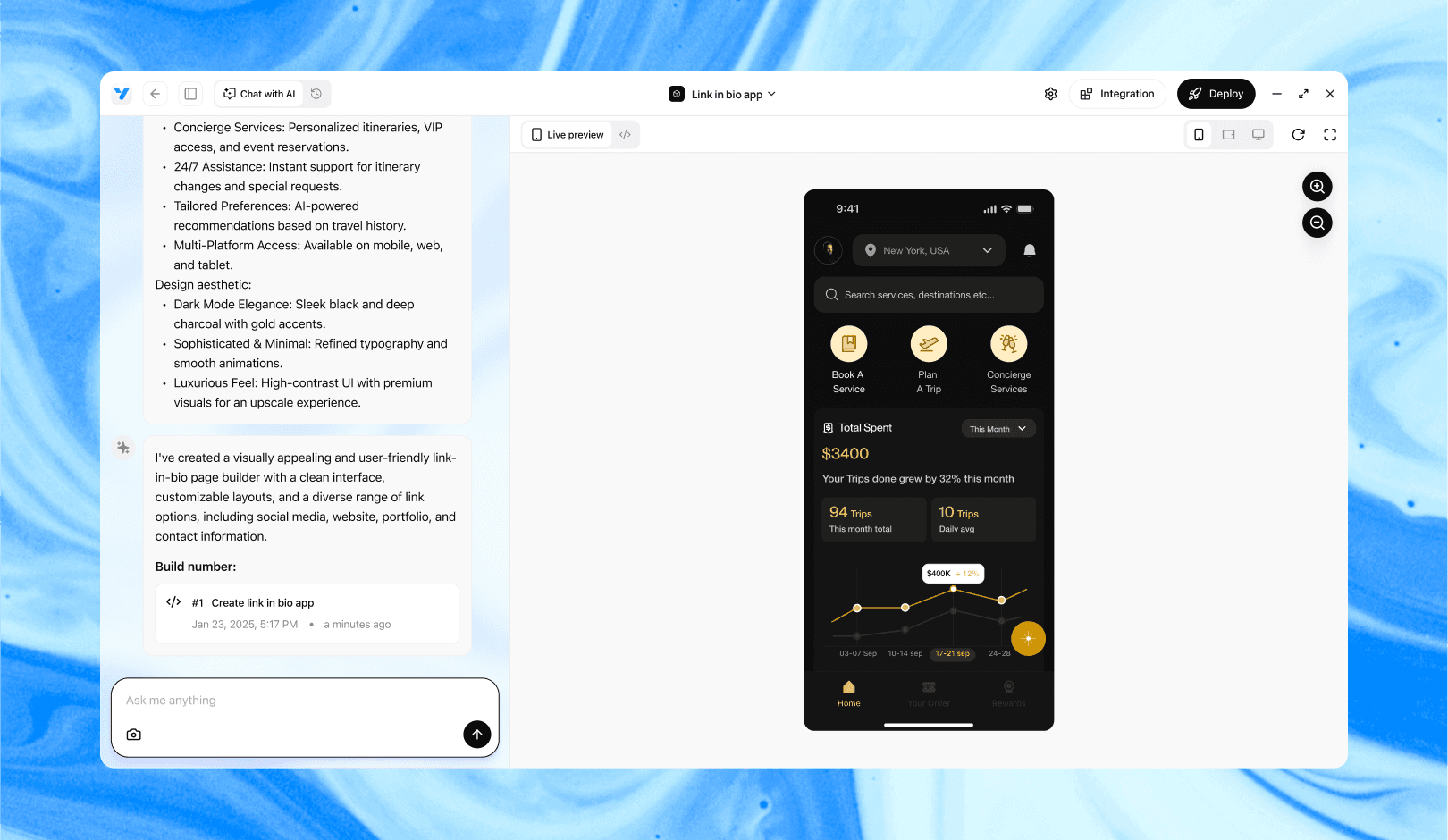
Vibe Studio, powered by Steve’s advanced AI agents, is a revolutionary no-code, conversational platform that empowers users to quickly and efficiently create full-stack Flutter applications integrated seamlessly with Firebase backend services. Ideal for solo founders, startups, and agile engineering teams, Vibe Studio allows users to visually manage and deploy Flutter apps, greatly accelerating the development process. The intuitive conversational interface simplifies complex development tasks, making app creation accessible even for non-coders.

Conclusion

Deferred imports are a practical, code-centric way to reduce Flutter startup cost by moving nonessential code out of the initial loading unit. Apply them to large feature modules, lazy services, and route-based loading. Measure before and after on real devices, watch for jank when calling loadLibrary(), and combine deferred loading with preloading strategies for the best user experience. With careful grouping and testing, deferred imports can noticeably improve cold-start and perceived startup performance in mobile development.

Introduction

Startup time is a critical metric for Flutter mobile development. Users abandon apps that take too long to become interactive. One effective technique to reduce perceived and actual cold-start latency is deferred imports (a.k.a. deferred loading). This tutorial explains how deferred imports work in Flutter, practical patterns to apply them, how to measure impact, and important limitations so you can safely optimize startup time.

How Deferred Imports Save Startup Time

Deferred imports tell the Dart runtime to load a library only when you explicitly request it. Instead of bundling every class and function into the initial loading unit, you mark some modules as deferred and invoke loadLibrary() before first use. For Flutter on mobile, this reduces the initial bytecode and initialization work the engine must process at cold start, shifting nonessential work to later, on-demand moments (for example, when the user navigates to a feature screen).

Syntax example:

import 'package:my_app/feature_screen.dart' deferred as feature;

// before using feature.SomeWidget:
await feature.loadLibrary();
Navigator.push(context, MaterialPageRoute(builder: (_) => feature.SomeWidget()));

Use deferred imports for large, infrequently used features: heavy UI trees, large packages (image processing, maps), or big initialization logic (ML models). Keep small utilities in the main unit so you don't increase runtime overhead with unnecessary loadLibrary calls.

Practical Patterns For Lazy Loading

1) Route-Based Loading: Attach a deferred import to a route. When the user navigates to that route, call loadLibrary() and then push the deferred widget. This keeps the main app minimal while still providing a seamless transition.

2) Lazy Singleton or Service: For services used only in certain flows (e.g., analytics, complex caching), expose factory functions that call loadLibrary() once and cache the loaded module.

3) Progressive Reveal: Show an interactive shell immediately and load large feature widgets in the background. Use FutureBuilder or you can prewarm by firing loadLibrary() after runApp if the user is likely to use the feature.

Example of caching the loaded module:

import 'package:my_app/heavy_feature.dart' deferred as heavy;
bool _heavyLoaded = false;
Future<void> ensureHeavyLoaded() async {
  if (!_heavyLoaded) {
    await heavy.loadLibrary();
    _heavyLoaded = true;
  }
}

Preloading after startup is often a good compromise: the app becomes interactive quickly, then nonblocking preloads reduce latency when the user eventually navigates.

Measuring And Diagnosing Startup Cost

Always measure before and after. Rely on both Flutter and platform tools:

  • Flutter DevTools CPU and Timeline traces show Dart isolate initialization and frame timings.

  • For Android, adb shell am start -W gives cold-start wall time; for iOS, use Instruments to measure launch time.

  • Use simple stopwatch measurements around runApp and heavy initialization to compare baseline vs deferred versions.

Look for these signs that deferred imports helped: shorter time to first frame, reduced main isolate startup events, and lower jank in the first few frames. If loadLibrary() introduces a jank spike, consider preloading during an idle period or using compute to offload heavy processing outside the main isolate.

Limitations And Best Practices

  • Platform Behavior Varies: The exact runtime benefits of deferred imports differ by platform and build configuration. Measure on real devices in release mode.

  • Not A Substitute For Asset Optimization: Deferred imports split code, not assets. Large images and native libs still affect APK/IPA size and startup; manage them separately.

  • Avoid Fragmentation Overhead: Creating many tiny deferred units can increase packaging and runtime overhead. Group related code into meaningful deferred libraries.

  • Error Surface: A deferred library that fails to load will throw at runtime. Provide graceful fallbacks and show loading/error UI.

  • Tooling: Flutter supports deferred imports, but build tooling evolves. Keep Flutter SDK updated and test your CI release builds to verify produced artifacts behave as expected.

Vibe Studio

Vibe Studio, powered by Steve’s advanced AI agents, is a revolutionary no-code, conversational platform that empowers users to quickly and efficiently create full-stack Flutter applications integrated seamlessly with Firebase backend services. Ideal for solo founders, startups, and agile engineering teams, Vibe Studio allows users to visually manage and deploy Flutter apps, greatly accelerating the development process. The intuitive conversational interface simplifies complex development tasks, making app creation accessible even for non-coders.

Conclusion

Deferred imports are a practical, code-centric way to reduce Flutter startup cost by moving nonessential code out of the initial loading unit. Apply them to large feature modules, lazy services, and route-based loading. Measure before and after on real devices, watch for jank when calling loadLibrary(), and combine deferred loading with preloading strategies for the best user experience. With careful grouping and testing, deferred imports can noticeably improve cold-start and perceived startup performance in mobile development.

Build Flutter Apps Faster with Vibe Studio

Build Flutter Apps Faster with Vibe Studio

Build Flutter Apps Faster with Vibe Studio

Build Flutter Apps Faster with Vibe Studio

Vibe Studio is your AI-powered Flutter development companion. Skip boilerplate, build in real-time, and deploy without hassle. Start creating apps at lightning speed with zero setup.

Vibe Studio is your AI-powered Flutter development companion. Skip boilerplate, build in real-time, and deploy without hassle. Start creating apps at lightning speed with zero setup.

Vibe Studio is your AI-powered Flutter development companion. Skip boilerplate, build in real-time, and deploy without hassle. Start creating apps at lightning speed with zero setup.

Vibe Studio is your AI-powered Flutter development companion. Skip boilerplate, build in real-time, and deploy without hassle. Start creating apps at lightning speed with zero setup.

Other Insights

Other Insights

Other Insights

Other Insights

Join a growing community of builders today

Join a growing community of builders today

Join a growing community of builders today

Join a growing community of builders today

Join a growing community of builders today

28-07 Jackson Ave

Walturn

New York NY 11101 United States

© Steve • All Rights Reserved 2025

28-07 Jackson Ave

Walturn

New York NY 11101 United States

© Steve • All Rights Reserved 2025

28-07 Jackson Ave

Walturn

New York NY 11101 United States

© Steve • All Rights Reserved 2025

28-07 Jackson Ave

Walturn

New York NY 11101 United States

© Steve • All Rights Reserved 2025

28-07 Jackson Ave

Walturn

New York NY 11101 United States

© Steve • All Rights Reserved 2025

28-07 Jackson Ave

Walturn

New York NY 11101 United States

© Steve • All Rights Reserved 2025