Optimizing Flutter App Startup With Deferred Loading And Warmup
Jan 21, 2026


Summary
Summary
Summary
Summary
This tutorial shows how to improve Flutter startup on mobile development by combining Dart deferred imports to defer heavy code and warmup strategies (precache, isolates, network priming) to prepare resources before first frame. Measure startup phases, apply deferred loading to noncritical modules, warm up expensive dependencies asynchronously, and iterate using profiling tools to validate real gains.
Key insights:
Key insights:
Key insights:
Key insights:
Understanding Startup Phases: Identify whether CPU, I/O, or rendering dominates startup with profiling before optimizing.
Deferred Loading With Dart's Deferred Imports: Use deferred imports to move large, noncritical modules out of the initial bundle and load them on demand.
Warmup Strategies For Flutter: Precache images, initialize databases in isolates, and prime network or crypto to reduce first-frame work.
Measuring And Iterating: Measure TTFF and time-to-interactive with DevTools and platform profilers; iterate based on evidence.
Combine Deferred Loading And Warmup: Defer heavy widgets while concurrently warming their dependencies so navigation feels instant when modules load.
Introduction
Startup performance is a critical UX metric for mobile development with Flutter. Users expect apps to appear within a second or two, and penalties for slow startup include higher abandonment and lower engagement. This tutorial focuses on two complementary techniques—deferred loading and warmup—to reduce initial latency without compromising app architecture or bundle size.
Understanding Startup Phases
A Flutter app startup typically has three observable phases: native boot (OS to engine), Dart VM initialization and JIT/AOT transition, and Flutter framework build + first frame. Optimizing startup requires targeting where your app spends most time. For most production Flutter AOT builds, the largest time sinks are asset loading, synchronous package initialization, and constructing heavy widget trees or expensive first-frame work (images, fonts, database migrations).
Measure first. Use flutter run --profile, timeline traces, and platform-specific tools (Android Studio profiler, Instruments on iOS) to identify whether CPU, I/O, or main-thread rendering dominates. Only then apply deferred loading and warmup selectively to the hotspots.
Deferred Loading With Dart's Deferred Imports
Deferred loading moves rarely used code and resources out of the initial bundle so they load only when needed. In Flutter, that means splitting Dart libraries so the runtime fetches them lazily. In AOT mobile builds deferred libraries are still compiled ahead-of-time but can reduce memory pressure and initial class resolution costs.
Use deferred imports for large feature modules, debug tools, or rarely used screens. Keep the app’s critical path (home, login) in the main bundle.
Example: defer an infrequently used settings module.
import 'settings_page.dart' deferred as settings; Future<void> openSettings(BuildContext context) async { await settings.loadLibrary(); // loads the deferred library Navigator.of(context).push(MaterialPageRoute(builder: (_) => settings.SettingsPage())); }
Notes:
Keep deferred libraries coarse-grained. Too many small deferred imports add overhead.
Avoid deferring tiny widgets in the critical path; that increases complexity.
Test on real devices; deferred load timing differs by platform and build type.
Warmup Strategies For Flutter
Warmup executes non-UI, expensive work before first frame or off the main thread so the visible startup becomes faster. Warmup patterns include pre-caching images, initializing databases in an isolate, pre-resolving fonts, and establishing network connections.
Precache and isolate examples:
// Precache an image during a splash stage await precacheImage(AssetImage('assets/hero.png'), context); // Run heavy init in an isolate final initResult = await compute(initializeDatabase, dbPath);
Best practices:
Move synchronous initializations into async functions you can await while showing a lightweight splash screen.
Use compute or dedicated isolates for CPU-bound work. Avoid blocking the UI thread.
For network warmup, consider making a small HEAD request to DNS-prefetched domains or opening lightweight sockets to prime TLS handshakes.
Pre-cache only what you will show immediately; over-warming increases memory use and slows cold start.
Combining warmup with deferred loading: keep UI responsive by deferring heavy widgets and concurrently warming up their dependencies so when the user navigates, the deferred module loads faster.
Measuring And Iterating
Optimization is iterative: measure, change, measure again. Recommended metrics:
Time to First Frame (TTFF)
Time to Interactive (app responds to input reliably)
Jank counts or frame build times during startup
Tools and tips:
Use Flutter's timeline logging and the Dart DevTools for frame analysis.
On Android, capture a systrace; on iOS, use Instruments Time Profiler.
A/B test with and without deferred modules to validate real impact.
Common pitfalls:
Premature optimization: deferring everything increases complexity without proportional gains.
Memory regressions: deferred libraries still occupy memory when loaded; track peak RSS.
Platform differences: iOS and Android can behave differently with deferred loading and file I/O.
A practical path: identify one large module or resource that you can defer, add warmup for the next-most-likely module, measure start metrics, then expand based on returns.
Vibe Studio
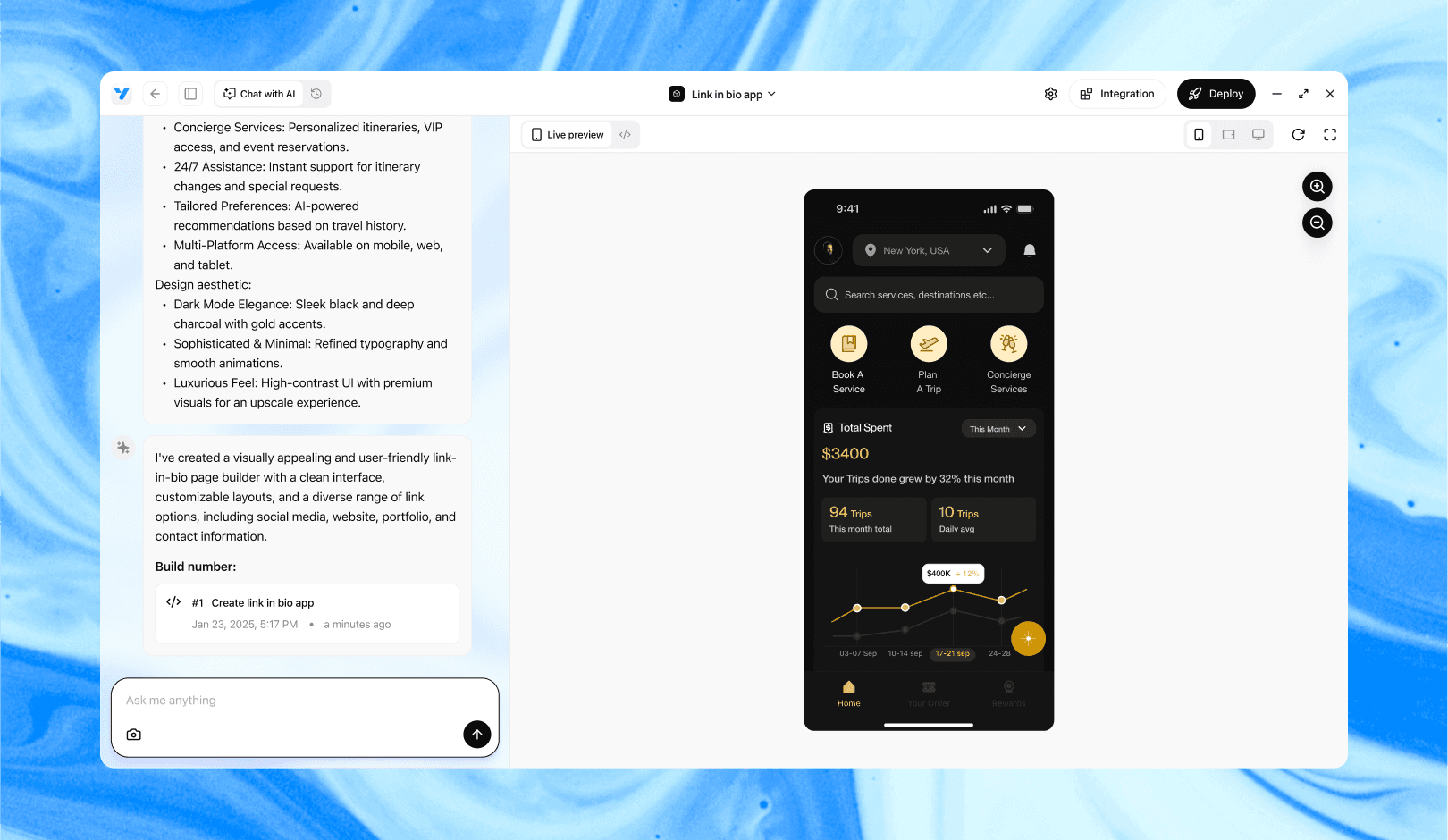
Vibe Studio, powered by Steve’s advanced AI agents, is a revolutionary no-code, conversational platform that empowers users to quickly and efficiently create full-stack Flutter applications integrated seamlessly with Firebase backend services. Ideal for solo founders, startups, and agile engineering teams, Vibe Studio allows users to visually manage and deploy Flutter apps, greatly accelerating the development process. The intuitive conversational interface simplifies complex development tasks, making app creation accessible even for non-coders.
Conclusion
Optimizing Flutter app startup in mobile development is about prioritizing what must be ready for the first frame and deferring or warming up the rest. Use Dart deferred imports to reduce initial bundle pressure, and apply warmup strategies—pre-caching, isolates, network/crypto priming—to shift expensive work off the main thread. Measure precisely, iterate selectively, and balance memory against perceived speed. With targeted deferred loading and careful warmup, you can deliver faster, smoother app launches without sacrificing architecture or maintainability.

Introduction
Startup performance is a critical UX metric for mobile development with Flutter. Users expect apps to appear within a second or two, and penalties for slow startup include higher abandonment and lower engagement. This tutorial focuses on two complementary techniques—deferred loading and warmup—to reduce initial latency without compromising app architecture or bundle size.
Understanding Startup Phases
A Flutter app startup typically has three observable phases: native boot (OS to engine), Dart VM initialization and JIT/AOT transition, and Flutter framework build + first frame. Optimizing startup requires targeting where your app spends most time. For most production Flutter AOT builds, the largest time sinks are asset loading, synchronous package initialization, and constructing heavy widget trees or expensive first-frame work (images, fonts, database migrations).
Measure first. Use flutter run --profile, timeline traces, and platform-specific tools (Android Studio profiler, Instruments on iOS) to identify whether CPU, I/O, or main-thread rendering dominates. Only then apply deferred loading and warmup selectively to the hotspots.
Deferred Loading With Dart's Deferred Imports
Deferred loading moves rarely used code and resources out of the initial bundle so they load only when needed. In Flutter, that means splitting Dart libraries so the runtime fetches them lazily. In AOT mobile builds deferred libraries are still compiled ahead-of-time but can reduce memory pressure and initial class resolution costs.
Use deferred imports for large feature modules, debug tools, or rarely used screens. Keep the app’s critical path (home, login) in the main bundle.
Example: defer an infrequently used settings module.
import 'settings_page.dart' deferred as settings; Future<void> openSettings(BuildContext context) async { await settings.loadLibrary(); // loads the deferred library Navigator.of(context).push(MaterialPageRoute(builder: (_) => settings.SettingsPage())); }
Notes:
Keep deferred libraries coarse-grained. Too many small deferred imports add overhead.
Avoid deferring tiny widgets in the critical path; that increases complexity.
Test on real devices; deferred load timing differs by platform and build type.
Warmup Strategies For Flutter
Warmup executes non-UI, expensive work before first frame or off the main thread so the visible startup becomes faster. Warmup patterns include pre-caching images, initializing databases in an isolate, pre-resolving fonts, and establishing network connections.
Precache and isolate examples:
// Precache an image during a splash stage await precacheImage(AssetImage('assets/hero.png'), context); // Run heavy init in an isolate final initResult = await compute(initializeDatabase, dbPath);
Best practices:
Move synchronous initializations into async functions you can await while showing a lightweight splash screen.
Use compute or dedicated isolates for CPU-bound work. Avoid blocking the UI thread.
For network warmup, consider making a small HEAD request to DNS-prefetched domains or opening lightweight sockets to prime TLS handshakes.
Pre-cache only what you will show immediately; over-warming increases memory use and slows cold start.
Combining warmup with deferred loading: keep UI responsive by deferring heavy widgets and concurrently warming up their dependencies so when the user navigates, the deferred module loads faster.
Measuring And Iterating
Optimization is iterative: measure, change, measure again. Recommended metrics:
Time to First Frame (TTFF)
Time to Interactive (app responds to input reliably)
Jank counts or frame build times during startup
Tools and tips:
Use Flutter's timeline logging and the Dart DevTools for frame analysis.
On Android, capture a systrace; on iOS, use Instruments Time Profiler.
A/B test with and without deferred modules to validate real impact.
Common pitfalls:
Premature optimization: deferring everything increases complexity without proportional gains.
Memory regressions: deferred libraries still occupy memory when loaded; track peak RSS.
Platform differences: iOS and Android can behave differently with deferred loading and file I/O.
A practical path: identify one large module or resource that you can defer, add warmup for the next-most-likely module, measure start metrics, then expand based on returns.
Vibe Studio

Vibe Studio, powered by Steve’s advanced AI agents, is a revolutionary no-code, conversational platform that empowers users to quickly and efficiently create full-stack Flutter applications integrated seamlessly with Firebase backend services. Ideal for solo founders, startups, and agile engineering teams, Vibe Studio allows users to visually manage and deploy Flutter apps, greatly accelerating the development process. The intuitive conversational interface simplifies complex development tasks, making app creation accessible even for non-coders.
Conclusion
Optimizing Flutter app startup in mobile development is about prioritizing what must be ready for the first frame and deferring or warming up the rest. Use Dart deferred imports to reduce initial bundle pressure, and apply warmup strategies—pre-caching, isolates, network/crypto priming—to shift expensive work off the main thread. Measure precisely, iterate selectively, and balance memory against perceived speed. With targeted deferred loading and careful warmup, you can deliver faster, smoother app launches without sacrificing architecture or maintainability.

Build Flutter Apps Faster with Vibe Studio
Vibe Studio is your AI-powered Flutter development companion. Skip boilerplate, build in real-time, and deploy without hassle. Start creating apps at lightning speed with zero setup.
Other Insights