Offline Search In Flutter With Local Indexing And Fuzzy Matching
Summary
Summary
Summary
Summary

Learn to implement offline search in Flutter: design a compact inverted index, tokenize and persist locally, apply n-gram or edit-distance fuzzy matching, run queries on background isolates, and integrate results into a responsive UI for mobile development.

Learn to implement offline search in Flutter: design a compact inverted index, tokenize and persist locally, apply n-gram or edit-distance fuzzy matching, run queries on background isolates, and integrate results into a responsive UI for mobile development.

Learn to implement offline search in Flutter: design a compact inverted index, tokenize and persist locally, apply n-gram or edit-distance fuzzy matching, run queries on background isolates, and integrate results into a responsive UI for mobile development.

Learn to implement offline search in Flutter: design a compact inverted index, tokenize and persist locally, apply n-gram or edit-distance fuzzy matching, run queries on background isolates, and integrate results into a responsive UI for mobile development.

Key insights:
Key insights:
Key insights:
Key insights:
  • Design Local Index: Use a compact inverted index mapping normalized tokens to integer ids and optionally index n-grams for fuzzy support.

  • Build The Local Index: Tokenize, normalize, and persist incrementally; use Hive or compressed JSON for small datasets and delta-encoded postings for larger sets.

  • Implement Fuzzy Matching: Prefer trigram overlap (Jaccard/Dice) for fast on-device fuzzy scoring; restrict edit-distance checks to filtered candidates.

  • Integrate Search Into UI: Debounce input, run heavy work on isolates, show instant prefix suggestions, and progressively include fuzzy results with ranking penalties.

  • Performance And Storage Considerations: Prune rare tokens, compact postings, precompute n-grams for speed, and profile on low-end devices to balance memory and CPU.

Introduction

Offline search on mobile is crucial for smooth user experience in Flutter mobile development: fast, private, and resilient to network issues. This tutorial shows how to build a lightweight local index, perform fuzzy matching, and integrate search into a Flutter app. The approach favors small memory overhead, fast lookups, and predictable performance on-device.

Design Local Index

A local index transforms raw documents into an efficient lookup structure. For mobile, prefer inverted indexes mapping normalized tokens to document ids. Keep data structures compact: use integers for ids, use lists or bitsets for postings, and persist using Sqflite, Hive, or plain JSON if the dataset is small.

Tokenization and normalization steps:

  • Lowercase and remove diacritics.

  • Split on non-word characters.

  • Optionally remove stopwords for size.

  • Index n-grams (bigrams or trigrams) for fuzzy search support.

Index schema (in-memory):

  • Map> invertedIndex

  • Map docs

This lets you answer token queries quickly, then rank results by frequency and recency.

Build The Local Index

Build the index at install time or on first run. For updates, perform incremental indexing: tokenize changed documents and update postings. Example tokenization and inverted-index builders are compact and fast.

// Simple tokenization + inverted index builder
Map<String, List<int>> buildIndex(List<Map> docs) {
  final index = <String, List<int>>{};
  for (var doc in docs) {
    final id = doc['id'] as int;
    final text = (doc['text'] as String).toLowerCase();
    final tokens = RegExp(r"\w+").allMatches(text).map((m) => m.group(0)).toSet();
    for (var t in tokens) index.putIfAbsent(t!, () => []).add(id);
  }
  return index;
}

Persist the index in Hive or as a compressed JSON blob. For datasets under ~50k small documents, JSON is acceptable; otherwise use a local database with precomputed tokens for efficient queries.

Implement Fuzzy Matching

Exact token matches fail for typos. Two practical on-device fuzzy strategies:

  • N-gram Overlap: Index trigrams for each token. At query time, compute Jaccard or Dice similarity between query trigrams and token trigrams. This is fast and approximate.

  • Levenshtein Threshold: Compute edit distance between query and token, but restrict candidates using prefix matching or length heuristics to avoid O(n) cost across vocabulary.

Example trigram similarity implementation for candidate scoring:

Set<String> trigrams(String s) {
  final padded = '  ' + s + '  ';
  final out = <String>{};
  for (var i = 0; i < padded.length - 2; i++) out.add(padded.substring(i, i + 3));
  return out;
}

double jaccard(Set<String> a, Set<String>

Use a two-phase query: quickly gather candidates from the inverted index (exact tokens and n-gram index), then re-rank using trigram similarity or edit distance. This keeps fuzzy matching bounded and fast.

Integrate Search Into UI

In Flutter, keep search logic separate from widgets. Use a SearchService that exposes stream updates. Perform index queries on a background isolate for large indexes to avoid jank. For small indexes, compute async on the main isolate but use compute for CPU-heavy tasks.

UI pattern: show instant suggestions from prefix matches, then progressively enhance with fuzzy results. Debounce user input (200–300ms), and cancel outdated queries to avoid race conditions.

Ranking heuristics:

  • Token match count and token frequency weight.

  • Field boosts (title > body).

  • Recency or user-specific signals.

  • Fuzzy penalty (lower score for fuzzy matches).

Persist user recent queries and clicks to refine ranking locally.

Performance And Storage Considerations

  • Limit vocabulary: remove rare tokens, stem or fold similar tokens.

  • Use compact posting lists: store sorted arrays of ints and delta-encode when persisting.

  • Memory vs CPU trade-off: precompute trigrams to speed fuzzy matching at the cost of storage.

  • Test on low-end devices: emulate slow CPUs and limited memory. Measure query latency and frame drops.

Vibe Studio
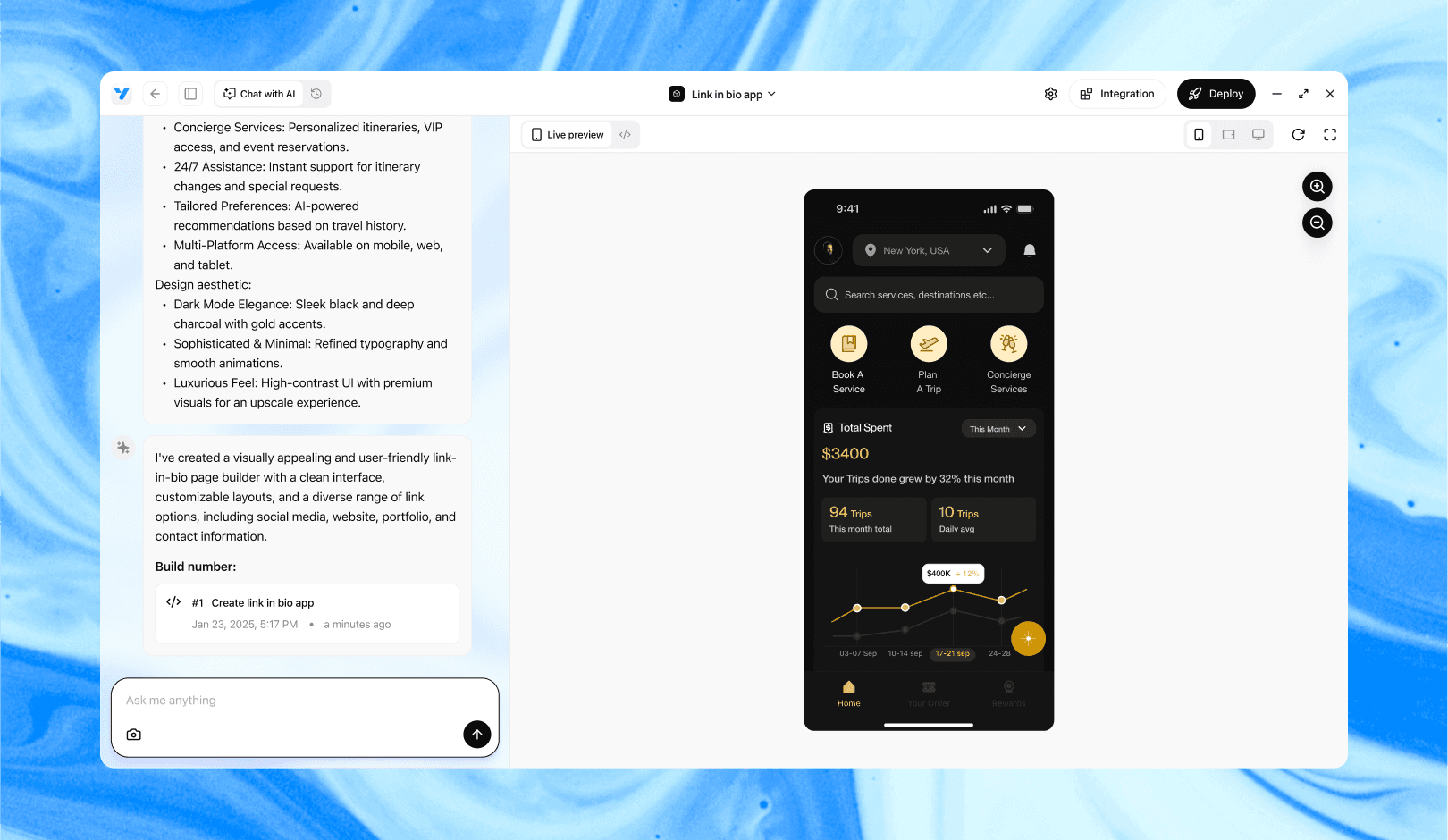
Vibe Studio, powered by Steve’s advanced AI agents, is a revolutionary no-code, conversational platform that empowers users to quickly and efficiently create full-stack Flutter applications integrated seamlessly with Firebase backend services. Ideal for solo founders, startups, and agile engineering teams, Vibe Studio allows users to visually manage and deploy Flutter apps, greatly accelerating the development process. The intuitive conversational interface simplifies complex development tasks, making app creation accessible even for non-coders.

Conclusion

Offline search in Flutter and mobile development is achievable with a compact inverted index, pragmatic fuzzy matching (n-grams or limited edit distance), and careful UI integration to maintain responsiveness. Build incrementally: start with exact token search, add trigrams for fuzzy matching, and profile on-device. This yields fast, private, and reliable search without server dependency.

Introduction

Offline search on mobile is crucial for smooth user experience in Flutter mobile development: fast, private, and resilient to network issues. This tutorial shows how to build a lightweight local index, perform fuzzy matching, and integrate search into a Flutter app. The approach favors small memory overhead, fast lookups, and predictable performance on-device.

Design Local Index

A local index transforms raw documents into an efficient lookup structure. For mobile, prefer inverted indexes mapping normalized tokens to document ids. Keep data structures compact: use integers for ids, use lists or bitsets for postings, and persist using Sqflite, Hive, or plain JSON if the dataset is small.

Tokenization and normalization steps:

  • Lowercase and remove diacritics.

  • Split on non-word characters.

  • Optionally remove stopwords for size.

  • Index n-grams (bigrams or trigrams) for fuzzy search support.

Index schema (in-memory):

  • Map> invertedIndex

  • Map docs

This lets you answer token queries quickly, then rank results by frequency and recency.

Build The Local Index

Build the index at install time or on first run. For updates, perform incremental indexing: tokenize changed documents and update postings. Example tokenization and inverted-index builders are compact and fast.

// Simple tokenization + inverted index builder
Map<String, List<int>> buildIndex(List<Map> docs) {
  final index = <String, List<int>>{};
  for (var doc in docs) {
    final id = doc['id'] as int;
    final text = (doc['text'] as String).toLowerCase();
    final tokens = RegExp(r"\w+").allMatches(text).map((m) => m.group(0)).toSet();
    for (var t in tokens) index.putIfAbsent(t!, () => []).add(id);
  }
  return index;
}

Persist the index in Hive or as a compressed JSON blob. For datasets under ~50k small documents, JSON is acceptable; otherwise use a local database with precomputed tokens for efficient queries.

Implement Fuzzy Matching

Exact token matches fail for typos. Two practical on-device fuzzy strategies:

  • N-gram Overlap: Index trigrams for each token. At query time, compute Jaccard or Dice similarity between query trigrams and token trigrams. This is fast and approximate.

  • Levenshtein Threshold: Compute edit distance between query and token, but restrict candidates using prefix matching or length heuristics to avoid O(n) cost across vocabulary.

Example trigram similarity implementation for candidate scoring:

Set<String> trigrams(String s) {
  final padded = '  ' + s + '  ';
  final out = <String>{};
  for (var i = 0; i < padded.length - 2; i++) out.add(padded.substring(i, i + 3));
  return out;
}

double jaccard(Set<String> a, Set<String>

Use a two-phase query: quickly gather candidates from the inverted index (exact tokens and n-gram index), then re-rank using trigram similarity or edit distance. This keeps fuzzy matching bounded and fast.

Integrate Search Into UI

In Flutter, keep search logic separate from widgets. Use a SearchService that exposes stream updates. Perform index queries on a background isolate for large indexes to avoid jank. For small indexes, compute async on the main isolate but use compute for CPU-heavy tasks.

UI pattern: show instant suggestions from prefix matches, then progressively enhance with fuzzy results. Debounce user input (200–300ms), and cancel outdated queries to avoid race conditions.

Ranking heuristics:

  • Token match count and token frequency weight.

  • Field boosts (title > body).

  • Recency or user-specific signals.

  • Fuzzy penalty (lower score for fuzzy matches).

Persist user recent queries and clicks to refine ranking locally.

Performance And Storage Considerations

  • Limit vocabulary: remove rare tokens, stem or fold similar tokens.

  • Use compact posting lists: store sorted arrays of ints and delta-encode when persisting.

  • Memory vs CPU trade-off: precompute trigrams to speed fuzzy matching at the cost of storage.

  • Test on low-end devices: emulate slow CPUs and limited memory. Measure query latency and frame drops.

Vibe Studio

Vibe Studio, powered by Steve’s advanced AI agents, is a revolutionary no-code, conversational platform that empowers users to quickly and efficiently create full-stack Flutter applications integrated seamlessly with Firebase backend services. Ideal for solo founders, startups, and agile engineering teams, Vibe Studio allows users to visually manage and deploy Flutter apps, greatly accelerating the development process. The intuitive conversational interface simplifies complex development tasks, making app creation accessible even for non-coders.

Conclusion

Offline search in Flutter and mobile development is achievable with a compact inverted index, pragmatic fuzzy matching (n-grams or limited edit distance), and careful UI integration to maintain responsiveness. Build incrementally: start with exact token search, add trigrams for fuzzy matching, and profile on-device. This yields fast, private, and reliable search without server dependency.

Build Flutter Apps Faster with Vibe Studio

Vibe Studio is your AI-powered Flutter development companion. Skip boilerplate, build in real-time, and deploy without hassle. Start creating apps at lightning speed with zero setup.

Other Insights

Join a growing community of builders today

Join a growing community of builders today

Join a growing community of builders today

Join a growing community of builders today

Join a growing community of builders today

28-07 Jackson Ave

Walturn

New York NY 11101 United States

© Steve • All Rights Reserved 2025

28-07 Jackson Ave

Walturn

New York NY 11101 United States

© Steve • All Rights Reserved 2025

28-07 Jackson Ave

Walturn

New York NY 11101 United States

© Steve • All Rights Reserved 2025

28-07 Jackson Ave

Walturn

New York NY 11101 United States

© Steve • All Rights Reserved 2025

28-07 Jackson Ave

Walturn

New York NY 11101 United States

© Steve • All Rights Reserved 2025

28-07 Jackson Ave

Walturn

New York NY 11101 United States

© Steve • All Rights Reserved 2025