Mastering Flutter Theme Extensions For Large Design Systems
Jan 20, 2026


Summary
Summary
Summary
Summary
This tutorial explains how to use Flutter ThemeExtension to manage large design systems in mobile development. It covers why ThemeExtension matters, design principles (immutability, semantic tokens), implementation patterns with copyWith and lerp, registration and consumption, variant management, testing, migration, and performance tips for scalable theming.
Key insights:
Key insights:
Key insights:
Key insights:
Why Use ThemeExtensions: Use ThemeExtensions for type-safe, composable tokens that ThemeData doesn't cover, enabling consistent cross-app semantics.
Designing Scalable Theme Extensions: Design small, immutable extensions with semantic names, copyWith, and lerp to simplify versioning and composition.
Implementing Theme Extensions: Register extensions in ThemeData.themeExtensions and retrieve them with Theme.of(context).extension(), providing fallbacks.
Managing Multiple Themes And Variants: Compose base extensions and brand overrides programmatically and use lerp for animated transitions between theme variants.
Performance Considerations: Keep extensions lightweight, avoid expensive objects, and limit Theme.of lookups to minimize rebuild scope.
Introduction
Large design systems in mobile development demand a predictable, scalable way to share tokens (colors, radii, shadows, type scales) across hundreds of screens. Flutter’s ThemeExtension API gives you a typed, composable surface to put design tokens that don’t belong in ThemeData itself. This article shows how to design, implement, and operate ThemeExtensions for real-world, large-scale Flutter apps.
Why Use ThemeExtensions
ThemeData covers many common tokens, but design systems evolve beyond it: component-specific palettes, elevation ramps, semantic aliases, and brand variants. ThemeExtension provides:
Type safety: tokens are strongly typed instead of ad-hoc maps.
Composition: multiple extensions for logically separate concerns.
Interpolation: built-in lerp allows animated transitions between themes.
Use extensions for tokens consumed by widgets directly (e.g., button surface color variants), and keep ThemeData for general platform-level settings.
Designing Scalable Theme Extensions
Design extensions as immutable value objects with copyWith and lerp. Keep extensions focused: one extension per concern (colors, shapes, motion). That makes versioning, testing, and composition easier.
Best practices:
Use semantic names: primaryActionColor, dangerText instead of raw color names.
Avoid storing widgets or BuildContext in extensions — they must remain pure data.
Provide sensible defaults and fallback helpers for older releases or partial themes.
Group tokens by change frequency: tokens that change per brand or per theme variant should be in separate extensions so small updates are cheap.
Implementing Theme Extensions
Create a small extension class that implements ThemeExtension, include copyWith and lerp, and register it in ThemeData.themeExtensions. Use extension lookups with robust fallbacks at call sites.
Example extension definition:
class AppColors extends ThemeExtension<AppColors> { final Color primaryAction; final Color danger; const AppColors({required this.primaryAction, required this.danger}); @override AppColors copyWith({Color? primaryAction, Color? danger}) => AppColors(primaryAction: primaryAction ?? this.primaryAction, danger: danger ?? this.danger); @override AppColors lerp(AppColors? other, double t) => other == null ? this : AppColors( primaryAction: Color.lerp(primaryAction, other.primaryAction, t)!, danger: Color.lerp(danger, other.danger, t)!, ); }
Register and consume the extension:
// In MaterialApp theme theme: ThemeData( themeExtensions: [AppColors(primaryAction: Colors.blue, danger: Colors.red)], ), // In widget final colors = Theme.of(context).extension<AppColors>() ?? const AppColors(primaryAction: Colors.blue, danger: Colors.red);
Managing Multiple Themes And Variants
Large systems typically require brand variants (light/dark, country-specific palettes) and runtime theme swapping. Keep variants declarative and centralized:
Maintain a registry of ThemeData builders: Map or a factory that composes a base ThemeData with a set of extensions for that variant.
Compose extensions programmatically: baseExtensions.merge(brandOverrides) via copyWith so you can override only specific tokens.
Use lerp to animate transitions smoothly between themes (MaterialApp’s ThemeMode and AnimatedTheme can be used in combination with ThemeData.copyWith to include interpolated extensions).
Testing and Migration
Unit-test your extensions: verify copyWith, lerp, and fallback behavior.
Snapshot visual tests for critical components under each variant.
When adding tokens, prefer additive changes. If you must rename or remove a token, provide a migration helper that translates old ThemeExtension instances to the new shape.
Performance Considerations
ThemeExtensions are lightweight data objects. Avoid instantiating heavy objects inside them.
Minimize rebuild scope: use context.dependOnInheritedWidgetOfExactType() or Theme.of only where needed; prefer passing tokens down to leaf widgets instead of repeatedly querying Theme.of in deeply nested build methods.
Vibe Studio
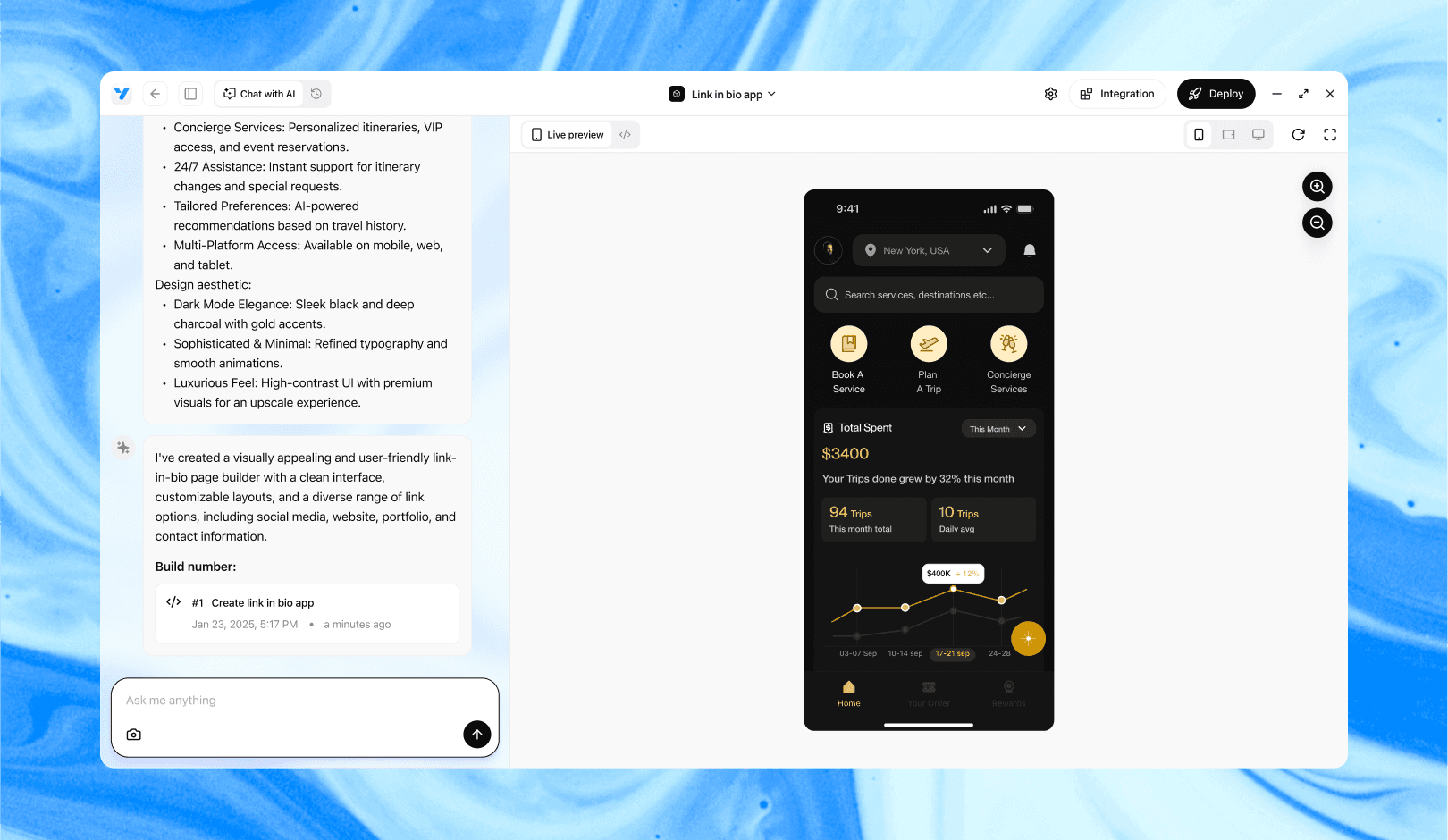
Vibe Studio, powered by Steve’s advanced AI agents, is a revolutionary no-code, conversational platform that empowers users to quickly and efficiently create full-stack Flutter applications integrated seamlessly with Firebase backend services. Ideal for solo founders, startups, and agile engineering teams, Vibe Studio allows users to visually manage and deploy Flutter apps, greatly accelerating the development process. The intuitive conversational interface simplifies complex development tasks, making app creation accessible even for non-coders.
Conclusion
ThemeExtension is a practical, type-safe tool for scaling design tokens in Flutter mobile development. By designing small, focused extensions, providing copyWith/lerp, centralizing variant composition, and testing migrations, you get predictable theming across many screens and brands. Use ThemeExtension to codify your system’s semantics, not presentation logic—this keeps your design system maintainable and fast as it grows.

Introduction
Large design systems in mobile development demand a predictable, scalable way to share tokens (colors, radii, shadows, type scales) across hundreds of screens. Flutter’s ThemeExtension API gives you a typed, composable surface to put design tokens that don’t belong in ThemeData itself. This article shows how to design, implement, and operate ThemeExtensions for real-world, large-scale Flutter apps.
Why Use ThemeExtensions
ThemeData covers many common tokens, but design systems evolve beyond it: component-specific palettes, elevation ramps, semantic aliases, and brand variants. ThemeExtension provides:
Type safety: tokens are strongly typed instead of ad-hoc maps.
Composition: multiple extensions for logically separate concerns.
Interpolation: built-in lerp allows animated transitions between themes.
Use extensions for tokens consumed by widgets directly (e.g., button surface color variants), and keep ThemeData for general platform-level settings.
Designing Scalable Theme Extensions
Design extensions as immutable value objects with copyWith and lerp. Keep extensions focused: one extension per concern (colors, shapes, motion). That makes versioning, testing, and composition easier.
Best practices:
Use semantic names: primaryActionColor, dangerText instead of raw color names.
Avoid storing widgets or BuildContext in extensions — they must remain pure data.
Provide sensible defaults and fallback helpers for older releases or partial themes.
Group tokens by change frequency: tokens that change per brand or per theme variant should be in separate extensions so small updates are cheap.
Implementing Theme Extensions
Create a small extension class that implements ThemeExtension, include copyWith and lerp, and register it in ThemeData.themeExtensions. Use extension lookups with robust fallbacks at call sites.
Example extension definition:
class AppColors extends ThemeExtension<AppColors> { final Color primaryAction; final Color danger; const AppColors({required this.primaryAction, required this.danger}); @override AppColors copyWith({Color? primaryAction, Color? danger}) => AppColors(primaryAction: primaryAction ?? this.primaryAction, danger: danger ?? this.danger); @override AppColors lerp(AppColors? other, double t) => other == null ? this : AppColors( primaryAction: Color.lerp(primaryAction, other.primaryAction, t)!, danger: Color.lerp(danger, other.danger, t)!, ); }
Register and consume the extension:
// In MaterialApp theme theme: ThemeData( themeExtensions: [AppColors(primaryAction: Colors.blue, danger: Colors.red)], ), // In widget final colors = Theme.of(context).extension<AppColors>() ?? const AppColors(primaryAction: Colors.blue, danger: Colors.red);
Managing Multiple Themes And Variants
Large systems typically require brand variants (light/dark, country-specific palettes) and runtime theme swapping. Keep variants declarative and centralized:
Maintain a registry of ThemeData builders: Map or a factory that composes a base ThemeData with a set of extensions for that variant.
Compose extensions programmatically: baseExtensions.merge(brandOverrides) via copyWith so you can override only specific tokens.
Use lerp to animate transitions smoothly between themes (MaterialApp’s ThemeMode and AnimatedTheme can be used in combination with ThemeData.copyWith to include interpolated extensions).
Testing and Migration
Unit-test your extensions: verify copyWith, lerp, and fallback behavior.
Snapshot visual tests for critical components under each variant.
When adding tokens, prefer additive changes. If you must rename or remove a token, provide a migration helper that translates old ThemeExtension instances to the new shape.
Performance Considerations
ThemeExtensions are lightweight data objects. Avoid instantiating heavy objects inside them.
Minimize rebuild scope: use context.dependOnInheritedWidgetOfExactType() or Theme.of only where needed; prefer passing tokens down to leaf widgets instead of repeatedly querying Theme.of in deeply nested build methods.
Vibe Studio

Vibe Studio, powered by Steve’s advanced AI agents, is a revolutionary no-code, conversational platform that empowers users to quickly and efficiently create full-stack Flutter applications integrated seamlessly with Firebase backend services. Ideal for solo founders, startups, and agile engineering teams, Vibe Studio allows users to visually manage and deploy Flutter apps, greatly accelerating the development process. The intuitive conversational interface simplifies complex development tasks, making app creation accessible even for non-coders.
Conclusion
ThemeExtension is a practical, type-safe tool for scaling design tokens in Flutter mobile development. By designing small, focused extensions, providing copyWith/lerp, centralizing variant composition, and testing migrations, you get predictable theming across many screens and brands. Use ThemeExtension to codify your system’s semantics, not presentation logic—this keeps your design system maintainable and fast as it grows.

Build Flutter Apps Faster with Vibe Studio
Vibe Studio is your AI-powered Flutter development companion. Skip boilerplate, build in real-time, and deploy without hassle. Start creating apps at lightning speed with zero setup.
Other Insights