Integrating Sentry For Flutter With Release Health And Breadcrumbs
Summary
Summary

This tutorial shows how to integrate Sentry into Flutter mobile development: initialize Sentry with release and session tracking, align release names with native builds, upload symbol files, and capture automated and manual breadcrumbs. Follow best practices for sampling, privacy, and monitoring to ensure release health metrics and readable stack traces.

This tutorial shows how to integrate Sentry into Flutter mobile development: initialize Sentry with release and session tracking, align release names with native builds, upload symbol files, and capture automated and manual breadcrumbs. Follow best practices for sampling, privacy, and monitoring to ensure release health metrics and readable stack traces.

Key insights:
Key insights:
  • Setup Sentry In Flutter: Initialize Sentry early with DSN, release, environment, and enableAutoSessionTracking for session metrics.

  • Configure Release Health: Ensure release strings match native build identifiers and upload dSYMs/ProGuard mappings for symbolication.

  • Capture Breadcrumbs: Add manual breadcrumbs for domain events and rely on automatic breadcrumbs for navigation and network events.

  • Use Breadcrumbs Strategically: Keep breadcrumbs small, avoid PII, and categorize events to reconstruct user flows effectively.

  • Optimize For Mobile Development: Sample transactions conservatively, sanitize data with callbacks, and test symbolication in staging.

Introduction

Sentry provides realtime error monitoring and performance telemetry for Flutter apps. Integrating Sentry with release health and breadcrumbs gives you context-rich crash reports, session metrics, and a timeline of user and system events that lead to failures. This tutorial explains how to wire Sentry into a Flutter mobile development workflow, configure release health for accurate session tracking, and capture meaningful breadcrumbs so you can reproduce and prioritize issues faster.

Setup Sentry In Flutter

Start by adding the official Sentry Flutter package to pubspec.yaml and configure it early in your app lifecycle—typically in main(). You must provide your DSN and set the release and environment for accurate grouping and release health. Enable auto session tracking to collect crash-free session metrics.

Example initialization (keep values in CI or environment variables for production):

import 'package:flutter/widgets.dart';
import 'package:sentry_flutter/sentry_flutter.dart';

void main() async {
  await SentryFlutter.init(
    (options) {
      options.dsn = 'https://examplePublicKey@o0.ingest.sentry.io/0';
      options.release = 'com.example.app@1.2.3+45';
      options.environment = 'production';
      options.enableAutoSessionTracking = true;
      options.tracesSampleRate = 0.1; // optional
    },
    appRunner: () => runApp(MyApp()),
  );
}

Key points:

  • Use a canonical release string (e.g., package@version+build) so Sentry can attribute crashes to a release.

  • enableAutoSessionTracking gathers session counts and crash-free users used by release health.

  • Set environment for separating staging/test/production metrics.

Configure Release Health

Release health depends on accurate release/version and session data. For mobile development, native platform builds often change the bundle/version separately from the Dart pubspec. Make sure the release value you send matches your native release identifiers (Android versionCode, iOS build number).

Steps to ensure accurate release health:

  • Inject native build numbers into your CI or build scripts and assemble a release tag used for Sentry upload and runtime options.

  • During CI, upload dSYMs and ProGuard mappings to Sentry for symbolication; without them, stack traces will be unreadable and release health is less actionable.

  • Confirm sessions are started. Sentry's auto session tracking will start sessions for foreground app lifecycles. For advanced control, use Sentry.startSession and Sentry.endSession to model custom flows.

Sentry’s Release Health dashboard uses sessions and crash counts to compute metrics like Crash Free Users and Crash Free Sessions—these are only meaningful when releases are consistently tagged and symbolicated.

Capture Breadcrumbs

Breadcrumbs are lightweight events that provide a chronological trail leading up to an error. Sentry automatically captures many breadcrumbs (navigation, HTTP requests, logs) in Flutter, but manual breadcrumbs are essential for domain-specific context.

Use Sentry.addBreadcrumb for custom events with categories and metadata. Keep breadcrumbs small and high-signal.

Sentry.addBreadcrumb(
  Breadcrumb(
    message: 'User tapped purchase',
    category: 'user.action',
    data: {'productId': 'sku_123', 'price': 9.99},
  ),
);

Best practices for breadcrumbs:

  • Use categories (navigation, user.action, network) to filter in the Sentry UI.

  • Avoid logging PII (personal data) or large payloads; breadcrumbs are included with events and contribute to payload size and privacy concerns.

  • Rate-limit high-frequency events (e.g., continuous sensor data) by sampling or reducing detail.

  • Instrument async flows: when doing multi-step network flows, add a breadcrumb at each step to reconstruct the sequence of operations.

Best Practices For Mobile Development

Performance and privacy are key in mobile development. Follow these practices when integrating Sentry:

  • Keep tracesSampleRate conservative for production; use transaction sampling rules when available to focus on slow or error-prone flows.

  • Scrub or drop PII with beforeSend and beforeBreadcrumb callbacks to sanitize events and comply with privacy regulations.

  • Test symbolication by triggering a controlled crash in a staging build with uploaded dSYMs/mappings.

  • Use environment and release tags to promote builds (staging → canary → production) and compare release health across channels.

  • Monitor SDK updates; Sentry Flutter improves native integrations over time, which can change how breadcrumbs and sessions are captured.

Vibe Studio
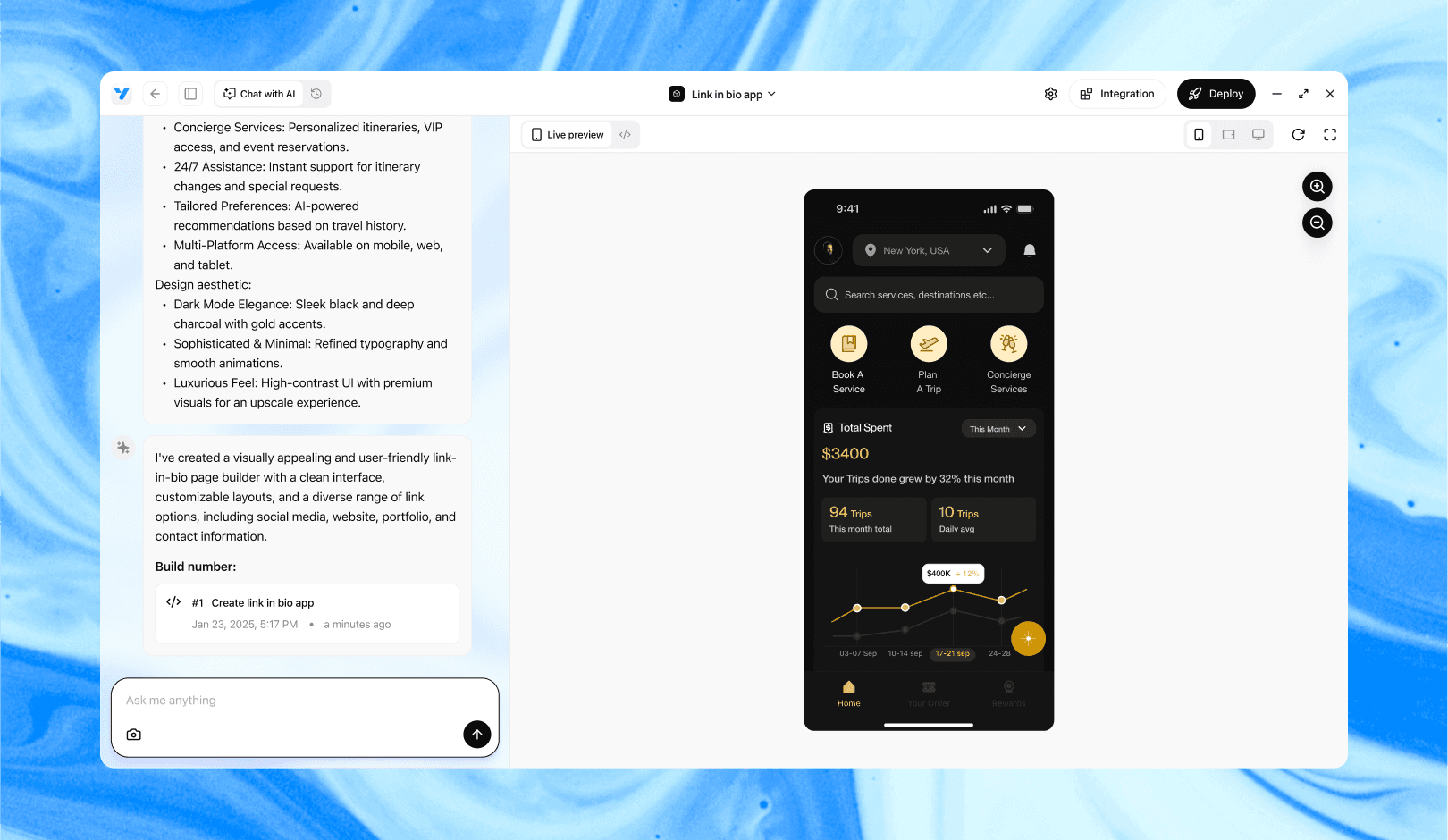
Vibe Studio, powered by Steve’s advanced AI agents, is a revolutionary no-code, conversational platform that empowers users to quickly and efficiently create full-stack Flutter applications integrated seamlessly with Firebase backend services. Ideal for solo founders, startups, and agile engineering teams, Vibe Studio allows users to visually manage and deploy Flutter apps, greatly accelerating the development process. The intuitive conversational interface simplifies complex development tasks, making app creation accessible even for non-coders.

Conclusion

Integrating Sentry into a Flutter app yields actionable crash reports when you pair accurate release metadata with disciplined breadcrumb usage. Configure releases to match native build identifiers, enable session tracking for release health, and add domain-specific breadcrumbs to build a timeline that helps you reproduce and prioritize issues quickly. For mobile development teams, these signals reduce time-to-fix and improve user quality metrics across releases.

Introduction

Sentry provides realtime error monitoring and performance telemetry for Flutter apps. Integrating Sentry with release health and breadcrumbs gives you context-rich crash reports, session metrics, and a timeline of user and system events that lead to failures. This tutorial explains how to wire Sentry into a Flutter mobile development workflow, configure release health for accurate session tracking, and capture meaningful breadcrumbs so you can reproduce and prioritize issues faster.

Setup Sentry In Flutter

Start by adding the official Sentry Flutter package to pubspec.yaml and configure it early in your app lifecycle—typically in main(). You must provide your DSN and set the release and environment for accurate grouping and release health. Enable auto session tracking to collect crash-free session metrics.

Example initialization (keep values in CI or environment variables for production):

import 'package:flutter/widgets.dart';
import 'package:sentry_flutter/sentry_flutter.dart';

void main() async {
  await SentryFlutter.init(
    (options) {
      options.dsn = 'https://examplePublicKey@o0.ingest.sentry.io/0';
      options.release = 'com.example.app@1.2.3+45';
      options.environment = 'production';
      options.enableAutoSessionTracking = true;
      options.tracesSampleRate = 0.1; // optional
    },
    appRunner: () => runApp(MyApp()),
  );
}

Key points:

  • Use a canonical release string (e.g., package@version+build) so Sentry can attribute crashes to a release.

  • enableAutoSessionTracking gathers session counts and crash-free users used by release health.

  • Set environment for separating staging/test/production metrics.

Configure Release Health

Release health depends on accurate release/version and session data. For mobile development, native platform builds often change the bundle/version separately from the Dart pubspec. Make sure the release value you send matches your native release identifiers (Android versionCode, iOS build number).

Steps to ensure accurate release health:

  • Inject native build numbers into your CI or build scripts and assemble a release tag used for Sentry upload and runtime options.

  • During CI, upload dSYMs and ProGuard mappings to Sentry for symbolication; without them, stack traces will be unreadable and release health is less actionable.

  • Confirm sessions are started. Sentry's auto session tracking will start sessions for foreground app lifecycles. For advanced control, use Sentry.startSession and Sentry.endSession to model custom flows.

Sentry’s Release Health dashboard uses sessions and crash counts to compute metrics like Crash Free Users and Crash Free Sessions—these are only meaningful when releases are consistently tagged and symbolicated.

Capture Breadcrumbs

Breadcrumbs are lightweight events that provide a chronological trail leading up to an error. Sentry automatically captures many breadcrumbs (navigation, HTTP requests, logs) in Flutter, but manual breadcrumbs are essential for domain-specific context.

Use Sentry.addBreadcrumb for custom events with categories and metadata. Keep breadcrumbs small and high-signal.

Sentry.addBreadcrumb(
  Breadcrumb(
    message: 'User tapped purchase',
    category: 'user.action',
    data: {'productId': 'sku_123', 'price': 9.99},
  ),
);

Best practices for breadcrumbs:

  • Use categories (navigation, user.action, network) to filter in the Sentry UI.

  • Avoid logging PII (personal data) or large payloads; breadcrumbs are included with events and contribute to payload size and privacy concerns.

  • Rate-limit high-frequency events (e.g., continuous sensor data) by sampling or reducing detail.

  • Instrument async flows: when doing multi-step network flows, add a breadcrumb at each step to reconstruct the sequence of operations.

Best Practices For Mobile Development

Performance and privacy are key in mobile development. Follow these practices when integrating Sentry:

  • Keep tracesSampleRate conservative for production; use transaction sampling rules when available to focus on slow or error-prone flows.

  • Scrub or drop PII with beforeSend and beforeBreadcrumb callbacks to sanitize events and comply with privacy regulations.

  • Test symbolication by triggering a controlled crash in a staging build with uploaded dSYMs/mappings.

  • Use environment and release tags to promote builds (staging → canary → production) and compare release health across channels.

  • Monitor SDK updates; Sentry Flutter improves native integrations over time, which can change how breadcrumbs and sessions are captured.

Vibe Studio

Vibe Studio, powered by Steve’s advanced AI agents, is a revolutionary no-code, conversational platform that empowers users to quickly and efficiently create full-stack Flutter applications integrated seamlessly with Firebase backend services. Ideal for solo founders, startups, and agile engineering teams, Vibe Studio allows users to visually manage and deploy Flutter apps, greatly accelerating the development process. The intuitive conversational interface simplifies complex development tasks, making app creation accessible even for non-coders.

Conclusion

Integrating Sentry into a Flutter app yields actionable crash reports when you pair accurate release metadata with disciplined breadcrumb usage. Configure releases to match native build identifiers, enable session tracking for release health, and add domain-specific breadcrumbs to build a timeline that helps you reproduce and prioritize issues quickly. For mobile development teams, these signals reduce time-to-fix and improve user quality metrics across releases.

Build Flutter Apps Faster with Vibe Studio

Vibe Studio is your AI-powered Flutter development companion. Skip boilerplate, build in real-time, and deploy without hassle. Start creating apps at lightning speed with zero setup.

Other Insights

Join a growing community of builders today

Join a growing community of builders today

Join a growing community of builders today

Join a growing community of builders today

Join a growing community of builders today

28-07 Jackson Ave

Walturn

New York NY 11101 United States

© Steve • All Rights Reserved 2025

28-07 Jackson Ave

Walturn

New York NY 11101 United States

© Steve • All Rights Reserved 2025

28-07 Jackson Ave

Walturn

New York NY 11101 United States

© Steve • All Rights Reserved 2025

28-07 Jackson Ave

Walturn

New York NY 11101 United States

© Steve • All Rights Reserved 2025

28-07 Jackson Ave

Walturn

New York NY 11101 United States

© Steve • All Rights Reserved 2025

28-07 Jackson Ave

Walturn

New York NY 11101 United States

© Steve • All Rights Reserved 2025