Integrating Flutter with GitHub Copilot Chat APIs

Summary
Summary
Summary
Summary

This tutorial explains how to integrate Flutter with GitHub Copilot Chat APIs by using a secure backend proxy, designing a client-server request flow, implementing streaming-aware chat UI patterns in Flutter, and applying security and operational best practices for mobile development.

This tutorial explains how to integrate Flutter with GitHub Copilot Chat APIs by using a secure backend proxy, designing a client-server request flow, implementing streaming-aware chat UI patterns in Flutter, and applying security and operational best practices for mobile development.

This tutorial explains how to integrate Flutter with GitHub Copilot Chat APIs by using a secure backend proxy, designing a client-server request flow, implementing streaming-aware chat UI patterns in Flutter, and applying security and operational best practices for mobile development.

This tutorial explains how to integrate Flutter with GitHub Copilot Chat APIs by using a secure backend proxy, designing a client-server request flow, implementing streaming-aware chat UI patterns in Flutter, and applying security and operational best practices for mobile development.

Key insights:
Key insights:
Key insights:
Key insights:
  • Setting Up Access: Use a backend proxy to exchange or store ephemeral tokens and avoid embedding secrets in the Flutter app.

  • Designing Your Request Flow: Send concise client messages to your server which enriches context and forwards to Copilot; prefer streaming for long responses.

  • Implementing In-App Chat UI: Render incremental tokens with StreamBuilder or ValueNotifier to provide a responsive, low-latency developer experience.

  • Security And Best Practices: Enforce rate limits, sanitize inputs, moderate output, and log safely to protect users and control costs.

  • Error Handling And Observability: Implement retries, cancelation, and telemetry (latency, errors) on the backend to improve reliability and debugging.

Introduction

Integrating Flutter with GitHub Copilot Chat APIs lets mobile developers embed AI-assisted conversational features directly into apps — for code assistance, guided workflows, or smart chat helpers. This tutorial covers the essentials: obtaining access, architecting request/response flow, implementing a minimal in-app chat UI, and hardening security for mobile development. Code-forward examples use Dart and standard HTTP libraries.

Setting Up Access

1) Obtain API Access: Request access to the GitHub Copilot Chat API and create a short-lived token or OAuth app per GitHub's current developer documentation. Treat tokens as secrets. 2) Server-side Proxy: Never embed long-lived tokens in the client. Instead, create a small backend service that exchanges client credentials for a scoped, ephemeral token or proxies requests after authenticating the user. This protects rate limits and credentials and allows central logging and moderation.

Backend responsibilities:

  • Authenticate app users (OAuth/JWT).

  • Request/refresh ephemeral Copilot tokens.

  • Enforce rate limits and logging.

Designing Your Request Flow

Keep the client simple: the Flutter app sends user messages to your backend, which then calls Copilot Chat API. A typical flow:

  • Client POSTs { userId, message, context } to your backend.

  • Backend validates, enriches context (e.g., repo metadata), and forwards to Copilot Chat API.

  • Backend receives streaming or final response and forwards to client.

If you use streaming responses, employ WebSockets or Server-Sent Events (SSE) between backend and Flutter so the UI can render incremental tokens. Below is a concise client-side example using HTTP POST to a proxy endpoint. Replace endpoints and models per your backend implementation.

import 'package:http/http.dart' as http;
import 'dart:convert';

Future<String> sendMessage(String message) async {
  final res = await http.post(
    Uri.parse('https://your-backend.example.com/chat'),
    headers: {'Content-Type': 'application/json'},
    body: jsonEncode({'message': message}),
  );
  return jsonDecode(res.body)['reply'] as String;
}

Implementing In-App Chat UI

Design patterns for Flutter UI:

  • Use a StreamBuilder or ValueNotifier to render tokens as they arrive for streaming responses.

  • Keep message models immutable and minimal: id, text, role, timestamp, status.

  • Provide user affordances: cancel request, retry, and attach context (current file content, device info).

A minimal UI snippet for updating chat state:

class Message { final String id; final String text; final String role; Message(this.id, this.text, this.role); }

final messages = ValueNotifier<List<Message>>([]);

void appendToken(String token) {
  final list = List<Message>.from(messages.value);
  list.last = Message(list.last.id, list.last.text + token, list.last.role);
  messages.value = list;
}

Stream tokens from your backend over WebSocket/SSE to progressively call appendToken as chunks arrive. This achieves the interactive feel developers expect from Copilot.

Security And Best Practices

  • Secrets: Keep API keys/server tokens only on the server. Use short-lived tokens for client sessions.

  • Rate Limiting: Enforce per-user and global caps server-side to avoid abuse and unexpected costs.

  • Input Sanitization: Filter or redact sensitive user data before forwarding to Copilot to avoid data leakage.

  • Moderation: If your app exposes generated content, run content safety checks and provide user reporting and undo flows.

  • Observability: Log requests (without sensitive payloads) and capture latency for streaming vs. non-streaming endpoints.

Performance tips: batch context only when needed, compress payloads (gzip), and enable streaming for long-form responses to reduce perceived latency.

Vibe Studio
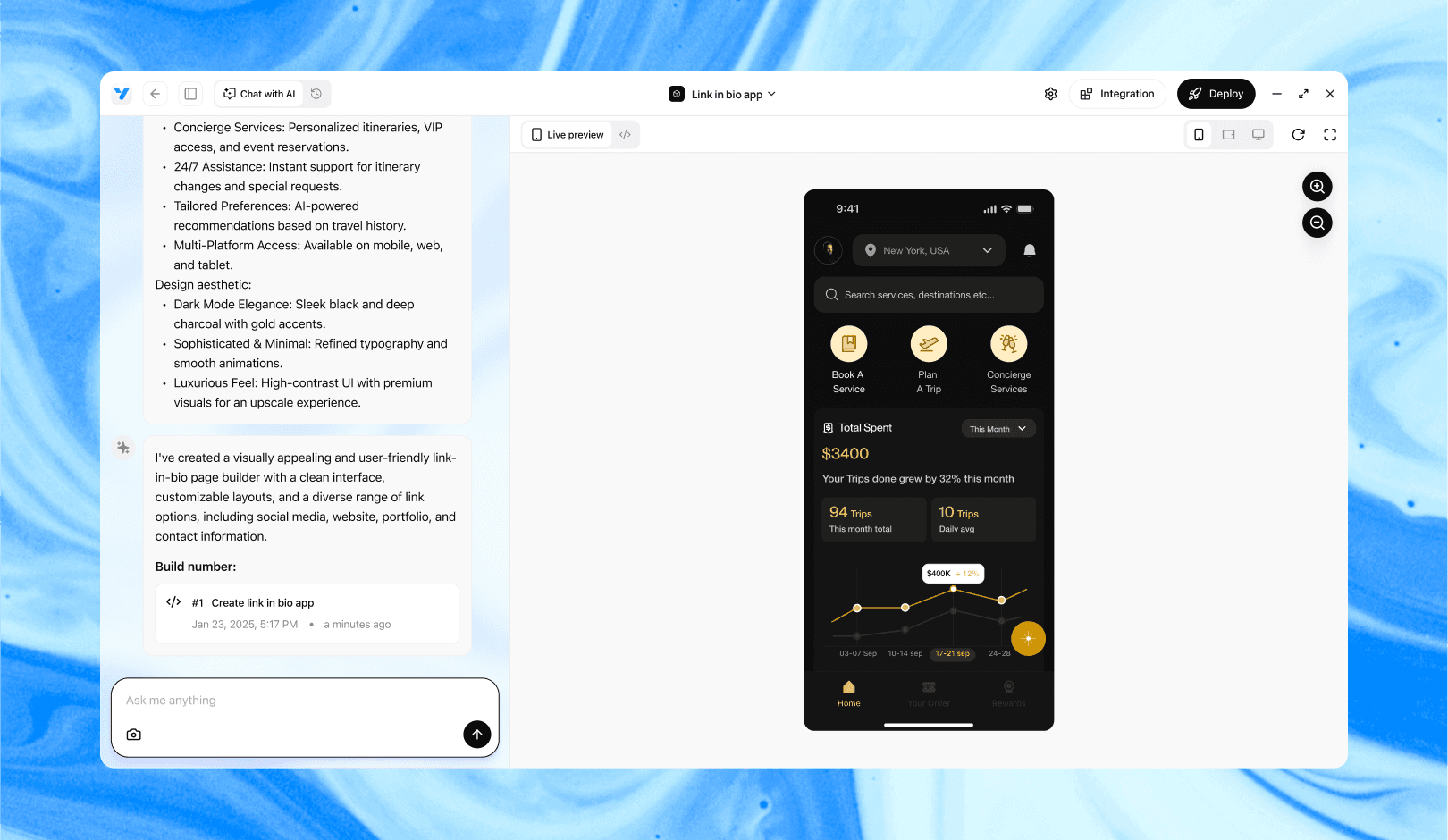
Vibe Studio, powered by Steve’s advanced AI agents, is a revolutionary no-code, conversational platform that empowers users to quickly and efficiently create full-stack Flutter applications integrated seamlessly with Firebase backend services. Ideal for solo founders, startups, and agile engineering teams, Vibe Studio allows users to visually manage and deploy Flutter apps, greatly accelerating the development process. The intuitive conversational interface simplifies complex development tasks, making app creation accessible even for non-coders.

Conclusion

Integrating Flutter with GitHub Copilot Chat APIs is a matter of designing a secure proxy layer, transferring concise client-server messages, and using streaming for responsive UIs. For mobile development, focus on minimizing secrets on-device, implementing incremental rendering for smooth UX, and enforcing server-side policies (rate limits, moderation, observability). With those building blocks you can safely add powerful conversational features to your Flutter apps while maintaining control over cost, security, and user experience.

Introduction

Integrating Flutter with GitHub Copilot Chat APIs lets mobile developers embed AI-assisted conversational features directly into apps — for code assistance, guided workflows, or smart chat helpers. This tutorial covers the essentials: obtaining access, architecting request/response flow, implementing a minimal in-app chat UI, and hardening security for mobile development. Code-forward examples use Dart and standard HTTP libraries.

Setting Up Access

1) Obtain API Access: Request access to the GitHub Copilot Chat API and create a short-lived token or OAuth app per GitHub's current developer documentation. Treat tokens as secrets. 2) Server-side Proxy: Never embed long-lived tokens in the client. Instead, create a small backend service that exchanges client credentials for a scoped, ephemeral token or proxies requests after authenticating the user. This protects rate limits and credentials and allows central logging and moderation.

Backend responsibilities:

  • Authenticate app users (OAuth/JWT).

  • Request/refresh ephemeral Copilot tokens.

  • Enforce rate limits and logging.

Designing Your Request Flow

Keep the client simple: the Flutter app sends user messages to your backend, which then calls Copilot Chat API. A typical flow:

  • Client POSTs { userId, message, context } to your backend.

  • Backend validates, enriches context (e.g., repo metadata), and forwards to Copilot Chat API.

  • Backend receives streaming or final response and forwards to client.

If you use streaming responses, employ WebSockets or Server-Sent Events (SSE) between backend and Flutter so the UI can render incremental tokens. Below is a concise client-side example using HTTP POST to a proxy endpoint. Replace endpoints and models per your backend implementation.

import 'package:http/http.dart' as http;
import 'dart:convert';

Future<String> sendMessage(String message) async {
  final res = await http.post(
    Uri.parse('https://your-backend.example.com/chat'),
    headers: {'Content-Type': 'application/json'},
    body: jsonEncode({'message': message}),
  );
  return jsonDecode(res.body)['reply'] as String;
}

Implementing In-App Chat UI

Design patterns for Flutter UI:

  • Use a StreamBuilder or ValueNotifier to render tokens as they arrive for streaming responses.

  • Keep message models immutable and minimal: id, text, role, timestamp, status.

  • Provide user affordances: cancel request, retry, and attach context (current file content, device info).

A minimal UI snippet for updating chat state:

class Message { final String id; final String text; final String role; Message(this.id, this.text, this.role); }

final messages = ValueNotifier<List<Message>>([]);

void appendToken(String token) {
  final list = List<Message>.from(messages.value);
  list.last = Message(list.last.id, list.last.text + token, list.last.role);
  messages.value = list;
}

Stream tokens from your backend over WebSocket/SSE to progressively call appendToken as chunks arrive. This achieves the interactive feel developers expect from Copilot.

Security And Best Practices

  • Secrets: Keep API keys/server tokens only on the server. Use short-lived tokens for client sessions.

  • Rate Limiting: Enforce per-user and global caps server-side to avoid abuse and unexpected costs.

  • Input Sanitization: Filter or redact sensitive user data before forwarding to Copilot to avoid data leakage.

  • Moderation: If your app exposes generated content, run content safety checks and provide user reporting and undo flows.

  • Observability: Log requests (without sensitive payloads) and capture latency for streaming vs. non-streaming endpoints.

Performance tips: batch context only when needed, compress payloads (gzip), and enable streaming for long-form responses to reduce perceived latency.

Vibe Studio

Vibe Studio, powered by Steve’s advanced AI agents, is a revolutionary no-code, conversational platform that empowers users to quickly and efficiently create full-stack Flutter applications integrated seamlessly with Firebase backend services. Ideal for solo founders, startups, and agile engineering teams, Vibe Studio allows users to visually manage and deploy Flutter apps, greatly accelerating the development process. The intuitive conversational interface simplifies complex development tasks, making app creation accessible even for non-coders.

Conclusion

Integrating Flutter with GitHub Copilot Chat APIs is a matter of designing a secure proxy layer, transferring concise client-server messages, and using streaming for responsive UIs. For mobile development, focus on minimizing secrets on-device, implementing incremental rendering for smooth UX, and enforcing server-side policies (rate limits, moderation, observability). With those building blocks you can safely add powerful conversational features to your Flutter apps while maintaining control over cost, security, and user experience.

Build Flutter Apps Faster with Vibe Studio

Build Flutter Apps Faster with Vibe Studio

Build Flutter Apps Faster with Vibe Studio

Build Flutter Apps Faster with Vibe Studio

Vibe Studio is your AI-powered Flutter development companion. Skip boilerplate, build in real-time, and deploy without hassle. Start creating apps at lightning speed with zero setup.

Vibe Studio is your AI-powered Flutter development companion. Skip boilerplate, build in real-time, and deploy without hassle. Start creating apps at lightning speed with zero setup.

Vibe Studio is your AI-powered Flutter development companion. Skip boilerplate, build in real-time, and deploy without hassle. Start creating apps at lightning speed with zero setup.

Vibe Studio is your AI-powered Flutter development companion. Skip boilerplate, build in real-time, and deploy without hassle. Start creating apps at lightning speed with zero setup.

Other Insights

Other Insights

Other Insights

Other Insights

Join a growing community of builders today

Join a growing community of builders today

Join a growing community of builders today

Join a growing community of builders today

Join a growing community of builders today

28-07 Jackson Ave

Walturn

New York NY 11101 United States

© Steve • All Rights Reserved 2025

28-07 Jackson Ave

Walturn

New York NY 11101 United States

© Steve • All Rights Reserved 2025

28-07 Jackson Ave

Walturn

New York NY 11101 United States

© Steve • All Rights Reserved 2025

28-07 Jackson Ave

Walturn

New York NY 11101 United States

© Steve • All Rights Reserved 2025

28-07 Jackson Ave

Walturn

New York NY 11101 United States

© Steve • All Rights Reserved 2025

28-07 Jackson Ave

Walturn

New York NY 11101 United States

© Steve • All Rights Reserved 2025