Integrating Blockchain Smart Contracts via Web3dart
Nov 13, 2025


Summary
Summary
Summary
Summary
This tutorial shows how to integrate Ethereum-compatible smart contracts into Flutter apps using web3dart. It covers client setup, ABI parsing, read-only calls, sending transactions with credentials, wallet handling options, gas/nonce management, testing on local chains, and security best practices for mobile development.
Key insights:
Key insights:
Key insights:
Key insights:
Setting Up Web3dart: Initialize a single Web3Client and use EthPrivateKey or external signing; never embed production keys.
Connecting To An Ethereum Node: Choose HTTP for simple reads or WebSocket for subscriptions; manage chainId for signing.
Interacting With Smart Contracts: Parse ABI with ContractAbi.fromJson, use client.call for reads and encoded transactions for writes.
Handling Wallets And Transactions: Prefer secure storage, WalletConnect, or backend signing; estimate gas and manage nonces.
Testing And Deployment Tips: Test locally (Ganache/Hardhat), separate env configs, and implement retries and receipt monitoring.
Introduction
Integrating smart contracts into Flutter mobile development enables decentralized, trustless features directly in an app. This tutorial focuses on using web3dart — a Dart library for Ethereum-compatible blockchains — to connect a Flutter app to smart contracts, call read-only methods, and send transactions. You'll learn practical patterns for ABI handling, provider selection, credential management, and transaction lifecycle management.
Setting Up Web3dart
Add web3dart and an HTTP/WebSocket transport to your pubspec.yaml (http is common for simple calls; web_socket_channel for subscriptions). Keep network and RPC keys out of source control.
Use a simple client and credentials from a private key for development. Never embed production private keys in the app — use secure key management or a backend signing service.
import 'package:web3dart/web3dart.dart';
import 'package:http/http.dart';
final client = Web3Client('https://mainnet.infura.io/v3/YOUR_KEY', Client());
final credentials = EthPrivateKey.fromHex('0xYOUR_PRIVATE_KEY');Connecting To An Ethereum Node
Choose an RPC provider (Infura, Alchemy, QuickNode) or run a local node/Ganache for testing. For event subscriptions and faster feedback use WebSocket URLs; for single calls HTTP is acceptable. Keep a single Web3Client instance per app lifecycle to reduce connections.
When connecting, consider chainId for transaction signing (EIP-155). web3dart accepts chainId in transaction construction or in sendTransaction calls when necessary.
Interacting With Smart Contracts
Obtain the contract ABI (JSON) and the deployed address. Parse the ABI with ContractAbi.fromJson and create a DeployedContract. Map contract functions to ContractFunction objects and use call for view/pure functions and sendTransaction for state changes.
Read-only example: prepare the contract and call a function that returns a BigInt or String. For state changes, build a Transaction with to=contractAddress and data=encoded call, then sign and send it with credentials. Monitor the transaction hash and wait for receipt when you need confirmation.
final abi = ContractAbi.fromJson(abiJsonString, 'MyContract');
final contract = DeployedContract(abi, EthereumAddress.fromHex(contractAddress));
final func = contract.function('balanceOf');
final result = await client.call(contract: contract, function: func, params: [EthereumAddress.fromHex(addr)]);
print(result.first); // parse BigInt or other typesABI types map to Dart types: uint/int become BigInt, addresses map to EthereumAddress, and bytes to Uint8List. Carefully convert and validate types when presenting values in the UI.
Handling Wallets And Transactions
For mobile, avoid storing private keys in plaintext. Options:
Use platform secure storage (Keychain/Keystore) with biometric protection for private keys.
Use WalletConnect to delegate signing to a mobile wallet app.
Delegate signing to a backend HSM if trust constraints allow.
When sending transactions, set gasPrice/gasLimit conservatively or estimate using client.estimateGas. Example flow: build transaction with encoded contract call, estimate gas, sign with credentials, send, then await receipt with client.pollTransactionReceipt or repeated getTransactionReceipt calls.
Edge cases: revert errors come back as failed receipts; parse the revert reason only with tooling that re-executes the call or via RPC trace endpoints. Handle nonce management carefully if sending multiple transactions in quick succession.
Testing And Deployment Tips
Develop against a local chain (Ganache, Hardhat node) and use deterministic test accounts. Keep your ABI, address, and network configuration per environment. Log transaction hashes and receipts for troubleshooting. For production, route RPC through a rate-limited provider and implement retry/backoff strategies for transient network failures.
Security checklist: never hardcode private keys, validate contract addresses and ABI before use, and limit on-device permissions. Consider rate-limiting UI actions that trigger transactions to prevent accidental multiple sends.
Vibe Studio
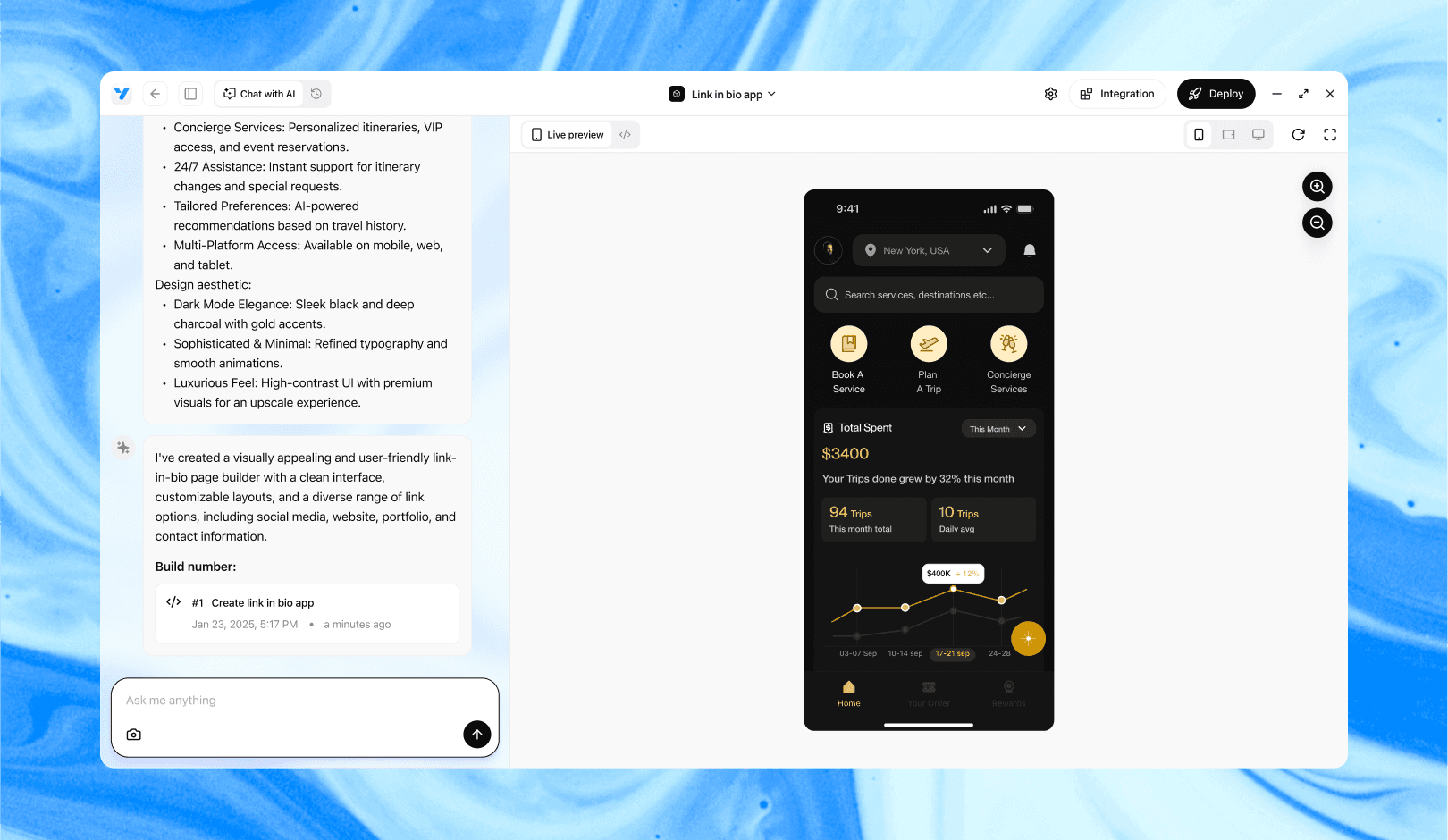
Vibe Studio, powered by Steve’s advanced AI agents, is a revolutionary no-code, conversational platform that empowers users to quickly and efficiently create full-stack Flutter applications integrated seamlessly with Firebase backend services. Ideal for solo founders, startups, and agile engineering teams, Vibe Studio allows users to visually manage and deploy Flutter apps, greatly accelerating the development process. The intuitive conversational interface simplifies complex development tasks, making app creation accessible even for non-coders.
Conclusion
Integrating smart contracts with Flutter using web3dart is practical and straightforward: set up a persistent Web3Client, parse ABIs, use call for reads and sendTransaction with credentials for writes, and secure private keys. Focus on secure credential handling, proper type conversions, gas and nonce management, and robust testing on local networks before production deployment.

Introduction
Integrating smart contracts into Flutter mobile development enables decentralized, trustless features directly in an app. This tutorial focuses on using web3dart — a Dart library for Ethereum-compatible blockchains — to connect a Flutter app to smart contracts, call read-only methods, and send transactions. You'll learn practical patterns for ABI handling, provider selection, credential management, and transaction lifecycle management.
Setting Up Web3dart
Add web3dart and an HTTP/WebSocket transport to your pubspec.yaml (http is common for simple calls; web_socket_channel for subscriptions). Keep network and RPC keys out of source control.
Use a simple client and credentials from a private key for development. Never embed production private keys in the app — use secure key management or a backend signing service.
import 'package:web3dart/web3dart.dart';
import 'package:http/http.dart';
final client = Web3Client('https://mainnet.infura.io/v3/YOUR_KEY', Client());
final credentials = EthPrivateKey.fromHex('0xYOUR_PRIVATE_KEY');Connecting To An Ethereum Node
Choose an RPC provider (Infura, Alchemy, QuickNode) or run a local node/Ganache for testing. For event subscriptions and faster feedback use WebSocket URLs; for single calls HTTP is acceptable. Keep a single Web3Client instance per app lifecycle to reduce connections.
When connecting, consider chainId for transaction signing (EIP-155). web3dart accepts chainId in transaction construction or in sendTransaction calls when necessary.
Interacting With Smart Contracts
Obtain the contract ABI (JSON) and the deployed address. Parse the ABI with ContractAbi.fromJson and create a DeployedContract. Map contract functions to ContractFunction objects and use call for view/pure functions and sendTransaction for state changes.
Read-only example: prepare the contract and call a function that returns a BigInt or String. For state changes, build a Transaction with to=contractAddress and data=encoded call, then sign and send it with credentials. Monitor the transaction hash and wait for receipt when you need confirmation.
final abi = ContractAbi.fromJson(abiJsonString, 'MyContract');
final contract = DeployedContract(abi, EthereumAddress.fromHex(contractAddress));
final func = contract.function('balanceOf');
final result = await client.call(contract: contract, function: func, params: [EthereumAddress.fromHex(addr)]);
print(result.first); // parse BigInt or other typesABI types map to Dart types: uint/int become BigInt, addresses map to EthereumAddress, and bytes to Uint8List. Carefully convert and validate types when presenting values in the UI.
Handling Wallets And Transactions
For mobile, avoid storing private keys in plaintext. Options:
Use platform secure storage (Keychain/Keystore) with biometric protection for private keys.
Use WalletConnect to delegate signing to a mobile wallet app.
Delegate signing to a backend HSM if trust constraints allow.
When sending transactions, set gasPrice/gasLimit conservatively or estimate using client.estimateGas. Example flow: build transaction with encoded contract call, estimate gas, sign with credentials, send, then await receipt with client.pollTransactionReceipt or repeated getTransactionReceipt calls.
Edge cases: revert errors come back as failed receipts; parse the revert reason only with tooling that re-executes the call or via RPC trace endpoints. Handle nonce management carefully if sending multiple transactions in quick succession.
Testing And Deployment Tips
Develop against a local chain (Ganache, Hardhat node) and use deterministic test accounts. Keep your ABI, address, and network configuration per environment. Log transaction hashes and receipts for troubleshooting. For production, route RPC through a rate-limited provider and implement retry/backoff strategies for transient network failures.
Security checklist: never hardcode private keys, validate contract addresses and ABI before use, and limit on-device permissions. Consider rate-limiting UI actions that trigger transactions to prevent accidental multiple sends.
Vibe Studio

Vibe Studio, powered by Steve’s advanced AI agents, is a revolutionary no-code, conversational platform that empowers users to quickly and efficiently create full-stack Flutter applications integrated seamlessly with Firebase backend services. Ideal for solo founders, startups, and agile engineering teams, Vibe Studio allows users to visually manage and deploy Flutter apps, greatly accelerating the development process. The intuitive conversational interface simplifies complex development tasks, making app creation accessible even for non-coders.
Conclusion
Integrating smart contracts with Flutter using web3dart is practical and straightforward: set up a persistent Web3Client, parse ABIs, use call for reads and sendTransaction with credentials for writes, and secure private keys. Focus on secure credential handling, proper type conversions, gas and nonce management, and robust testing on local networks before production deployment.
Build Flutter Apps Faster with Vibe Studio
Vibe Studio is your AI-powered Flutter development companion. Skip boilerplate, build in real-time, and deploy without hassle. Start creating apps at lightning speed with zero setup.