Integrating Appwrite with Flutter for Full-Stack Apps

Summary
Summary
Summary
Summary

This tutorial covers integrating Appwrite with Flutter: set up Appwrite console, add the Dart SDK, initialize the client, implement authentication, read/write documents, and enable realtime sync and file storage. Emphasizes secure client use, collection modeling, and practical code snippets to get a full-stack mobile app running quickly.

This tutorial covers integrating Appwrite with Flutter: set up Appwrite console, add the Dart SDK, initialize the client, implement authentication, read/write documents, and enable realtime sync and file storage. Emphasizes secure client use, collection modeling, and practical code snippets to get a full-stack mobile app running quickly.

This tutorial covers integrating Appwrite with Flutter: set up Appwrite console, add the Dart SDK, initialize the client, implement authentication, read/write documents, and enable realtime sync and file storage. Emphasizes secure client use, collection modeling, and practical code snippets to get a full-stack mobile app running quickly.

This tutorial covers integrating Appwrite with Flutter: set up Appwrite console, add the Dart SDK, initialize the client, implement authentication, read/write documents, and enable realtime sync and file storage. Emphasizes secure client use, collection modeling, and practical code snippets to get a full-stack mobile app running quickly.

Key insights:
Key insights:
Key insights:
Key insights:
  • Setting Up Appwrite Console: Prepare project, collections, storage buckets, and record endpoint and project ID for your client.

  • Adding Appwrite To Flutter: Initialize the Appwrite Client with endpoint and project ID and expose services (Account, Databases, Storage, Realtime).

  • Implementing Authentication And Database: Use Account for sessions and Databases for CRUD; validate and handle permission errors gracefully.

  • Real-Time Sync And File Storage: Subscribe to Realtime events for live updates and store media in Storage with file IDs referenced from documents.

  • Full-Stack Integration Pattern: Keep server secrets out of the client, model data in collections, and let Appwrite handle backend concerns so Flutter focuses on UI.

Introduction

This tutorial shows how to integrate Appwrite — an open-source backend server — with Flutter to build full-stack mobile apps. You’ll see how to set up Appwrite, add the official Dart client to a Flutter app, implement authentication, read and write structured data, and enable real-time updates and file storage. Examples are concise and practical so you can copy, run, and iterate.

Setting Up Appwrite Console

Before writing Flutter code, run Appwrite (Docker or managed) and create a Project in the console. Under your project create:

  • A Web or Flutter client (copy the Project ID).

  • A Database and a Collection (define indexes and attributes for your documents).

  • A Storage bucket for media files (set up public/private rules as needed).

  • Ensure CORS and endpoints are accessible from your device or emulator.

Record the projectId and endpoint (https://your-appwrite.example). You’ll use these values in your Flutter client initialization.

Adding Appwrite To Flutter

Add the Appwrite SDK to pubspec.yaml:

  • package: appwrite

Initialize the client early (for example, in main.dart or a provider). Provide endpoint and project ID and optionally attach an SDK key for server-side operations. Keep secret keys out of mobile apps; prefer email/password or OAuth flows.

import 'package:appwrite/appwrite.dart';

final client = Client()
  ..setEndpoint('https://YOUR_APPWRITE_ENDPOINT')
  ..setProject('YOUR_PROJECT_ID');

final account = Account(client);

This client object is the gateway to Appwrite services: Account, Databases, Storage, and Realtime.

Implementing Authentication And Database

Authentication is handled by the Account service. Use email/password, OAuth providers, or anonymous sessions. After authentication you receive a session token managed by the SDK. Store minimal state in Flutter (use provider, riverpod, or bloc) and call Appwrite for user operations.

Use the Databases service to create, query, update, and delete documents. Structure your collection models according to app needs (e.g., messages, profiles). Validate and secure access with collection permissions and rules set in the Appwrite console.

Example patterns: create a user account, create a document in a collection, and fetch documents for display in a list view.

final databases = Databases(client);

// Create a user (server policies required for direct creation in some setups)
await account.create(
  userId: ID.unique(),
  email: 'alice@example.com',
  password: 'Secur3P@ss',
);

// Create a document in the 'messages' collection
await databases.createDocument(
  databaseId: 'databaseId',
  collectionId: 'messages',
  documentId: ID.unique(),
  data: {'text': 'Hello from Flutter', 'author': 'alice'},
);

Handle errors explicitly: network failures, permission denials, and validation errors should map to user-facing messages.

Real-Time Sync And File Storage

Real-time features let your Flutter UI react to changes in Appwrite collections. The Realtime service delivers events for document creates, updates, deletes, and custom events. Subscribe from the client and update local state on incoming events. Keep logic idempotent: ignore duplicates or stale events and reconcile via snapshots when needed.

Storage is used for uploading images, audio, and other binaries. In Flutter, collect a file (image_picker or similar), create a MultipartFile or platform-equivalent stream, and call Storage.createFile to upload. Store the returned fileId in a related document in your database so the UI can fetch the file URL or stream it via Appwrite’s file endpoint.

Security notes:

  • Use rules and collection permissions; avoid embedding project secrets in the client.

  • Use session management to expire stale tokens.

  • Validate user input server-side via Appwrite functions or collection rules.

Vibe Studio
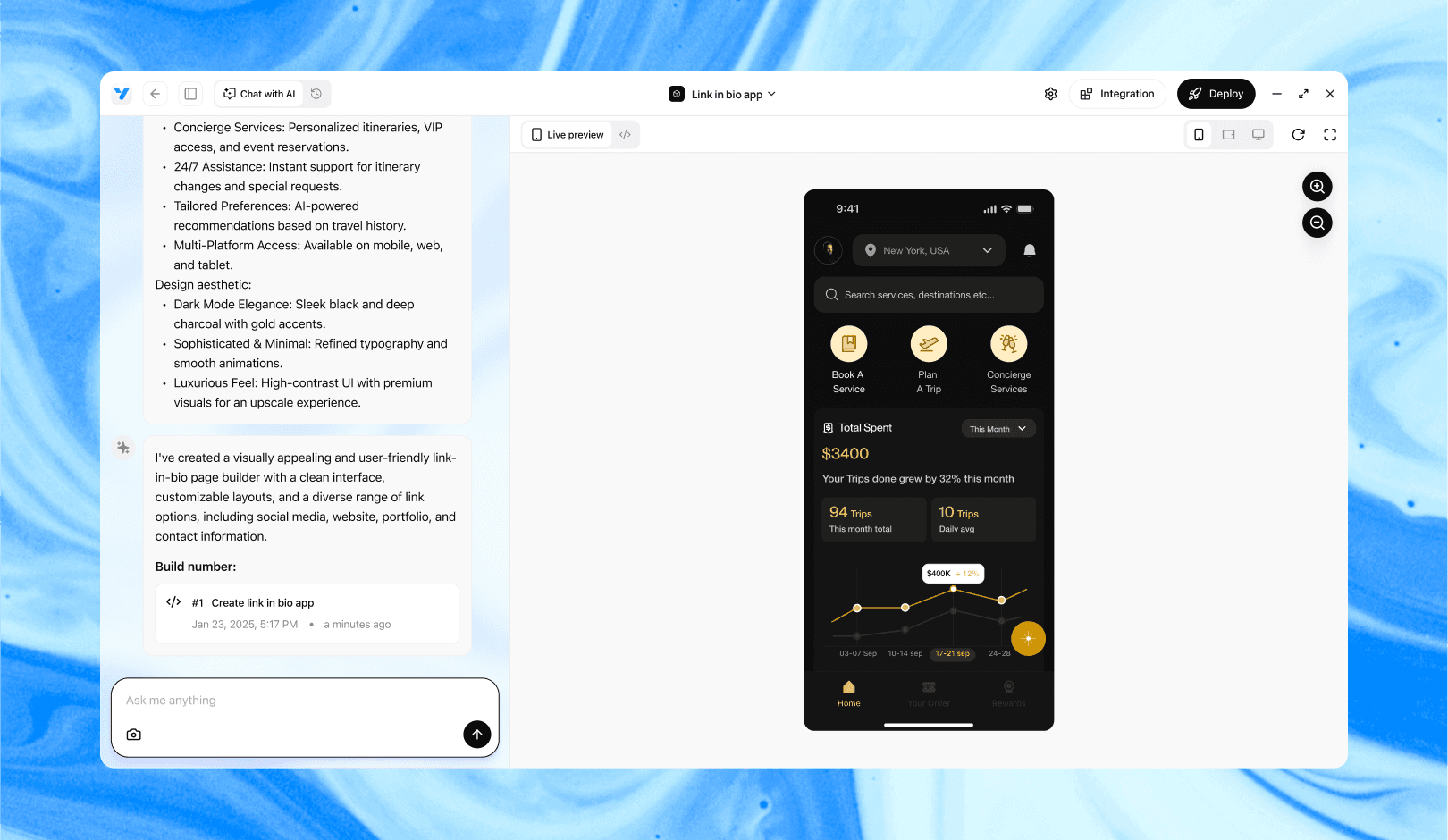
Vibe Studio, powered by Steve’s advanced AI agents, is a revolutionary no-code, conversational platform that empowers users to quickly and efficiently create full-stack Flutter applications integrated seamlessly with Firebase backend services. Ideal for solo founders, startups, and agile engineering teams, Vibe Studio allows users to visually manage and deploy Flutter apps, greatly accelerating the development process. The intuitive conversational interface simplifies complex development tasks, making app creation accessible even for non-coders.

Conclusion

Integrating Appwrite with Flutter gives you a full-stack mobile app with authentication, a managed database, file storage, and real-time capabilities without writing a custom backend. Start with a minimal structure: initialize the client, authenticate users, model collections for your app, and add realtime subscriptions and storage as needed. This approach keeps your Flutter UI focused on user experience while Appwrite handles backend concerns securely and scalably.


Introduction

This tutorial shows how to integrate Appwrite — an open-source backend server — with Flutter to build full-stack mobile apps. You’ll see how to set up Appwrite, add the official Dart client to a Flutter app, implement authentication, read and write structured data, and enable real-time updates and file storage. Examples are concise and practical so you can copy, run, and iterate.

Setting Up Appwrite Console

Before writing Flutter code, run Appwrite (Docker or managed) and create a Project in the console. Under your project create:

  • A Web or Flutter client (copy the Project ID).

  • A Database and a Collection (define indexes and attributes for your documents).

  • A Storage bucket for media files (set up public/private rules as needed).

  • Ensure CORS and endpoints are accessible from your device or emulator.

Record the projectId and endpoint (https://your-appwrite.example). You’ll use these values in your Flutter client initialization.

Adding Appwrite To Flutter

Add the Appwrite SDK to pubspec.yaml:

  • package: appwrite

Initialize the client early (for example, in main.dart or a provider). Provide endpoint and project ID and optionally attach an SDK key for server-side operations. Keep secret keys out of mobile apps; prefer email/password or OAuth flows.

import 'package:appwrite/appwrite.dart';

final client = Client()
  ..setEndpoint('https://YOUR_APPWRITE_ENDPOINT')
  ..setProject('YOUR_PROJECT_ID');

final account = Account(client);

This client object is the gateway to Appwrite services: Account, Databases, Storage, and Realtime.

Implementing Authentication And Database

Authentication is handled by the Account service. Use email/password, OAuth providers, or anonymous sessions. After authentication you receive a session token managed by the SDK. Store minimal state in Flutter (use provider, riverpod, or bloc) and call Appwrite for user operations.

Use the Databases service to create, query, update, and delete documents. Structure your collection models according to app needs (e.g., messages, profiles). Validate and secure access with collection permissions and rules set in the Appwrite console.

Example patterns: create a user account, create a document in a collection, and fetch documents for display in a list view.

final databases = Databases(client);

// Create a user (server policies required for direct creation in some setups)
await account.create(
  userId: ID.unique(),
  email: 'alice@example.com',
  password: 'Secur3P@ss',
);

// Create a document in the 'messages' collection
await databases.createDocument(
  databaseId: 'databaseId',
  collectionId: 'messages',
  documentId: ID.unique(),
  data: {'text': 'Hello from Flutter', 'author': 'alice'},
);

Handle errors explicitly: network failures, permission denials, and validation errors should map to user-facing messages.

Real-Time Sync And File Storage

Real-time features let your Flutter UI react to changes in Appwrite collections. The Realtime service delivers events for document creates, updates, deletes, and custom events. Subscribe from the client and update local state on incoming events. Keep logic idempotent: ignore duplicates or stale events and reconcile via snapshots when needed.

Storage is used for uploading images, audio, and other binaries. In Flutter, collect a file (image_picker or similar), create a MultipartFile or platform-equivalent stream, and call Storage.createFile to upload. Store the returned fileId in a related document in your database so the UI can fetch the file URL or stream it via Appwrite’s file endpoint.

Security notes:

  • Use rules and collection permissions; avoid embedding project secrets in the client.

  • Use session management to expire stale tokens.

  • Validate user input server-side via Appwrite functions or collection rules.

Vibe Studio

Vibe Studio, powered by Steve’s advanced AI agents, is a revolutionary no-code, conversational platform that empowers users to quickly and efficiently create full-stack Flutter applications integrated seamlessly with Firebase backend services. Ideal for solo founders, startups, and agile engineering teams, Vibe Studio allows users to visually manage and deploy Flutter apps, greatly accelerating the development process. The intuitive conversational interface simplifies complex development tasks, making app creation accessible even for non-coders.

Conclusion

Integrating Appwrite with Flutter gives you a full-stack mobile app with authentication, a managed database, file storage, and real-time capabilities without writing a custom backend. Start with a minimal structure: initialize the client, authenticate users, model collections for your app, and add realtime subscriptions and storage as needed. This approach keeps your Flutter UI focused on user experience while Appwrite handles backend concerns securely and scalably.

Build Flutter Apps Faster with Vibe Studio

Build Flutter Apps Faster with Vibe Studio

Build Flutter Apps Faster with Vibe Studio

Build Flutter Apps Faster with Vibe Studio

Vibe Studio is your AI-powered Flutter development companion. Skip boilerplate, build in real-time, and deploy without hassle. Start creating apps at lightning speed with zero setup.

Vibe Studio is your AI-powered Flutter development companion. Skip boilerplate, build in real-time, and deploy without hassle. Start creating apps at lightning speed with zero setup.

Vibe Studio is your AI-powered Flutter development companion. Skip boilerplate, build in real-time, and deploy without hassle. Start creating apps at lightning speed with zero setup.

Vibe Studio is your AI-powered Flutter development companion. Skip boilerplate, build in real-time, and deploy without hassle. Start creating apps at lightning speed with zero setup.

Other Insights

Other Insights

Other Insights

Other Insights

Join a growing community of builders today

Join a growing community of builders today

Join a growing community of builders today

Join a growing community of builders today

Join a growing community of builders today

28-07 Jackson Ave

Walturn

New York NY 11101 United States

© Steve • All Rights Reserved 2025

28-07 Jackson Ave

Walturn

New York NY 11101 United States

© Steve • All Rights Reserved 2025

28-07 Jackson Ave

Walturn

New York NY 11101 United States

© Steve • All Rights Reserved 2025

28-07 Jackson Ave

Walturn

New York NY 11101 United States

© Steve • All Rights Reserved 2025

28-07 Jackson Ave

Walturn

New York NY 11101 United States

© Steve • All Rights Reserved 2025

28-07 Jackson Ave

Walturn

New York NY 11101 United States

© Steve • All Rights Reserved 2025