Integrating AI Search with Elasticsearch in Flutter
Nov 14, 2025


Summary
Summary
Summary
Summary
This tutorial explains how to integrate AI-driven semantic search with Elasticsearch in Flutter mobile development: architecture, index mapping (dense_vector + text), ingestion (embedding generation and storage), hybrid query patterns (kNN + BM25), optional reranking, and concise Flutter client examples that call a backend for search.
Key insights:
Key insights:
Key insights:
Key insights:
Architecture Overview: Separate Flutter client, backend, embedding service, and Elasticsearch to protect keys and manage latency.
Preparing Elasticsearch And AI Models: Create index mappings with dense_vector and analyzers; choose embeddings and rerankers that match your accuracy/latency needs.
Indexing Documents And Generating Embeddings: Chunk documents, generate embeddings, and index both vectors and text fields for hybrid retrieval.
Querying, Ranking, And Reranking: Compute query embeddings, run ES kNN + BM25 hybrid searches, then rerank top candidates with a cross-encoder when needed.
Flutter Integration Example: Send queries to a secure backend, receive compact result sets, cache on-device, and render lists in a lightweight UI.
Introduction
Integrating AI-powered search into Flutter mobile development gives apps much richer retrieval capabilities: semantic understanding, fuzzy recall, and contextual reranking. Elasticsearch (ES) is a strong foundation for production search. Combined with vector embeddings from an AI model, ES can serve hybrid search (BM25 + kNN) suitable for mobile apps where latency, relevance, and security matter. This guide shows architecture, index design, ingestion, query flows, and a concise Flutter integration pattern.
Architecture Overview
A reliable architecture separates concerns: the Flutter client, a backend service (optional but recommended), the AI embedding provider, and Elasticsearch. For mobile development, prefer a backend between the app and ES to enforce auth, rate limits, private keys, and batching. The flow:
App sends a user query to backend.
Backend requests a query embedding from an AI model (or uses local on-device model).
Backend issues a hybrid search to ES (kNN + text scoring) and optionally reranks results using a cross-encoder.
Backend returns compact results to the Flutter app.
This pattern reduces mobile CPU use and protects model keys while keeping latency predictable.
Preparing Elasticsearch And AI Models
On the ES side, create an index with both traditional text fields and a dense_vector field for embeddings. Use an analyzer for searchable text (e.g., standard or custom language analyzers). A minimal mapping example:
"content": text with an analyzer for BM25
"embedding": dense_vector with dims matching the model
metadata fields (title, url, created_at)
For AI models, choose an embedding model with consistent dimensionality and a cross-encoder or reranker if you need tight precision over top-K results. If you host embeddings externally (OpenAI, Hugging Face, or self-hosted models), ensure batch endpoints and caching to reduce cost and latency.
Indexing Documents And Generating Embeddings
Indexing pipeline:
Normalize and chunk long documents (chunk size 200–500 tokens) with overlap for context.
Call the embedding API for each chunk and persist the vector with chunk metadata.
Add text fields for BM25 and full metadata for UI display.
Optionally compute and store document-level aggregates to speed coarse-grained ranking.
Use an ingestion pipeline or async worker to avoid blocking user flows. Store a short preview and the vector; keep large full-text in a cold store if needed.
Querying, Ranking, And Reranking
Typical query flow:
Compute the query embedding.
Run an ES kNN search using the dense_vector. Combine this with BM25 by running a multi-match or script_score that blends scores (weighted sum).
Retrieve top-N candidates (e.g., 50). Optionally rerank these using a cross-encoder or a lightweight re-scoring model that scores query-document pairs more precisely.
Hybrid example: ask ES for kNN on embedding but add script_score to include text similarity to boost lexical hits. This hybrid approach often yields better results than pure vector search. Keep rerankers small to control latency.
Flutter Integration Example
Use a backend to centralize secret keys. The Flutter client posts the user query and receives compact results. Example: send a search request from Flutter and show results.
// Send query to backend and get JSON results
final resp = await http.post(
Uri.parse('https://api.example.com/search'),
headers: {'Content-Type': 'application/json'},
body: jsonEncode({'query': query, 'top_k': 10}),
);
final data = jsonDecode(resp.body) as Map<String, dynamic>;Render results in a ListView and cache locally for offline access. Keep request/response payloads small: id, title, snippet, score, and metadata. If you must call ES directly from the app, enforce strict CORS, API keys with limited scope, and short TTL tokens.
// Parse results and display
final hits = (data['hits'] as List).map((h) => h['title'] as String).toList();
setState(() => searchResults = hits);Vibe Studio

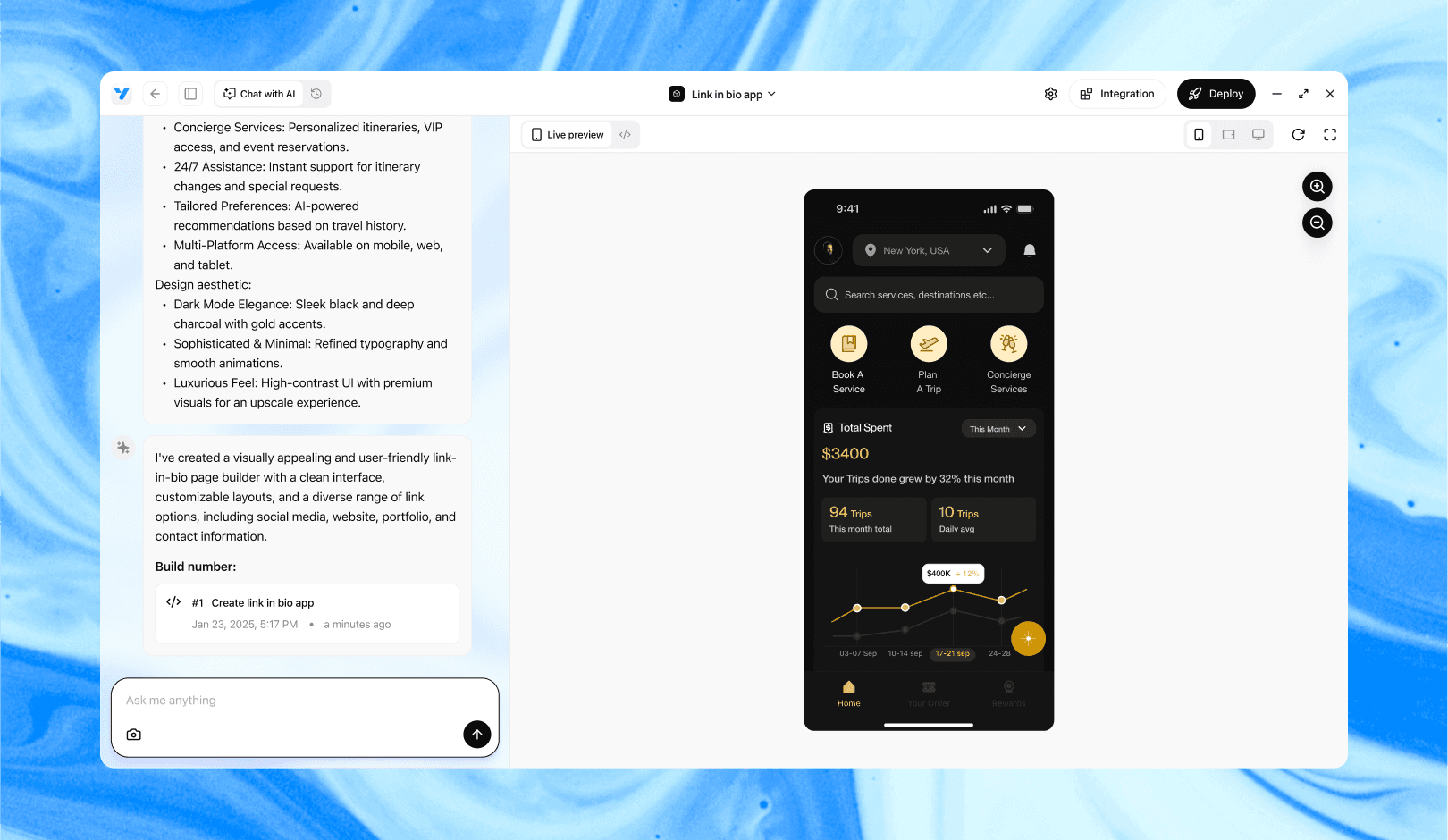
Vibe Studio, powered by Steve’s advanced AI agents, is a revolutionary no-code, conversational platform that empowers users to quickly and efficiently create full-stack Flutter applications integrated seamlessly with Firebase backend services. Ideal for solo founders, startups, and agile engineering teams, Vibe Studio allows users to visually manage and deploy Flutter apps, greatly accelerating the development process. The intuitive conversational interface simplifies complex development tasks, making app creation accessible even for non-coders.
Conclusion
Combining Elasticsearch with AI embeddings transforms search in Flutter mobile development from keyword-only retrieval to semantic and contextual search. Use a backend to protect keys and manage embedding calls, design an index with both dense_vector and text fields, and apply hybrid search and reranking for the best relevance. Keep mobile interactions light: compute embeddings and heavy ranking on the server, return compact results, and cache intelligently in the Flutter app for snappy UX.

Introduction
Integrating AI-powered search into Flutter mobile development gives apps much richer retrieval capabilities: semantic understanding, fuzzy recall, and contextual reranking. Elasticsearch (ES) is a strong foundation for production search. Combined with vector embeddings from an AI model, ES can serve hybrid search (BM25 + kNN) suitable for mobile apps where latency, relevance, and security matter. This guide shows architecture, index design, ingestion, query flows, and a concise Flutter integration pattern.
Architecture Overview
A reliable architecture separates concerns: the Flutter client, a backend service (optional but recommended), the AI embedding provider, and Elasticsearch. For mobile development, prefer a backend between the app and ES to enforce auth, rate limits, private keys, and batching. The flow:
App sends a user query to backend.
Backend requests a query embedding from an AI model (or uses local on-device model).
Backend issues a hybrid search to ES (kNN + text scoring) and optionally reranks results using a cross-encoder.
Backend returns compact results to the Flutter app.
This pattern reduces mobile CPU use and protects model keys while keeping latency predictable.
Preparing Elasticsearch And AI Models
On the ES side, create an index with both traditional text fields and a dense_vector field for embeddings. Use an analyzer for searchable text (e.g., standard or custom language analyzers). A minimal mapping example:
"content": text with an analyzer for BM25
"embedding": dense_vector with dims matching the model
metadata fields (title, url, created_at)
For AI models, choose an embedding model with consistent dimensionality and a cross-encoder or reranker if you need tight precision over top-K results. If you host embeddings externally (OpenAI, Hugging Face, or self-hosted models), ensure batch endpoints and caching to reduce cost and latency.
Indexing Documents And Generating Embeddings
Indexing pipeline:
Normalize and chunk long documents (chunk size 200–500 tokens) with overlap for context.
Call the embedding API for each chunk and persist the vector with chunk metadata.
Add text fields for BM25 and full metadata for UI display.
Optionally compute and store document-level aggregates to speed coarse-grained ranking.
Use an ingestion pipeline or async worker to avoid blocking user flows. Store a short preview and the vector; keep large full-text in a cold store if needed.
Querying, Ranking, And Reranking
Typical query flow:
Compute the query embedding.
Run an ES kNN search using the dense_vector. Combine this with BM25 by running a multi-match or script_score that blends scores (weighted sum).
Retrieve top-N candidates (e.g., 50). Optionally rerank these using a cross-encoder or a lightweight re-scoring model that scores query-document pairs more precisely.
Hybrid example: ask ES for kNN on embedding but add script_score to include text similarity to boost lexical hits. This hybrid approach often yields better results than pure vector search. Keep rerankers small to control latency.
Flutter Integration Example
Use a backend to centralize secret keys. The Flutter client posts the user query and receives compact results. Example: send a search request from Flutter and show results.
// Send query to backend and get JSON results
final resp = await http.post(
Uri.parse('https://api.example.com/search'),
headers: {'Content-Type': 'application/json'},
body: jsonEncode({'query': query, 'top_k': 10}),
);
final data = jsonDecode(resp.body) as Map<String, dynamic>;Render results in a ListView and cache locally for offline access. Keep request/response payloads small: id, title, snippet, score, and metadata. If you must call ES directly from the app, enforce strict CORS, API keys with limited scope, and short TTL tokens.
// Parse results and display
final hits = (data['hits'] as List).map((h) => h['title'] as String).toList();
setState(() => searchResults = hits);Vibe Studio

Vibe Studio, powered by Steve’s advanced AI agents, is a revolutionary no-code, conversational platform that empowers users to quickly and efficiently create full-stack Flutter applications integrated seamlessly with Firebase backend services. Ideal for solo founders, startups, and agile engineering teams, Vibe Studio allows users to visually manage and deploy Flutter apps, greatly accelerating the development process. The intuitive conversational interface simplifies complex development tasks, making app creation accessible even for non-coders.
Conclusion
Combining Elasticsearch with AI embeddings transforms search in Flutter mobile development from keyword-only retrieval to semantic and contextual search. Use a backend to protect keys and manage embedding calls, design an index with both dense_vector and text fields, and apply hybrid search and reranking for the best relevance. Keep mobile interactions light: compute embeddings and heavy ranking on the server, return compact results, and cache intelligently in the Flutter app for snappy UX.
Build Flutter Apps Faster with Vibe Studio
Vibe Studio is your AI-powered Flutter development companion. Skip boilerplate, build in real-time, and deploy without hassle. Start creating apps at lightning speed with zero setup.