Improving Flutter Scroll Performance for Long Lists
Dec 10, 2025


Summary
Summary
Summary
Summary
This tutorial shows practical techniques to improve Flutter scroll performance for long lists: use lazy builders and slivers, give itemExtent when possible, minimize item rebuilds, leverage const and keys, optimize image loading, control layout/painting, and profile with DevTools to find bottlenecks.
Key insights:
Key insights:
Key insights:
Key insights:
Use Lazy Builders And Slivers: Build only visible children with ListView.builder or SliverList and provide itemExtent to avoid full layout passes.
Minimize Rebuilds And State Changes: Scope state to per-item widgets, avoid heavy work in build, and target updates to individual items to reduce rebuild cost.
Leverage Const And Keys: Use const constructors to reduce widget churn and ValueKey/ObjectKey to preserve identity and avoid unnecessary rebuilds during list changes.
Optimize Images And Network Content: Resize images server-side, use caching (cached_network_image or precacheImage), and avoid decoding large bitmaps on the UI thread.
Control Layout And Painting: Flatten widget trees, avoid Intrinsic widgets and costly clips/opacity, and use RepaintBoundary and cacheExtent judiciously to reduce layout and paint work.
Introduction
Long, scrollable lists are common in mobile development with Flutter, but naive implementations can produce jank, high memory use, and poor battery life. This tutorial shows concrete, code-forward techniques to improve scroll performance for long lists. Focus areas: choosing lazy widgets, reducing rebuilds, optimizing images and layout, and profiling so you fix the real bottlenecks.
Use Lazy Builders And Slivers
Always prefer lazy builders that create only visible children. ListView.builder, ListView.separated, and SliverList with CustomScrollView construct items on demand; avoid ListView(children: ...) for large lists. Where item sizes are uniform, supply itemExtent (or prototypeItem in some packages) so the framework can compute scroll metrics without laying out every child.
Example: ListView.builder with itemExtent
ListView.builder(
itemCount: items.length,
itemExtent: 72.0, // fixed height lets Flutter skip per-item layout
itemBuilder: (c, i) => ItemTile(item: items[i]),
)When items vary widely in size or include complex nested scrollables, prefer slivers and keep the scrollable tree shallow. Use SliverList for sections that can be combined efficiently inside a CustomScrollView.
Minimize Rebuilds And State Changes
Every rebuild of a list item costs layout and paint. Keep item widgets as pure and lightweight as possible. Pull mutable state out of the item builder and into dedicated StatefulWidgets that manage only the tiny state they need. Use const constructors where possible so widgets are canonicalized and skip subtree rebuilds.
Avoid expensive operations inside build() — no synchronous JSON parsing, heavy math, or synchronous database calls. Offload CPU-heavy work to isolates or run it once and cache results. If you update only one item, avoid setState on the whole list; instead, target that item’s StatefulWidget or use state management solutions (Provider, Riverpod, Bloc) to scope updates.
Wrap expensive child subtrees with RepaintBoundary to prevent repainting sibling subtrees when only that part changes. But use RepaintBoundary sparingly — it has memory and rasterization costs.
Leverage const And Keys
Using const constructors where possible reduces widget churn. For repeated child widgets that are identical, const lets Flutter reuse instances. Also use Keys to keep element identity stable when list content changes. ValueKey or ObjectKey attached to list items prevents incidental widget reuse that can force costly rebuilds or lost state.
Example: stable keyed tile
class ItemTile extends StatelessWidget {
final Item item;
const ItemTile({Key? key, required this.item}) : super(key: key);
@override
Widget build(BuildContext context) => ListTile(
key: ValueKey(item.id),
title: Text(item.title),
);
}Keys are particularly important when removing, inserting, or reordering items; without keys, Flutter may rebuild and reanimate items unnecessarily.
Optimize Images And Network Content
Large images are a frequent cause of jank. Use cached network image strategies, resize images on the server, or use Image.memory with properly decoded byte sizes. Use the cached_network_image package or precacheImage for images you expect to display soon. When images load, use low-cost placeholders rather than widgets that trigger full repaints.
Prefer Image.network with cacheWidth/cacheHeight in ImageProvider to request scaled images where supported. Also set fit and cache behavior explicitly. Avoid decoding huge bitmaps on the UI thread; use compute or an isolate if you must decode image bytes manually.
Control Layout And Painting
Complex nested layouts force layout passes and repaints. Flatten the widget tree where feasible: replace nested Rows/Columns with Flex or combine Padding into Container where it reduces depth. Use SizedBox or itemExtent to give the framework size hints. Avoid IntrinsicWidth/IntrinsicHeight; they trigger extra layout passes.
Minimize use of Opacity, ClipRRect, and heavy shadows in list items. Opacity can be replaced with colors that match the final alpha or with Fade transitions that are GPU-accelerated. Clip operations are expensive; prefer pre-rounded images or avoid clipping for simple rectangular content.
Finally, use cacheExtent on scrollables if you want to pre-build a small number of offscreen items to avoid frame drops when fast scrolling, but don’t cache too many items or you’ll increase memory pressure.
Vibe Studio
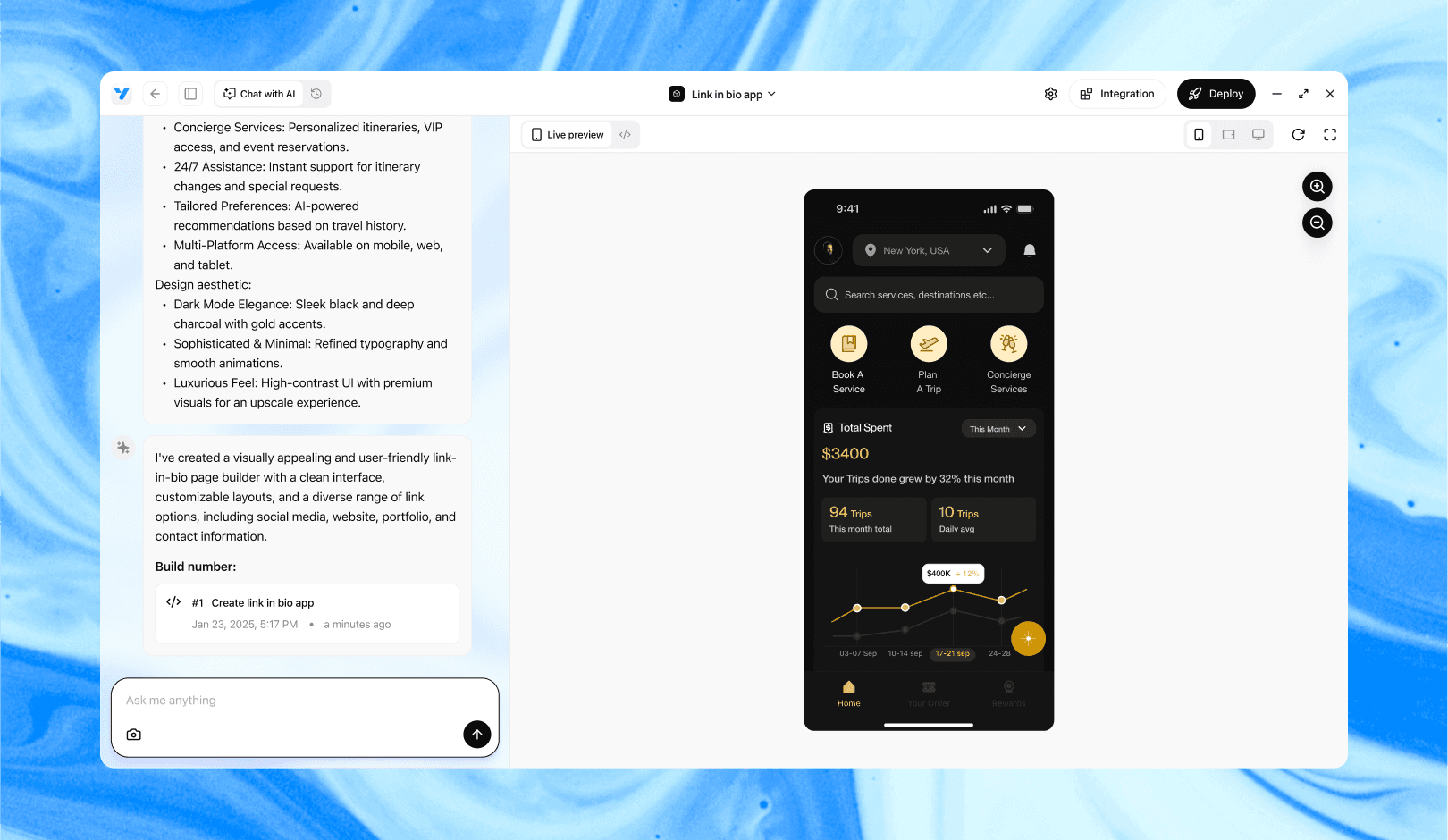
Vibe Studio, powered by Steve’s advanced AI agents, is a revolutionary no-code, conversational platform that empowers users to quickly and efficiently create full-stack Flutter applications integrated seamlessly with Firebase backend services. Ideal for solo founders, startups, and agile engineering teams, Vibe Studio allows users to visually manage and deploy Flutter apps, greatly accelerating the development process. The intuitive conversational interface simplifies complex development tasks, making app creation accessible even for non-coders.
Conclusion
Improving Flutter scroll performance combines correct widget choices, limiting rebuilds, efficient image handling, and layout discipline. Start by using lazy builders and itemExtent, keep item widgets small and const where possible, use keys to stabilize identity, optimize images, and profile with Flutter DevTools to find the real hotspots. Apply these targeted changes and measure: often a few precise adjustments eliminate most jank in long lists.

Introduction
Long, scrollable lists are common in mobile development with Flutter, but naive implementations can produce jank, high memory use, and poor battery life. This tutorial shows concrete, code-forward techniques to improve scroll performance for long lists. Focus areas: choosing lazy widgets, reducing rebuilds, optimizing images and layout, and profiling so you fix the real bottlenecks.
Use Lazy Builders And Slivers
Always prefer lazy builders that create only visible children. ListView.builder, ListView.separated, and SliverList with CustomScrollView construct items on demand; avoid ListView(children: ...) for large lists. Where item sizes are uniform, supply itemExtent (or prototypeItem in some packages) so the framework can compute scroll metrics without laying out every child.
Example: ListView.builder with itemExtent
ListView.builder(
itemCount: items.length,
itemExtent: 72.0, // fixed height lets Flutter skip per-item layout
itemBuilder: (c, i) => ItemTile(item: items[i]),
)When items vary widely in size or include complex nested scrollables, prefer slivers and keep the scrollable tree shallow. Use SliverList for sections that can be combined efficiently inside a CustomScrollView.
Minimize Rebuilds And State Changes
Every rebuild of a list item costs layout and paint. Keep item widgets as pure and lightweight as possible. Pull mutable state out of the item builder and into dedicated StatefulWidgets that manage only the tiny state they need. Use const constructors where possible so widgets are canonicalized and skip subtree rebuilds.
Avoid expensive operations inside build() — no synchronous JSON parsing, heavy math, or synchronous database calls. Offload CPU-heavy work to isolates or run it once and cache results. If you update only one item, avoid setState on the whole list; instead, target that item’s StatefulWidget or use state management solutions (Provider, Riverpod, Bloc) to scope updates.
Wrap expensive child subtrees with RepaintBoundary to prevent repainting sibling subtrees when only that part changes. But use RepaintBoundary sparingly — it has memory and rasterization costs.
Leverage const And Keys
Using const constructors where possible reduces widget churn. For repeated child widgets that are identical, const lets Flutter reuse instances. Also use Keys to keep element identity stable when list content changes. ValueKey or ObjectKey attached to list items prevents incidental widget reuse that can force costly rebuilds or lost state.
Example: stable keyed tile
class ItemTile extends StatelessWidget {
final Item item;
const ItemTile({Key? key, required this.item}) : super(key: key);
@override
Widget build(BuildContext context) => ListTile(
key: ValueKey(item.id),
title: Text(item.title),
);
}Keys are particularly important when removing, inserting, or reordering items; without keys, Flutter may rebuild and reanimate items unnecessarily.
Optimize Images And Network Content
Large images are a frequent cause of jank. Use cached network image strategies, resize images on the server, or use Image.memory with properly decoded byte sizes. Use the cached_network_image package or precacheImage for images you expect to display soon. When images load, use low-cost placeholders rather than widgets that trigger full repaints.
Prefer Image.network with cacheWidth/cacheHeight in ImageProvider to request scaled images where supported. Also set fit and cache behavior explicitly. Avoid decoding huge bitmaps on the UI thread; use compute or an isolate if you must decode image bytes manually.
Control Layout And Painting
Complex nested layouts force layout passes and repaints. Flatten the widget tree where feasible: replace nested Rows/Columns with Flex or combine Padding into Container where it reduces depth. Use SizedBox or itemExtent to give the framework size hints. Avoid IntrinsicWidth/IntrinsicHeight; they trigger extra layout passes.
Minimize use of Opacity, ClipRRect, and heavy shadows in list items. Opacity can be replaced with colors that match the final alpha or with Fade transitions that are GPU-accelerated. Clip operations are expensive; prefer pre-rounded images or avoid clipping for simple rectangular content.
Finally, use cacheExtent on scrollables if you want to pre-build a small number of offscreen items to avoid frame drops when fast scrolling, but don’t cache too many items or you’ll increase memory pressure.
Vibe Studio

Vibe Studio, powered by Steve’s advanced AI agents, is a revolutionary no-code, conversational platform that empowers users to quickly and efficiently create full-stack Flutter applications integrated seamlessly with Firebase backend services. Ideal for solo founders, startups, and agile engineering teams, Vibe Studio allows users to visually manage and deploy Flutter apps, greatly accelerating the development process. The intuitive conversational interface simplifies complex development tasks, making app creation accessible even for non-coders.
Conclusion
Improving Flutter scroll performance combines correct widget choices, limiting rebuilds, efficient image handling, and layout discipline. Start by using lazy builders and itemExtent, keep item widgets small and const where possible, use keys to stabilize identity, optimize images, and profile with Flutter DevTools to find the real hotspots. Apply these targeted changes and measure: often a few precise adjustments eliminate most jank in long lists.

Build Flutter Apps Faster with Vibe Studio
Vibe Studio is your AI-powered Flutter development companion. Skip boilerplate, build in real-time, and deploy without hassle. Start creating apps at lightning speed with zero setup.