Implementing Role Based Access Control In Flutter Apps
Summary
Summary
Summary
Summary

This tutorial explains how to implement Role Based Access Control (RBAC) in Flutter mobile development: design stable role models, store role claims securely, expose them via a centralized AuthService, enforce access with widget and routing guards, and rely on server-side authorization for all sensitive operations. Use short-lived tokens, refresh on role change, and keep client checks declarative and lightweight.

This tutorial explains how to implement Role Based Access Control (RBAC) in Flutter mobile development: design stable role models, store role claims securely, expose them via a centralized AuthService, enforce access with widget and routing guards, and rely on server-side authorization for all sensitive operations. Use short-lived tokens, refresh on role change, and keep client checks declarative and lightweight.

This tutorial explains how to implement Role Based Access Control (RBAC) in Flutter mobile development: design stable role models, store role claims securely, expose them via a centralized AuthService, enforce access with widget and routing guards, and rely on server-side authorization for all sensitive operations. Use short-lived tokens, refresh on role change, and keep client checks declarative and lightweight.

This tutorial explains how to implement Role Based Access Control (RBAC) in Flutter mobile development: design stable role models, store role claims securely, expose them via a centralized AuthService, enforce access with widget and routing guards, and rely on server-side authorization for all sensitive operations. Use short-lived tokens, refresh on role change, and keep client checks declarative and lightweight.

Key insights:
Key insights:
Key insights:
Key insights:
  • Designing Roles And Permissions: Use enums/constants for roles and keep client checks lightweight while delegating complex rules to the server.

  • Storing And Retrieving Roles: Persist role claims securely (flutter_secure_storage) and centralize access via an AuthService exposing reactive state.

  • Enforcing Access In UI And Navigation: Create reusable widget guards and route guards to declaratively hide or redirect unauthorized UI.

  • Server-Side Authorization And Token Handling: Always enforce permissions server-side, validate tokens, and provide clear 401/403 responses for the client.

  • Enforcing Access In UI And Navigation: Integrate guards into routing and update UI reactively on token/role refresh for consistent UX.

Introduction

Role Based Access Control (RBAC) is a practical pattern for controlling what users can see and do in your Flutter mobile app. RBAC separates authentication (who you are) from authorization (what you can do) and makes permission logic maintainable. This tutorial demonstrates a pragmatic approach: define clear roles and permissions, store and retrieve role assertions securely, enforce access in UI and navigation, and validate on the server via tokens.

Designing Roles And Permissions

Start by modeling roles and permissions as explicit types. Keep role names stable and small in number (e.g., admin, editor, viewer) and prefer permissions only when fine-grained control is required. A simple model is an enum for roles and a map of role -> allowed actions on the server. On the client, avoid reimplementing complex permission logic: the client enforces visibility and UX, while the server remains the source of truth.

Best practices:

  • Use enums or constants for roles to avoid typos.

  • Treat roles as claims on a token, not as mutable local state.

  • Keep the client-side permission checks lightweight (e.g., hide buttons, disable navigation).

Example role model and storage (local claim after login):

enum Role { admin, editor, viewer }

// Store role in secure storage as a claim from the server
Future<void> saveRole(String roleName) async {
  await secureStorage.write(key: 'user_role', value: roleName);
}

Storing And Retrieving Roles

Persist the role claim you receive during authentication. Prefer Secure Storage (flutter_secure_storage) for tokens and sensitive claims. If your backend returns a JWT, parse its claims server-side and client-side only to present UI differences — do not trust the client for authorization decisions.

When to refresh roles:

  • On login and token refresh.

  • When the server signals role changes (push notifications or next fetch).

Implementation notes:

  • Centralize retrieval of role claims in an AuthService that exposes the current role as a stream or ValueNotifier so widgets can reactively update.

  • Avoid scattering storage reads across the app.

Enforcing Access In UI And Navigation

Enforce authorization at the UI and routing layer using small reusable guards and wrapper widgets. Your checks should be declarative: show or hide widgets and guard routes before navigation. Always design the UI to fail gracefully when a claim is missing (e.g., show a permission-denied screen).

Example of a simple widget guard:

class RoleGuard extends StatelessWidget {
  final Role required;
  final Widget child;
  RoleGuard({required this.required, required this.child});

  @override
  Widget build(BuildContext context) {
    final current = AuthService.of(context).currentRole;
    return current == required ? child : SizedBox.shrink();
  }
}

For routing, incorporate guards into onGenerateRoute or use middleware in routing packages (auto_route, go_router) to redirect unauthorized users to a safe screen.

Server-Side Authorization And Token Handling

Never rely solely on client checks for security: enforce RBAC on the server for every sensitive API. The client should send a short-lived access token and optionally a refresh token. The server should:

  • Validate tokens and extract role claims.

  • Enforce permissions for each endpoint (resource-based or action-based checks).

  • Offer an endpoint to list effective permissions so the client can render appropriate UI without duplicating logic.

Token considerations:

  • Use HTTP-only cookies or secure storage depending on your threat model.

  • Rotate tokens and require re-authentication for critical role changes.

Integration tips:

  • When a role change occurs, invalidate client tokens so the client fetches updated claims.

  • Provide predictable error status codes (401/403) so the client can show meaningful UI and prompt re-authentication.

Vibe Studio
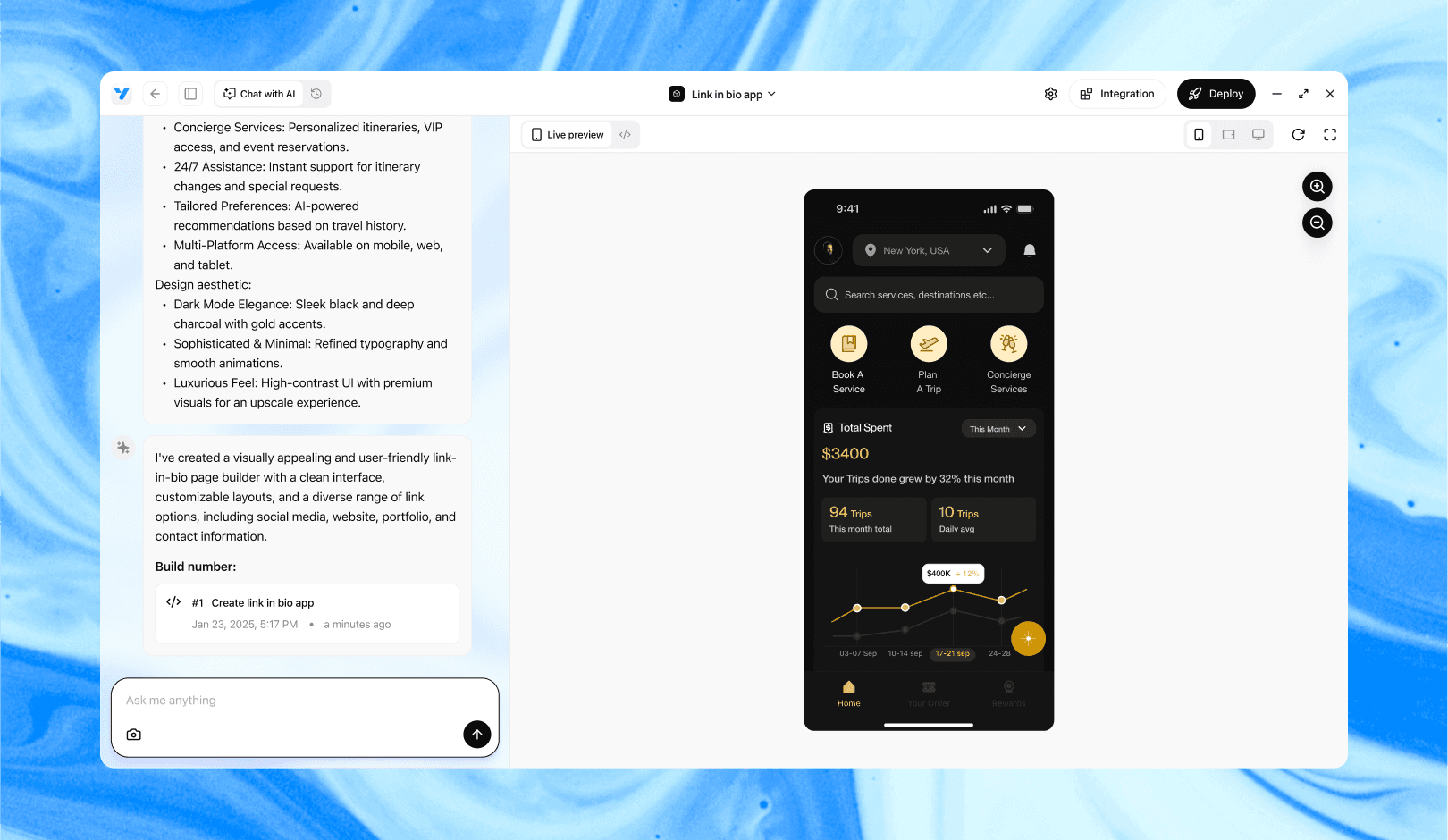
Vibe Studio, powered by Steve’s advanced AI agents, is a revolutionary no-code, conversational platform that empowers users to quickly and efficiently create full-stack Flutter applications integrated seamlessly with Firebase backend services. Ideal for solo founders, startups, and agile engineering teams, Vibe Studio allows users to visually manage and deploy Flutter apps, greatly accelerating the development process. The intuitive conversational interface simplifies complex development tasks, making app creation accessible even for non-coders.

Conclusion

Implementing RBAC in Flutter apps is about a clear separation of concerns: define stable role models, persist minimal claims securely, enforce UI-level visibility with reusable guards, and rely on server-side checks for real authorization. Centralize role retrieval in an AuthService and integrate checks into routing to keep your codebase maintainable. By combining secure storage, declarative UI guards, and robust server validation, you get a responsive and secure mobile application that scales with team and feature complexity.


Introduction

Role Based Access Control (RBAC) is a practical pattern for controlling what users can see and do in your Flutter mobile app. RBAC separates authentication (who you are) from authorization (what you can do) and makes permission logic maintainable. This tutorial demonstrates a pragmatic approach: define clear roles and permissions, store and retrieve role assertions securely, enforce access in UI and navigation, and validate on the server via tokens.

Designing Roles And Permissions

Start by modeling roles and permissions as explicit types. Keep role names stable and small in number (e.g., admin, editor, viewer) and prefer permissions only when fine-grained control is required. A simple model is an enum for roles and a map of role -> allowed actions on the server. On the client, avoid reimplementing complex permission logic: the client enforces visibility and UX, while the server remains the source of truth.

Best practices:

  • Use enums or constants for roles to avoid typos.

  • Treat roles as claims on a token, not as mutable local state.

  • Keep the client-side permission checks lightweight (e.g., hide buttons, disable navigation).

Example role model and storage (local claim after login):

enum Role { admin, editor, viewer }

// Store role in secure storage as a claim from the server
Future<void> saveRole(String roleName) async {
  await secureStorage.write(key: 'user_role', value: roleName);
}

Storing And Retrieving Roles

Persist the role claim you receive during authentication. Prefer Secure Storage (flutter_secure_storage) for tokens and sensitive claims. If your backend returns a JWT, parse its claims server-side and client-side only to present UI differences — do not trust the client for authorization decisions.

When to refresh roles:

  • On login and token refresh.

  • When the server signals role changes (push notifications or next fetch).

Implementation notes:

  • Centralize retrieval of role claims in an AuthService that exposes the current role as a stream or ValueNotifier so widgets can reactively update.

  • Avoid scattering storage reads across the app.

Enforcing Access In UI And Navigation

Enforce authorization at the UI and routing layer using small reusable guards and wrapper widgets. Your checks should be declarative: show or hide widgets and guard routes before navigation. Always design the UI to fail gracefully when a claim is missing (e.g., show a permission-denied screen).

Example of a simple widget guard:

class RoleGuard extends StatelessWidget {
  final Role required;
  final Widget child;
  RoleGuard({required this.required, required this.child});

  @override
  Widget build(BuildContext context) {
    final current = AuthService.of(context).currentRole;
    return current == required ? child : SizedBox.shrink();
  }
}

For routing, incorporate guards into onGenerateRoute or use middleware in routing packages (auto_route, go_router) to redirect unauthorized users to a safe screen.

Server-Side Authorization And Token Handling

Never rely solely on client checks for security: enforce RBAC on the server for every sensitive API. The client should send a short-lived access token and optionally a refresh token. The server should:

  • Validate tokens and extract role claims.

  • Enforce permissions for each endpoint (resource-based or action-based checks).

  • Offer an endpoint to list effective permissions so the client can render appropriate UI without duplicating logic.

Token considerations:

  • Use HTTP-only cookies or secure storage depending on your threat model.

  • Rotate tokens and require re-authentication for critical role changes.

Integration tips:

  • When a role change occurs, invalidate client tokens so the client fetches updated claims.

  • Provide predictable error status codes (401/403) so the client can show meaningful UI and prompt re-authentication.

Vibe Studio

Vibe Studio, powered by Steve’s advanced AI agents, is a revolutionary no-code, conversational platform that empowers users to quickly and efficiently create full-stack Flutter applications integrated seamlessly with Firebase backend services. Ideal for solo founders, startups, and agile engineering teams, Vibe Studio allows users to visually manage and deploy Flutter apps, greatly accelerating the development process. The intuitive conversational interface simplifies complex development tasks, making app creation accessible even for non-coders.

Conclusion

Implementing RBAC in Flutter apps is about a clear separation of concerns: define stable role models, persist minimal claims securely, enforce UI-level visibility with reusable guards, and rely on server-side checks for real authorization. Centralize role retrieval in an AuthService and integrate checks into routing to keep your codebase maintainable. By combining secure storage, declarative UI guards, and robust server validation, you get a responsive and secure mobile application that scales with team and feature complexity.

Build Flutter Apps Faster with Vibe Studio

Vibe Studio is your AI-powered Flutter development companion. Skip boilerplate, build in real-time, and deploy without hassle. Start creating apps at lightning speed with zero setup.

Other Insights

Join a growing community of builders today

Join a growing community of builders today

Join a growing community of builders today

Join a growing community of builders today

Join a growing community of builders today

28-07 Jackson Ave

Walturn

New York NY 11101 United States

© Steve • All Rights Reserved 2025

28-07 Jackson Ave

Walturn

New York NY 11101 United States

© Steve • All Rights Reserved 2025

28-07 Jackson Ave

Walturn

New York NY 11101 United States

© Steve • All Rights Reserved 2025

28-07 Jackson Ave

Walturn

New York NY 11101 United States

© Steve • All Rights Reserved 2025

28-07 Jackson Ave

Walturn

New York NY 11101 United States

© Steve • All Rights Reserved 2025

28-07 Jackson Ave

Walturn

New York NY 11101 United States

© Steve • All Rights Reserved 2025