Introduction
Passkeys (platform or roaming credentials based on WebAuthn/FIDO2) replace passwords with public-key cryptography and strong user verification. For Flutter developers building web and mobile applications, implementing passkeys improves security and reduces friction for users. This tutorial explains the architecture, the differences between web and native flows, server responsibilities, and shows concise Flutter patterns for integrating passkeys across platforms.
Understanding Passkeys
Passkeys are asymmetric credentials: the authenticator (device or platform) creates a key pair and returns an attestation that the server verifies. On subsequent logins, the authenticator signs a server-generated challenge with the private key. Important concepts to understand before coding:
Relying Party (RP): your app/server identifier (origin for web, package/bundle ID for mobile).
Attestation: metadata proving the key was created by a genuine authenticator.
Challenge: short, server-generated random bytes used to prevent replay.
User Verification: built-in check (biometrics/PIN) that mitigates phishing.
On web, the browser exposes navigator.credentials (WebAuthn). On mobile, native APIs expose the same primitives (Android FIDO2, iOS AuthenticationServices). Flutter acts as the cross-platform UI; platform interop is required for native APIs.
Flutter Web Integration
On Flutter Web, use the browser's WebAuthn API through dart:html and js_util. The workflow:
App requests a creation challenge from your server (JSON with challenge and user info).
Call navigator.credentials.create({ publicKey: ... }) with PublicKeyCredentialCreationOptions.
Send the returned attestation to the server for verification and registration.
For authentication, call navigator.credentials.get({ publicKey: ... }) with challenge and allowCredentials.
Example Dart helper for web using dart:html and js_util:
import 'dart:html' as html;
import 'package:js/js_util.dart' as js_util;

Future<dynamic> createPasskey(Map publicKey) async {
  final promise = js_util.callMethod(html.window.navigator.credentials!, 'create', [js_util.jsify({'publicKey': publicKey})]);
  return await js_util.promiseToFuture(promise);
}
Key implementation tips: enforce origin and RP ID consistency, set userVerification to "required" or "preferred" depending on UX, and always use TLS. Validate attestation on the server and store the credential ID and public key for future assertions.
Flutter Mobile Integration
Mobile platforms do not expose WebAuthn directly to Dart. Use MethodChannel to call native code that uses platform FIDO APIs (Android FIDO2 API, iOS AuthenticationServices with ASAuthorizationPlatformPublicKeyCredentialProvider). The flow mirrors web: server challenge → native create/get → send response to server.
A Dart MethodChannel pattern:
import 'package:flutter/services.dart';
static const MethodChannel _channel = MethodChannel('passkeys');

Future<Map?> createPasskey(Map options) async {
  final result = await _channel.invokeMethod('createPasskey', options);
  return result == null ? null : Map<String, dynamic>.from(result);
}
On Android implement an Activity/Service that calls Fido2ApiClient.getRegisterIntent or use the Credential Management API. On iOS implement ASAuthorizationController flows. Return the raw attestation/assertion bytes, credential ID, client data JSON, and signature to the Dart side for server verification.
Practical considerations for mobile development: leverage system UI for biometrics, request minimal permissions, and keep the native implementations insulated so the Dart API stays simple.
Server-Side Verification And Fallbacks
The server performs crucial security checks:
Verify attestation statement (format, signature, certificate chain) OR use "none" attestation and CA verification policies.
Validate that challenge, origin (web) or RP ID (mobile), and userHandle match expectations.
Store credential ID, publicKey (COSE key), signCount, and metadata for each credential.
On authentication, verify the assertion signature using the stored public key, validate the challenge, and check or update the signature counter to detect cloned authenticators.
Fallback strategies: not every user or device supports passkeys. Provide an alternative login (password + 2FA or one-time code). Offer migration: register a passkey after a successful alternative login.
Security checklist: TLS everywhere, protect your challenge endpoints from CSRF, limit attestation/logging of sensitive binary blobs, and rotate server keys that sign ancillary tokens.
Vibe Studio
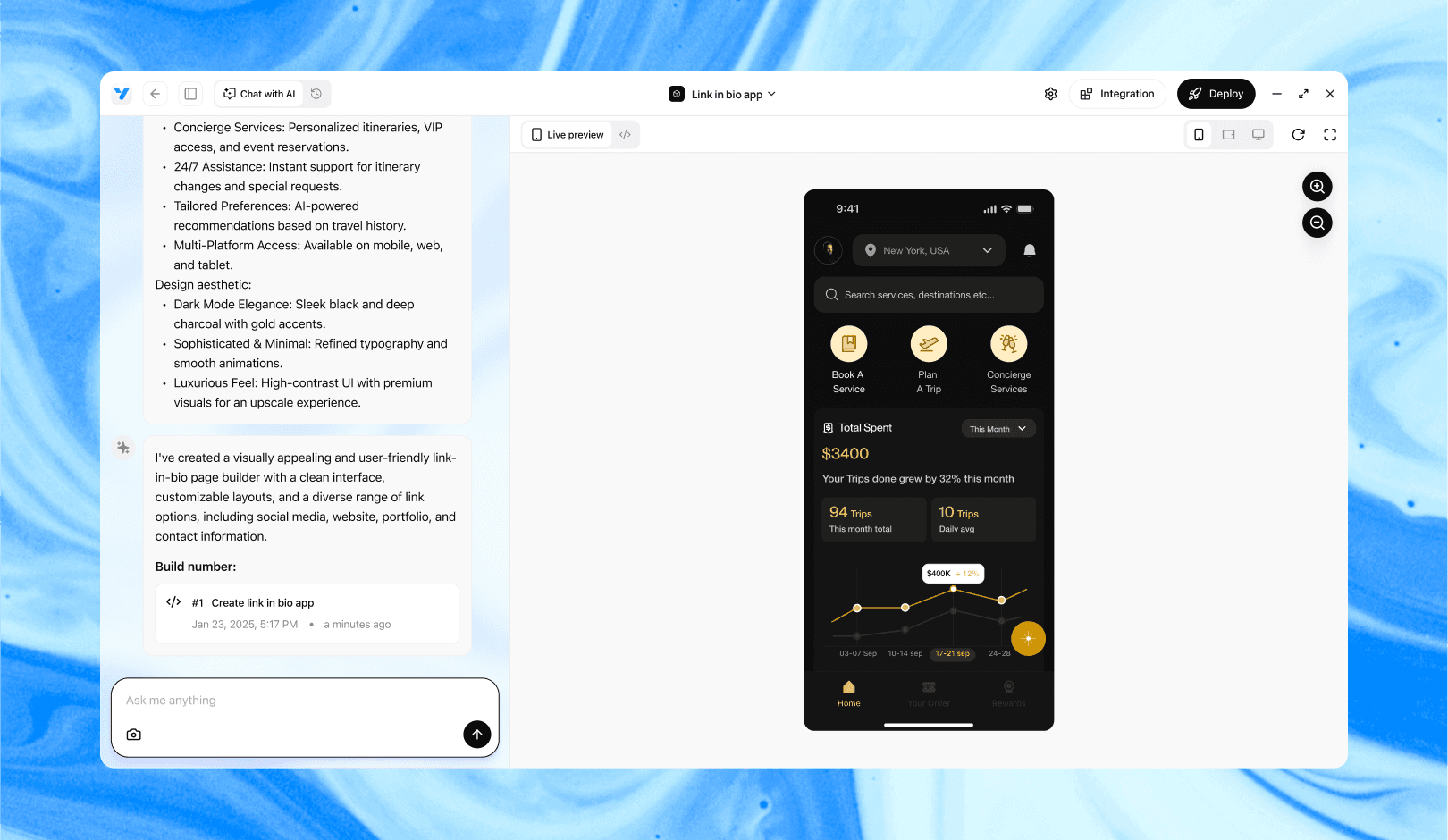
Vibe Studio, powered by Steve’s advanced AI agents, is a revolutionary no-code, conversational platform that empowers users to quickly and efficiently create full-stack Flutter applications integrated seamlessly with Firebase backend services. Ideal for solo founders, startups, and agile engineering teams, Vibe Studio allows users to visually manage and deploy Flutter apps, greatly accelerating the development process. The intuitive conversational interface simplifies complex development tasks, making app creation accessible even for non-coders.
Conclusion
Implementing passkeys in Flutter requires bridging platform APIs for native mobile and using WebAuthn on the web. The core pattern remains constant: obtain a server challenge, create or get credentials via platform APIs, and verify responses on the server. Use concise Dart wrappers—JS interop on web and MethodChannel on mobile—to keep your Flutter codebase maintainable. Proper server-side attestation and fallback strategies complete a secure, user-friendly passkey implementation that elevates both security and UX for flutter and mobile development projects.