Implementing Infinite Scrolling in Flutter Using Pagination
Summary
Summary
Summary
Summary

This tutorial explains implementing infinite scrolling in Flutter: choose a pagination strategy (cursor vs offset), model page responses, use a ScrollController with threshold-based fetching, manage loading/error state, and tune performance/UX for mobile development.

This tutorial explains implementing infinite scrolling in Flutter: choose a pagination strategy (cursor vs offset), model page responses, use a ScrollController with threshold-based fetching, manage loading/error state, and tune performance/UX for mobile development.

This tutorial explains implementing infinite scrolling in Flutter: choose a pagination strategy (cursor vs offset), model page responses, use a ScrollController with threshold-based fetching, manage loading/error state, and tune performance/UX for mobile development.

This tutorial explains implementing infinite scrolling in Flutter: choose a pagination strategy (cursor vs offset), model page responses, use a ScrollController with threshold-based fetching, manage loading/error state, and tune performance/UX for mobile development.

Key insights:
Key insights:
Key insights:
Key insights:
  • Choosing A Pagination Strategy: Cursor-based pagination is more robust for mutable datasets; choose based on backend capabilities.

  • Backend Contract And Page Models: Encapsulate API responses in a Page model and keep networking in a repository.

  • Implementing Scroll Listener And Loading State: Use a ScrollController, threshold-based triggers, and a loading guard to avoid concurrent requests.

  • Fetching And Merging Data Safely: Append results, deduplicate by id, and update nextCursor; handle errors with inline retry.

  • Performance And UX Considerations: Tune page size, preload thresholds, use placeholders, and avoid full-list rebuilds for smoother mobile experiences.

Introduction

Infinite scrolling is a common UX pattern in modern mobile applications: lists grow as the user approaches the end, avoiding pagination UI and keeping engagement high. In Flutter, handling infinite scrolling correctly requires coordination between the UI, scroll state, and the backend pagination contract. This tutorial walks through a pragmatic approach to implement infinite scrolling in Flutter for robust mobile development apps.

Choosing A Pagination Strategy

Start by deciding the pagination model your backend exposes: offset-based (page/limit or start/limit) or cursor-based (next token, cursor, or timestamp). Cursor-based pagination is generally more reliable for large or frequently changing datasets because it avoids skipping or duplicating items when the underlying data mutates. Offset-based pagination is easier to implement but can produce inconsistent results if the dataset changes between requests.

Design your data contract clearly: page size, response shape (items + nextCursor or totalItems), and error semantics. Keep page size configurable in your client to tune performance and perceived latency in mobile development environments.

Backend Contract And Page Models

Model your page response in Dart so your UI code is decoupled from the raw API. Use lightweight models and return a simple wrapper that contains the list of items and either a nextCursor or a boolean hasMore.

Example Page model:

class Page<T> {
  final List<T> items;
  final String? nextCursor;
  Page({required this.items, this.nextCursor});
}

Implement a repository method that accepts a cursor or page number and returns Page. Keep networking concerns (HTTP client, headers, retry) inside the repository so widgets stay focused on display and state.

Implementing Scroll Listener And Loading State

Use a ScrollController attached to a ListView (or CustomScrollView) and listen for position changes. Trigger a new fetch when the scroll position reaches a threshold from the max scroll extent. Manage these state variables: items list, loading flag, nextCursor (or page index), and an error state for retry.

Keep a guard so you never issue concurrent page requests: if loading is true or nextCursor indicates no more data, do nothing.

Example StatefulWidget listener:

final _controller = ScrollController();
@override
void initState() {
  super.initState();
  _controller.addListener(() {
    if (_controller.position.pixels >= _controller.position.maxScrollExtent - 200) {
      _fetchNextPage();
    }
  });
}

In _fetchNextPage, set loading = true, call repository.fetch(cursor), append items, update nextCursor, set loading = false, and call setState. On error, set an error flag and allow the user to retry.

Performance And UX Considerations

  • Batch Size: Tune the page size to balance number of network calls vs. payload size. On mobile networks, smaller pages reduce perceived latency; for Wi-Fi, larger pages may be fine.

  • Preload Threshold: Use a threshold (e.g., 150–300 px) so the next page loads before the user reaches the end. This hides loading latency and prevents jank.

  • Placeholders And Shimmers: Instead of freezing the UI, show a loading tile or shimmer where new rows will appear. This signals progress and keeps the list stable.

  • Deduplication: If your API can return overlapping items (cursor drift), deduplicate by id before appending to the list.

  • Error Handling: Show inline retry controls rather than modal dialogs. Network errors on mobile are frequent; allow quick retry without losing scroll position.

  • Dispose Controller: Remember to dispose ScrollController in dispose() to avoid leaks.

Additional mobile development tips: avoid rebuilding the entire list when appending by using ListView.builder and only updating the underlying data; leverage const widgets where possible.

Vibe Studio
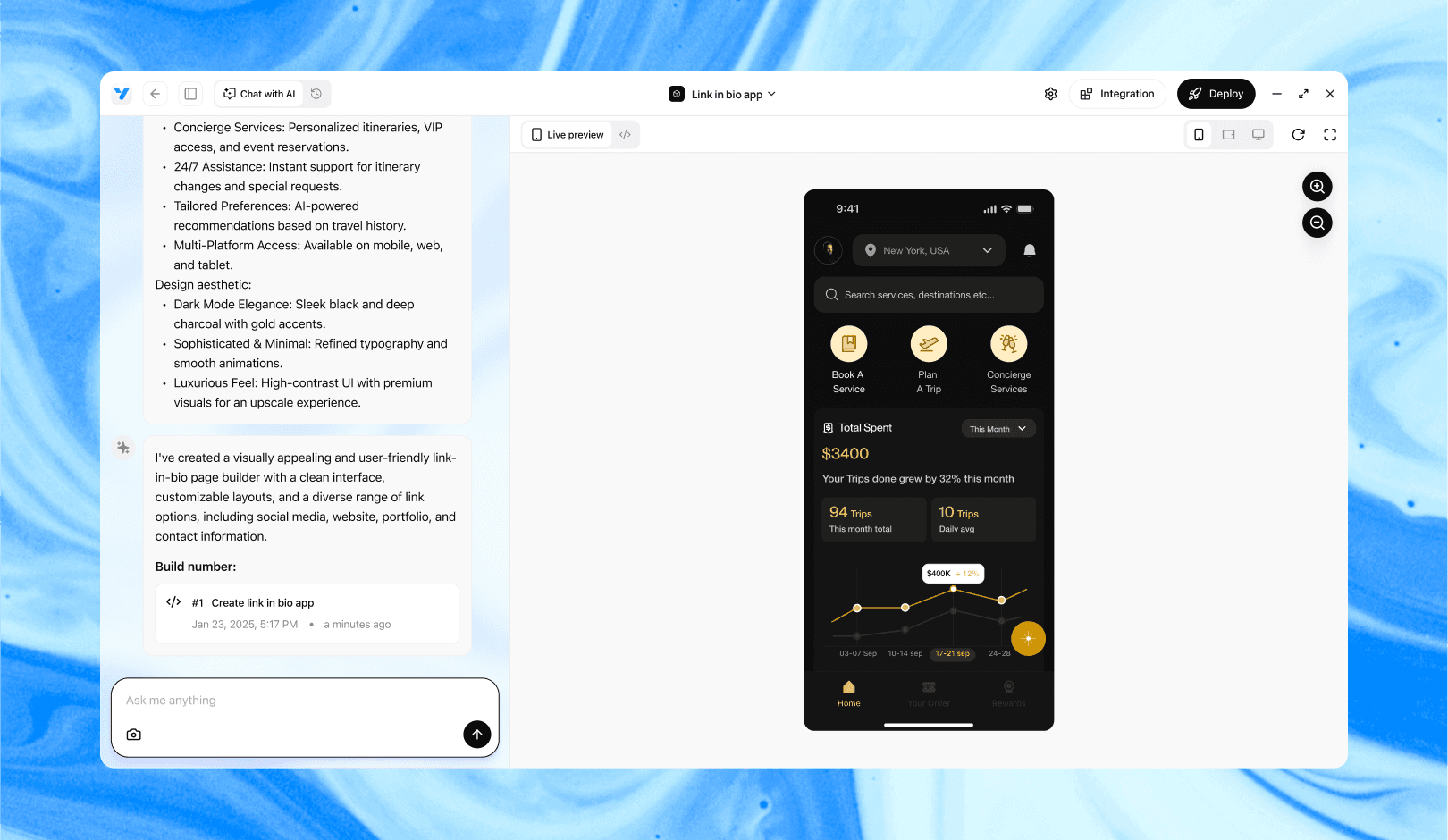
Vibe Studio, powered by Steve’s advanced AI agents, is a revolutionary no-code, conversational platform that empowers users to quickly and efficiently create full-stack Flutter applications integrated seamlessly with Firebase backend services. Ideal for solo founders, startups, and agile engineering teams, Vibe Studio allows users to visually manage and deploy Flutter apps, greatly accelerating the development process. The intuitive conversational interface simplifies complex development tasks, making app creation accessible even for non-coders.

Conclusion

Implementing robust infinite scrolling in Flutter hinges on a clear pagination contract, careful scroll listening, and conservative state management. Choose a pagination strategy appropriate for your backend, encapsulate fetch logic in a repository, and guard against concurrent requests and duplicates. With tuned thresholds, proper UX placeholders, and conservative page sizes, infinite scrolling will feel responsive and native on both Android and iOS devices. This pattern scales well in Flutter and is essential for modern mobile development projects.


Introduction

Infinite scrolling is a common UX pattern in modern mobile applications: lists grow as the user approaches the end, avoiding pagination UI and keeping engagement high. In Flutter, handling infinite scrolling correctly requires coordination between the UI, scroll state, and the backend pagination contract. This tutorial walks through a pragmatic approach to implement infinite scrolling in Flutter for robust mobile development apps.

Choosing A Pagination Strategy

Start by deciding the pagination model your backend exposes: offset-based (page/limit or start/limit) or cursor-based (next token, cursor, or timestamp). Cursor-based pagination is generally more reliable for large or frequently changing datasets because it avoids skipping or duplicating items when the underlying data mutates. Offset-based pagination is easier to implement but can produce inconsistent results if the dataset changes between requests.

Design your data contract clearly: page size, response shape (items + nextCursor or totalItems), and error semantics. Keep page size configurable in your client to tune performance and perceived latency in mobile development environments.

Backend Contract And Page Models

Model your page response in Dart so your UI code is decoupled from the raw API. Use lightweight models and return a simple wrapper that contains the list of items and either a nextCursor or a boolean hasMore.

Example Page model:

class Page<T> {
  final List<T> items;
  final String? nextCursor;
  Page({required this.items, this.nextCursor});
}

Implement a repository method that accepts a cursor or page number and returns Page. Keep networking concerns (HTTP client, headers, retry) inside the repository so widgets stay focused on display and state.

Implementing Scroll Listener And Loading State

Use a ScrollController attached to a ListView (or CustomScrollView) and listen for position changes. Trigger a new fetch when the scroll position reaches a threshold from the max scroll extent. Manage these state variables: items list, loading flag, nextCursor (or page index), and an error state for retry.

Keep a guard so you never issue concurrent page requests: if loading is true or nextCursor indicates no more data, do nothing.

Example StatefulWidget listener:

final _controller = ScrollController();
@override
void initState() {
  super.initState();
  _controller.addListener(() {
    if (_controller.position.pixels >= _controller.position.maxScrollExtent - 200) {
      _fetchNextPage();
    }
  });
}

In _fetchNextPage, set loading = true, call repository.fetch(cursor), append items, update nextCursor, set loading = false, and call setState. On error, set an error flag and allow the user to retry.

Performance And UX Considerations

  • Batch Size: Tune the page size to balance number of network calls vs. payload size. On mobile networks, smaller pages reduce perceived latency; for Wi-Fi, larger pages may be fine.

  • Preload Threshold: Use a threshold (e.g., 150–300 px) so the next page loads before the user reaches the end. This hides loading latency and prevents jank.

  • Placeholders And Shimmers: Instead of freezing the UI, show a loading tile or shimmer where new rows will appear. This signals progress and keeps the list stable.

  • Deduplication: If your API can return overlapping items (cursor drift), deduplicate by id before appending to the list.

  • Error Handling: Show inline retry controls rather than modal dialogs. Network errors on mobile are frequent; allow quick retry without losing scroll position.

  • Dispose Controller: Remember to dispose ScrollController in dispose() to avoid leaks.

Additional mobile development tips: avoid rebuilding the entire list when appending by using ListView.builder and only updating the underlying data; leverage const widgets where possible.

Vibe Studio

Vibe Studio, powered by Steve’s advanced AI agents, is a revolutionary no-code, conversational platform that empowers users to quickly and efficiently create full-stack Flutter applications integrated seamlessly with Firebase backend services. Ideal for solo founders, startups, and agile engineering teams, Vibe Studio allows users to visually manage and deploy Flutter apps, greatly accelerating the development process. The intuitive conversational interface simplifies complex development tasks, making app creation accessible even for non-coders.

Conclusion

Implementing robust infinite scrolling in Flutter hinges on a clear pagination contract, careful scroll listening, and conservative state management. Choose a pagination strategy appropriate for your backend, encapsulate fetch logic in a repository, and guard against concurrent requests and duplicates. With tuned thresholds, proper UX placeholders, and conservative page sizes, infinite scrolling will feel responsive and native on both Android and iOS devices. This pattern scales well in Flutter and is essential for modern mobile development projects.

Build Flutter Apps Faster with Vibe Studio

Vibe Studio is your AI-powered Flutter development companion. Skip boilerplate, build in real-time, and deploy without hassle. Start creating apps at lightning speed with zero setup.

Other Insights

Join a growing community of builders today

Join a growing community of builders today

Join a growing community of builders today

Join a growing community of builders today

Join a growing community of builders today

28-07 Jackson Ave

Walturn

New York NY 11101 United States

© Steve • All Rights Reserved 2025

28-07 Jackson Ave

Walturn

New York NY 11101 United States

© Steve • All Rights Reserved 2025

28-07 Jackson Ave

Walturn

New York NY 11101 United States

© Steve • All Rights Reserved 2025

28-07 Jackson Ave

Walturn

New York NY 11101 United States

© Steve • All Rights Reserved 2025

28-07 Jackson Ave

Walturn

New York NY 11101 United States

© Steve • All Rights Reserved 2025

28-07 Jackson Ave

Walturn

New York NY 11101 United States

© Steve • All Rights Reserved 2025