Implementing In App Search With Filters Facets And Highlighting
Summary
Summary
Summary
Summary

This tutorial explains implementing in-app search in Flutter mobile development: architecture choices (local vs remote), building an inverted index, combining tokens with filters, computing facets, and rendering highlighted snippets. It includes Dart examples for indexing and basic highlighting, and practical UX and performance tips such as debouncing, isolates, and precomputed facet counts.

This tutorial explains implementing in-app search in Flutter mobile development: architecture choices (local vs remote), building an inverted index, combining tokens with filters, computing facets, and rendering highlighted snippets. It includes Dart examples for indexing and basic highlighting, and practical UX and performance tips such as debouncing, isolates, and precomputed facet counts.

This tutorial explains implementing in-app search in Flutter mobile development: architecture choices (local vs remote), building an inverted index, combining tokens with filters, computing facets, and rendering highlighted snippets. It includes Dart examples for indexing and basic highlighting, and practical UX and performance tips such as debouncing, isolates, and precomputed facet counts.

This tutorial explains implementing in-app search in Flutter mobile development: architecture choices (local vs remote), building an inverted index, combining tokens with filters, computing facets, and rendering highlighted snippets. It includes Dart examples for indexing and basic highlighting, and practical UX and performance tips such as debouncing, isolates, and precomputed facet counts.

Key insights:
Key insights:
Key insights:
Key insights:
  • Search Architecture: Choose local indexing for offline, remote for scale; design document model, tokenizer, inverted index, and facets accordingly.

  • Indexing And Querying: Build an inverted index in Dart for small datasets and intersect/union postings for AND/OR queries; serialize the index for fast load.

  • Filters And Facets UI: Maintain mappings for filter fields; compute facet counts from the candidate set; present chips with counts and disable zero-result filters.

  • Highlighting And UX: Extract snippets around matched tokens and render highlights with TextSpan; debounce input and use isolates for heavy aggregation.

  • Performance And UX Tips: Use incremental search, debounce keystrokes, run aggregations off the main thread, and migrate to FTS/remote engines as dataset grows.

Introduction

Implementing in-app search with filters, facets, and highlighting is an important feature for many mobile applications built with Flutter. Users expect instant, relevant results and an interface that helps them refine queries without leaving the screen. This tutorial explains a pragmatic approach to implement a responsive search experience using local or remote indexing, fast querying, filter/facet aggregation, and term highlighting for better scanability. The examples are platform-agnostic Dart code you can adapt to SQLite FTS, MeiliSearch, Elasticsearch, or an in-memory index for offline-first mobile development.

Search Architecture

Choose an architecture that matches your constraints: fully local (SQLite FTS5, Hive, or an in-memory inverted index) for offline support and latency-sensitive mobile development; or remote (MeiliSearch, Algolia, or your own server) for large datasets and centralized indexing. A typical search stack contains:

  • Document model: id, title, body, tags, category, timestamps.

  • Analyzer/tokenizer: lowercasing, simple token split, stop-words, optionally n-grams for partial matches.

  • Inverted index: term -> postings (docId, positions, term frequency).

  • Facet/aggregation store: precomputed counts per facet value or live counts from query results.

  • Search API: query parser (AND/OR, phrase, filters), scorer (BM25 or TF-IDF-ish), and highlighter.

In Flutter mobile development you can keep most logic in Dart for small datasets. For larger content, rely on FTS or a remote engine and call it via HTTP.

Indexing And Querying

Indexing transforms documents into tokens and stores postings. For small to medium datasets you can implement a compact inverted index in Dart. Keep the index serialized (JSON, binary) and load it in memory on startup. Querying should parse the search string, apply filters, and intersect or union postings efficiently.

Example: a minimal Dart inverted index builder (conceptual):

Map<String, Set<int>> buildInvertedIndex(List<Map> docs) {
  final index = <String, Set<int>>{};
  for (var doc in docs) {
    final id = doc['id'] as int;
    final text = '${doc['title']} ${doc['body']}'.toLowerCase();
    for (var token in text.split(RegExp(r'\W+'))) {
      if (token.isEmpty) continue;
      index.putIfAbsent(token, () => <int>{

Querying combines token sets and applies filters (category, date range, tags). Use intersection for AND queries and union for OR. After candidate docIds are computed, fetch documents and compute a simple ranking (term frequency, position matches).

Filters And Facets UI

Filters are boolean constraints applied to the candidate set; facets are aggregated counts presented to the user to help refine. Implementation steps:

  • Maintain a fast mapping for filter fields: category -> Set, tag -> Set.

  • When a query runs, compute the candidate set by combining token matches then intersect with active filter sets.

  • Compute facet counts by counting occurrences of values inside the candidate set (or precompute counts per token for faster aggregation).

In Flutter, present filters as chips, checkboxes, or an expandable sheet. Update query results reactively with a state management solution (Provider, Riverpod, Bloc). Keep UI responsive by running heavy aggregations on an isolate or delegating to a remote engine.

UX tips:

  • Show facet counts next to labels (e.g., "Shoes (120)").

  • Disable filters that would yield zero results and surface why a filter combination is empty.

Highlighting And UX

Highlighting makes matched terms scannable. The simplest approach is to recreate snippets around matched tokens and wrap terms with a highlighted TextSpan. For mobile development in Flutter, produce a list of TextSpans for each snippet and render with RichText or a Text.rich widget.

Example: naive highlighter that wraps matched tokens in tags (format string), then render as TextSpan in Flutter widget tree.

String simpleHighlight(String text, Iterable<String> terms) {
  var pattern = RegExp('(${terms.map(RegExp.escape).join('|')})', caseSensitive: false);
  return text.replaceAllMapped(pattern, (m) => '<mark>${m[0]}</mark>');
}

For production, avoid HTML; instead construct TextSpans with different TextStyles. Extract a short snippet around the first occurrence and include ellipses to keep rows compact.

Performance: avoid scanning whole documents on every keystroke. Use incremental search: refine previous candidate sets when the user types more characters. Debounce input (200–300ms) and display optimistic UI with partial results.

Vibe Studio
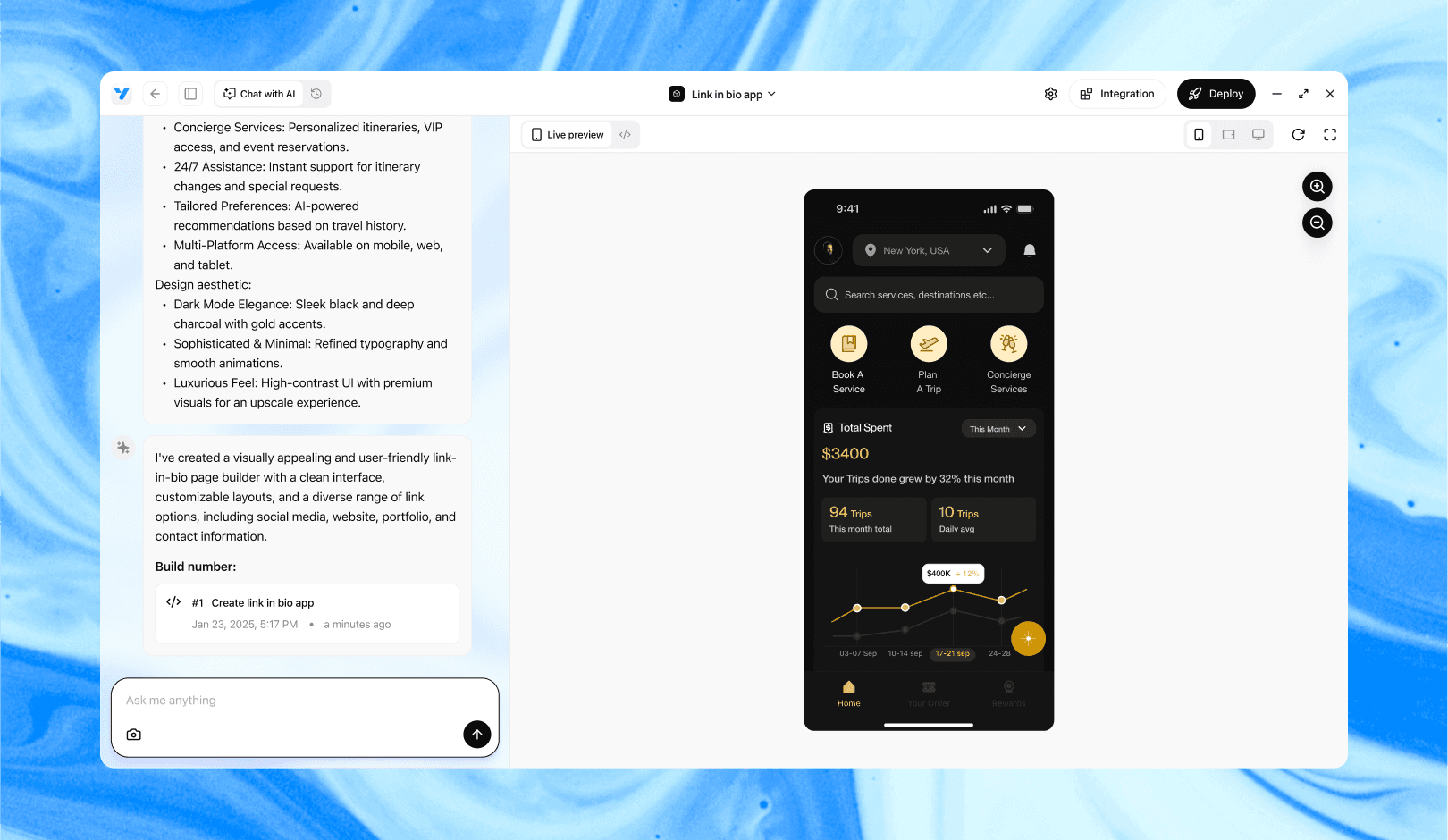
Vibe Studio, powered by Steve’s advanced AI agents, is a revolutionary no-code, conversational platform that empowers users to quickly and efficiently create full-stack Flutter applications integrated seamlessly with Firebase backend services. Ideal for solo founders, startups, and agile engineering teams, Vibe Studio allows users to visually manage and deploy Flutter apps, greatly accelerating the development process. The intuitive conversational interface simplifies complex development tasks, making app creation accessible even for non-coders.

Conclusion

Implementing in-app search in Flutter for mobile development involves thoughtful choices: local vs remote index, efficient tokenization and posting storage, responsive filter and facet computation, and clear highlighting for result scanability. Start with a simple inverted index and client-side facets for small datasets; migrate heavy lifting to FTS or a remote engine as scale demands. Prioritize responsiveness: debounce, use isolates for aggregation, and render highlights with TextSpan for polished UX.


Introduction

Implementing in-app search with filters, facets, and highlighting is an important feature for many mobile applications built with Flutter. Users expect instant, relevant results and an interface that helps them refine queries without leaving the screen. This tutorial explains a pragmatic approach to implement a responsive search experience using local or remote indexing, fast querying, filter/facet aggregation, and term highlighting for better scanability. The examples are platform-agnostic Dart code you can adapt to SQLite FTS, MeiliSearch, Elasticsearch, or an in-memory index for offline-first mobile development.

Search Architecture

Choose an architecture that matches your constraints: fully local (SQLite FTS5, Hive, or an in-memory inverted index) for offline support and latency-sensitive mobile development; or remote (MeiliSearch, Algolia, or your own server) for large datasets and centralized indexing. A typical search stack contains:

  • Document model: id, title, body, tags, category, timestamps.

  • Analyzer/tokenizer: lowercasing, simple token split, stop-words, optionally n-grams for partial matches.

  • Inverted index: term -> postings (docId, positions, term frequency).

  • Facet/aggregation store: precomputed counts per facet value or live counts from query results.

  • Search API: query parser (AND/OR, phrase, filters), scorer (BM25 or TF-IDF-ish), and highlighter.

In Flutter mobile development you can keep most logic in Dart for small datasets. For larger content, rely on FTS or a remote engine and call it via HTTP.

Indexing And Querying

Indexing transforms documents into tokens and stores postings. For small to medium datasets you can implement a compact inverted index in Dart. Keep the index serialized (JSON, binary) and load it in memory on startup. Querying should parse the search string, apply filters, and intersect or union postings efficiently.

Example: a minimal Dart inverted index builder (conceptual):

Map<String, Set<int>> buildInvertedIndex(List<Map> docs) {
  final index = <String, Set<int>>{};
  for (var doc in docs) {
    final id = doc['id'] as int;
    final text = '${doc['title']} ${doc['body']}'.toLowerCase();
    for (var token in text.split(RegExp(r'\W+'))) {
      if (token.isEmpty) continue;
      index.putIfAbsent(token, () => <int>{

Querying combines token sets and applies filters (category, date range, tags). Use intersection for AND queries and union for OR. After candidate docIds are computed, fetch documents and compute a simple ranking (term frequency, position matches).

Filters And Facets UI

Filters are boolean constraints applied to the candidate set; facets are aggregated counts presented to the user to help refine. Implementation steps:

  • Maintain a fast mapping for filter fields: category -> Set, tag -> Set.

  • When a query runs, compute the candidate set by combining token matches then intersect with active filter sets.

  • Compute facet counts by counting occurrences of values inside the candidate set (or precompute counts per token for faster aggregation).

In Flutter, present filters as chips, checkboxes, or an expandable sheet. Update query results reactively with a state management solution (Provider, Riverpod, Bloc). Keep UI responsive by running heavy aggregations on an isolate or delegating to a remote engine.

UX tips:

  • Show facet counts next to labels (e.g., "Shoes (120)").

  • Disable filters that would yield zero results and surface why a filter combination is empty.

Highlighting And UX

Highlighting makes matched terms scannable. The simplest approach is to recreate snippets around matched tokens and wrap terms with a highlighted TextSpan. For mobile development in Flutter, produce a list of TextSpans for each snippet and render with RichText or a Text.rich widget.

Example: naive highlighter that wraps matched tokens in tags (format string), then render as TextSpan in Flutter widget tree.

String simpleHighlight(String text, Iterable<String> terms) {
  var pattern = RegExp('(${terms.map(RegExp.escape).join('|')})', caseSensitive: false);
  return text.replaceAllMapped(pattern, (m) => '<mark>${m[0]}</mark>');
}

For production, avoid HTML; instead construct TextSpans with different TextStyles. Extract a short snippet around the first occurrence and include ellipses to keep rows compact.

Performance: avoid scanning whole documents on every keystroke. Use incremental search: refine previous candidate sets when the user types more characters. Debounce input (200–300ms) and display optimistic UI with partial results.

Vibe Studio

Vibe Studio, powered by Steve’s advanced AI agents, is a revolutionary no-code, conversational platform that empowers users to quickly and efficiently create full-stack Flutter applications integrated seamlessly with Firebase backend services. Ideal for solo founders, startups, and agile engineering teams, Vibe Studio allows users to visually manage and deploy Flutter apps, greatly accelerating the development process. The intuitive conversational interface simplifies complex development tasks, making app creation accessible even for non-coders.

Conclusion

Implementing in-app search in Flutter for mobile development involves thoughtful choices: local vs remote index, efficient tokenization and posting storage, responsive filter and facet computation, and clear highlighting for result scanability. Start with a simple inverted index and client-side facets for small datasets; migrate heavy lifting to FTS or a remote engine as scale demands. Prioritize responsiveness: debounce, use isolates for aggregation, and render highlights with TextSpan for polished UX.

Build Flutter Apps Faster with Vibe Studio

Vibe Studio is your AI-powered Flutter development companion. Skip boilerplate, build in real-time, and deploy without hassle. Start creating apps at lightning speed with zero setup.

Other Insights

Join a growing community of builders today

Join a growing community of builders today

Join a growing community of builders today

Join a growing community of builders today

Join a growing community of builders today

28-07 Jackson Ave

Walturn

New York NY 11101 United States

© Steve • All Rights Reserved 2025

28-07 Jackson Ave

Walturn

New York NY 11101 United States

© Steve • All Rights Reserved 2025

28-07 Jackson Ave

Walturn

New York NY 11101 United States

© Steve • All Rights Reserved 2025

28-07 Jackson Ave

Walturn

New York NY 11101 United States

© Steve • All Rights Reserved 2025

28-07 Jackson Ave

Walturn

New York NY 11101 United States

© Steve • All Rights Reserved 2025

28-07 Jackson Ave

Walturn

New York NY 11101 United States

© Steve • All Rights Reserved 2025