Implementing GraphQL in Flutter Using Artemis
Dec 2, 2025


Summary
Summary
Summary
Summary
This tutorial shows how to integrate GraphQL in Flutter using Artemis: install dependencies, configure artemis.yaml, generate Dart types and operation classes, and call queries and mutations from Flutter. It covers build_runner usage, generated client patterns, error handling, subscriptions, scalar mappings, and practical best practices for production mobile development.
Key insights:
Key insights:
Key insights:
Key insights:
Setup And Dependencies: Add artemis, build_runner, and a runtime GraphQL client; store schema and queries in a predictable folder for stable generation.
Generating Types With Artemis: Run build_runner to generate null-safe Dart models and operation classes; use fragments and scalar mappings to reduce boilerplate.
Using The Generated Client: Instantiate the generated query/mutation classes and execute them through an ArtemisClient or compatible runtime, checking response.hasErrors.
Handling Mutations And Subscriptions: Mutations use generated argument classes; subscriptions need a WebSocket-capable runtime transport and mapping to generated types.
Best Practices: Centralize auth, map custom scalars, pair Artemis with a runtime that supports caching for offline use, and keep queries small and explicit.
Introduction
GraphQL is a strong fit for modern Flutter mobile development: it reduces over-fetching, centralizes types, and pairs well with code generation. Artemis is a Dart-first GraphQL code generator that produces type-safe models and operation classes, letting you call GraphQL endpoints with minimal boilerplate. This tutorial shows a practical workflow: install Artemis, configure generation, run build_runner, and call queries and mutations from Flutter with robust error handling.
Setup And Dependencies
Start by adding Artemis and the build tools to pubspec.yaml. Include artemis, build_runner, and graphql (runtime client). Example dependencies:
artemis (dev-time generator)
build_runner (dev tool)
graphql (runtime client if you use GraphQLClient)
Create a directory structure: /graphql/schema.graphql for an SDL schema (or use introspection JSON), and /graphql/queries/*.graphql for operations. Artemis reads these files plus a small YAML config to produce Dart files.
Example artemis configuration (artemis.yaml) points to the schema and queries and sets the output file. Keep your schema local for repeatable builds or fetch a schema as part of CI.
Generating Types With Artemis
Artemis generates strongly typed Dart classes for queries, inputs, and fragments. Use fragments to reuse shape definitions and avoid duplicate fields. A typical query file (GetPosts.graphql) contains the operation and any fragments used.
Run the generator with build_runner:
flutter pub run build_runner build --delete-conflicting-outputs
This creates a generated file (for example lib/graphql/api.dart). Artemis produces classes named after the operation, e.g., GetPostsQuery, with properties for variables and a parsed response type. The generator respects null-safety and maps GraphQL scalars to Dart types; you can customize scalars in artemis.yaml if your API uses custom scalars (DateTime, UUID).
Best practices for generation:
Keep queries focused: smaller fragments, explicit fields.
Commit generated code only if your workflow prefers reproducible builds without generator on CI agents.
Use scalar mappings to avoid manual conversion logic at call sites.
Using The Generated Client
Artemis can generate both types and a client wrapper, but you can also wire the generated operations to any runtime HTTP client. Below is a minimal example creating an Artemis client and executing a query.
// Client initialization
final client = ArtemisClient('https://api.example.com/graphql');
final query = GetPostsQuery();
final response = await client.execute(query);
if (response.hasErrors) throw Exception(response.graphqlErrors);
final posts = response.data?.posts;Use try/catch and check response.hasErrors before accessing data. The generated response types give compile-time guarantees about available fields and nullability. For more advanced cases, integrate with graphql_flutter or ferry for normalized caching, but generated types remain valuable.
Caching: Artemis itself is a generator only. Pair it with a runtime client that supports caching (graphql_flutter or ferry) if you need offline capabilities or normalized cache. Map the generated input and output types to the runtime client’s interfaces as needed.
Handling Mutations And Subscriptions
Mutations are similar to queries: define the mutation in a .graphql file, reference input types, and run build_runner to regenerate. Generated mutation classes accept strongly typed variables.
final mutation = CreatePostMutation(variables: CreatePostArguments(title: 'Hi', body: 'Body'));
final mResp = await client.execute(mutation);
if (mResp.hasErrors) print(mResp.graphqlErrors);
final created = mResp.data?.createPost;For subscriptions, Artemis can generate classes if your schema supports subscriptions. Subscriptions require a WebSocket-capable runtime client. Artemis does not manage the socket lifecycle; provide a runtime transport that can handle GraphQL over WebSocket and map the incoming payloads to the generated classes.
Error Handling and Retries: Always inspect response.hasErrors and response.graphqlErrors. Wrap network calls with retries or backoff for transient failures. For mutations, consider idempotency keys at the API level to avoid duplicate writes on retries.
Security: Keep authentication headers separate from generated code. Inject an HTTP client or interceptor that adds tokens at runtime so regeneration doesn’t leak secrets.
Vibe Studio
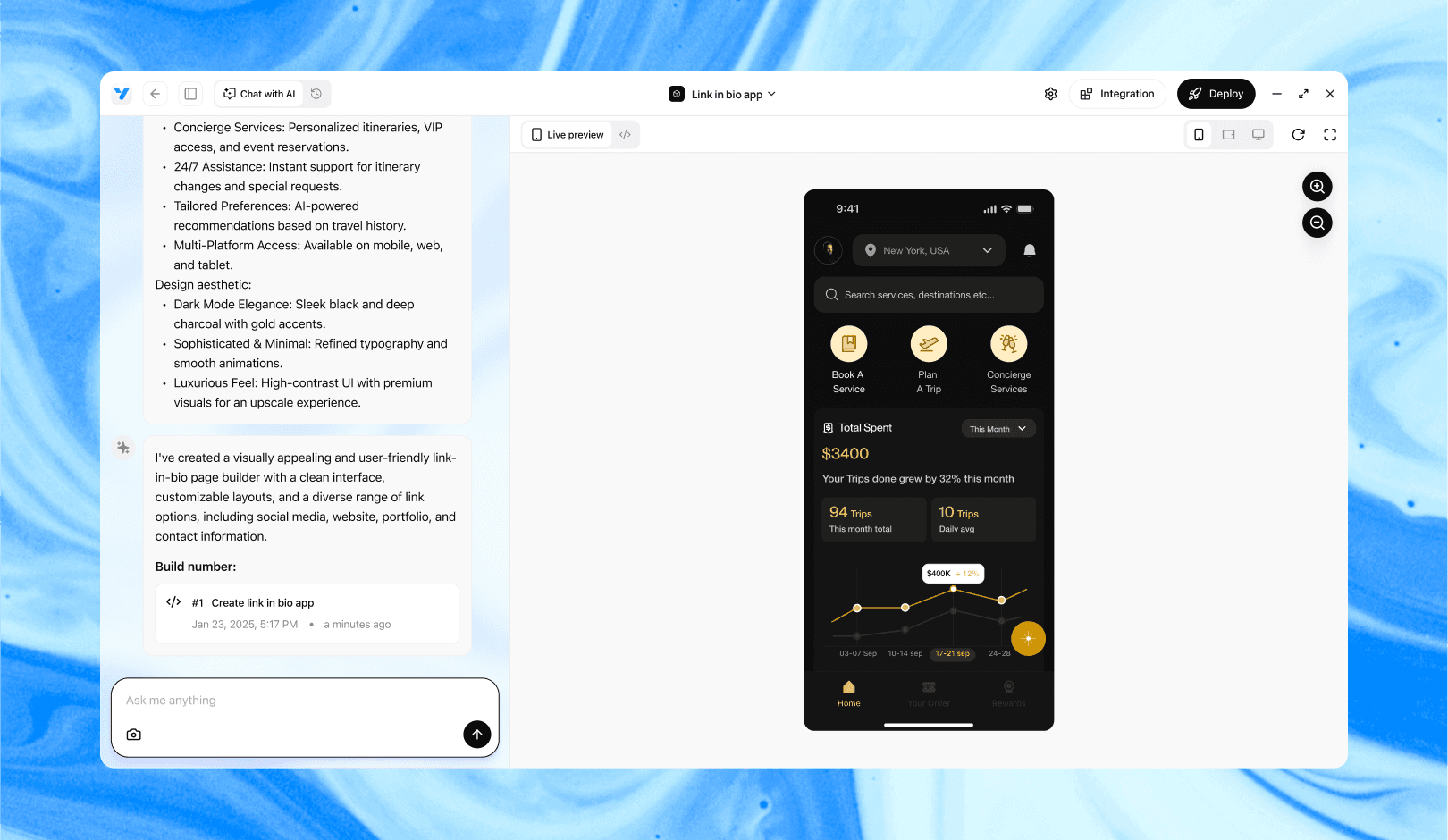
Vibe Studio, powered by Steve’s advanced AI agents, is a revolutionary no-code, conversational platform that empowers users to quickly and efficiently create full-stack Flutter applications integrated seamlessly with Firebase backend services. Ideal for solo founders, startups, and agile engineering teams, Vibe Studio allows users to visually manage and deploy Flutter apps, greatly accelerating the development process. The intuitive conversational interface simplifies complex development tasks, making app creation accessible even for non-coders.
Conclusion
Artemis streamlines GraphQL in Flutter mobile development by generating type-safe Dart models and operation classes. The workflow is: define your schema and queries, configure artemis.yaml, run build_runner, then use the generated classes with a runtime client. For production apps, pair generation with a robust runtime for caching and subscriptions, map custom scalars, and centralize authentication. With Artemis you get compile-time guarantees that reduce runtime errors and speed up development of Flutter apps consuming GraphQL APIs.

Introduction
GraphQL is a strong fit for modern Flutter mobile development: it reduces over-fetching, centralizes types, and pairs well with code generation. Artemis is a Dart-first GraphQL code generator that produces type-safe models and operation classes, letting you call GraphQL endpoints with minimal boilerplate. This tutorial shows a practical workflow: install Artemis, configure generation, run build_runner, and call queries and mutations from Flutter with robust error handling.
Setup And Dependencies
Start by adding Artemis and the build tools to pubspec.yaml. Include artemis, build_runner, and graphql (runtime client). Example dependencies:
artemis (dev-time generator)
build_runner (dev tool)
graphql (runtime client if you use GraphQLClient)
Create a directory structure: /graphql/schema.graphql for an SDL schema (or use introspection JSON), and /graphql/queries/*.graphql for operations. Artemis reads these files plus a small YAML config to produce Dart files.
Example artemis configuration (artemis.yaml) points to the schema and queries and sets the output file. Keep your schema local for repeatable builds or fetch a schema as part of CI.
Generating Types With Artemis
Artemis generates strongly typed Dart classes for queries, inputs, and fragments. Use fragments to reuse shape definitions and avoid duplicate fields. A typical query file (GetPosts.graphql) contains the operation and any fragments used.
Run the generator with build_runner:
flutter pub run build_runner build --delete-conflicting-outputs
This creates a generated file (for example lib/graphql/api.dart). Artemis produces classes named after the operation, e.g., GetPostsQuery, with properties for variables and a parsed response type. The generator respects null-safety and maps GraphQL scalars to Dart types; you can customize scalars in artemis.yaml if your API uses custom scalars (DateTime, UUID).
Best practices for generation:
Keep queries focused: smaller fragments, explicit fields.
Commit generated code only if your workflow prefers reproducible builds without generator on CI agents.
Use scalar mappings to avoid manual conversion logic at call sites.
Using The Generated Client
Artemis can generate both types and a client wrapper, but you can also wire the generated operations to any runtime HTTP client. Below is a minimal example creating an Artemis client and executing a query.
// Client initialization
final client = ArtemisClient('https://api.example.com/graphql');
final query = GetPostsQuery();
final response = await client.execute(query);
if (response.hasErrors) throw Exception(response.graphqlErrors);
final posts = response.data?.posts;Use try/catch and check response.hasErrors before accessing data. The generated response types give compile-time guarantees about available fields and nullability. For more advanced cases, integrate with graphql_flutter or ferry for normalized caching, but generated types remain valuable.
Caching: Artemis itself is a generator only. Pair it with a runtime client that supports caching (graphql_flutter or ferry) if you need offline capabilities or normalized cache. Map the generated input and output types to the runtime client’s interfaces as needed.
Handling Mutations And Subscriptions
Mutations are similar to queries: define the mutation in a .graphql file, reference input types, and run build_runner to regenerate. Generated mutation classes accept strongly typed variables.
final mutation = CreatePostMutation(variables: CreatePostArguments(title: 'Hi', body: 'Body'));
final mResp = await client.execute(mutation);
if (mResp.hasErrors) print(mResp.graphqlErrors);
final created = mResp.data?.createPost;For subscriptions, Artemis can generate classes if your schema supports subscriptions. Subscriptions require a WebSocket-capable runtime client. Artemis does not manage the socket lifecycle; provide a runtime transport that can handle GraphQL over WebSocket and map the incoming payloads to the generated classes.
Error Handling and Retries: Always inspect response.hasErrors and response.graphqlErrors. Wrap network calls with retries or backoff for transient failures. For mutations, consider idempotency keys at the API level to avoid duplicate writes on retries.
Security: Keep authentication headers separate from generated code. Inject an HTTP client or interceptor that adds tokens at runtime so regeneration doesn’t leak secrets.
Vibe Studio

Vibe Studio, powered by Steve’s advanced AI agents, is a revolutionary no-code, conversational platform that empowers users to quickly and efficiently create full-stack Flutter applications integrated seamlessly with Firebase backend services. Ideal for solo founders, startups, and agile engineering teams, Vibe Studio allows users to visually manage and deploy Flutter apps, greatly accelerating the development process. The intuitive conversational interface simplifies complex development tasks, making app creation accessible even for non-coders.
Conclusion
Artemis streamlines GraphQL in Flutter mobile development by generating type-safe Dart models and operation classes. The workflow is: define your schema and queries, configure artemis.yaml, run build_runner, then use the generated classes with a runtime client. For production apps, pair generation with a robust runtime for caching and subscriptions, map custom scalars, and centralize authentication. With Artemis you get compile-time guarantees that reduce runtime errors and speed up development of Flutter apps consuming GraphQL APIs.
Build Flutter Apps Faster with Vibe Studio
Vibe Studio is your AI-powered Flutter development companion. Skip boilerplate, build in real-time, and deploy without hassle. Start creating apps at lightning speed with zero setup.