Implementing Dependency Injection Without Overengineering
Summary
Summary
Summary
Summary

A pragmatic DI approach for flutter mobile development: use constructor injection for clarity and testability, employ a minimal service locator only at app bootstrap, and prefer explicit wiring over auto-generated frameworks to avoid overengineering.

A pragmatic DI approach for flutter mobile development: use constructor injection for clarity and testability, employ a minimal service locator only at app bootstrap, and prefer explicit wiring over auto-generated frameworks to avoid overengineering.

A pragmatic DI approach for flutter mobile development: use constructor injection for clarity and testability, employ a minimal service locator only at app bootstrap, and prefer explicit wiring over auto-generated frameworks to avoid overengineering.

A pragmatic DI approach for flutter mobile development: use constructor injection for clarity and testability, employ a minimal service locator only at app bootstrap, and prefer explicit wiring over auto-generated frameworks to avoid overengineering.

Key insights:
Key insights:
Key insights:
Key insights:
  • When To Use Dependency Injection: Use DI for testability, lifecycle control, and replaceable implementations; avoid it for trivial, stable dependencies.

  • Simple Service Locator For App Scope: Implement a tiny register/get/reset locator for app-scoped singletons and avoid making it the primary resolver.

  • Constructor Injection For Widgets: Pass dependencies via constructors so widgets stay pure and tests remain straightforward.

  • Testing And Swapping Implementations: Prefer constructor injection for unit tests; use the small locator for integration tests and keep factories for frequent swaps.

  • Practical Tip: Use Provider/InheritedWidget to expose constructed objects, not to implicitly resolve dependencies deep in logic.

Introduction

Dependency injection (DI) is a core technique for writing testable, decoupled code in flutter mobile development. But many teams overengineer DI by introducing containers, giant service locators, or complex code-generation early. This short, practical guide shows how to implement DI with minimal ceremony: choose explicit patterns, favor constructor injection, and use a tiny, well-scoped service locator only where it buys clarity.

When To Use Dependency Injection

DI is about managing how objects acquire collaborators. Use DI when:

  • You need to replace implementations easily (testing, debug vs production).

  • You want to decouple business logic from Flutter framework concerns.

  • You need to scope resources (per screen, per session) cleanly.

Avoid DI when a dependency is trivial and unlikely to change. Overusing DI (wrapping every primitive) creates indirection that hurts readability. In mobile development, prioritize the shapes of your APIs so refactors are straightforward while keeping DI focused on real benefits: testability and lifecycle control.

Simple Service Locator For App Scope

A tiny service locator can be useful as a bootstrap mechanism for app-scoped singletons (analytics, API clients). Implement one class with three operations: register, get, and reset. Keep it intentionally small—no auto-wiring, no scopes, no reflection.

class ServiceLocator {
  static final Map<Type, dynamic> _services = {};
  static void register<T>(T instance) => _services[T] = instance;
  static T get<T>() => _services[T] as T;
  static void reset() => _services.clear();
}

Usage: register concrete instances during app startup (main) and read them only at appropriate boundaries (e.g., top-level widgets or repositories). Don't sprinkle ServiceLocator.get(...) everywhere; prefer constructor injection for core classes and only use the locator at the application bootstrap or for platform-specific bindings.

Constructor Injection For Widgets

Constructor injection is explicit, easy to understand, and works well with Flutter's immutable widget model. Pass the dependencies a widget needs through its constructor. This keeps build methods pure and simplifies testing.

  • For view models/cubits: construct them above the widget tree and pass them down (or store them in an InheritedWidget/Provider for convenience).

  • For small screens: create the controller in the parent widget and inject it into children.

Example of constructor injection and testable code:

class CounterRepository { int getCount() => 0; }
class CounterCubit { final CounterRepository repo; CounterCubit(this.repo); int count() => repo.getCount(); }
class CounterWidget extends StatelessWidget {
  final CounterCubit cubit;
  const CounterWidget({Key? key, required this.cubit}): super(key: key);
  @override Widget build(BuildContext context) => Text('${cubit.count()}');
}

In tests you can swap implementations with a lightweight fake or mock and construct CounterWidget with a test cubit—no global wiring required.

Testing And Swapping Implementations

Well-designed DI makes tests trivial. Prefer these patterns:

  • Constructor injection for unit tests: pass fakes and assert behavior directly.

  • Small locator for integration tests: register test doubles at startup, then launch widgets that read the app-scoped services.

  • Provider/InheritedWidget only for reducing prop drilling, not for hiding dependencies. Use Provider to expose an already-constructed object, not to resolve dependencies deep inside code.

A typical test flow:

  • Use constructor injection for pure unit tests.

  • For widget tests that require app-scoped services, call ServiceLocator.reset(); ServiceLocator.register(FakeAnalytics()); then pump the widget under test.

Keep mocks focused and behavior-driven. If you need to swap multiple implementations frequently in tests, create factory functions that return configured instances rather than adding more global state.

Vibe Studio
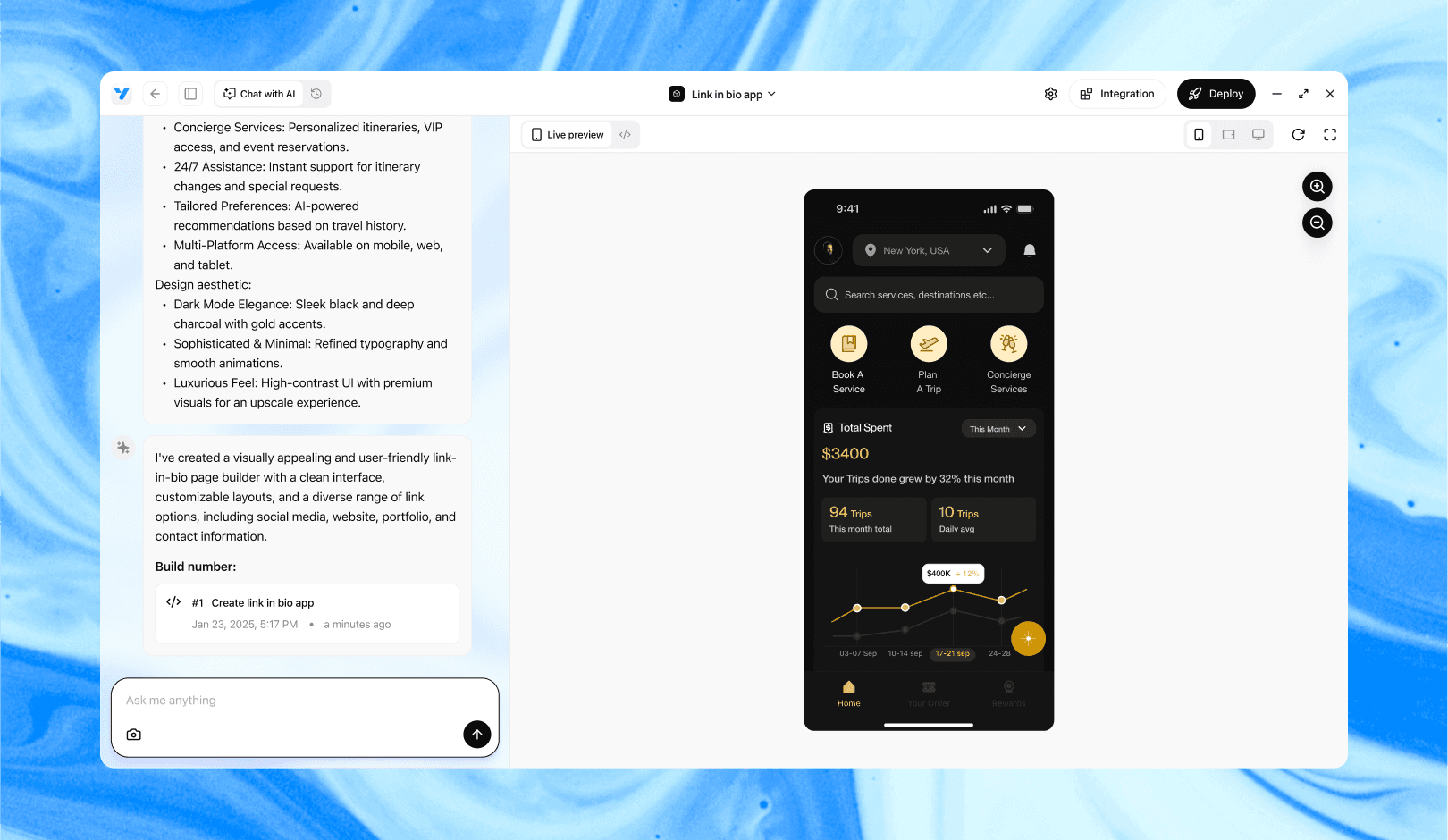
Vibe Studio, powered by Steve’s advanced AI agents, is a revolutionary no-code, conversational platform that empowers users to quickly and efficiently create full-stack Flutter applications integrated seamlessly with Firebase backend services. Ideal for solo founders, startups, and agile engineering teams, Vibe Studio allows users to visually manage and deploy Flutter apps, greatly accelerating the development process. The intuitive conversational interface simplifies complex development tasks, making app creation accessible even for non-coders.

Conclusion

Dependency injection in flutter mobile development should be pragmatic: favor constructor injection, keep a tiny service locator only for app bootstrap or global singletons, and avoid heavy frameworks or auto-generated wiring unless your app truly needs them. This approach yields readable code, straightforward tests, and minimal indirection—exactly what teams need to move fast without paying an architectural tax.


Introduction

Dependency injection (DI) is a core technique for writing testable, decoupled code in flutter mobile development. But many teams overengineer DI by introducing containers, giant service locators, or complex code-generation early. This short, practical guide shows how to implement DI with minimal ceremony: choose explicit patterns, favor constructor injection, and use a tiny, well-scoped service locator only where it buys clarity.

When To Use Dependency Injection

DI is about managing how objects acquire collaborators. Use DI when:

  • You need to replace implementations easily (testing, debug vs production).

  • You want to decouple business logic from Flutter framework concerns.

  • You need to scope resources (per screen, per session) cleanly.

Avoid DI when a dependency is trivial and unlikely to change. Overusing DI (wrapping every primitive) creates indirection that hurts readability. In mobile development, prioritize the shapes of your APIs so refactors are straightforward while keeping DI focused on real benefits: testability and lifecycle control.

Simple Service Locator For App Scope

A tiny service locator can be useful as a bootstrap mechanism for app-scoped singletons (analytics, API clients). Implement one class with three operations: register, get, and reset. Keep it intentionally small—no auto-wiring, no scopes, no reflection.

class ServiceLocator {
  static final Map<Type, dynamic> _services = {};
  static void register<T>(T instance) => _services[T] = instance;
  static T get<T>() => _services[T] as T;
  static void reset() => _services.clear();
}

Usage: register concrete instances during app startup (main) and read them only at appropriate boundaries (e.g., top-level widgets or repositories). Don't sprinkle ServiceLocator.get(...) everywhere; prefer constructor injection for core classes and only use the locator at the application bootstrap or for platform-specific bindings.

Constructor Injection For Widgets

Constructor injection is explicit, easy to understand, and works well with Flutter's immutable widget model. Pass the dependencies a widget needs through its constructor. This keeps build methods pure and simplifies testing.

  • For view models/cubits: construct them above the widget tree and pass them down (or store them in an InheritedWidget/Provider for convenience).

  • For small screens: create the controller in the parent widget and inject it into children.

Example of constructor injection and testable code:

class CounterRepository { int getCount() => 0; }
class CounterCubit { final CounterRepository repo; CounterCubit(this.repo); int count() => repo.getCount(); }
class CounterWidget extends StatelessWidget {
  final CounterCubit cubit;
  const CounterWidget({Key? key, required this.cubit}): super(key: key);
  @override Widget build(BuildContext context) => Text('${cubit.count()}');
}

In tests you can swap implementations with a lightweight fake or mock and construct CounterWidget with a test cubit—no global wiring required.

Testing And Swapping Implementations

Well-designed DI makes tests trivial. Prefer these patterns:

  • Constructor injection for unit tests: pass fakes and assert behavior directly.

  • Small locator for integration tests: register test doubles at startup, then launch widgets that read the app-scoped services.

  • Provider/InheritedWidget only for reducing prop drilling, not for hiding dependencies. Use Provider to expose an already-constructed object, not to resolve dependencies deep inside code.

A typical test flow:

  • Use constructor injection for pure unit tests.

  • For widget tests that require app-scoped services, call ServiceLocator.reset(); ServiceLocator.register(FakeAnalytics()); then pump the widget under test.

Keep mocks focused and behavior-driven. If you need to swap multiple implementations frequently in tests, create factory functions that return configured instances rather than adding more global state.

Vibe Studio

Vibe Studio, powered by Steve’s advanced AI agents, is a revolutionary no-code, conversational platform that empowers users to quickly and efficiently create full-stack Flutter applications integrated seamlessly with Firebase backend services. Ideal for solo founders, startups, and agile engineering teams, Vibe Studio allows users to visually manage and deploy Flutter apps, greatly accelerating the development process. The intuitive conversational interface simplifies complex development tasks, making app creation accessible even for non-coders.

Conclusion

Dependency injection in flutter mobile development should be pragmatic: favor constructor injection, keep a tiny service locator only for app bootstrap or global singletons, and avoid heavy frameworks or auto-generated wiring unless your app truly needs them. This approach yields readable code, straightforward tests, and minimal indirection—exactly what teams need to move fast without paying an architectural tax.

Build Flutter Apps Faster with Vibe Studio

Vibe Studio is your AI-powered Flutter development companion. Skip boilerplate, build in real-time, and deploy without hassle. Start creating apps at lightning speed with zero setup.

Other Insights

Join a growing community of builders today

Join a growing community of builders today

Join a growing community of builders today

Join a growing community of builders today

Join a growing community of builders today

28-07 Jackson Ave

Walturn

New York NY 11101 United States

© Steve • All Rights Reserved 2025

28-07 Jackson Ave

Walturn

New York NY 11101 United States

© Steve • All Rights Reserved 2025

28-07 Jackson Ave

Walturn

New York NY 11101 United States

© Steve • All Rights Reserved 2025

28-07 Jackson Ave

Walturn

New York NY 11101 United States

© Steve • All Rights Reserved 2025

28-07 Jackson Ave

Walturn

New York NY 11101 United States

© Steve • All Rights Reserved 2025

28-07 Jackson Ave

Walturn

New York NY 11101 United States

© Steve • All Rights Reserved 2025