Implementing Biometric Authentication in Flutter
Dec 4, 2025


Summary
Summary
Summary
Summary
This tutorial shows how to implement biometric authentication in Flutter using the local_auth package. It covers why biometrics matter, package setup for Android and iOS, a compact authentication helper, secure token handling, and handling errors and edge cases to ensure a resilient mobile development experience.
Key insights:
Key insights:
Key insights:
Key insights:
Why Use Biometrics: Biometrics delegate sensitive matching to the OS, improving usability and reducing credential risk.
Setting Up The Package: Add local_auth and configure AndroidManifest and Info.plist for proper platform permissions.
Implementing Authentication Logic: Encapsulate canCheckBiometrics, available checks, and authenticate calls in a service class.
Handling Errors And Edge Cases: Provide clear fallbacks for unsupported, unenrolled, locked-out, or cancelled biometric attempts.
Security Best Practices: Store secrets in secure storage, use short-lived tokens, and avoid logging sensitive information.
Introduction
Biometric authentication adds a secure, user-friendly layer to mobile apps. For Flutter developers building modern mobile development experiences, integrating fingerprint or face recognition increases conversion and reduces password-related friction. This tutorial shows a concise, practical approach to implement biometric authentication using the local_auth package, platform considerations, and robust error handling.
Why Use Biometrics
Biometrics provide fast, device-level authentication that leverages the platform's secure hardware (TEE/secure enclave). Compared to passwords or PINs, biometrics improve usability and reduce credential theft risk. In mobile development, using biometric APIs delegates sensitive credential checks to the OS, which handles template storage and matching. That reduces attack surface and simplifies compliance.
Use cases: authenticating payments, unlocking sensitive screens, securing tokens in local storage, or gating high-risk operations. Remember to offer a fallback (PIN or passcode) because not every device or user enrolls biometrics.
Setting Up The Package
Add the official local_auth package to pubspec.yaml. Configure Android and iOS following the package README: update AndroidManifest for USE_BIOMETRIC and add NSFaceIDUsageDescription for iOS. For apps targeting Android 11+ or using biometric prompt, ensure compileSdk is up to date.
Minimal dependency addition example (pubspec.yaml snippet shown in prose):
dependency: local_auth: ^2.1.0 (check latest on pub.dev)
Platform setup notes:
Android: Declare USE_BIOMETRIC and USE_FINGERPRINT if needed. Ensure AndroidX and appropriate compileSdk.
iOS: Add NSFaceIDUsageDescription to Info.plist describing why the app uses Face ID.
Implementing Authentication Logic
Keep UI and authentication logic separated. Use a service class to encapsulate local_auth interactions. Always check availability first, then query enrolled biometrics, and finally request authentication with meaningful messages.
Sample authentication helper (compact):
import 'package:local_auth/local_auth.dart';
final LocalAuthentication auth = LocalAuthentication();
Future<bool> authenticateWithBiometrics() async {
final bool canCheck = await auth.canCheckBiometrics;
if (!canCheck) return false;
return await auth.authenticate(
localizedReason: 'Authenticate to continue',
options: const AuthenticationOptions(biometricOnly: true),
);
}Call this helper from a button or state management action. If authenticate returns true, proceed to protected content. If false, fall back to a secure PIN/passcode flow.
Security tips:
Avoid storing secrets in plain text. Use flutter_secure_storage or platform keystore/Keychain to persist tokens. Only unlock them after successful biometric auth.
Use short-lived tokens and refresh mechanisms.
Log authentication events (success/failure) without leaking sensitive data.
Handling Errors And Edge Cases
Biometric APIs vary by device and OS version. Handle these scenarios:
Not Supported: Devices without biometric hardware should show a clear fallback path.
Not Enrolled: Prompt the user to enroll biometrics in system settings or use fallback auth.
Lockout: After repeated failures, biometrics may lock out; require fallback authentication.
Cancellations: Users can cancel the prompt; treat this as a non-auth attempt, not a failure.
Example of a robust flow:
Step 1: Check canCheckBiometrics and getAvailableBiometrics.
Step 2: If available and enrolled, call authenticate with localizedReason.
Step 3: On success, retrieve secrets from secure storage. On failure or cancel, prompt fallback.
UI/UX considerations:
Localize the reason string for the system prompt.
Use a progressive experience: try biometrics first, and if not available show a PIN option.
Inform users why biometric data is used and how it is protected.
Testing tips:
Use emulators/simulators with simulated biometrics for development.
Test across Android and iOS for behavior differences (e.g., Face ID vs. fingerprint prompts).
Vibe Studio
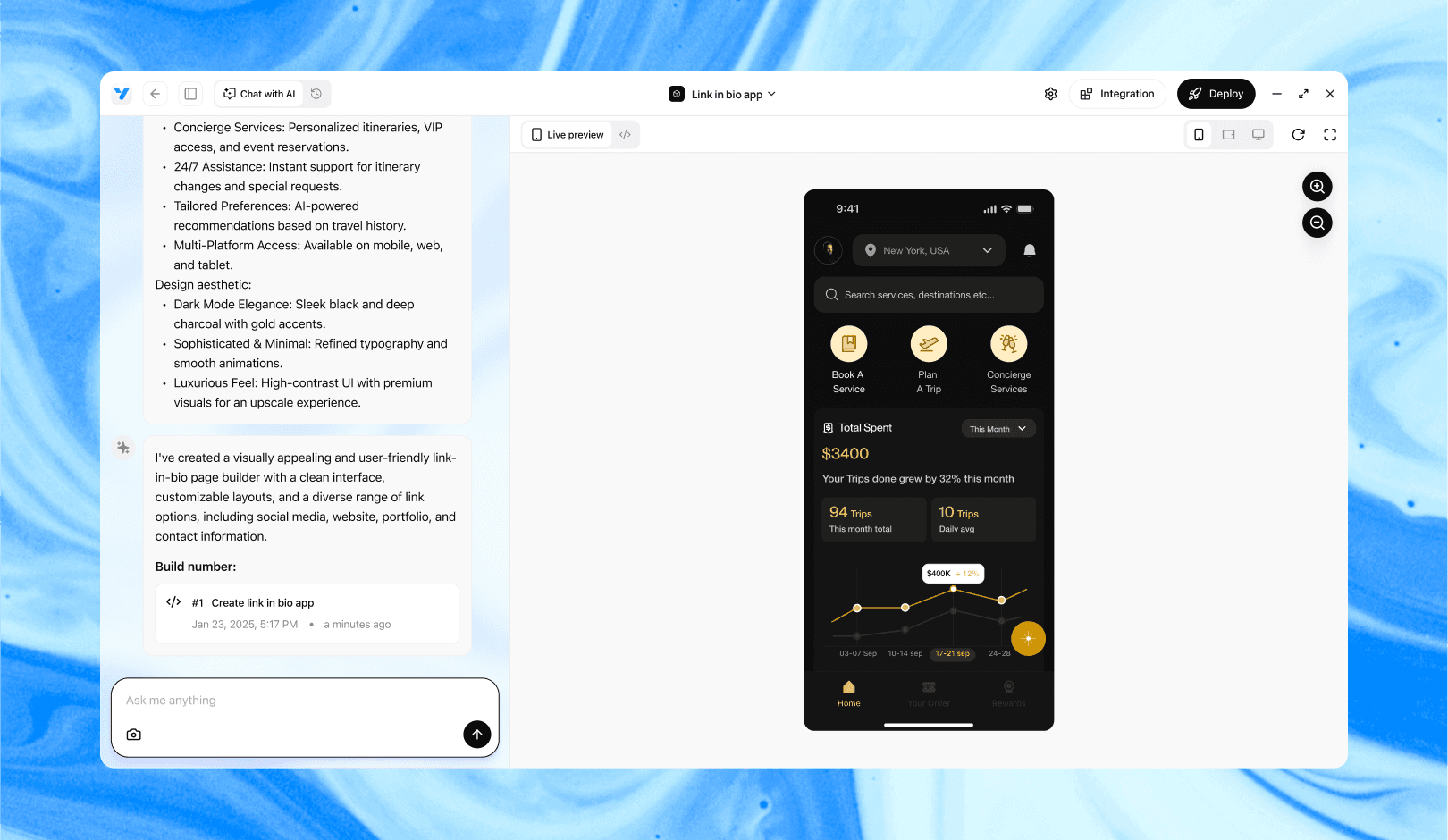
Vibe Studio, powered by Steve’s advanced AI agents, is a revolutionary no-code, conversational platform that empowers users to quickly and efficiently create full-stack Flutter applications integrated seamlessly with Firebase backend services. Ideal for solo founders, startups, and agile engineering teams, Vibe Studio allows users to visually manage and deploy Flutter apps, greatly accelerating the development process. The intuitive conversational interface simplifies complex development tasks, making app creation accessible even for non-coders.
Conclusion
Integrating biometric authentication in Flutter streamlines secure access while delegating sensitive matching to the OS. Use the local_auth package, follow platform setup, encapsulate logic in a service, and provide robust fallback and error handling. With careful token management and UX considerations, biometrics become a strong, user-friendly part of your mobile development security stack.

Introduction
Biometric authentication adds a secure, user-friendly layer to mobile apps. For Flutter developers building modern mobile development experiences, integrating fingerprint or face recognition increases conversion and reduces password-related friction. This tutorial shows a concise, practical approach to implement biometric authentication using the local_auth package, platform considerations, and robust error handling.
Why Use Biometrics
Biometrics provide fast, device-level authentication that leverages the platform's secure hardware (TEE/secure enclave). Compared to passwords or PINs, biometrics improve usability and reduce credential theft risk. In mobile development, using biometric APIs delegates sensitive credential checks to the OS, which handles template storage and matching. That reduces attack surface and simplifies compliance.
Use cases: authenticating payments, unlocking sensitive screens, securing tokens in local storage, or gating high-risk operations. Remember to offer a fallback (PIN or passcode) because not every device or user enrolls biometrics.
Setting Up The Package
Add the official local_auth package to pubspec.yaml. Configure Android and iOS following the package README: update AndroidManifest for USE_BIOMETRIC and add NSFaceIDUsageDescription for iOS. For apps targeting Android 11+ or using biometric prompt, ensure compileSdk is up to date.
Minimal dependency addition example (pubspec.yaml snippet shown in prose):
dependency: local_auth: ^2.1.0 (check latest on pub.dev)
Platform setup notes:
Android: Declare USE_BIOMETRIC and USE_FINGERPRINT if needed. Ensure AndroidX and appropriate compileSdk.
iOS: Add NSFaceIDUsageDescription to Info.plist describing why the app uses Face ID.
Implementing Authentication Logic
Keep UI and authentication logic separated. Use a service class to encapsulate local_auth interactions. Always check availability first, then query enrolled biometrics, and finally request authentication with meaningful messages.
Sample authentication helper (compact):
import 'package:local_auth/local_auth.dart';
final LocalAuthentication auth = LocalAuthentication();
Future<bool> authenticateWithBiometrics() async {
final bool canCheck = await auth.canCheckBiometrics;
if (!canCheck) return false;
return await auth.authenticate(
localizedReason: 'Authenticate to continue',
options: const AuthenticationOptions(biometricOnly: true),
);
}Call this helper from a button or state management action. If authenticate returns true, proceed to protected content. If false, fall back to a secure PIN/passcode flow.
Security tips:
Avoid storing secrets in plain text. Use flutter_secure_storage or platform keystore/Keychain to persist tokens. Only unlock them after successful biometric auth.
Use short-lived tokens and refresh mechanisms.
Log authentication events (success/failure) without leaking sensitive data.
Handling Errors And Edge Cases
Biometric APIs vary by device and OS version. Handle these scenarios:
Not Supported: Devices without biometric hardware should show a clear fallback path.
Not Enrolled: Prompt the user to enroll biometrics in system settings or use fallback auth.
Lockout: After repeated failures, biometrics may lock out; require fallback authentication.
Cancellations: Users can cancel the prompt; treat this as a non-auth attempt, not a failure.
Example of a robust flow:
Step 1: Check canCheckBiometrics and getAvailableBiometrics.
Step 2: If available and enrolled, call authenticate with localizedReason.
Step 3: On success, retrieve secrets from secure storage. On failure or cancel, prompt fallback.
UI/UX considerations:
Localize the reason string for the system prompt.
Use a progressive experience: try biometrics first, and if not available show a PIN option.
Inform users why biometric data is used and how it is protected.
Testing tips:
Use emulators/simulators with simulated biometrics for development.
Test across Android and iOS for behavior differences (e.g., Face ID vs. fingerprint prompts).
Vibe Studio

Vibe Studio, powered by Steve’s advanced AI agents, is a revolutionary no-code, conversational platform that empowers users to quickly and efficiently create full-stack Flutter applications integrated seamlessly with Firebase backend services. Ideal for solo founders, startups, and agile engineering teams, Vibe Studio allows users to visually manage and deploy Flutter apps, greatly accelerating the development process. The intuitive conversational interface simplifies complex development tasks, making app creation accessible even for non-coders.
Conclusion
Integrating biometric authentication in Flutter streamlines secure access while delegating sensitive matching to the OS. Use the local_auth package, follow platform setup, encapsulate logic in a service, and provide robust fallback and error handling. With careful token management and UX considerations, biometrics become a strong, user-friendly part of your mobile development security stack.
Build Flutter Apps Faster with Vibe Studio
Vibe Studio is your AI-powered Flutter development companion. Skip boilerplate, build in real-time, and deploy without hassle. Start creating apps at lightning speed with zero setup.