Implementing Authentication in Flutter With Firebase Auth

Summary
Summary
Summary
Summary

This tutorial shows how to implement authentication in Flutter using Firebase Auth: initialize Firebase, add email/password sign-up and sign-in, handle password reset, catch FirebaseAuthException for user-friendly errors, and use authStateChanges with StreamBuilder to manage session-driven UI in mobile development.

This tutorial shows how to implement authentication in Flutter using Firebase Auth: initialize Firebase, add email/password sign-up and sign-in, handle password reset, catch FirebaseAuthException for user-friendly errors, and use authStateChanges with StreamBuilder to manage session-driven UI in mobile development.

This tutorial shows how to implement authentication in Flutter using Firebase Auth: initialize Firebase, add email/password sign-up and sign-in, handle password reset, catch FirebaseAuthException for user-friendly errors, and use authStateChanges with StreamBuilder to manage session-driven UI in mobile development.

This tutorial shows how to implement authentication in Flutter using Firebase Auth: initialize Firebase, add email/password sign-up and sign-in, handle password reset, catch FirebaseAuthException for user-friendly errors, and use authStateChanges with StreamBuilder to manage session-driven UI in mobile development.

Key insights:
Key insights:
Key insights:
Key insights:
  • Setup Firebase And Flutter: Initialize Firebase in main and add firebase_core and firebase_auth to manage authentication across platforms.

  • Sign In Methods And UI: Start with email/password, validate inputs client-side, and design separate flows for sign-in, sign-up, and password reset.

  • Implement Email/Password Authentication: Use createUserWithEmailAndPassword and signInWithEmailAndPassword with proper FirebaseAuthException handling.

  • Handle Authentication State: Use FirebaseAuth.instance.authStateChanges() with StreamBuilder to route users reactively between screens.

  • Error Handling And Best Practices: Centralize auth logic, map Firebase error codes to clear messages, and rely on the SDK for secure token handling.

Introduction

Authentication is a foundational concern in mobile development. Flutter paired with Firebase Auth gives you a straightforward, cross-platform way to add secure sign-in, account creation, password reset, and session management to your apps. This tutorial focuses on practical implementation patterns: project setup, common sign-in methods, email/password flows, and maintaining authenticated state in the UI with minimal boilerplate.

Setup Firebase And Flutter

Start by adding firebase_core and firebase_auth to pubspec.yaml and run flutter pub get. Register your Android and iOS apps in the Firebase Console, download the configuration files (google-services.json for Android, GoogleService-Info.plist for iOS), and follow platform-specific integration steps. Initialize Firebase at app startup to ensure services are ready before widgets run.

Example initialization in main.dart:

import 'package:firebase_core/firebase_core.dart';
import 'package:flutter/material.dart';

void main() async {
  WidgetsFlutterBinding.ensureInitialized();
  await Firebase.initializeApp();
  runApp(MyApp());
}

Once initialized, import FirebaseAuth where needed: import 'package:firebase_auth/firebase_auth.dart';. Use the singleton FirebaseAuth.instance across your app for sign-in, sign-up, and sign-out operations.

Sign In Methods And UI

Firebase Auth supports multiple providers (email/password, Google, Apple, phone, etc.). For many apps, start with email/password and optionally add OAuth later. Design your UI to separate flows: Sign In, Sign Up, and Forgot Password. Keep validation and feedback immediate: show loading indicators while awaiting Firebase responses and display concise error messages from FirebaseAuthException.

UI recommendations:

  • Use TextFormField with validators for email and password.

  • Disable the submit button while awaiting network responses.

  • Map Firebase error codes (user-not-found, wrong-password, email-already-in-use) to user-friendly messages.

Implement Email/Password Authentication

Email/password is the simplest to implement and great for learning. Use FirebaseAuth.instance.createUserWithEmailAndPassword for registration and signInWithEmailAndPassword for login. Always catch FirebaseAuthException to handle common failure modes.

Example sign-in and sign-up helper functions:

Future<UserCredential?> signIn(String email, String password) async {
  try {
    return await FirebaseAuth.instance
        .signInWithEmailAndPassword(email: email, password: password);
  } on FirebaseAuthException catch (e) {
    // Translate or rethrow error for UI to show
    throw Exception(e.code);
  }
}

For account creation:

Future<UserCredential?> signUp(String email, String password) async {
  try {
    return await FirebaseAuth.instance
        .createUserWithEmailAndPassword(email: email, password: password);
  } on FirebaseAuthException catch (e) {
    throw Exception(e.code);
  }
}

Also implement password reset: sendPasswordResetEmail(email: email) triggers Firebase to send a reset link. For password strength and policies, validate on the client and, when needed, use Firebase's secure defaults.

Handle Authentication State

Rather than checking auth state imperatively throughout your app, use FirebaseAuth.instance.authStateChanges() or idTokenChanges() as a Stream to rebuild UI reactively. In Flutter this is commonly done with StreamBuilder at the top of your widget tree to route users to authenticated or unauthenticated flows.

Use this pattern in your root widget to show the correct landing screen:

StreamBuilder<User?>(
  stream: FirebaseAuth.instance.authStateChanges(),
  builder: (context, snapshot) {
    if (snapshot.connectionState == ConnectionState.waiting) return Splash();
    final user = snapshot.data;
    return user == null ? SignInScreen() : HomeScreen();
  },
)

Keep security and session handling in mind: tokens are refreshed automatically by the SDK. Use Firebase rules on backend services (Firestore, Storage) to protect data by uid. Avoid storing sensitive tokens manually; rely on the SDK's secure handling.

Error Handling And Best Practices

  • Map FirebaseAuthException codes to clear UI messages; don’t surface raw codes to end users.

  • Use a single authentication service class to encapsulate Firebase calls — this simplifies testing and mocking.

  • Handle network errors and timeouts gracefully; show retry affordances.

  • For social sign-ins (Google/Apple), use the platform-appropriate plugin flows and link provider credentials with existing Firebase users when needed.

Vibe Studio
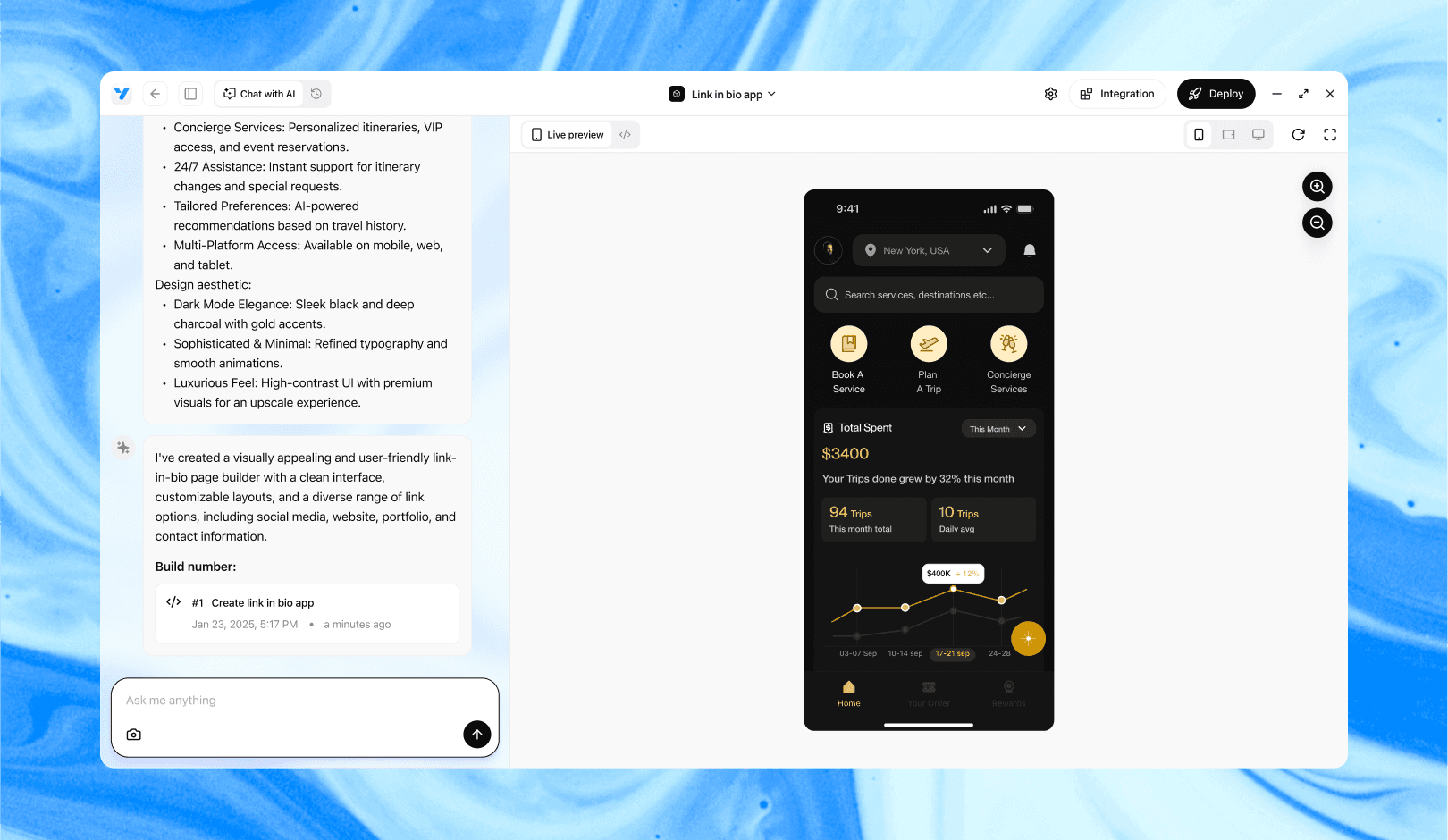
Vibe Studio, powered by Steve’s advanced AI agents, is a revolutionary no-code, conversational platform that empowers users to quickly and efficiently create full-stack Flutter applications integrated seamlessly with Firebase backend services. Ideal for solo founders, startups, and agile engineering teams, Vibe Studio allows users to visually manage and deploy Flutter apps, greatly accelerating the development process. The intuitive conversational interface simplifies complex development tasks, making app creation accessible even for non-coders.

Conclusion

Implementing authentication in Flutter with Firebase Auth is straightforward and scales from simple email/password flows to multi-provider systems. Initialize Firebase at startup, encapsulate auth logic in a service layer, use StreamBuilder to respond to authStateChanges, and always translate FirebaseAuthException into user-friendly messages. These patterns keep your Flutter codebase clean, testable, and ready for production mobile development.


Introduction

Authentication is a foundational concern in mobile development. Flutter paired with Firebase Auth gives you a straightforward, cross-platform way to add secure sign-in, account creation, password reset, and session management to your apps. This tutorial focuses on practical implementation patterns: project setup, common sign-in methods, email/password flows, and maintaining authenticated state in the UI with minimal boilerplate.

Setup Firebase And Flutter

Start by adding firebase_core and firebase_auth to pubspec.yaml and run flutter pub get. Register your Android and iOS apps in the Firebase Console, download the configuration files (google-services.json for Android, GoogleService-Info.plist for iOS), and follow platform-specific integration steps. Initialize Firebase at app startup to ensure services are ready before widgets run.

Example initialization in main.dart:

import 'package:firebase_core/firebase_core.dart';
import 'package:flutter/material.dart';

void main() async {
  WidgetsFlutterBinding.ensureInitialized();
  await Firebase.initializeApp();
  runApp(MyApp());
}

Once initialized, import FirebaseAuth where needed: import 'package:firebase_auth/firebase_auth.dart';. Use the singleton FirebaseAuth.instance across your app for sign-in, sign-up, and sign-out operations.

Sign In Methods And UI

Firebase Auth supports multiple providers (email/password, Google, Apple, phone, etc.). For many apps, start with email/password and optionally add OAuth later. Design your UI to separate flows: Sign In, Sign Up, and Forgot Password. Keep validation and feedback immediate: show loading indicators while awaiting Firebase responses and display concise error messages from FirebaseAuthException.

UI recommendations:

  • Use TextFormField with validators for email and password.

  • Disable the submit button while awaiting network responses.

  • Map Firebase error codes (user-not-found, wrong-password, email-already-in-use) to user-friendly messages.

Implement Email/Password Authentication

Email/password is the simplest to implement and great for learning. Use FirebaseAuth.instance.createUserWithEmailAndPassword for registration and signInWithEmailAndPassword for login. Always catch FirebaseAuthException to handle common failure modes.

Example sign-in and sign-up helper functions:

Future<UserCredential?> signIn(String email, String password) async {
  try {
    return await FirebaseAuth.instance
        .signInWithEmailAndPassword(email: email, password: password);
  } on FirebaseAuthException catch (e) {
    // Translate or rethrow error for UI to show
    throw Exception(e.code);
  }
}

For account creation:

Future<UserCredential?> signUp(String email, String password) async {
  try {
    return await FirebaseAuth.instance
        .createUserWithEmailAndPassword(email: email, password: password);
  } on FirebaseAuthException catch (e) {
    throw Exception(e.code);
  }
}

Also implement password reset: sendPasswordResetEmail(email: email) triggers Firebase to send a reset link. For password strength and policies, validate on the client and, when needed, use Firebase's secure defaults.

Handle Authentication State

Rather than checking auth state imperatively throughout your app, use FirebaseAuth.instance.authStateChanges() or idTokenChanges() as a Stream to rebuild UI reactively. In Flutter this is commonly done with StreamBuilder at the top of your widget tree to route users to authenticated or unauthenticated flows.

Use this pattern in your root widget to show the correct landing screen:

StreamBuilder<User?>(
  stream: FirebaseAuth.instance.authStateChanges(),
  builder: (context, snapshot) {
    if (snapshot.connectionState == ConnectionState.waiting) return Splash();
    final user = snapshot.data;
    return user == null ? SignInScreen() : HomeScreen();
  },
)

Keep security and session handling in mind: tokens are refreshed automatically by the SDK. Use Firebase rules on backend services (Firestore, Storage) to protect data by uid. Avoid storing sensitive tokens manually; rely on the SDK's secure handling.

Error Handling And Best Practices

  • Map FirebaseAuthException codes to clear UI messages; don’t surface raw codes to end users.

  • Use a single authentication service class to encapsulate Firebase calls — this simplifies testing and mocking.

  • Handle network errors and timeouts gracefully; show retry affordances.

  • For social sign-ins (Google/Apple), use the platform-appropriate plugin flows and link provider credentials with existing Firebase users when needed.

Vibe Studio

Vibe Studio, powered by Steve’s advanced AI agents, is a revolutionary no-code, conversational platform that empowers users to quickly and efficiently create full-stack Flutter applications integrated seamlessly with Firebase backend services. Ideal for solo founders, startups, and agile engineering teams, Vibe Studio allows users to visually manage and deploy Flutter apps, greatly accelerating the development process. The intuitive conversational interface simplifies complex development tasks, making app creation accessible even for non-coders.

Conclusion

Implementing authentication in Flutter with Firebase Auth is straightforward and scales from simple email/password flows to multi-provider systems. Initialize Firebase at startup, encapsulate auth logic in a service layer, use StreamBuilder to respond to authStateChanges, and always translate FirebaseAuthException into user-friendly messages. These patterns keep your Flutter codebase clean, testable, and ready for production mobile development.

Build Flutter Apps Faster with Vibe Studio

Build Flutter Apps Faster with Vibe Studio

Build Flutter Apps Faster with Vibe Studio

Build Flutter Apps Faster with Vibe Studio

Vibe Studio is your AI-powered Flutter development companion. Skip boilerplate, build in real-time, and deploy without hassle. Start creating apps at lightning speed with zero setup.

Vibe Studio is your AI-powered Flutter development companion. Skip boilerplate, build in real-time, and deploy without hassle. Start creating apps at lightning speed with zero setup.

Vibe Studio is your AI-powered Flutter development companion. Skip boilerplate, build in real-time, and deploy without hassle. Start creating apps at lightning speed with zero setup.

Vibe Studio is your AI-powered Flutter development companion. Skip boilerplate, build in real-time, and deploy without hassle. Start creating apps at lightning speed with zero setup.

Other Insights

Other Insights

Other Insights

Other Insights

Join a growing community of builders today

Join a growing community of builders today

Join a growing community of builders today

Join a growing community of builders today

Join a growing community of builders today

28-07 Jackson Ave

Walturn

New York NY 11101 United States

© Steve • All Rights Reserved 2025

28-07 Jackson Ave

Walturn

New York NY 11101 United States

© Steve • All Rights Reserved 2025

28-07 Jackson Ave

Walturn

New York NY 11101 United States

© Steve • All Rights Reserved 2025

28-07 Jackson Ave

Walturn

New York NY 11101 United States

© Steve • All Rights Reserved 2025

28-07 Jackson Ave

Walturn

New York NY 11101 United States

© Steve • All Rights Reserved 2025

28-07 Jackson Ave

Walturn

New York NY 11101 United States

© Steve • All Rights Reserved 2025