How To Use Riverpod for Predictable and Testable State Management

Summary
Summary
Summary
Summary

Riverpod decouples state from widgets, encouraging immutable state and StateNotifier-based logic. Read providers with ref.watch, invoke actions via notifier, and use ProviderContainer for unit tests and overrides. This leads to deterministic state transitions and easier testing in Flutter mobile development.

Riverpod decouples state from widgets, encouraging immutable state and StateNotifier-based logic. Read providers with ref.watch, invoke actions via notifier, and use ProviderContainer for unit tests and overrides. This leads to deterministic state transitions and easier testing in Flutter mobile development.

Riverpod decouples state from widgets, encouraging immutable state and StateNotifier-based logic. Read providers with ref.watch, invoke actions via notifier, and use ProviderContainer for unit tests and overrides. This leads to deterministic state transitions and easier testing in Flutter mobile development.

Riverpod decouples state from widgets, encouraging immutable state and StateNotifier-based logic. Read providers with ref.watch, invoke actions via notifier, and use ProviderContainer for unit tests and overrides. This leads to deterministic state transitions and easier testing in Flutter mobile development.

Key insights:
Key insights:
Key insights:
Key insights:
  • Why Riverpod: Decouples state from widgets so logic becomes deterministic and easier to test.

  • Core Concepts And Patterns: Use StateNotifier for business logic and immutable state objects for clarity.

  • Testing Riverpod Providers: ProviderContainer lets you instantiate and override providers without widgets.

  • Practical Example: Todo App: Encapsulate actions in notifiers; UI only subscribes and renders.

  • Best Practices: Keep providers top-level, small, and single-responsibility to simplify mocking and tests.

Introduction

Riverpod is a modern, composable state-management library for Flutter that emphasizes predictability and testability. Unlike inherited widgets or Provider with BuildContext coupling, Riverpod uses a simple dependency graph and explicit reading/watching of providers. This tutorial explains core patterns, how to design testable logic, and a small practical example to get you started in mobile development with Flutter.

Why Riverpod

Predictable state management means deterministic state transitions and clear dependency relationships. Riverpod achieves this by:

  • Decoupling state from the widget tree: providers are top-level objects that can be read from anywhere with a ProviderReference (ref).

  • Encouraging immutable state or single-source of truth state managers like StateNotifier.

  • Allowing easy overrides for testing through ProviderContainer or scope-based overrides in widgets.

These properties make logic easier to unit test and reason about: you can instantiate providers in isolation and assert outcomes without rendering widgets.

Core Concepts And Patterns

Key Riverpod types to know:

  • Provider: simple read-only value.

  • StateProvider: exposes mutable state (for simple primitives).

  • StateNotifierProvider: exposes StateNotifier, ideal for complex state and actions.

  • FutureProvider / StreamProvider: asynchronous sources of data.

Best practices:

  • Keep business logic in Notifiers (StateNotifier) or plain classes, not inside widgets. Widgets should only subscribe and render.

  • Use immutable state objects (copyWith pattern) for StateNotifier state. This makes state transitions explicit and easy to test.

  • Prefer final providers declared at top-level so they can be overridden in tests.

Example: a concise StateNotifier-based counter provider.

class Counter extends StateNotifier<int> {
  Counter(): super(0);
  void increment() => state = state + 1;
}
final counterProvider = StateNotifierProvider<Counter, int>((ref) => Counter());

Read in a widget with ref.watch(counterProvider) to rebuild on changes, or use ref.read(counterProvider.notifier) to call methods.

Testing Riverpod Providers

Riverpod makes testing straightforward because you can create a ProviderContainer that hosts providers outside the widget tree. Tests can override providers and call methods on notifiers directly.

Basic test pattern:

  • Create a ProviderContainer with any required overrides.

  • Read providers or notifiers via container.read or container.read(provider.notifier).

  • Assert state changes or outputs.

Small test example (conceptual):

final container = ProviderContainer();
final counter = container.read(counterProvider.notifier);
counter.increment();
expect(container.read(counterProvider), 1);

For async providers use container.read and container.listen or container.read(provider.future). To mock dependencies, override a provider via ProviderContainer(overrides: [someProvider.overrideWithValue(mock)]).

Testing tips:

  • Keep providers small and single-responsibility to make mocking and assertions easier.

  • Avoid direct global state mutation; encapsulate mutation in notifiers.

  • For widget tests, wrap the app with ProviderScope(overrides: [...]) to inject test doubles.

Practical Example: Todo App

Design a TodoListNotifier that holds a list of Todo objects. Use StateNotifier to implement actions like add, toggleComplete, and remove. This keeps UI trivial and test logic concentrated in the notifier.

Example notifier skeleton:

class Todo { final String id; final String text; final bool done; Todo({required this.id, required this.text, this.done = false}); }
class TodoList extends StateNotifier<List<Todo>> { TodoList(): super([]); void add(Todo t) => state = [...state, t]; void toggle(String id) => state = state.map((t)=> t.id==id ? Todo(id: t.id, text: t.text, done: !t.done) : t).toList(); }
final todosProvider = StateNotifierProvider<TodoList, List<Todo>>((ref)=> TodoList());

In a widget, watch todosProvider to rebuild when the list changes. For tests, instantiate ProviderContainer and verify add and toggle change the state as expected. This pattern yields a predictable flow: UI dispatches actions -> Notifier updates immutable state -> UI reacts to new state.

Vibe Studio
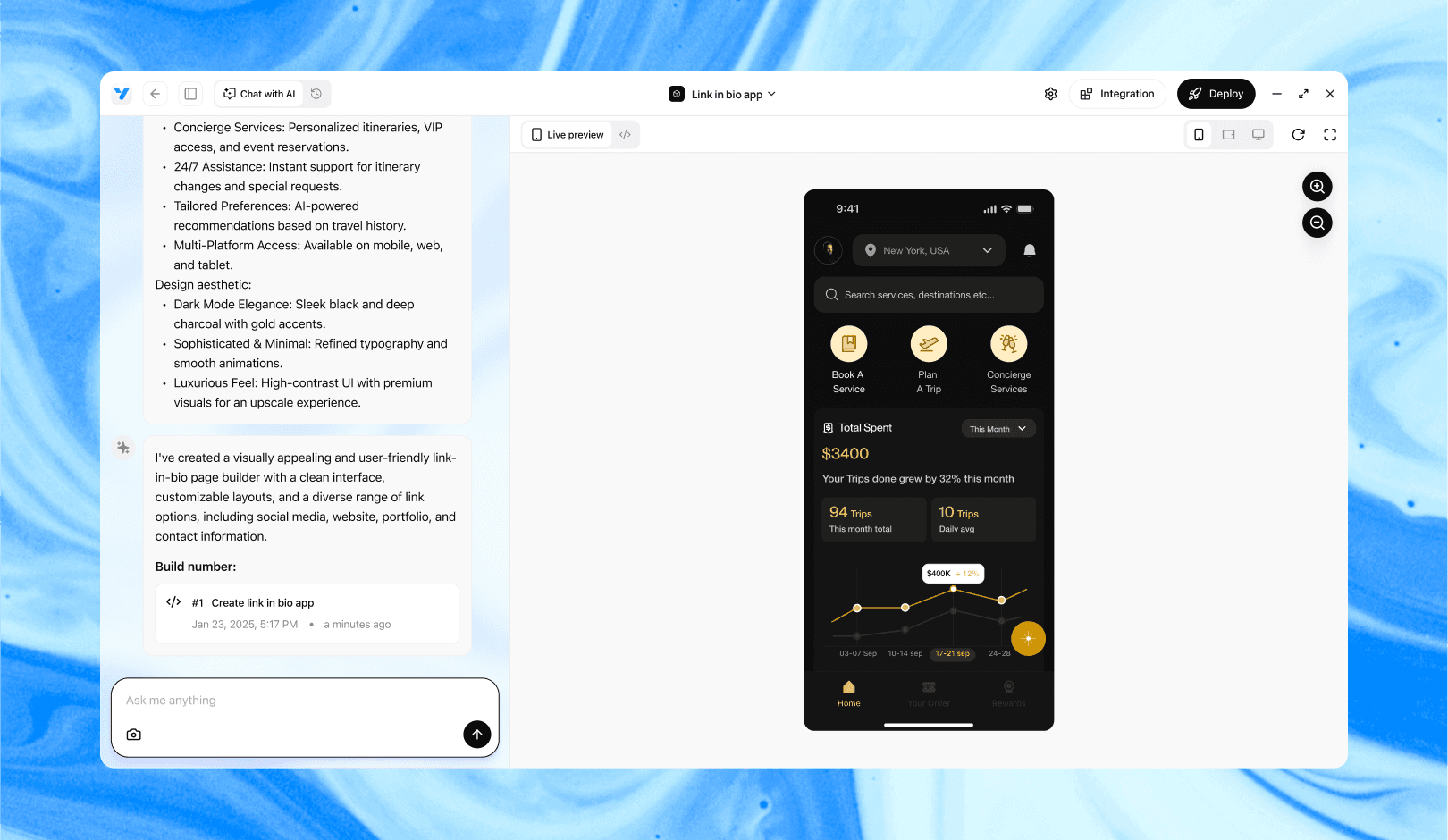
Vibe Studio, powered by Steve’s advanced AI agents, is a revolutionary no-code, conversational platform that empowers users to quickly and efficiently create full-stack Flutter applications integrated seamlessly with Firebase backend services. Ideal for solo founders, startups, and agile engineering teams, Vibe Studio allows users to visually manage and deploy Flutter apps, greatly accelerating the development process. The intuitive conversational interface simplifies complex development tasks, making app creation accessible even for non-coders.

Conclusion

Riverpod offers a clear, test-friendly model for Flutter mobile development. By separating concerns into providers and notifiers, using immutable state, and leveraging ProviderContainer for tests, you gain deterministic state transitions and much easier unit testing. Start small: convert one feature to StateNotifier-based providers, write a few unit tests with ProviderContainer, and iterate. This yields more maintainable, predictable Flutter apps.

Introduction

Riverpod is a modern, composable state-management library for Flutter that emphasizes predictability and testability. Unlike inherited widgets or Provider with BuildContext coupling, Riverpod uses a simple dependency graph and explicit reading/watching of providers. This tutorial explains core patterns, how to design testable logic, and a small practical example to get you started in mobile development with Flutter.

Why Riverpod

Predictable state management means deterministic state transitions and clear dependency relationships. Riverpod achieves this by:

  • Decoupling state from the widget tree: providers are top-level objects that can be read from anywhere with a ProviderReference (ref).

  • Encouraging immutable state or single-source of truth state managers like StateNotifier.

  • Allowing easy overrides for testing through ProviderContainer or scope-based overrides in widgets.

These properties make logic easier to unit test and reason about: you can instantiate providers in isolation and assert outcomes without rendering widgets.

Core Concepts And Patterns

Key Riverpod types to know:

  • Provider: simple read-only value.

  • StateProvider: exposes mutable state (for simple primitives).

  • StateNotifierProvider: exposes StateNotifier, ideal for complex state and actions.

  • FutureProvider / StreamProvider: asynchronous sources of data.

Best practices:

  • Keep business logic in Notifiers (StateNotifier) or plain classes, not inside widgets. Widgets should only subscribe and render.

  • Use immutable state objects (copyWith pattern) for StateNotifier state. This makes state transitions explicit and easy to test.

  • Prefer final providers declared at top-level so they can be overridden in tests.

Example: a concise StateNotifier-based counter provider.

class Counter extends StateNotifier<int> {
  Counter(): super(0);
  void increment() => state = state + 1;
}
final counterProvider = StateNotifierProvider<Counter, int>((ref) => Counter());

Read in a widget with ref.watch(counterProvider) to rebuild on changes, or use ref.read(counterProvider.notifier) to call methods.

Testing Riverpod Providers

Riverpod makes testing straightforward because you can create a ProviderContainer that hosts providers outside the widget tree. Tests can override providers and call methods on notifiers directly.

Basic test pattern:

  • Create a ProviderContainer with any required overrides.

  • Read providers or notifiers via container.read or container.read(provider.notifier).

  • Assert state changes or outputs.

Small test example (conceptual):

final container = ProviderContainer();
final counter = container.read(counterProvider.notifier);
counter.increment();
expect(container.read(counterProvider), 1);

For async providers use container.read and container.listen or container.read(provider.future). To mock dependencies, override a provider via ProviderContainer(overrides: [someProvider.overrideWithValue(mock)]).

Testing tips:

  • Keep providers small and single-responsibility to make mocking and assertions easier.

  • Avoid direct global state mutation; encapsulate mutation in notifiers.

  • For widget tests, wrap the app with ProviderScope(overrides: [...]) to inject test doubles.

Practical Example: Todo App

Design a TodoListNotifier that holds a list of Todo objects. Use StateNotifier to implement actions like add, toggleComplete, and remove. This keeps UI trivial and test logic concentrated in the notifier.

Example notifier skeleton:

class Todo { final String id; final String text; final bool done; Todo({required this.id, required this.text, this.done = false}); }
class TodoList extends StateNotifier<List<Todo>> { TodoList(): super([]); void add(Todo t) => state = [...state, t]; void toggle(String id) => state = state.map((t)=> t.id==id ? Todo(id: t.id, text: t.text, done: !t.done) : t).toList(); }
final todosProvider = StateNotifierProvider<TodoList, List<Todo>>((ref)=> TodoList());

In a widget, watch todosProvider to rebuild when the list changes. For tests, instantiate ProviderContainer and verify add and toggle change the state as expected. This pattern yields a predictable flow: UI dispatches actions -> Notifier updates immutable state -> UI reacts to new state.

Vibe Studio

Vibe Studio, powered by Steve’s advanced AI agents, is a revolutionary no-code, conversational platform that empowers users to quickly and efficiently create full-stack Flutter applications integrated seamlessly with Firebase backend services. Ideal for solo founders, startups, and agile engineering teams, Vibe Studio allows users to visually manage and deploy Flutter apps, greatly accelerating the development process. The intuitive conversational interface simplifies complex development tasks, making app creation accessible even for non-coders.

Conclusion

Riverpod offers a clear, test-friendly model for Flutter mobile development. By separating concerns into providers and notifiers, using immutable state, and leveraging ProviderContainer for tests, you gain deterministic state transitions and much easier unit testing. Start small: convert one feature to StateNotifier-based providers, write a few unit tests with ProviderContainer, and iterate. This yields more maintainable, predictable Flutter apps.

Build Flutter Apps Faster with Vibe Studio

Build Flutter Apps Faster with Vibe Studio

Build Flutter Apps Faster with Vibe Studio

Build Flutter Apps Faster with Vibe Studio

Vibe Studio is your AI-powered Flutter development companion. Skip boilerplate, build in real-time, and deploy without hassle. Start creating apps at lightning speed with zero setup.

Vibe Studio is your AI-powered Flutter development companion. Skip boilerplate, build in real-time, and deploy without hassle. Start creating apps at lightning speed with zero setup.

Vibe Studio is your AI-powered Flutter development companion. Skip boilerplate, build in real-time, and deploy without hassle. Start creating apps at lightning speed with zero setup.

Vibe Studio is your AI-powered Flutter development companion. Skip boilerplate, build in real-time, and deploy without hassle. Start creating apps at lightning speed with zero setup.

Other Insights

Other Insights

Other Insights

Other Insights

Join a growing community of builders today

Join a growing community of builders today

Join a growing community of builders today

Join a growing community of builders today

Join a growing community of builders today

28-07 Jackson Ave

Walturn

New York NY 11101 United States

© Steve • All Rights Reserved 2025

28-07 Jackson Ave

Walturn

New York NY 11101 United States

© Steve • All Rights Reserved 2025

28-07 Jackson Ave

Walturn

New York NY 11101 United States

© Steve • All Rights Reserved 2025

28-07 Jackson Ave

Walturn

New York NY 11101 United States

© Steve • All Rights Reserved 2025

28-07 Jackson Ave

Walturn

New York NY 11101 United States

© Steve • All Rights Reserved 2025

28-07 Jackson Ave

Walturn

New York NY 11101 United States

© Steve • All Rights Reserved 2025