How To Use Dart FFI For High-Performance Flutter Integrations

Summary
Summary
Summary
Summary

This tutorial explains how to use Dart FFI in Flutter: loading libraries, declaring matching signatures, managing memory safely with calloc and buffers, building and linking native binaries per platform, and performance best practices such as minimizing FFI crossings and batching work. It covers safety, error handling, and when to move computation into native code for mobile development.

This tutorial explains how to use Dart FFI in Flutter: loading libraries, declaring matching signatures, managing memory safely with calloc and buffers, building and linking native binaries per platform, and performance best practices such as minimizing FFI crossings and batching work. It covers safety, error handling, and when to move computation into native code for mobile development.

This tutorial explains how to use Dart FFI in Flutter: loading libraries, declaring matching signatures, managing memory safely with calloc and buffers, building and linking native binaries per platform, and performance best practices such as minimizing FFI crossings and batching work. It covers safety, error handling, and when to move computation into native code for mobile development.

This tutorial explains how to use Dart FFI in Flutter: loading libraries, declaring matching signatures, managing memory safely with calloc and buffers, building and linking native binaries per platform, and performance best practices such as minimizing FFI crossings and batching work. It covers safety, error handling, and when to move computation into native code for mobile development.

Key insights:
Key insights:
Key insights:
Key insights:
  • Match Dart and native signatures exactly: Match Dart and native signatures exactly and use DynamicLibrary.open or .process appropriately.

  • Manage Memory Explicitly: Manage memory explicitly—use calloc, reuse buffers, and avoid per-call malloc/free to reduce overhead.

  • Batch Operations: Batch operations and keep tight numeric loops in native code to minimize crossing costs.

  • Package & Link Platform-Specific Binaries: Package and link platform-specific native binaries correctly for Android, iOS, macOS, and Windows.

  • Safety & Error Handling: Use defensive error handling and execute long native tasks off the UI thread (isolates or async patterns).

Introduction

Dart FFI (Foreign Function Interface) lets Flutter apps call native C APIs with near-native performance. Use cases include heavy numeric kernels, audio processing, image codecs, and reusing legacy native libraries. This tutorial focuses on practical patterns: loading libraries, mapping signatures, managing memory safely, and extracting peak performance while avoiding common pitfalls.

Understanding Dart FFI

Dart exposes native functions through dart:ffi. The basic flow is: compile or ship a native shared library (.so, .dylib, .dll), open it with DynamicLibrary.open, declare Dart-side typedefs matching the native signatures, and convert them to callable Dart functions with .asFunction(). Keep signatures exact: calling convention and types must align.

Example: binding a simple add function from C into Dart.

import 'dart:ffi';
final dylib = DynamicLibrary.open('libmath.so');
typedef c_add = Int32 Function(Int32 a, Int32 b);
typedef dart_add = int Function(int a, int b);
final dart_add add = dylib
  .lookup<NativeFunction<c_add>>('add')
  .asFunction<dart_add>();

int result = add(2, 3);

Keep in mind: Pointer types in Dart mirror native pointers. Use Utf8 conversion helpers from package:ffi for string interop, and avoid implicit copies by designing APIs that operate on buffers or return simple scalars.

Managing Memory And Conversions

Memory management is the most error-prone part. Never call malloc from C and free from Dart; pick an owner. Prefer one of these patterns:

  • Dart allocates and passes pointers (using calloc from package:ffi), native writes into the buffer, and Dart reads results and frees.

  • Native allocates and returns pointers with a companion free function exported for Dart to call.

Avoid allocating per element in tight loops. Instead, allocate a contiguous buffer once and reuse it. For strings, prefer functions that write into caller-provided buffers to avoid multiple allocations and copies.

Example: allocate a buffer and pass it to native code.

import 'package:ffi/ffi.dart';
final ptr = calloc<Uint8>(1024); // reusable buffer
// call native writer(ptr, 1024)
// read bytes from ptr
calloc.free(ptr);

When converting strings, use Utf8.toUtf8/fromUtf8 helpers or package:ffi helpers. Be mindful of encoding and null termination.

Building And Linking Native Libraries

On mobile, embed the correct native binary per platform: Android (.so) goes into android/src/main/jniLibs//, iOS uses static/dynamic frameworks compiled into the Runner project, and Windows/macOS require platform-specific bundling. Use conditional loading:

  • DynamicLibrary.process() for functions linked into the process (iOS when using static linking).

  • DynamicLibrary.open('libraryName') for platform-specific dynamic libraries.

When developing, build native code with optimization flags (-O3) and ensure position-independent code where required. Test ABI compatibility (32-bit vs 64-bit) and use consistent compilers and calling conventions.

Performance Best Practices

  • Minimize FFI crossings: batch work in native code. Each call has overhead; consolidating operations drastically improves throughput.

  • Use Plain Old Data (POD) structs and map them with Struct subclasses. Reading a Struct is cheaper than many separate native calls.

  • Avoid callback hell: NativeCallback has a registration cost and can be slow if created frequently. Register once and reuse.

  • Reuse buffers and avoid per-call malloc/free. Use pooled arenas if your workload demands many transient buffers.

  • Keep critical loops in native code (e.g., SIMD, DSP). Dart is great for orchestrating but native C/C++ will be faster for tight numeric kernels.

Measure: use microbenchmarks with and without batching to quantify FFI overhead for your specific workload.

Safety And Error Handling

FFI skips Dart's safety checks. Validate inputs in both boundaries. Use defensive APIs: return error codes or structured status objects rather than relying on exceptions across the FFI boundary. When exposing functions that may throw, catch in native wrappers and propagate error codes or strings that Dart can map back into exceptions.

Also consider isolates: FFI calls are synchronous and will block the calling thread. For long-running native operations, spawn a Dart isolate to keep the UI thread responsive, or provide asynchronous native APIs that use callbacks to signal completion.

Vibe Studio
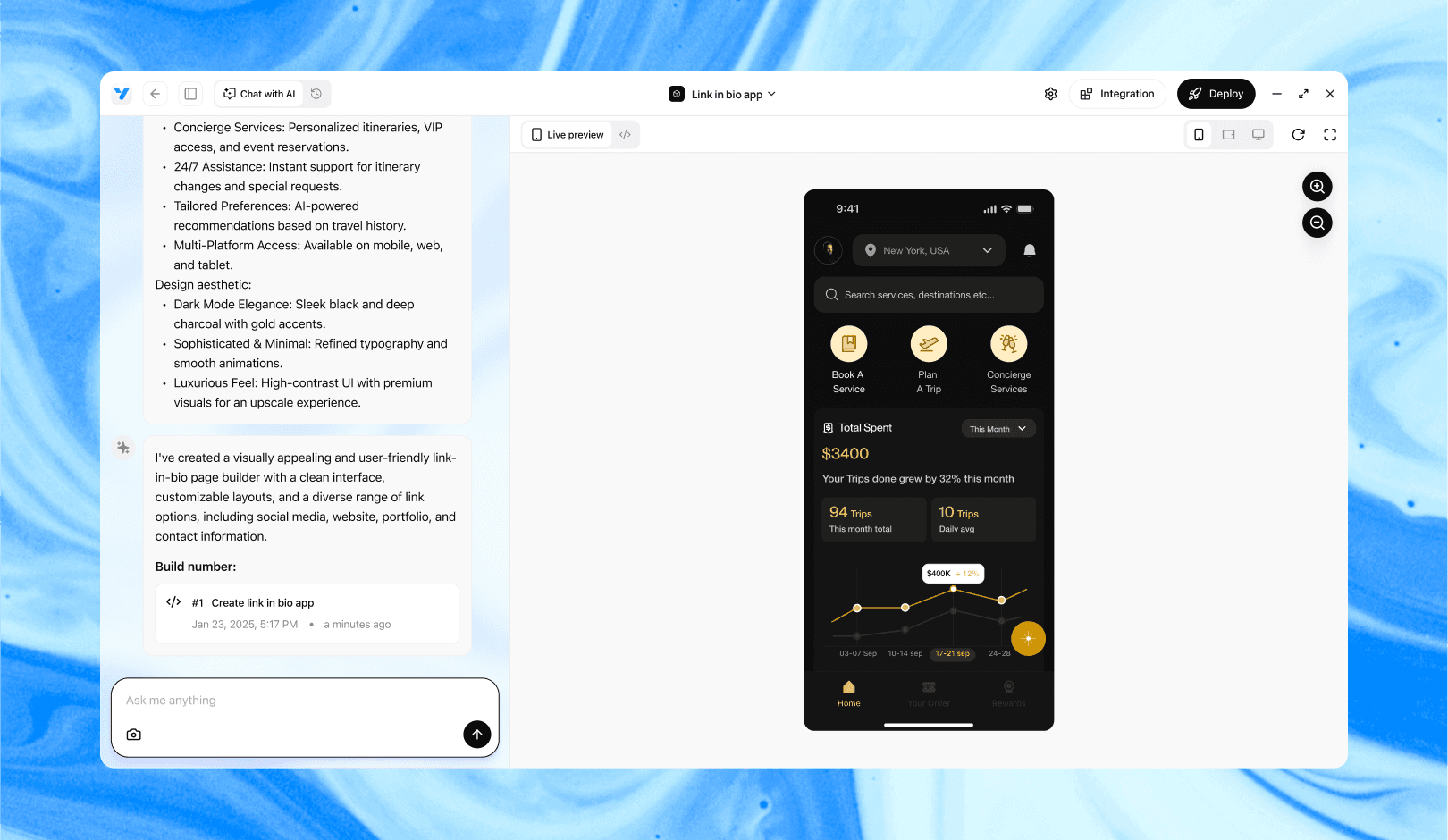
Vibe Studio, powered by Steve’s advanced AI agents, is a revolutionary no-code, conversational platform that empowers users to quickly and efficiently create full-stack Flutter applications integrated seamlessly with Firebase backend services. Ideal for solo founders, startups, and agile engineering teams, Vibe Studio allows users to visually manage and deploy Flutter apps, greatly accelerating the development process. The intuitive conversational interface simplifies complex development tasks, making app creation accessible even for non-coders.

Conclusion

Dart FFI unlocks high-performance capabilities for Flutter by letting you reuse optimized native code or implement critical kernels in C/C++. Align signatures precisely, manage memory deliberately, minimize crossings, and batch work into native routines. With careful library packaging and a focus on safety, FFI can provide orders-of-magnitude improvements for compute-heavy mobile development tasks while integrating cleanly into Flutter's architecture.


Introduction

Dart FFI (Foreign Function Interface) lets Flutter apps call native C APIs with near-native performance. Use cases include heavy numeric kernels, audio processing, image codecs, and reusing legacy native libraries. This tutorial focuses on practical patterns: loading libraries, mapping signatures, managing memory safely, and extracting peak performance while avoiding common pitfalls.

Understanding Dart FFI

Dart exposes native functions through dart:ffi. The basic flow is: compile or ship a native shared library (.so, .dylib, .dll), open it with DynamicLibrary.open, declare Dart-side typedefs matching the native signatures, and convert them to callable Dart functions with .asFunction(). Keep signatures exact: calling convention and types must align.

Example: binding a simple add function from C into Dart.

import 'dart:ffi';
final dylib = DynamicLibrary.open('libmath.so');
typedef c_add = Int32 Function(Int32 a, Int32 b);
typedef dart_add = int Function(int a, int b);
final dart_add add = dylib
  .lookup<NativeFunction<c_add>>('add')
  .asFunction<dart_add>();

int result = add(2, 3);

Keep in mind: Pointer types in Dart mirror native pointers. Use Utf8 conversion helpers from package:ffi for string interop, and avoid implicit copies by designing APIs that operate on buffers or return simple scalars.

Managing Memory And Conversions

Memory management is the most error-prone part. Never call malloc from C and free from Dart; pick an owner. Prefer one of these patterns:

  • Dart allocates and passes pointers (using calloc from package:ffi), native writes into the buffer, and Dart reads results and frees.

  • Native allocates and returns pointers with a companion free function exported for Dart to call.

Avoid allocating per element in tight loops. Instead, allocate a contiguous buffer once and reuse it. For strings, prefer functions that write into caller-provided buffers to avoid multiple allocations and copies.

Example: allocate a buffer and pass it to native code.

import 'package:ffi/ffi.dart';
final ptr = calloc<Uint8>(1024); // reusable buffer
// call native writer(ptr, 1024)
// read bytes from ptr
calloc.free(ptr);

When converting strings, use Utf8.toUtf8/fromUtf8 helpers or package:ffi helpers. Be mindful of encoding and null termination.

Building And Linking Native Libraries

On mobile, embed the correct native binary per platform: Android (.so) goes into android/src/main/jniLibs//, iOS uses static/dynamic frameworks compiled into the Runner project, and Windows/macOS require platform-specific bundling. Use conditional loading:

  • DynamicLibrary.process() for functions linked into the process (iOS when using static linking).

  • DynamicLibrary.open('libraryName') for platform-specific dynamic libraries.

When developing, build native code with optimization flags (-O3) and ensure position-independent code where required. Test ABI compatibility (32-bit vs 64-bit) and use consistent compilers and calling conventions.

Performance Best Practices

  • Minimize FFI crossings: batch work in native code. Each call has overhead; consolidating operations drastically improves throughput.

  • Use Plain Old Data (POD) structs and map them with Struct subclasses. Reading a Struct is cheaper than many separate native calls.

  • Avoid callback hell: NativeCallback has a registration cost and can be slow if created frequently. Register once and reuse.

  • Reuse buffers and avoid per-call malloc/free. Use pooled arenas if your workload demands many transient buffers.

  • Keep critical loops in native code (e.g., SIMD, DSP). Dart is great for orchestrating but native C/C++ will be faster for tight numeric kernels.

Measure: use microbenchmarks with and without batching to quantify FFI overhead for your specific workload.

Safety And Error Handling

FFI skips Dart's safety checks. Validate inputs in both boundaries. Use defensive APIs: return error codes or structured status objects rather than relying on exceptions across the FFI boundary. When exposing functions that may throw, catch in native wrappers and propagate error codes or strings that Dart can map back into exceptions.

Also consider isolates: FFI calls are synchronous and will block the calling thread. For long-running native operations, spawn a Dart isolate to keep the UI thread responsive, or provide asynchronous native APIs that use callbacks to signal completion.

Vibe Studio

Vibe Studio, powered by Steve’s advanced AI agents, is a revolutionary no-code, conversational platform that empowers users to quickly and efficiently create full-stack Flutter applications integrated seamlessly with Firebase backend services. Ideal for solo founders, startups, and agile engineering teams, Vibe Studio allows users to visually manage and deploy Flutter apps, greatly accelerating the development process. The intuitive conversational interface simplifies complex development tasks, making app creation accessible even for non-coders.

Conclusion

Dart FFI unlocks high-performance capabilities for Flutter by letting you reuse optimized native code or implement critical kernels in C/C++. Align signatures precisely, manage memory deliberately, minimize crossings, and batch work into native routines. With careful library packaging and a focus on safety, FFI can provide orders-of-magnitude improvements for compute-heavy mobile development tasks while integrating cleanly into Flutter's architecture.

Build Flutter Apps Faster with Vibe Studio

Build Flutter Apps Faster with Vibe Studio

Build Flutter Apps Faster with Vibe Studio

Build Flutter Apps Faster with Vibe Studio

Vibe Studio is your AI-powered Flutter development companion. Skip boilerplate, build in real-time, and deploy without hassle. Start creating apps at lightning speed with zero setup.

Vibe Studio is your AI-powered Flutter development companion. Skip boilerplate, build in real-time, and deploy without hassle. Start creating apps at lightning speed with zero setup.

Vibe Studio is your AI-powered Flutter development companion. Skip boilerplate, build in real-time, and deploy without hassle. Start creating apps at lightning speed with zero setup.

Vibe Studio is your AI-powered Flutter development companion. Skip boilerplate, build in real-time, and deploy without hassle. Start creating apps at lightning speed with zero setup.

Other Insights

Other Insights

Other Insights

Other Insights

Join a growing community of builders today

Join a growing community of builders today

Join a growing community of builders today

Join a growing community of builders today

Join a growing community of builders today

28-07 Jackson Ave

Walturn

New York NY 11101 United States

© Steve • All Rights Reserved 2025

28-07 Jackson Ave

Walturn

New York NY 11101 United States

© Steve • All Rights Reserved 2025

28-07 Jackson Ave

Walturn

New York NY 11101 United States

© Steve • All Rights Reserved 2025

28-07 Jackson Ave

Walturn

New York NY 11101 United States

© Steve • All Rights Reserved 2025

28-07 Jackson Ave

Walturn

New York NY 11101 United States

© Steve • All Rights Reserved 2025

28-07 Jackson Ave

Walturn

New York NY 11101 United States

© Steve • All Rights Reserved 2025