How To Structure Large Flutter Projects for Scale

Summary
Summary
Summary
Summary

Structure large Flutter projects with a feature-first, layered layout; use DI and a testable state-management solution; modularize routing; and enforce tests and CI. Keep business logic in plain Dart classes and expose minimal APIs per feature to enable parallel development and scalable maintenance.

Structure large Flutter projects with a feature-first, layered layout; use DI and a testable state-management solution; modularize routing; and enforce tests and CI. Keep business logic in plain Dart classes and expose minimal APIs per feature to enable parallel development and scalable maintenance.

Structure large Flutter projects with a feature-first, layered layout; use DI and a testable state-management solution; modularize routing; and enforce tests and CI. Keep business logic in plain Dart classes and expose minimal APIs per feature to enable parallel development and scalable maintenance.

Structure large Flutter projects with a feature-first, layered layout; use DI and a testable state-management solution; modularize routing; and enforce tests and CI. Keep business logic in plain Dart classes and expose minimal APIs per feature to enable parallel development and scalable maintenance.

Key insights:
Key insights:
Key insights:
Key insights:
  • Project Organization And Layering: Use a feature-first layout with clear layers (core, features, shared, infra) to isolate concerns and make refactoring safe.

  • State Management And Dependency Injection: Prefer Riverpod or Provider with a composition root; register dependencies centrally (get_it) and inject into providers to keep widgets testable.

  • Routing And Feature Modularization: Centralize app routing while delegating routes to feature modules; expose minimal feature APIs so teams can work in parallel.

  • Testing And CI: Separate logic from UI for easy unit testing; run linting, unit tests, and selective integration tests in CI with caching and sharding to keep pipelines fast.

  • Operational Practices: Keep small barrel files, avoid global singletons, and enforce architecture via code review and CI to maintain long-term scalability.

Introduction

Scaling a Flutter app requires deliberate structure. As projects grow, coupling, unclear boundaries, and ad-hoc patterns lead to fragile code, slow builds, and painful releases. This guide shows pragmatic patterns for organizing large Flutter projects: layering, feature modules, state management, dependency injection, routing, testing, and CI strategies. Examples are code-forward and focused on maintainability and team collaboration.

Project Organization And Layering

Adopt a layered architecture to separate concerns. Typical layers:

  • core: app-wide utilities (logging, theme, constants).

  • features: each user-facing area (auth, profile, feed) contains its own domain, data, and presentation folders.

  • shared: reusable widgets and platform-agnostic helpers.

  • infra: platform and third-party integrations (api clients, storage).

Use a feature-first directory layout rather than widget-first. A feature encapsulates everything it needs and exposes a minimal API to other features.

Example structure:


Keep small barrel files (module entry points) that export public pieces. That makes imports explicit and easier to refactor.

State Management And Dependency Injection

Choose a state management approach that aligns with scale. Provider and Riverpod are both solid; Riverpod's compile-time safety and testability scale well. Keep state close to the feature and avoid global singletons unless intentionally shared.

Dependency injection decouples construction from usage. get_it is lightweight and pairs well with Riverpod. Register dependencies at app bootstrap and keep registration code in core/bootstrap.

Small get_it example:

import 'package:get_it/get_it.dart';
final di = GetIt.instance;

void setup() {
  di.registerLazySingleton(() => ApiClient());
  di.registerFactory(() => AuthRepository(di()));
}

Inject repositories into providers or Riverpod notifiers. Avoid accessing DI directly inside widgets—use providers as the composition root.

Routing And Feature Modularization

Routing should be centralized but modular. Use an AppRouter that delegates to feature routers. For large apps, code-generation tools like go_router or auto_route simplify nested routes and deep-linking.

Encapsulate feature routes in modules with a single entry point exposing Route/RouteFactory. This keeps the app router thin and makes features pluggable for team parallelization.

Expose UI via widgets or factories to prevent tightly coupling features. Example: each feature exposes a Widget buildFeature() or RouteFactory instead of importing internal files.

Testing And CI

Design for testability from day one. Keep logic out of widgets: use plain Dart classes for business rules and small, well-defined interfaces for external systems. Unit test domain logic and repository behavior with mocked infra. Widget and integration tests validate UI flows and platform integration.

Create CI pipelines that run static analysis (flutter analyze), format checks, unit tests, and a subset of integration tests. Use test sharding and caching (pub cache, build artifacts) to keep CI responsive. For large teams, gate merge requests on a passing matrix: linting, unit tests, and smoke integration tests.

Include a clear test strategy per feature: unit tests for domain, widget tests for presentation, and integration tests for critical flows. Aim for fast unit tests and selective integration runs in CI.

Vibe Studio
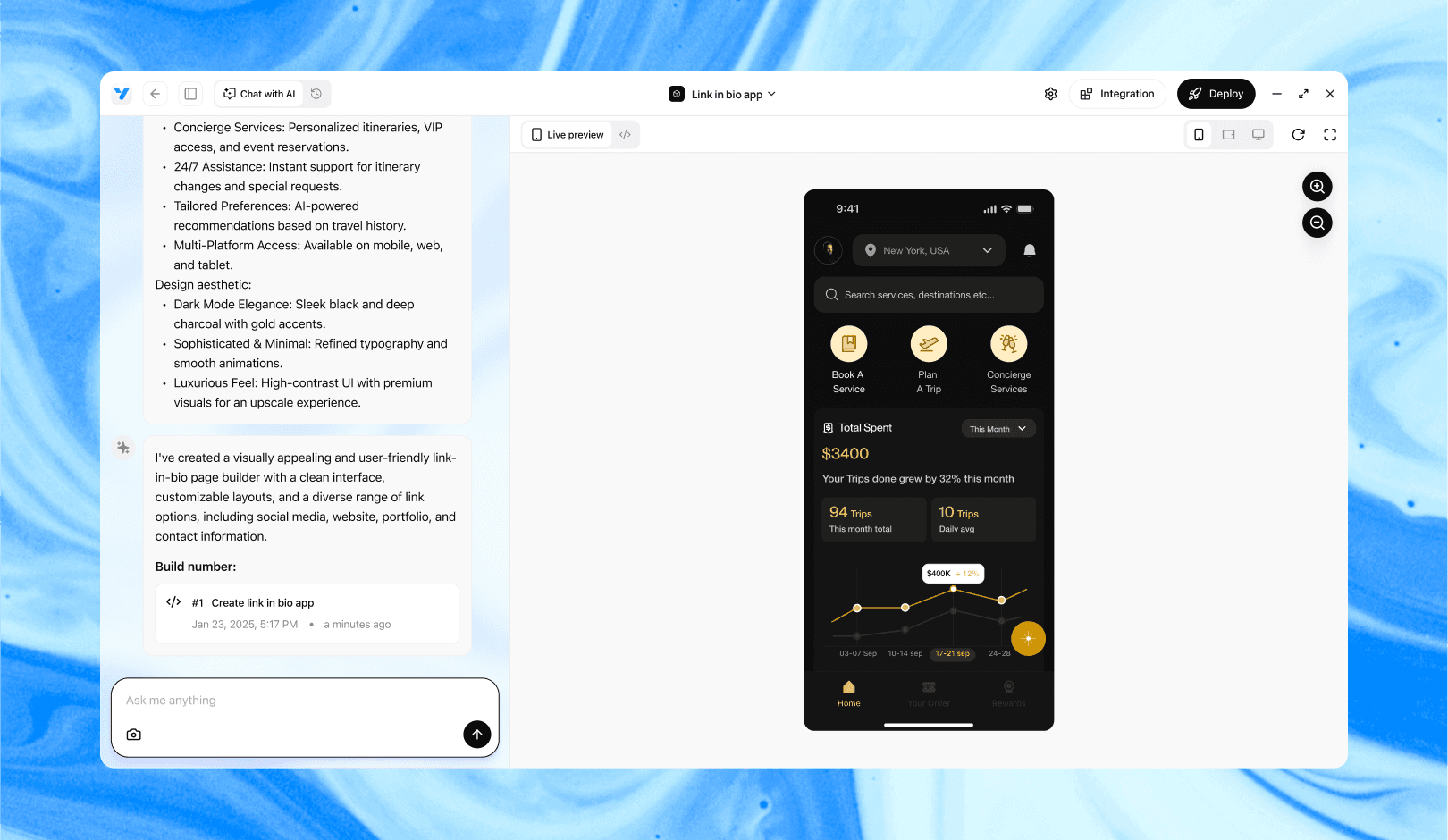
Vibe Studio, powered by Steve’s advanced AI agents, is a revolutionary no-code, conversational platform that empowers users to quickly and efficiently create full-stack Flutter applications integrated seamlessly with Firebase backend services. Ideal for solo founders, startups, and agile engineering teams, Vibe Studio allows users to visually manage and deploy Flutter apps, greatly accelerating the development process. The intuitive conversational interface simplifies complex development tasks, making app creation accessible even for non-coders.

Conclusion

Structure matters more than clever patterns. Use feature-first layout, explicit layering, DI, and modular routing to keep boundaries clear. Prefer testable plain Dart classes for business logic, use Riverpod or Provider with a single composition root, and keep per-feature entry points to enable parallel work. Invest in CI that enforces quality and runs quick feedback loops. These practices reduce coupling, improve build times, and let teams scale development without chaos.


Introduction

Scaling a Flutter app requires deliberate structure. As projects grow, coupling, unclear boundaries, and ad-hoc patterns lead to fragile code, slow builds, and painful releases. This guide shows pragmatic patterns for organizing large Flutter projects: layering, feature modules, state management, dependency injection, routing, testing, and CI strategies. Examples are code-forward and focused on maintainability and team collaboration.

Project Organization And Layering

Adopt a layered architecture to separate concerns. Typical layers:

  • core: app-wide utilities (logging, theme, constants).

  • features: each user-facing area (auth, profile, feed) contains its own domain, data, and presentation folders.

  • shared: reusable widgets and platform-agnostic helpers.

  • infra: platform and third-party integrations (api clients, storage).

Use a feature-first directory layout rather than widget-first. A feature encapsulates everything it needs and exposes a minimal API to other features.

Example structure:


Keep small barrel files (module entry points) that export public pieces. That makes imports explicit and easier to refactor.

State Management And Dependency Injection

Choose a state management approach that aligns with scale. Provider and Riverpod are both solid; Riverpod's compile-time safety and testability scale well. Keep state close to the feature and avoid global singletons unless intentionally shared.

Dependency injection decouples construction from usage. get_it is lightweight and pairs well with Riverpod. Register dependencies at app bootstrap and keep registration code in core/bootstrap.

Small get_it example:

import 'package:get_it/get_it.dart';
final di = GetIt.instance;

void setup() {
  di.registerLazySingleton(() => ApiClient());
  di.registerFactory(() => AuthRepository(di()));
}

Inject repositories into providers or Riverpod notifiers. Avoid accessing DI directly inside widgets—use providers as the composition root.

Routing And Feature Modularization

Routing should be centralized but modular. Use an AppRouter that delegates to feature routers. For large apps, code-generation tools like go_router or auto_route simplify nested routes and deep-linking.

Encapsulate feature routes in modules with a single entry point exposing Route/RouteFactory. This keeps the app router thin and makes features pluggable for team parallelization.

Expose UI via widgets or factories to prevent tightly coupling features. Example: each feature exposes a Widget buildFeature() or RouteFactory instead of importing internal files.

Testing And CI

Design for testability from day one. Keep logic out of widgets: use plain Dart classes for business rules and small, well-defined interfaces for external systems. Unit test domain logic and repository behavior with mocked infra. Widget and integration tests validate UI flows and platform integration.

Create CI pipelines that run static analysis (flutter analyze), format checks, unit tests, and a subset of integration tests. Use test sharding and caching (pub cache, build artifacts) to keep CI responsive. For large teams, gate merge requests on a passing matrix: linting, unit tests, and smoke integration tests.

Include a clear test strategy per feature: unit tests for domain, widget tests for presentation, and integration tests for critical flows. Aim for fast unit tests and selective integration runs in CI.

Vibe Studio

Vibe Studio, powered by Steve’s advanced AI agents, is a revolutionary no-code, conversational platform that empowers users to quickly and efficiently create full-stack Flutter applications integrated seamlessly with Firebase backend services. Ideal for solo founders, startups, and agile engineering teams, Vibe Studio allows users to visually manage and deploy Flutter apps, greatly accelerating the development process. The intuitive conversational interface simplifies complex development tasks, making app creation accessible even for non-coders.

Conclusion

Structure matters more than clever patterns. Use feature-first layout, explicit layering, DI, and modular routing to keep boundaries clear. Prefer testable plain Dart classes for business logic, use Riverpod or Provider with a single composition root, and keep per-feature entry points to enable parallel work. Invest in CI that enforces quality and runs quick feedback loops. These practices reduce coupling, improve build times, and let teams scale development without chaos.

Build Flutter Apps Faster with Vibe Studio

Build Flutter Apps Faster with Vibe Studio

Build Flutter Apps Faster with Vibe Studio

Build Flutter Apps Faster with Vibe Studio

Vibe Studio is your AI-powered Flutter development companion. Skip boilerplate, build in real-time, and deploy without hassle. Start creating apps at lightning speed with zero setup.

Vibe Studio is your AI-powered Flutter development companion. Skip boilerplate, build in real-time, and deploy without hassle. Start creating apps at lightning speed with zero setup.

Vibe Studio is your AI-powered Flutter development companion. Skip boilerplate, build in real-time, and deploy without hassle. Start creating apps at lightning speed with zero setup.

Vibe Studio is your AI-powered Flutter development companion. Skip boilerplate, build in real-time, and deploy without hassle. Start creating apps at lightning speed with zero setup.

Other Insights

Other Insights

Other Insights

Other Insights

Join a growing community of builders today

Join a growing community of builders today

Join a growing community of builders today

Join a growing community of builders today

Join a growing community of builders today

28-07 Jackson Ave

Walturn

New York NY 11101 United States

© Steve • All Rights Reserved 2025

28-07 Jackson Ave

Walturn

New York NY 11101 United States

© Steve • All Rights Reserved 2025

28-07 Jackson Ave

Walturn

New York NY 11101 United States

© Steve • All Rights Reserved 2025

28-07 Jackson Ave

Walturn

New York NY 11101 United States

© Steve • All Rights Reserved 2025

28-07 Jackson Ave

Walturn

New York NY 11101 United States

© Steve • All Rights Reserved 2025

28-07 Jackson Ave

Walturn

New York NY 11101 United States

© Steve • All Rights Reserved 2025