How To Review AI Generated Flutter Code Like A Senior Engineer
Summary
Summary

A senior review of AI-generated Flutter code combines automated analysis (analyzer/lints/CI), architectural checks (separate UI and logic, correct state management), thorough testing (unit/widget/integration/golden), performance profiling (const, caching, isolate use), and dependency/security vetting—turning AI drafts into production-ready mobile development code.

A senior review of AI-generated Flutter code combines automated analysis (analyzer/lints/CI), architectural checks (separate UI and logic, correct state management), thorough testing (unit/widget/integration/golden), performance profiling (const, caching, isolate use), and dependency/security vetting—turning AI drafts into production-ready mobile development code.

Key insights:
Key insights:
  • Heading 1: Use strict static analysis and lints to catch style, null-safety, and complexity issues early.

  • Heading 2: Enforce architecture and state boundaries; never let UI contain heavy business logic.

  • Heading 3: Require unit, widget, and integration tests; include golden tests for UI regression control.

  • Heading 4: Profile and optimize for mobile: const constructors, rebuild minimization, caching, and isolates for heavy work.

  • Heading 5: Vet dependencies and security: lock versions, check licenses, and validate platform channel use.

Introduction

Reviewing AI-generated Flutter code is a different skill than writing it. AI can produce syntactically correct Dart, but it often misses architectural trade-offs, performance patterns, or platform-specific pitfalls important to mobile development. This guide gives a concise, code-forward checklist and techniques a senior engineer would use to audit Flutter code quickly and reliably.

Static Analysis And Linting

Start with the basics: run the Dart analyzer and enforce strong lints. A proper analysis flags style, null-safety gaps, potential runtime errors, and complexity hotspots. Configure analysis_options.yaml and add ci hooks so AI output is validated automatically.

Look for:

  • Missing or disabled lints (avoid turning off rules globally).

  • Ignored or suppressed analyzer warnings left as TODOs.

  • Public APIs with weak null-safety or ambiguous types.

Concretely: prefer const constructors, final fields, and avoid dynamic unless necessary. Example pattern to prefer const widgets and immutable fields:

class UserAvatar extends StatelessWidget {
  final String url;
  const UserAvatar({Key? key, required this.url}) : super(key: key);

  @override
  Widget build(BuildContext context) {
    return Image.network(url, width: 48, height: 48);
  }
}

Small fixes here drastically reduce rebuilds and runtime surprises in mobile development contexts.

Architecture And State Management

AI often mixes UI and business logic. Ensure single responsibility and clear state boundaries:

  • Logic should live in services, repositories, or controllers — not inside build methods.

  • Prefer immutable state updates and explicit streams or providers. If using Provider, Riverpod, or BLoC, verify patterns are consistent.

  • Check for expensive synchronous work in initState/build — move it to asynchronous setup functions or isolates when CPU-bound.

Review navigation, routing, and deep link handling for predictable behavior on Android/iOS. Ensure platform channel usage is encapsulated and tested.

Testing And Validation

A senior reviewer accepts code only with adequate tests. Ensure a mix of unit tests, widget tests, and at least one integration test for critical flows. Verify tests are deterministic and fast enough for CI in mobile development pipelines.

Look for these test patterns:

  • Small, fast unit tests for pure logic.

  • Widget tests that assert rendering and interaction.

  • Golden tests for visual regressions when UI is important.

Example widget test snippet:

testWidgets('Shows title', (WidgetTester t) async {
  await t.pumpWidget(const MaterialApp(home: MyHomePage()));
  expect(find.text('Welcome'), findsOneWidget);
});

Also validate error paths — network failures, timeouts, and service unavailability should be covered.

Performance And Resource Optimization

Mobile constraints demand vigilance. AI can generate inefficient widget trees, unnecessary rebuilds, or memory-heavy patterns.

Check for:

  • Over-nesting of widgets and large anonymous functions inside build.

  • Missing const where possible, lack of const constructors, and unnecessary setState calls.

  • Unbounded ListView builders or images not using caching and placeholder strategies.

  • Expensive operations run on the UI thread — consider compute or isolates for heavy parsing.

Profile on a device or emulator: examine jank, frame budget, and memory footprint. Use DevTools to find excessive rebuilds and large layer trees; add RepaintBoundary selectively.

Security And Dependency Management

AI may suggest packages without vetting. A senior engineer checks licenses, popularity, maintenance, and known CVEs.

  • Lock dependency versions in pubspec.lock for reproducible builds.

  • Prefer well-maintained, null-safety-ready packages and avoid heavy native dependencies without clear justification.

  • Validate that secrets aren’t hard-coded and that permissions in AndroidManifest/Info.plist are minimal.

  • Review marshaling to/from platform channels for injection risks and validate input sanitization.

Vibe Studio
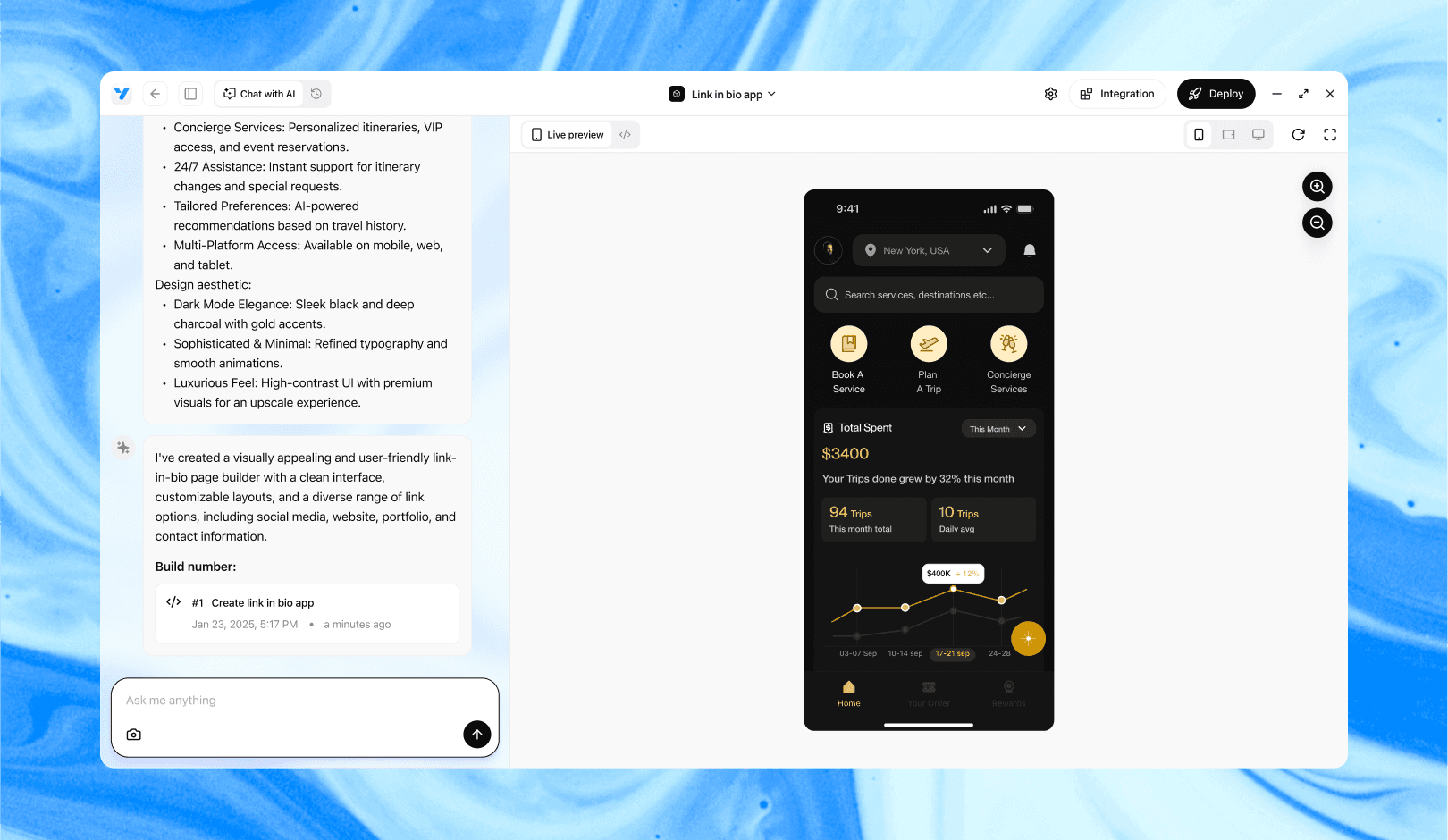
Vibe Studio, powered by Steve’s advanced AI agents, is a revolutionary no-code, conversational platform that empowers users to quickly and efficiently create full-stack Flutter applications integrated seamlessly with Firebase backend services. Ideal for solo founders, startups, and agile engineering teams, Vibe Studio allows users to visually manage and deploy Flutter apps, greatly accelerating the development process. The intuitive conversational interface simplifies complex development tasks, making app creation accessible even for non-coders.

Conclusion

Reviewing AI-generated Flutter code should balance automated checks and human judgment. Automate linting, analysis, and tests in CI; inspect architecture, state separation, and performance patterns manually. Prioritize reproducible builds, clear APIs, and deterministic tests. By applying these checks you raise AI output from usable snippets to production-quality mobile development code.


Introduction

Reviewing AI-generated Flutter code is a different skill than writing it. AI can produce syntactically correct Dart, but it often misses architectural trade-offs, performance patterns, or platform-specific pitfalls important to mobile development. This guide gives a concise, code-forward checklist and techniques a senior engineer would use to audit Flutter code quickly and reliably.

Static Analysis And Linting

Start with the basics: run the Dart analyzer and enforce strong lints. A proper analysis flags style, null-safety gaps, potential runtime errors, and complexity hotspots. Configure analysis_options.yaml and add ci hooks so AI output is validated automatically.

Look for:

  • Missing or disabled lints (avoid turning off rules globally).

  • Ignored or suppressed analyzer warnings left as TODOs.

  • Public APIs with weak null-safety or ambiguous types.

Concretely: prefer const constructors, final fields, and avoid dynamic unless necessary. Example pattern to prefer const widgets and immutable fields:

class UserAvatar extends StatelessWidget {
  final String url;
  const UserAvatar({Key? key, required this.url}) : super(key: key);

  @override
  Widget build(BuildContext context) {
    return Image.network(url, width: 48, height: 48);
  }
}

Small fixes here drastically reduce rebuilds and runtime surprises in mobile development contexts.

Architecture And State Management

AI often mixes UI and business logic. Ensure single responsibility and clear state boundaries:

  • Logic should live in services, repositories, or controllers — not inside build methods.

  • Prefer immutable state updates and explicit streams or providers. If using Provider, Riverpod, or BLoC, verify patterns are consistent.

  • Check for expensive synchronous work in initState/build — move it to asynchronous setup functions or isolates when CPU-bound.

Review navigation, routing, and deep link handling for predictable behavior on Android/iOS. Ensure platform channel usage is encapsulated and tested.

Testing And Validation

A senior reviewer accepts code only with adequate tests. Ensure a mix of unit tests, widget tests, and at least one integration test for critical flows. Verify tests are deterministic and fast enough for CI in mobile development pipelines.

Look for these test patterns:

  • Small, fast unit tests for pure logic.

  • Widget tests that assert rendering and interaction.

  • Golden tests for visual regressions when UI is important.

Example widget test snippet:

testWidgets('Shows title', (WidgetTester t) async {
  await t.pumpWidget(const MaterialApp(home: MyHomePage()));
  expect(find.text('Welcome'), findsOneWidget);
});

Also validate error paths — network failures, timeouts, and service unavailability should be covered.

Performance And Resource Optimization

Mobile constraints demand vigilance. AI can generate inefficient widget trees, unnecessary rebuilds, or memory-heavy patterns.

Check for:

  • Over-nesting of widgets and large anonymous functions inside build.

  • Missing const where possible, lack of const constructors, and unnecessary setState calls.

  • Unbounded ListView builders or images not using caching and placeholder strategies.

  • Expensive operations run on the UI thread — consider compute or isolates for heavy parsing.

Profile on a device or emulator: examine jank, frame budget, and memory footprint. Use DevTools to find excessive rebuilds and large layer trees; add RepaintBoundary selectively.

Security And Dependency Management

AI may suggest packages without vetting. A senior engineer checks licenses, popularity, maintenance, and known CVEs.

  • Lock dependency versions in pubspec.lock for reproducible builds.

  • Prefer well-maintained, null-safety-ready packages and avoid heavy native dependencies without clear justification.

  • Validate that secrets aren’t hard-coded and that permissions in AndroidManifest/Info.plist are minimal.

  • Review marshaling to/from platform channels for injection risks and validate input sanitization.

Vibe Studio

Vibe Studio, powered by Steve’s advanced AI agents, is a revolutionary no-code, conversational platform that empowers users to quickly and efficiently create full-stack Flutter applications integrated seamlessly with Firebase backend services. Ideal for solo founders, startups, and agile engineering teams, Vibe Studio allows users to visually manage and deploy Flutter apps, greatly accelerating the development process. The intuitive conversational interface simplifies complex development tasks, making app creation accessible even for non-coders.

Conclusion

Reviewing AI-generated Flutter code should balance automated checks and human judgment. Automate linting, analysis, and tests in CI; inspect architecture, state separation, and performance patterns manually. Prioritize reproducible builds, clear APIs, and deterministic tests. By applying these checks you raise AI output from usable snippets to production-quality mobile development code.

Build Flutter Apps Faster with Vibe Studio

Vibe Studio is your AI-powered Flutter development companion. Skip boilerplate, build in real-time, and deploy without hassle. Start creating apps at lightning speed with zero setup.

Other Insights

Join a growing community of builders today

Join a growing community of builders today

Join a growing community of builders today

Join a growing community of builders today

Join a growing community of builders today

28-07 Jackson Ave

Walturn

New York NY 11101 United States

© Steve • All Rights Reserved 2025

28-07 Jackson Ave

Walturn

New York NY 11101 United States

© Steve • All Rights Reserved 2025

28-07 Jackson Ave

Walturn

New York NY 11101 United States

© Steve • All Rights Reserved 2025

28-07 Jackson Ave

Walturn

New York NY 11101 United States

© Steve • All Rights Reserved 2025

28-07 Jackson Ave

Walturn

New York NY 11101 United States

© Steve • All Rights Reserved 2025

28-07 Jackson Ave

Walturn

New York NY 11101 United States

© Steve • All Rights Reserved 2025