How To Iterate On UI Designs Using Vibe Studio Chat
Summary
Summary

This tutorial shows how to iterate UI designs using Vibe Studio Chat in Flutter mobile development: set up context-rich prompts, translate suggestions into reusable widgets and theme tokens, prototype variants with runtime toggles and hot reload, and formalize chosen designs with tests and token refactors.

This tutorial shows how to iterate UI designs using Vibe Studio Chat in Flutter mobile development: set up context-rich prompts, translate suggestions into reusable widgets and theme tokens, prototype variants with runtime toggles and hot reload, and formalize chosen designs with tests and token refactors.

Key insights:
Key insights:
  • Set Up Vibe Studio Chat: Provide device constraints and component inventory so generated variants are actionable for Flutter mobile development.

  • Translate Design Feedback Into Widgets: Convert Vibe recommendations into small, reusable Flutter widgets and centralized theme tokens.

  • Iterate With Rapid Prototyping: Implement variants behind toggles and use hot reload to evaluate multiple densities, colors, and states quickly.

  • Integrate Feedback Into Flutter Code: Formalize winning variants with theme updates, golden tests, and refactors to design tokens.

  • Collaboration And Handoff: Use Vibe to produce PR summaries, accessibility notes, and design checklists to speed review and cross-discipline alignment.

Introduction

Iterating UI designs quickly is essential in modern Flutter mobile development. Vibe Studio Chat adds conversational, context-aware design guidance into your workflow so you can move from idea to interactive prototype faster. This tutorial shows a practical loop: set up Vibe Studio Chat, convert its design suggestions into Flutter widget plans, prototype rapidly, and integrate feedback into production-ready code.

Set Up Vibe Studio Chat

Start by connecting your project context to Vibe Studio Chat. Provide the chat with your app’s platform target, design constraints (colors, spacing, accessible font sizes), and a short component inventory (app bars, lists, cards). Keep prompts deterministic: include device pixel density, orientation, and platform-specific conventions (iOS vs Android gestures). Use the chat to request specific artifacts: layout sketches, interaction states, accessibility notes, and widget trees.

Practical prompt example to Vibe Studio Chat:

  • “I’m building a Flutter mobile app for Android and iOS. Target devices: 360–412 dp widths. Provide a responsive card list component with title, subtitle, icon, and primary action. Show compact (tight) and comfortable (spaced) density variants and export a widget tree.”

Receive structured responses (state descriptions, suggested paddings, and widget hierarchies). Capture these as a spec file or a pinned message in Vibe Studio Chat so iterations reference the same baseline.

Translate Design Feedback Into Widgets

Convert Vibe’s suggestions into concrete Flutter widgets. Focus on composability: build small reusable components (CardItem, Avatar, ActionButton) driven by parameters Vibe recommends (padding, typography scale, elevation). Keep styles centralized with ThemeData and extension methods so later iterations update across the app.

Example reusable widget pattern:

class CardItem extends StatelessWidget {
  final String title, subtitle;
  final VoidCallback? onTap;
  Widget build(BuildContext c) => Card(
    child: ListTile(title: Text(title), subtitle: Text(subtitle), onTap: onTap),
  );
}

Map Vibe’s density and spacing tokens to constants or a design system class. That lets you apply a single change (e.g., increased vertical rhythm) and re-render without hunting through files.

Iterate With Rapid Prototyping

Use Vibe Studio Chat to generate multiple variants in one conversation turn: color themes, spacing scales, and micro-interaction notes. For each variant:

  • Implement the change behind a feature flag or a runtime toggle.

  • Use Flutter’s hot reload to see changes instantly on device or emulator.

  • Record short video captures or screenshots and add them back to Vibe Studio Chat for comparative feedback.

Keep the code path toggles minimal and test-driven. Example: a runtime theme toggle that swaps two ThemeData instances allows designers to evaluate contrast and hierarchy without code merges.

final ThemeData compact = ThemeData(textTheme: TextTheme(bodyText2: TextStyle(fontSize: 14)));
final ThemeData comfortable = ThemeData(textTheme: TextTheme(bodyText2: TextStyle(fontSize: 16)));
// Toggle at runtime and hot reload.

Ask Vibe Studio Chat to suggest which variant improves readability, tap targets, or visual hierarchy for mobile development ergonomics. Feed the results back immediately and request refined variants (e.g., stronger CTA contrast, increased hit area for small icons).

Integrate Feedback Into Flutter Code

When a variant matures, formalize it: update your theme tokens, refactor temporary toggles into configuration files, and add snapshot tests. Vibe can help by producing a checklist of items to finalize: asset sizes, accessibility labels, animation easing values, and platform-specific gestures.

Automate integration steps:

  • Convert ad-hoc style values into constants or theme properties.

  • Add golden tests for visual regressions.

  • Update README or design tokens JSON so the next iteration starts from the current baseline.

Use Vibe Studio Chat to generate small PR descriptions summarizing visual and UX changes. Include visuals and code references in the PR to speed review for mobile development teams.

Vibe Studio
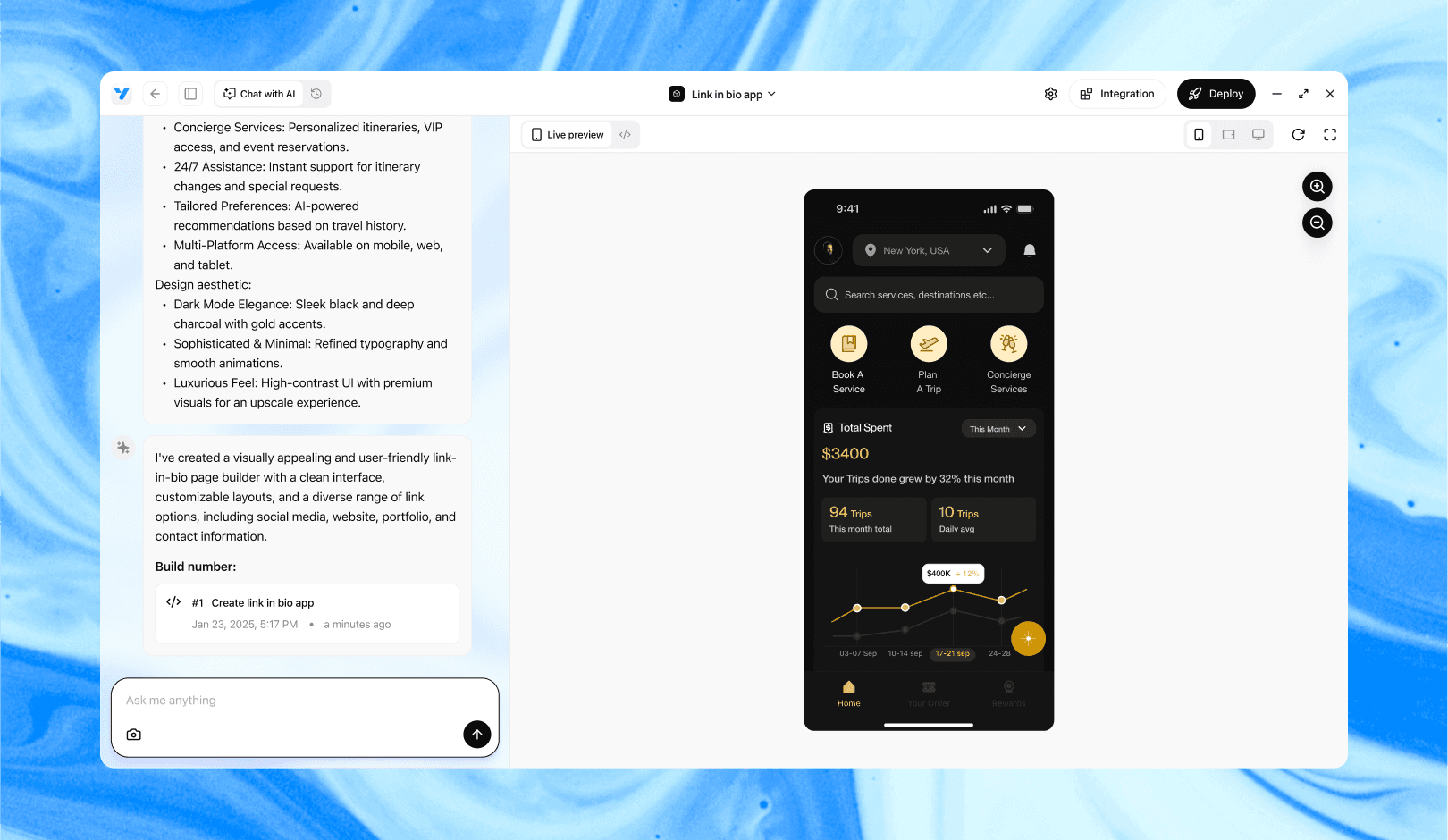
Vibe Studio, powered by Steve’s advanced AI agents, is a revolutionary no-code, conversational platform that empowers users to quickly and efficiently create full-stack Flutter applications integrated seamlessly with Firebase backend services. Ideal for solo founders, startups, and agile engineering teams, Vibe Studio allows users to visually manage and deploy Flutter apps, greatly accelerating the development process. The intuitive conversational interface simplifies complex development tasks, making app creation accessible even for non-coders.

Conclusion

Vibe Studio Chat streamlines UI iteration for Flutter mobile development by providing guided, repeatable design conversations that map directly to widgets and theme changes. The loop is simple: feed context, get structured variants, implement lightweight toggles, evaluate with hot reload, and then formalize the winning variant into your codebase. That workflow minimizes back-and-forth and surfaces measurable improvements — faster.


Introduction

Iterating UI designs quickly is essential in modern Flutter mobile development. Vibe Studio Chat adds conversational, context-aware design guidance into your workflow so you can move from idea to interactive prototype faster. This tutorial shows a practical loop: set up Vibe Studio Chat, convert its design suggestions into Flutter widget plans, prototype rapidly, and integrate feedback into production-ready code.

Set Up Vibe Studio Chat

Start by connecting your project context to Vibe Studio Chat. Provide the chat with your app’s platform target, design constraints (colors, spacing, accessible font sizes), and a short component inventory (app bars, lists, cards). Keep prompts deterministic: include device pixel density, orientation, and platform-specific conventions (iOS vs Android gestures). Use the chat to request specific artifacts: layout sketches, interaction states, accessibility notes, and widget trees.

Practical prompt example to Vibe Studio Chat:

  • “I’m building a Flutter mobile app for Android and iOS. Target devices: 360–412 dp widths. Provide a responsive card list component with title, subtitle, icon, and primary action. Show compact (tight) and comfortable (spaced) density variants and export a widget tree.”

Receive structured responses (state descriptions, suggested paddings, and widget hierarchies). Capture these as a spec file or a pinned message in Vibe Studio Chat so iterations reference the same baseline.

Translate Design Feedback Into Widgets

Convert Vibe’s suggestions into concrete Flutter widgets. Focus on composability: build small reusable components (CardItem, Avatar, ActionButton) driven by parameters Vibe recommends (padding, typography scale, elevation). Keep styles centralized with ThemeData and extension methods so later iterations update across the app.

Example reusable widget pattern:

class CardItem extends StatelessWidget {
  final String title, subtitle;
  final VoidCallback? onTap;
  Widget build(BuildContext c) => Card(
    child: ListTile(title: Text(title), subtitle: Text(subtitle), onTap: onTap),
  );
}

Map Vibe’s density and spacing tokens to constants or a design system class. That lets you apply a single change (e.g., increased vertical rhythm) and re-render without hunting through files.

Iterate With Rapid Prototyping

Use Vibe Studio Chat to generate multiple variants in one conversation turn: color themes, spacing scales, and micro-interaction notes. For each variant:

  • Implement the change behind a feature flag or a runtime toggle.

  • Use Flutter’s hot reload to see changes instantly on device or emulator.

  • Record short video captures or screenshots and add them back to Vibe Studio Chat for comparative feedback.

Keep the code path toggles minimal and test-driven. Example: a runtime theme toggle that swaps two ThemeData instances allows designers to evaluate contrast and hierarchy without code merges.

final ThemeData compact = ThemeData(textTheme: TextTheme(bodyText2: TextStyle(fontSize: 14)));
final ThemeData comfortable = ThemeData(textTheme: TextTheme(bodyText2: TextStyle(fontSize: 16)));
// Toggle at runtime and hot reload.

Ask Vibe Studio Chat to suggest which variant improves readability, tap targets, or visual hierarchy for mobile development ergonomics. Feed the results back immediately and request refined variants (e.g., stronger CTA contrast, increased hit area for small icons).

Integrate Feedback Into Flutter Code

When a variant matures, formalize it: update your theme tokens, refactor temporary toggles into configuration files, and add snapshot tests. Vibe can help by producing a checklist of items to finalize: asset sizes, accessibility labels, animation easing values, and platform-specific gestures.

Automate integration steps:

  • Convert ad-hoc style values into constants or theme properties.

  • Add golden tests for visual regressions.

  • Update README or design tokens JSON so the next iteration starts from the current baseline.

Use Vibe Studio Chat to generate small PR descriptions summarizing visual and UX changes. Include visuals and code references in the PR to speed review for mobile development teams.

Vibe Studio

Vibe Studio, powered by Steve’s advanced AI agents, is a revolutionary no-code, conversational platform that empowers users to quickly and efficiently create full-stack Flutter applications integrated seamlessly with Firebase backend services. Ideal for solo founders, startups, and agile engineering teams, Vibe Studio allows users to visually manage and deploy Flutter apps, greatly accelerating the development process. The intuitive conversational interface simplifies complex development tasks, making app creation accessible even for non-coders.

Conclusion

Vibe Studio Chat streamlines UI iteration for Flutter mobile development by providing guided, repeatable design conversations that map directly to widgets and theme changes. The loop is simple: feed context, get structured variants, implement lightweight toggles, evaluate with hot reload, and then formalize the winning variant into your codebase. That workflow minimizes back-and-forth and surfaces measurable improvements — faster.

Build Flutter Apps Faster with Vibe Studio

Vibe Studio is your AI-powered Flutter development companion. Skip boilerplate, build in real-time, and deploy without hassle. Start creating apps at lightning speed with zero setup.

Other Insights

Join a growing community of builders today

Join a growing community of builders today

Join a growing community of builders today

Join a growing community of builders today

Join a growing community of builders today

28-07 Jackson Ave

Walturn

New York NY 11101 United States

© Steve • All Rights Reserved 2025

28-07 Jackson Ave

Walturn

New York NY 11101 United States

© Steve • All Rights Reserved 2025

28-07 Jackson Ave

Walturn

New York NY 11101 United States

© Steve • All Rights Reserved 2025

28-07 Jackson Ave

Walturn

New York NY 11101 United States

© Steve • All Rights Reserved 2025

28-07 Jackson Ave

Walturn

New York NY 11101 United States

© Steve • All Rights Reserved 2025

28-07 Jackson Ave

Walturn

New York NY 11101 United States

© Steve • All Rights Reserved 2025