How To Integrate Payment Gateways in Flutter Apps
Dec 8, 2025


Summary
Summary
Summary
Summary
This tutorial explains how to integrate payment gateways in Flutter apps: prerequisites, choosing a gateway, a Flutter client pattern with backend-created payment intents, security best practices (HTTPS, tokenization, webhooks), and testing tips to reduce PCI scope and ensure reliable mobile payment flows.
Key insights:
Key insights:
Key insights:
Key insights:
Prerequisites: Always use a backend to create server-side payment objects and keep API secrets out of the app.
Choosing A Gateway: Select based on region, supported payment methods, and whether you need native SDK UX or hosted flows.
Flutter Integration Example: Use official plugins or SDKs to confirm payment intents on-device after your backend returns a client token.
Backend And Security Best Practices: Validate amounts server-side, use idempotency keys, verify webhooks, and avoid logging sensitive data.
Testing And Compliance: Use sandbox keys, test edge cases (3DS, declines), and adopt tokenization or hosted pages to reduce PCI scope.
Introduction
Integrating payment gateways into Flutter apps is a common requirement for mobile development. This tutorial explains practical steps, integration patterns, and security practices to accept payments reliably, using Flutter on the client and a minimal backend for sensitive operations. The goal is to help you pick a gateway, integrate SDKs or web flows, and avoid common security mistakes.
Prerequisites
Before you begin, ensure you have:
A Flutter project (stable channel) and working Android/iOS build setup.
An account with your chosen payment provider (Stripe, PayPal, Braintree, Razorpay, etc.).
A simple backend (Node, Python, Go, or Firebase Functions) to create server-side payment objects (payment intents, orders) and hold API secrets.
Why a backend? Client secrets must never be embedded in the app. Most gateways require server-created tokens or intents that the client completes. In mobile development, think of the Flutter app as the UI + a token consumer; the backend is the authoritative signer.
Choosing A Gateway
Pick a gateway based on geography, fees, and features (cards, wallets, ACH, local methods).
Common options:
Stripe: Excellent developer experience, global reach, strong mobile SDKs. Good for card+wallet flows and subscriptions.
PayPal/Braintree: Popular where PayPal penetration matters; Braintree supports card vaulting.
Razorpay/Paystack/Adyen: Strong regional support.
Integration modes:
Native SDK: Best UX, card entry UIs, and built-in native flows (Apple Pay, Google Pay).
Hosted/Redirect: Simpler PCI scope but weaker UX (webview or external browser). Use when you want minimal PCI burden.
Tokenization + Custom Form: You host the card form but tokenize via the gateway client-side SDK to offload PCI compliance.
Flutter Integration Example
Below is a concise pattern using the client SDK to collect payment method details and a backend to create a payment intent. Replace placeholders with your gateway and keys.
Client (Flutter): request a payment intent from your backend, then confirm with the gateway SDK or REST API.
// Example: call backend to create PaymentIntent and confirm via a plugin final response = await http.post(Uri.parse('$backend/create_intent'), body: {'amount': '1000'}); final clientSecret = jsonDecode(response.body)['client_secret']; // Use a gateway plugin (pseudo-code) to confirm final result = await Stripe.instance.confirmPayment(clientSecret, PaymentMethodParams.card()); if (result.status == PaymentIntentsStatus.Succeeded) { /* success */ }
Server (pseudo): create the payment intent with gateway secret and return client_secret. This keeps credentials off the device.
Best practices in Flutter:
Prefer well-maintained packages (official or community) that wrap native SDKs for Android/iOS.
Use platform channels only if an official plugin is unavailable.
Provide clear UI states: loading, 3D Secure/Authentication, success, and error.
Backend And Security Best Practices
The backend handles sensitive operations and should:
Store API secrets in environment variables — never in source control.
Create payment intents/tokens and return short-lived client tokens to the client.
Validate amounts, user identities, and order integrity server-side before creating a charge.
Handle webhooks: verify signatures from the gateway and update order status (capture, refund, disputes).
Security specifics:
Use HTTPS everywhere.
Do not collect raw card data on your backend unless you are PCI-compliant. Use gateway tokenization flows.
Implement retry-safe idempotency keys when creating payments to avoid duplicate charges.
Log minimal PCI-sensitive data; never log full card numbers or CVV.
Testing and Compliance:
Use gateway sandbox/test keys during development.
Exercise 3D Secure, declined card, insufficient funds, and network-failure scenarios in tests.
Follow gateway-provided guides for PCI scope reduction (hosted pages, Elements, or tokenization).
Deployment notes:
Use feature flags to toggle payment methods for A/B tests or phased rollouts.
Monitor live payments and webhook processing; configure alerting on failure rates and disputes.
Vibe Studio
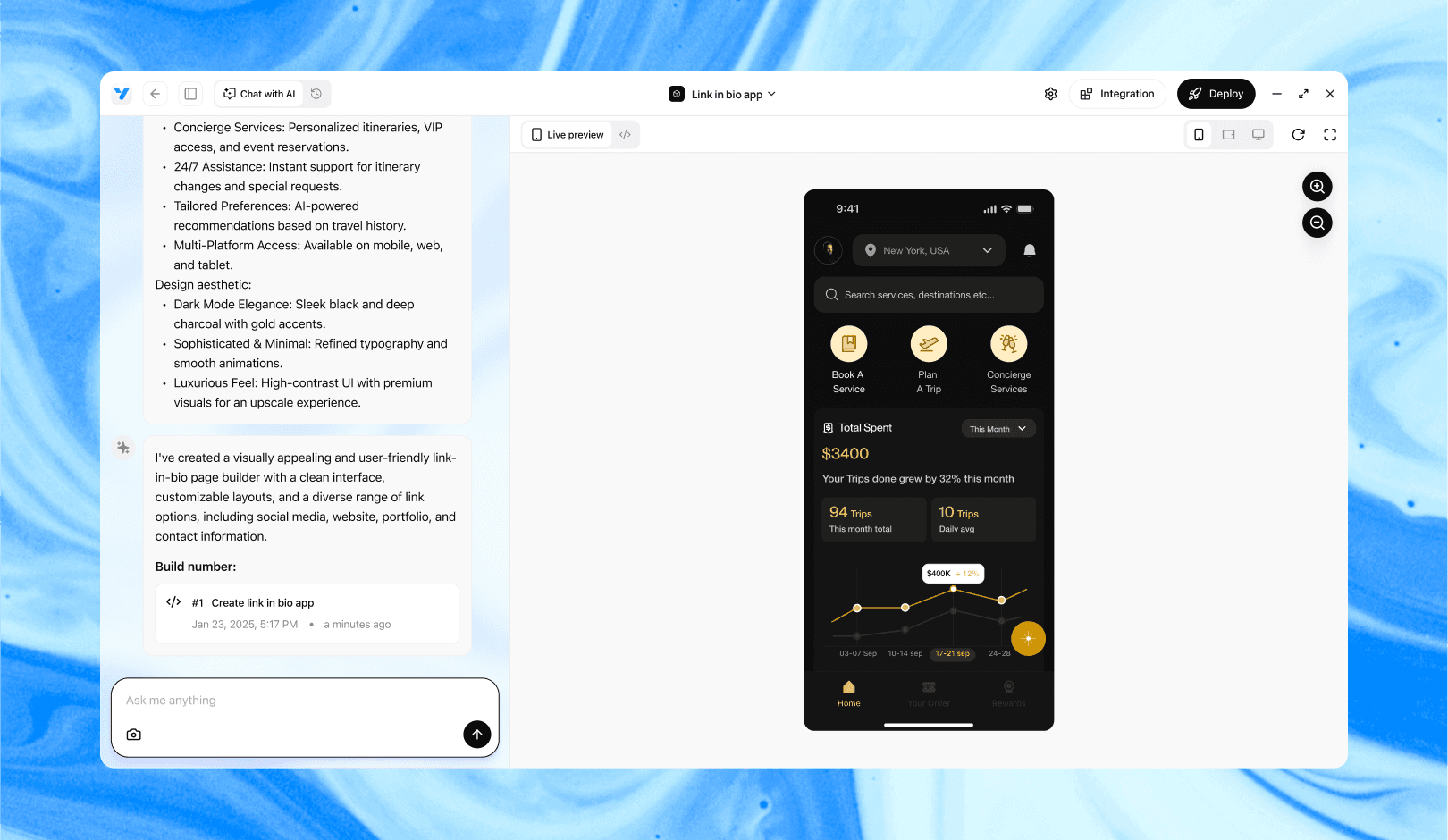
Vibe Studio, powered by Steve’s advanced AI agents, is a revolutionary no-code, conversational platform that empowers users to quickly and efficiently create full-stack Flutter applications integrated seamlessly with Firebase backend services. Ideal for solo founders, startups, and agile engineering teams, Vibe Studio allows users to visually manage and deploy Flutter apps, greatly accelerating the development process. The intuitive conversational interface simplifies complex development tasks, making app creation accessible even for non-coders.
Conclusion
Integrating payments in Flutter apps is a two-part problem: client-side UX and server-side security. Use official SDKs or well-maintained plugins to provide native experiences, keep secrets on a backend that creates short-lived tokens or payment intents, and validate all critical business logic server-side. Test thoroughly with sandbox accounts, implement webhook handlers, and follow PCI-reduction patterns to minimize compliance burden. With the correct separation of responsibilities, your Flutter app can accept payments securely and smoothly.

Introduction
Integrating payment gateways into Flutter apps is a common requirement for mobile development. This tutorial explains practical steps, integration patterns, and security practices to accept payments reliably, using Flutter on the client and a minimal backend for sensitive operations. The goal is to help you pick a gateway, integrate SDKs or web flows, and avoid common security mistakes.
Prerequisites
Before you begin, ensure you have:
A Flutter project (stable channel) and working Android/iOS build setup.
An account with your chosen payment provider (Stripe, PayPal, Braintree, Razorpay, etc.).
A simple backend (Node, Python, Go, or Firebase Functions) to create server-side payment objects (payment intents, orders) and hold API secrets.
Why a backend? Client secrets must never be embedded in the app. Most gateways require server-created tokens or intents that the client completes. In mobile development, think of the Flutter app as the UI + a token consumer; the backend is the authoritative signer.
Choosing A Gateway
Pick a gateway based on geography, fees, and features (cards, wallets, ACH, local methods).
Common options:
Stripe: Excellent developer experience, global reach, strong mobile SDKs. Good for card+wallet flows and subscriptions.
PayPal/Braintree: Popular where PayPal penetration matters; Braintree supports card vaulting.
Razorpay/Paystack/Adyen: Strong regional support.
Integration modes:
Native SDK: Best UX, card entry UIs, and built-in native flows (Apple Pay, Google Pay).
Hosted/Redirect: Simpler PCI scope but weaker UX (webview or external browser). Use when you want minimal PCI burden.
Tokenization + Custom Form: You host the card form but tokenize via the gateway client-side SDK to offload PCI compliance.
Flutter Integration Example
Below is a concise pattern using the client SDK to collect payment method details and a backend to create a payment intent. Replace placeholders with your gateway and keys.
Client (Flutter): request a payment intent from your backend, then confirm with the gateway SDK or REST API.
// Example: call backend to create PaymentIntent and confirm via a plugin final response = await http.post(Uri.parse('$backend/create_intent'), body: {'amount': '1000'}); final clientSecret = jsonDecode(response.body)['client_secret']; // Use a gateway plugin (pseudo-code) to confirm final result = await Stripe.instance.confirmPayment(clientSecret, PaymentMethodParams.card()); if (result.status == PaymentIntentsStatus.Succeeded) { /* success */ }
Server (pseudo): create the payment intent with gateway secret and return client_secret. This keeps credentials off the device.
Best practices in Flutter:
Prefer well-maintained packages (official or community) that wrap native SDKs for Android/iOS.
Use platform channels only if an official plugin is unavailable.
Provide clear UI states: loading, 3D Secure/Authentication, success, and error.
Backend And Security Best Practices
The backend handles sensitive operations and should:
Store API secrets in environment variables — never in source control.
Create payment intents/tokens and return short-lived client tokens to the client.
Validate amounts, user identities, and order integrity server-side before creating a charge.
Handle webhooks: verify signatures from the gateway and update order status (capture, refund, disputes).
Security specifics:
Use HTTPS everywhere.
Do not collect raw card data on your backend unless you are PCI-compliant. Use gateway tokenization flows.
Implement retry-safe idempotency keys when creating payments to avoid duplicate charges.
Log minimal PCI-sensitive data; never log full card numbers or CVV.
Testing and Compliance:
Use gateway sandbox/test keys during development.
Exercise 3D Secure, declined card, insufficient funds, and network-failure scenarios in tests.
Follow gateway-provided guides for PCI scope reduction (hosted pages, Elements, or tokenization).
Deployment notes:
Use feature flags to toggle payment methods for A/B tests or phased rollouts.
Monitor live payments and webhook processing; configure alerting on failure rates and disputes.
Vibe Studio

Vibe Studio, powered by Steve’s advanced AI agents, is a revolutionary no-code, conversational platform that empowers users to quickly and efficiently create full-stack Flutter applications integrated seamlessly with Firebase backend services. Ideal for solo founders, startups, and agile engineering teams, Vibe Studio allows users to visually manage and deploy Flutter apps, greatly accelerating the development process. The intuitive conversational interface simplifies complex development tasks, making app creation accessible even for non-coders.
Conclusion
Integrating payments in Flutter apps is a two-part problem: client-side UX and server-side security. Use official SDKs or well-maintained plugins to provide native experiences, keep secrets on a backend that creates short-lived tokens or payment intents, and validate all critical business logic server-side. Test thoroughly with sandbox accounts, implement webhook handlers, and follow PCI-reduction patterns to minimize compliance burden. With the correct separation of responsibilities, your Flutter app can accept payments securely and smoothly.

Build Flutter Apps Faster with Vibe Studio
Vibe Studio is your AI-powered Flutter development companion. Skip boilerplate, build in real-time, and deploy without hassle. Start creating apps at lightning speed with zero setup.