How To Integrate AI Image Generation Into Flutter Apps
Dec 10, 2025


Summary
Summary
Summary
Summary
Learn how to integrate AI image generation into Flutter mobile development: choose a provider, secure API keys (prefer backend token exchange), POST prompts to receive image bytes or base64, decode and display with Image.memory, cache results, and optimize for mobile (offload decoding, downscale, manage network/energy).
Key insights:
Key insights:
Key insights:
Key insights:
Choose An API And Manage Keys: Use a backend or short-lived tokens; do not hard-code keys in the mobile app.
Implement Image Generation Requests: POST prompts and handle either base64 or raw bytes; handle headers and error cases.
Handle Decoding, Caching, And Display: Decode off the UI thread, cache files with metadata, and show images with Image.memory or file widgets.
Optimize For Mobile Performance: Downscale previews, debounce requests, and offload heavy work to isolates to prevent UI jank.
Prompt Design And UX Considerations: Offer presets, preview flows, and moderation to reduce iteration and improve safety.
Introduction
This tutorial shows how to integrate AI image generation into Flutter mobile development projects. You'll learn how to choose an API, securely manage keys, call a generation endpoint, decode and display images, and optimize for performance on devices. Example code is concise and focused on engineering concerns rather than vendor-specific SDKs.
Choose An API And Manage Keys
Pick an image-generation provider that supports RESTful calls returning image bytes or base64. Important criteria: request rate limits, image size options, content policy, and latency. For mobile development, prefer server-side proxying for sensitive keys, or use a secure secrets flow (OAuth or short-lived tokens). On-device direct key storage is risky — use flutter_secure_storage for tokens if you must store anything client-side.
Security checklist:
Do not hard-code API keys in the app binary.
Use a backend to sign requests or exchange credentials for ephemeral tokens.
Enforce rate limits and content moderation on the backend.
Implement Image Generation Requests
Use a simple HTTP POST to the generation endpoint. Send a prompt and any style parameters. Many APIs return binary image data or base64; handle both. Below is a minimalist example using the http package to POST a prompt and receive base64 image data.
import 'dart:convert';
import 'package:http/http.dart' as http;
Future<Uint8List> generateImage(String prompt, String token) async {
final resp = await http.post(
Uri.parse('https://api.example.com/v1/images'),
headers: {'Authorization': 'Bearer $token', 'Content-Type': 'application/json'},
body: jsonEncode({'prompt': prompt, 'size': '1024x1024'}),
);
final map = jsonDecode(resp.body);
return base64Decode(map['image_base64']);
}If the API returns bytes directly (image/*), you can read resp.bodyBytes instead of decoding base64.
Handle Decoding, Caching, And Display
Memory and storage handling is crucial on mobile. Convert bytes to images with Image.memory for quick display. For persistent caching, write to a file in the app's documents directory and store metadata (prompt, seed) in a lightweight DB (sqflite) or shared preferences. Use a cache eviction policy based on size or age.
Quick display example:
// bytes is Uint8List from the generator
Widget buildGenerated(Uint8List bytes) => Image.memory(bytes, fit: BoxFit.contain);Consider these practical tips:
Decode large images off the UI thread using compute or Isolates to avoid jank.
Downscale images when you only need thumbnails to save memory and bandwidth.
Use placeholders and progressive loading for a smoother UX.
Optimize For Mobile Performance
Network, CPU, and storage are constrained on mobile. Optimize across the stack:
Batch or debounce generation requests to limit cost and rate-limit hits.
Use progressive generation or lower-resolution preview first, then request full resolution if the user confirms.
Respect battery and data usage: add settings for generation quality and cellular-only toggles.
Use compression and webp where supported to reduce payloads and storage size.
If you decode many images, consider image pooling and reusing memory buffers. When saving to disk, prefer background isolates or scheduled background tasks.
Prompt Design And UX Considerations
Good prompt design reduces iteration loops and saves credits/time. Provide UI affordances: style presets, example prompts, and a preview history. Let users tweak seed, aspect ratio, and guidance settings. For user-generated content, implement moderation and reporting UI; keep a server-side moderation pipeline to filter harmful content before exposing generated results.
Vibe Studio
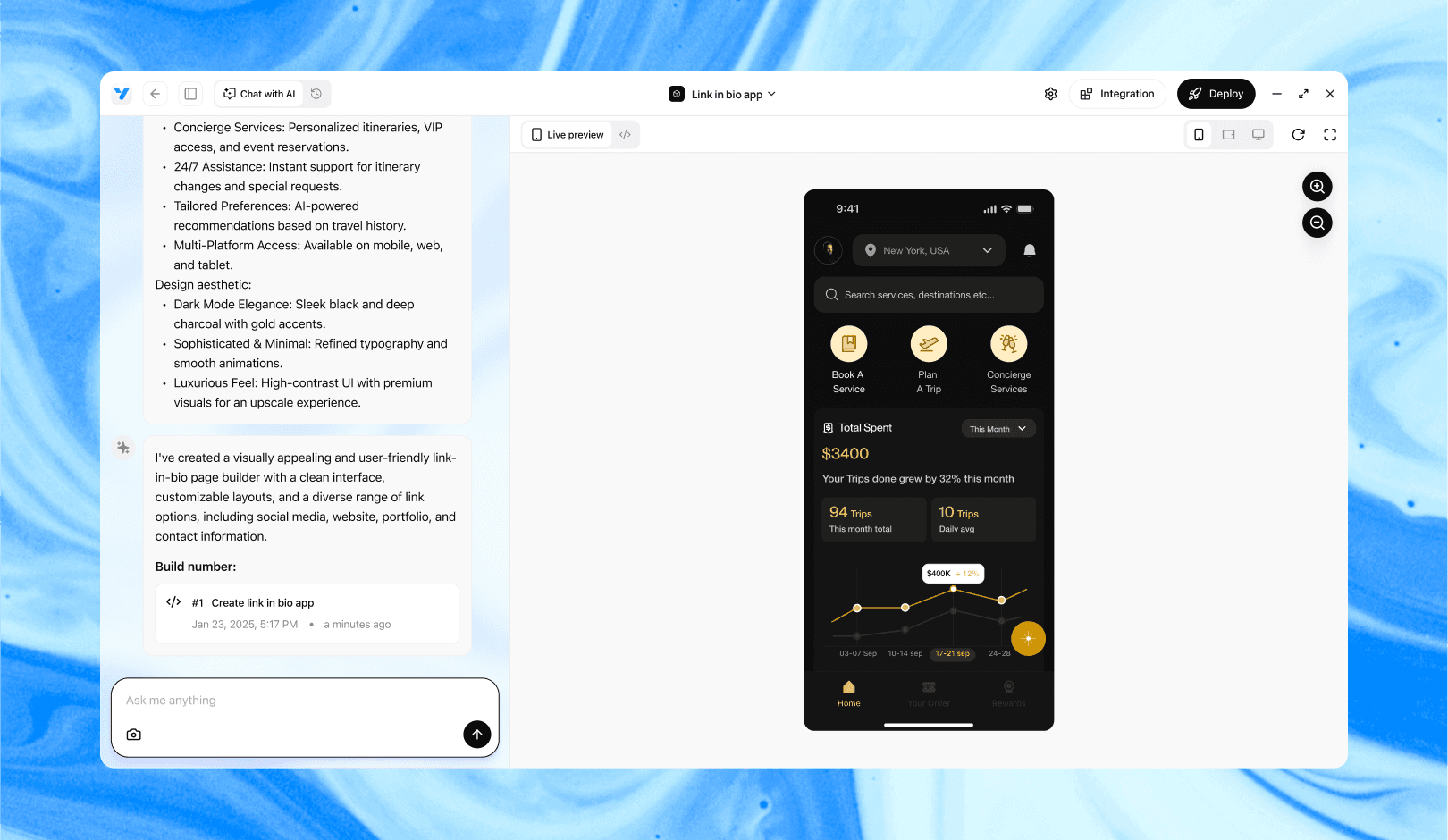
Vibe Studio, powered by Steve’s advanced AI agents, is a revolutionary no-code, conversational platform that empowers users to quickly and efficiently create full-stack Flutter applications integrated seamlessly with Firebase backend services. Ideal for solo founders, startups, and agile engineering teams, Vibe Studio allows users to visually manage and deploy Flutter apps, greatly accelerating the development process. The intuitive conversational interface simplifies complex development tasks, making app creation accessible even for non-coders.
Conclusion
Integrating AI image generation into Flutter apps involves secure API selection and key management, robust request/response handling, efficient decoding and caching, and mobile-specific optimizations for network, CPU, and UX. Use a backend to protect secrets and moderate content, decode and display images off the main thread, and provide user controls for quality and data usage. With these practices, you can add compelling generative imagery to your Flutter mobile development projects while keeping performance and safety in check.

Introduction
This tutorial shows how to integrate AI image generation into Flutter mobile development projects. You'll learn how to choose an API, securely manage keys, call a generation endpoint, decode and display images, and optimize for performance on devices. Example code is concise and focused on engineering concerns rather than vendor-specific SDKs.
Choose An API And Manage Keys
Pick an image-generation provider that supports RESTful calls returning image bytes or base64. Important criteria: request rate limits, image size options, content policy, and latency. For mobile development, prefer server-side proxying for sensitive keys, or use a secure secrets flow (OAuth or short-lived tokens). On-device direct key storage is risky — use flutter_secure_storage for tokens if you must store anything client-side.
Security checklist:
Do not hard-code API keys in the app binary.
Use a backend to sign requests or exchange credentials for ephemeral tokens.
Enforce rate limits and content moderation on the backend.
Implement Image Generation Requests
Use a simple HTTP POST to the generation endpoint. Send a prompt and any style parameters. Many APIs return binary image data or base64; handle both. Below is a minimalist example using the http package to POST a prompt and receive base64 image data.
import 'dart:convert';
import 'package:http/http.dart' as http;
Future<Uint8List> generateImage(String prompt, String token) async {
final resp = await http.post(
Uri.parse('https://api.example.com/v1/images'),
headers: {'Authorization': 'Bearer $token', 'Content-Type': 'application/json'},
body: jsonEncode({'prompt': prompt, 'size': '1024x1024'}),
);
final map = jsonDecode(resp.body);
return base64Decode(map['image_base64']);
}If the API returns bytes directly (image/*), you can read resp.bodyBytes instead of decoding base64.
Handle Decoding, Caching, And Display
Memory and storage handling is crucial on mobile. Convert bytes to images with Image.memory for quick display. For persistent caching, write to a file in the app's documents directory and store metadata (prompt, seed) in a lightweight DB (sqflite) or shared preferences. Use a cache eviction policy based on size or age.
Quick display example:
// bytes is Uint8List from the generator
Widget buildGenerated(Uint8List bytes) => Image.memory(bytes, fit: BoxFit.contain);Consider these practical tips:
Decode large images off the UI thread using compute or Isolates to avoid jank.
Downscale images when you only need thumbnails to save memory and bandwidth.
Use placeholders and progressive loading for a smoother UX.
Optimize For Mobile Performance
Network, CPU, and storage are constrained on mobile. Optimize across the stack:
Batch or debounce generation requests to limit cost and rate-limit hits.
Use progressive generation or lower-resolution preview first, then request full resolution if the user confirms.
Respect battery and data usage: add settings for generation quality and cellular-only toggles.
Use compression and webp where supported to reduce payloads and storage size.
If you decode many images, consider image pooling and reusing memory buffers. When saving to disk, prefer background isolates or scheduled background tasks.
Prompt Design And UX Considerations
Good prompt design reduces iteration loops and saves credits/time. Provide UI affordances: style presets, example prompts, and a preview history. Let users tweak seed, aspect ratio, and guidance settings. For user-generated content, implement moderation and reporting UI; keep a server-side moderation pipeline to filter harmful content before exposing generated results.
Vibe Studio

Vibe Studio, powered by Steve’s advanced AI agents, is a revolutionary no-code, conversational platform that empowers users to quickly and efficiently create full-stack Flutter applications integrated seamlessly with Firebase backend services. Ideal for solo founders, startups, and agile engineering teams, Vibe Studio allows users to visually manage and deploy Flutter apps, greatly accelerating the development process. The intuitive conversational interface simplifies complex development tasks, making app creation accessible even for non-coders.
Conclusion
Integrating AI image generation into Flutter apps involves secure API selection and key management, robust request/response handling, efficient decoding and caching, and mobile-specific optimizations for network, CPU, and UX. Use a backend to protect secrets and moderate content, decode and display images off the main thread, and provide user controls for quality and data usage. With these practices, you can add compelling generative imagery to your Flutter mobile development projects while keeping performance and safety in check.
Build Flutter Apps Faster with Vibe Studio
Vibe Studio is your AI-powered Flutter development companion. Skip boilerplate, build in real-time, and deploy without hassle. Start creating apps at lightning speed with zero setup.