How To Build Your First Flutter Package and Publish It
Nov 26, 2025


Summary
Summary
Summary
Summary
This tutorial guides you through creating your first Flutter package for mobile development: scaffold with flutter create, structure lib and example, design a concise public API, write tests and documentation, and publish using flutter pub publish with semantic versioning and CI checks.
Key insights:
Key insights:
Key insights:
Key insights:
Setup Your Package: Use flutter create --template=package, keep a single entry-point library, and document metadata in pubspec.yaml.
Design a Clear Public API: Export a small surface area, separate logic from widgets, and use doc comments and null-safety for reliability.
Test and Document: Add unit and widget tests, include an example/ app, and provide README and CHANGELOG for users and reviewers.
Publish to Pub.dev: Validate with flutter pub publish --dry-run, follow semantic versioning, include a license, and publish with flutter pub publish.
Continuous Integration and Versioning: Automate analyze/test/format in CI and increment versions semantically (PATCH/MINOR/MAJOR).
Introduction
Creating a reusable Flutter package is a foundational skill for mobile development that increases code reuse, speeds project setup, and helps you contribute to the ecosystem. This tutorial walks you through creating a minimal, well-structured Dart package for Flutter, designing a clear public API, adding tests and documentation, and publishing to pub.dev.
Setup Your Package
Start by creating a package using the Flutter tooling. From your terminal run:
flutter create --template=package my_flutter_package
This generates a package with the correct folder layout: lib, test, example, and pubspec.yaml. Edit pubspec.yaml to set a meaningful name, description, homepage, repository, authors, and a license. Keep the package focused — one responsibility per package improves discoverability.
Key files and folders:
lib/: primary library code. Export a single entry point at lib/my_flutter_package.dart.
example/: a minimal Flutter app demonstrating usage.
test/: unit and widget tests.
CHANGELOG.md and README.md: required by pub.dev recommendations.
Keep the public API surface small: export only the classes and functions users need. Use a single file (lib/my_flutter_package.dart) to re-export internals so consumers import one symbol.
Design a Clear Public API
Design your package API as if it were a product: predictable names, small surface area, clear docs, and null-safety. Favor composition over deep inheritance. Use concise documentation comments (///) above public members.
Example: expose a simple utility and a widget. Put implementations in src/ and export from the main library.
// lib/my_flutter_package.dart
library my_flutter_package;
export 'src/simple_counter.dart';
export 'src/counter_widget.dart';In src/simple_counter.dart implement the logic, keeping it testable and independent of Flutter widgets.
// lib/src/simple_counter.dart
class SimpleCounter {
int value = 0;
void increment() => value++;
}Keep widget code separated so logic can be tested without the Flutter framework. Document expected behavior and edge cases in doc comments. Use effective null-safety and mark deprecated APIs clearly before removal.
Test and Document
Testing protects your users and boosts confidence. Write unit tests for pure Dart logic and widget tests for UI. Example tests live in test/ and should run with dart test or flutter test.
Create an example app in example/ that demonstrates common usage patterns. The example is valuable for reviewers on pub.dev and for users trying out the package.
Documentation essentials:
README.md with installation and usage snippets.
API docs via dartdoc comments; run dart doc locally with dart doc generator or rely on pub.dev generation.
CHANGELOG.md noting breaking changes and versions.
Automate formatting and analysis: add a simple GitHub Action to run flutter analyze, flutter test, and flutter format to ensure consistent quality before publishing.
Publish to pub.dev
Before publishing:
Make sure your package name is unique on pub.dev.
Update version in pubspec.yaml using semantic versioning (MAJOR.MINOR.PATCH).
Add a license file (MIT, BSD, or similar) and a well-written README.
Run flutter pub publish --dry-run to check for issues.
Publishing steps:
Sign in with your Google account used by pub.dev (flutter pub publish will prompt you).
Run flutter pub publish and confirm. The tool uploads the package, and pub.dev processes it.
Post-publish tasks:
Monitor the package page and respond to issues.
Tag releases in Git and push a changelog entry.
Use continuous integration to run tests and publish automated version checks (do not automate publishing without safeguards).
Versioning rules: increment PATCH for fixes, MINOR for backward-compatible features, and MAJOR for breaking changes. Keep changelog entries clear and user-focused.
Vibe Studio
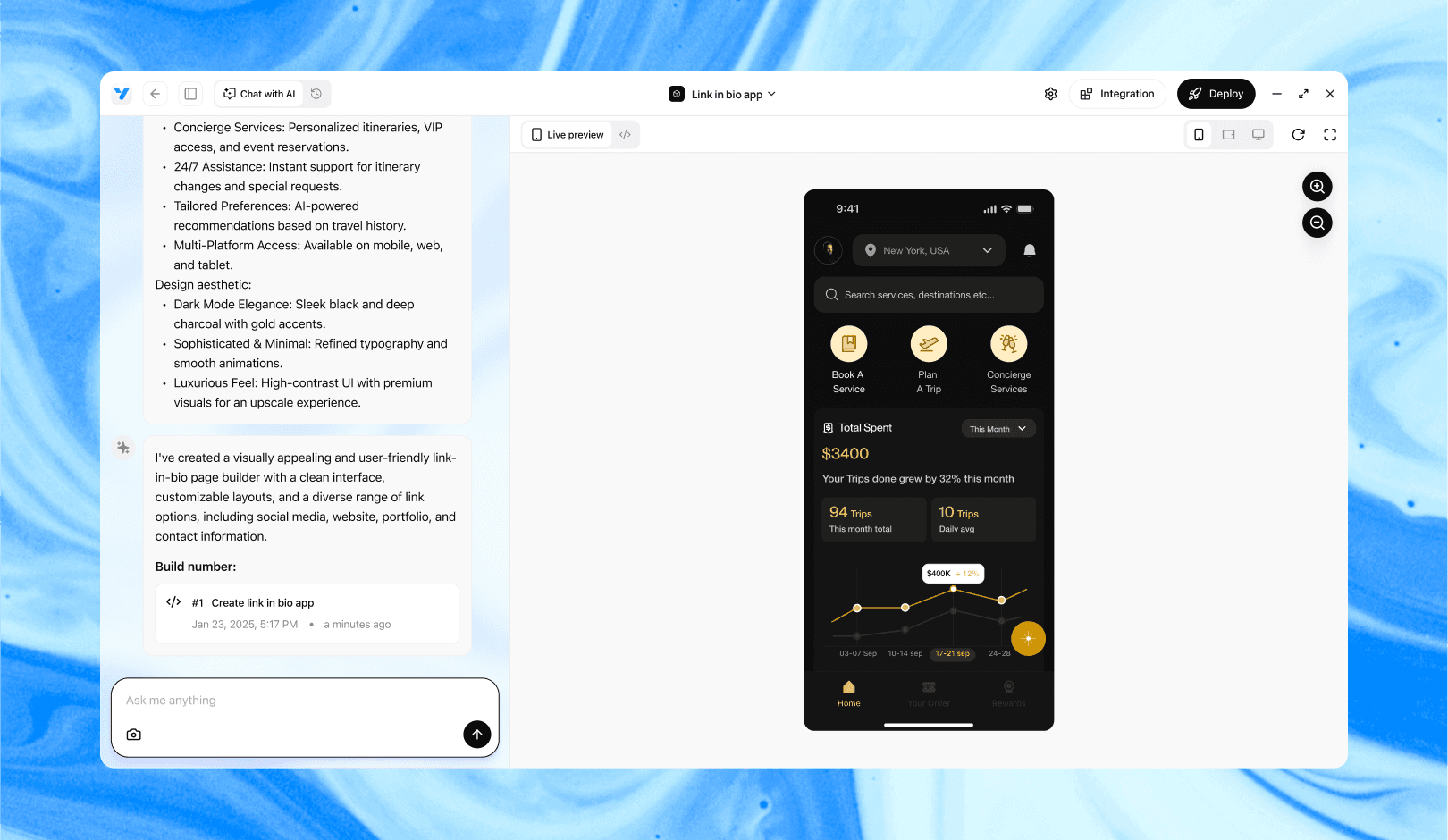
Vibe Studio, powered by Steve’s advanced AI agents, is a revolutionary no-code, conversational platform that empowers users to quickly and efficiently create full-stack Flutter applications integrated seamlessly with Firebase backend services. Ideal for solo founders, startups, and agile engineering teams, Vibe Studio allows users to visually manage and deploy Flutter apps, greatly accelerating the development process. The intuitive conversational interface simplifies complex development tasks, making app creation accessible even for non-coders.
Conclusion
Building and publishing your first Flutter package is a repeatable process: scaffold with flutter create, design a minimal public API, write tests and example apps, document thoroughly, and follow pub.dev publishing steps. Focus on maintainability, clear docs, and small surface area. Once published, iterate with semantic versioning and community feedback to improve your package for the broader mobile development ecosystem.

Introduction
Creating a reusable Flutter package is a foundational skill for mobile development that increases code reuse, speeds project setup, and helps you contribute to the ecosystem. This tutorial walks you through creating a minimal, well-structured Dart package for Flutter, designing a clear public API, adding tests and documentation, and publishing to pub.dev.
Setup Your Package
Start by creating a package using the Flutter tooling. From your terminal run:
flutter create --template=package my_flutter_package
This generates a package with the correct folder layout: lib, test, example, and pubspec.yaml. Edit pubspec.yaml to set a meaningful name, description, homepage, repository, authors, and a license. Keep the package focused — one responsibility per package improves discoverability.
Key files and folders:
lib/: primary library code. Export a single entry point at lib/my_flutter_package.dart.
example/: a minimal Flutter app demonstrating usage.
test/: unit and widget tests.
CHANGELOG.md and README.md: required by pub.dev recommendations.
Keep the public API surface small: export only the classes and functions users need. Use a single file (lib/my_flutter_package.dart) to re-export internals so consumers import one symbol.
Design a Clear Public API
Design your package API as if it were a product: predictable names, small surface area, clear docs, and null-safety. Favor composition over deep inheritance. Use concise documentation comments (///) above public members.
Example: expose a simple utility and a widget. Put implementations in src/ and export from the main library.
// lib/my_flutter_package.dart
library my_flutter_package;
export 'src/simple_counter.dart';
export 'src/counter_widget.dart';In src/simple_counter.dart implement the logic, keeping it testable and independent of Flutter widgets.
// lib/src/simple_counter.dart
class SimpleCounter {
int value = 0;
void increment() => value++;
}Keep widget code separated so logic can be tested without the Flutter framework. Document expected behavior and edge cases in doc comments. Use effective null-safety and mark deprecated APIs clearly before removal.
Test and Document
Testing protects your users and boosts confidence. Write unit tests for pure Dart logic and widget tests for UI. Example tests live in test/ and should run with dart test or flutter test.
Create an example app in example/ that demonstrates common usage patterns. The example is valuable for reviewers on pub.dev and for users trying out the package.
Documentation essentials:
README.md with installation and usage snippets.
API docs via dartdoc comments; run dart doc locally with dart doc generator or rely on pub.dev generation.
CHANGELOG.md noting breaking changes and versions.
Automate formatting and analysis: add a simple GitHub Action to run flutter analyze, flutter test, and flutter format to ensure consistent quality before publishing.
Publish to pub.dev
Before publishing:
Make sure your package name is unique on pub.dev.
Update version in pubspec.yaml using semantic versioning (MAJOR.MINOR.PATCH).
Add a license file (MIT, BSD, or similar) and a well-written README.
Run flutter pub publish --dry-run to check for issues.
Publishing steps:
Sign in with your Google account used by pub.dev (flutter pub publish will prompt you).
Run flutter pub publish and confirm. The tool uploads the package, and pub.dev processes it.
Post-publish tasks:
Monitor the package page and respond to issues.
Tag releases in Git and push a changelog entry.
Use continuous integration to run tests and publish automated version checks (do not automate publishing without safeguards).
Versioning rules: increment PATCH for fixes, MINOR for backward-compatible features, and MAJOR for breaking changes. Keep changelog entries clear and user-focused.
Vibe Studio

Vibe Studio, powered by Steve’s advanced AI agents, is a revolutionary no-code, conversational platform that empowers users to quickly and efficiently create full-stack Flutter applications integrated seamlessly with Firebase backend services. Ideal for solo founders, startups, and agile engineering teams, Vibe Studio allows users to visually manage and deploy Flutter apps, greatly accelerating the development process. The intuitive conversational interface simplifies complex development tasks, making app creation accessible even for non-coders.
Conclusion
Building and publishing your first Flutter package is a repeatable process: scaffold with flutter create, design a minimal public API, write tests and example apps, document thoroughly, and follow pub.dev publishing steps. Focus on maintainability, clear docs, and small surface area. Once published, iterate with semantic versioning and community feedback to improve your package for the broader mobile development ecosystem.
Build Flutter Apps Faster with Vibe Studio
Vibe Studio is your AI-powered Flutter development companion. Skip boilerplate, build in real-time, and deploy without hassle. Start creating apps at lightning speed with zero setup.