How To Build Pixel-Perfect UI Components In Flutter

Summary
Summary
Summary
Summary

This tutorial covers practical techniques for pixel-perfect Flutter UIs: establish design tokens and scales, use deterministic layout and spacing, control typography and icons precisely, and employ CustomPainter and device-pixel-aware hairlines. Automate visual tests to catch regressions across devicePixelRatios.

This tutorial covers practical techniques for pixel-perfect Flutter UIs: establish design tokens and scales, use deterministic layout and spacing, control typography and icons precisely, and employ CustomPainter and device-pixel-aware hairlines. Automate visual tests to catch regressions across devicePixelRatios.

This tutorial covers practical techniques for pixel-perfect Flutter UIs: establish design tokens and scales, use deterministic layout and spacing, control typography and icons precisely, and employ CustomPainter and device-pixel-aware hairlines. Automate visual tests to catch regressions across devicePixelRatios.

This tutorial covers practical techniques for pixel-perfect Flutter UIs: establish design tokens and scales, use deterministic layout and spacing, control typography and icons precisely, and employ CustomPainter and device-pixel-aware hairlines. Automate visual tests to catch regressions across devicePixelRatios.

Key insights:
Key insights:
Key insights:
Key insights:
  • Establish Design Tokens And Scales: Centralize spacing, radii, and colors so all components share a single source of truth.

  • Master Layout, Spacing, And Alignment: Use grid-based spacing, LayoutBuilder, and hairline calculations (1 / devicePixelRatio) for exact placement.

  • Implement Typography And Iconography Precisely: Lock line-height, use textBaseline, and scale icons to integer multiples of your grid to avoid blurring.

  • Build Custom Widgets And Pixel-Perfect Drawing: Use CustomPainter or RenderObjects to align strokes to physical pixels and minimize repainting.

  • Testing And Regression Detection: Automate golden tests across multiple devicePixelRatios to catch visual drift early.

Introduction

Pixel-perfect UI matters in mobile development: small alignment, spacing, or typographic differences quickly make an app feel unpolished. Flutter's compositional UI model gives you precise control over layout, painting, and theming — but that power requires discipline. This tutorial shows practical techniques to build pixel-perfect components in Flutter: establish tokens and scales, control layout at device-pixel granularity, manage typography and icons, and implement custom widgets and drawing when necessary.

Establish Design Tokens And Scales

Start with a single source of truth for colors, spacing, radii, and type. Use a Theme extension or a Dart constants file so components consume the same values. Design tokens let you translate designer artifacts (pt, px) into device-aware values at runtime.

  • Define base spacing and scale steps (4px grid, 8px rhythm).

  • Centralize color swatches and elevation shadows.

  • Provide typography scales (headline, body, caption) tied to font sizes, weights, and letter spacing.

Example: a minimal Theme extension for spacing and radius.

import 'package:flutter/material.dart';
class AppTokens extends ThemeExtension<AppTokens> {
  final double spacingUnit; final double radius;
  const AppTokens({this.spacingUnit = 8, this.radius = 6});
  @override AppTokens copyWith({double? spacingUnit, double? radius}) =>
    AppTokens(spacingUnit: spacingUnit ?? this.spacingUnit, radius: radius ?? this.radius);
  @override AppTokens lerp(ThemeExtension<AppTokens>? other, double t) => this;
}

Consume tokens in widgets via Theme.of(context).extension() to keep components consistent and easy to update.

Master Layout, Spacing, And Alignment

Flutter's layout primitives (Row, Column, Stack, Align, FractionallySizedBox) provide exact placement. To achieve pixel-perfect layout:

  • Design on a consistent grid. Multiply spacingUnit for paddings and gaps.

  • Prefer SizedBox for fixed spacing; use const where possible for performance.

  • Use Align and FractionalOffset for percent-based positioning. Avoid hard-coded pixel offsets unless mapped from tokens.

  • Account for devicePixelRatio when you need 1 physical pixel borders: render 1 / MediaQuery.of(context).devicePixelRatio logical pixels.

Example: hairline border that stays one physical pixel thick.

final double hairline = 1 / MediaQuery.of(context).devicePixelRatio;
Container(height: 44, decoration: BoxDecoration(border: Border(bottom: BorderSide(width: hairline, color: Colors.grey))));

Also use LayoutBuilder to measure parent constraints and adapt sizes deterministically, which prevents rounding artifacts across screen sizes.

Implement Typography And Iconography Precisely

Typography is critical for perceived polish. Use text styles from the theme and specify letterSpacing and height explicitly.

  • Lock line-height by setting height in TextStyle to avoid platform defaults.

  • Use TextHeightBehavior to control ascent/descent clipping when aligning across baselines.

  • For icons, prefer Icon fonts or vector assets (SVG) exported at predictable viewBoxes. Scale icons with integer multiples of your base grid to avoid half-pixel blurring.

Tip: test fonts at multiple devicePixelRatios and use GoogleFonts or packaged fonts for consistent metrics. Use textBaseline and Baseline widgets to align text across widgets precisely.

Build Custom Widgets And Pixel-Perfect Drawing

When standard widgets can't match the spec, implement RenderObjects or CustomPainter for ultimate control. CustomPainter lets you draw crisp shapes and borders with explicit handling of device pixel ratios.

  • Use Canvas.translate(0.5, 0.5) or hairline width offsets to align strokes to physical pixels.

  • Cache paths and repaint only when properties change; use shouldRepaint conservatively.

  • Keep painting operations simple and avoid heavy allocations in paint().

Short CustomPainter pattern:

class StrokePainter extends CustomPainter {
  final Color color; StrokePainter(this.color);
  @override void paint(Canvas canvas, Size size) {
    final paint = Paint()..color = color..style = PaintingStyle.stroke..strokeWidth = 1;
    canvas.drawRRect(RRect.fromRectAndRadius(Offset.zero & size, Radius.circular(6)), paint);
  }
  @override bool shouldRepaint(covariant StrokePainter old) => old.color != color;
}

Use widget-level tests and golden tests (flutter_test + flutter_goldens) to detect pixel regressions early. Capture screenshots on multiple device pixel ratios and compare.

Vibe Studio
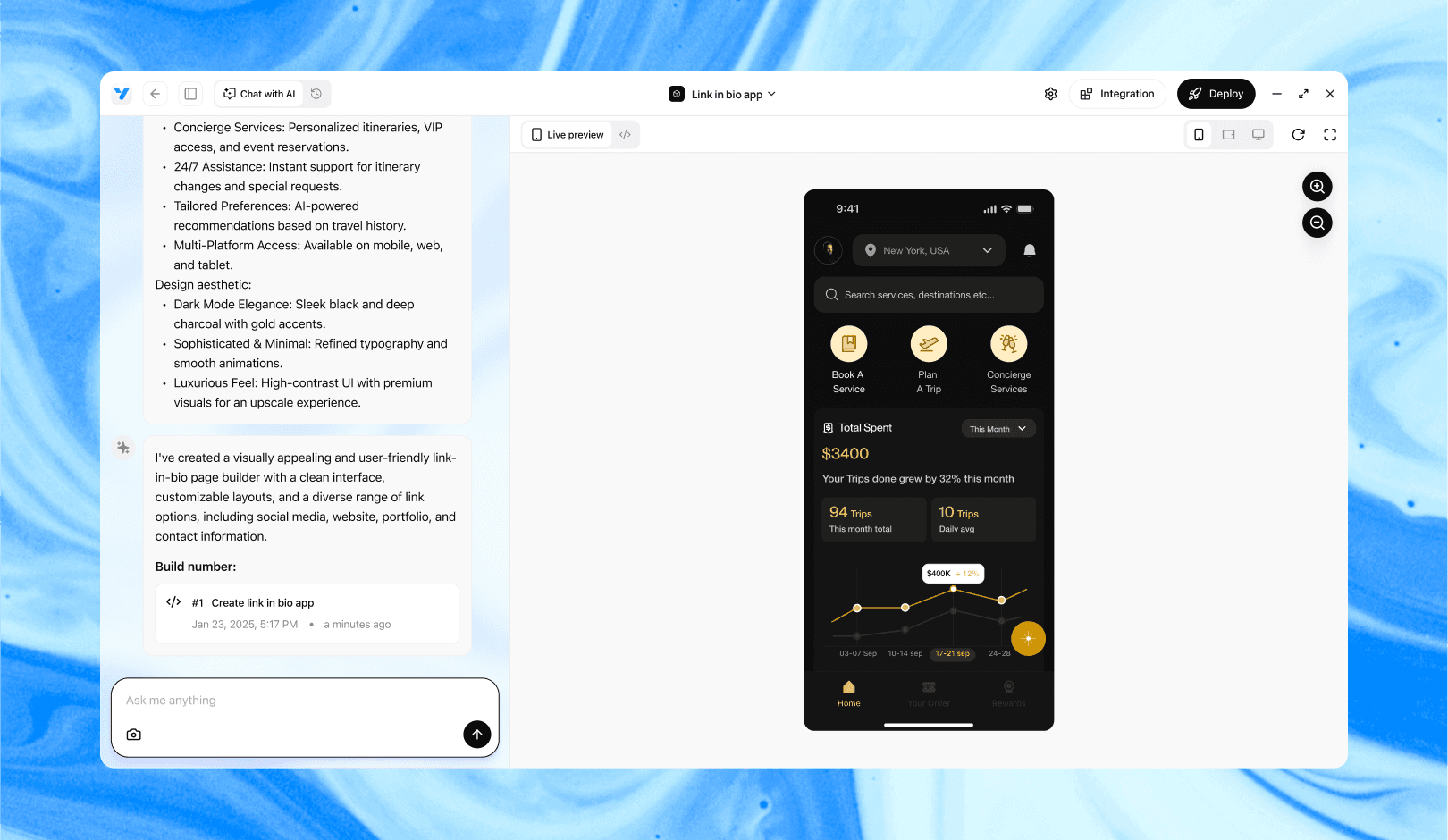
Vibe Studio, powered by Steve’s advanced AI agents, is a revolutionary no-code, conversational platform that empowers users to quickly and efficiently create full-stack Flutter applications integrated seamlessly with Firebase backend services. Ideal for solo founders, startups, and agile engineering teams, Vibe Studio allows users to visually manage and deploy Flutter apps, greatly accelerating the development process. The intuitive conversational interface simplifies complex development tasks, making app creation accessible even for non-coders.

Conclusion

Building pixel-perfect UIs in Flutter is a combination of systematizing design tokens, applying deterministic layout rules, controlling typography and icons, and using custom painting when needed. Centralize your tokens, respect device pixel ratio for hairline details, and automate visual tests. With disciplined patterns and a few low-level techniques you'll deliver mobile interfaces that match design specs closely and feel consistently polished across devices.

Introduction

Pixel-perfect UI matters in mobile development: small alignment, spacing, or typographic differences quickly make an app feel unpolished. Flutter's compositional UI model gives you precise control over layout, painting, and theming — but that power requires discipline. This tutorial shows practical techniques to build pixel-perfect components in Flutter: establish tokens and scales, control layout at device-pixel granularity, manage typography and icons, and implement custom widgets and drawing when necessary.

Establish Design Tokens And Scales

Start with a single source of truth for colors, spacing, radii, and type. Use a Theme extension or a Dart constants file so components consume the same values. Design tokens let you translate designer artifacts (pt, px) into device-aware values at runtime.

  • Define base spacing and scale steps (4px grid, 8px rhythm).

  • Centralize color swatches and elevation shadows.

  • Provide typography scales (headline, body, caption) tied to font sizes, weights, and letter spacing.

Example: a minimal Theme extension for spacing and radius.

import 'package:flutter/material.dart';
class AppTokens extends ThemeExtension<AppTokens> {
  final double spacingUnit; final double radius;
  const AppTokens({this.spacingUnit = 8, this.radius = 6});
  @override AppTokens copyWith({double? spacingUnit, double? radius}) =>
    AppTokens(spacingUnit: spacingUnit ?? this.spacingUnit, radius: radius ?? this.radius);
  @override AppTokens lerp(ThemeExtension<AppTokens>? other, double t) => this;
}

Consume tokens in widgets via Theme.of(context).extension() to keep components consistent and easy to update.

Master Layout, Spacing, And Alignment

Flutter's layout primitives (Row, Column, Stack, Align, FractionallySizedBox) provide exact placement. To achieve pixel-perfect layout:

  • Design on a consistent grid. Multiply spacingUnit for paddings and gaps.

  • Prefer SizedBox for fixed spacing; use const where possible for performance.

  • Use Align and FractionalOffset for percent-based positioning. Avoid hard-coded pixel offsets unless mapped from tokens.

  • Account for devicePixelRatio when you need 1 physical pixel borders: render 1 / MediaQuery.of(context).devicePixelRatio logical pixels.

Example: hairline border that stays one physical pixel thick.

final double hairline = 1 / MediaQuery.of(context).devicePixelRatio;
Container(height: 44, decoration: BoxDecoration(border: Border(bottom: BorderSide(width: hairline, color: Colors.grey))));

Also use LayoutBuilder to measure parent constraints and adapt sizes deterministically, which prevents rounding artifacts across screen sizes.

Implement Typography And Iconography Precisely

Typography is critical for perceived polish. Use text styles from the theme and specify letterSpacing and height explicitly.

  • Lock line-height by setting height in TextStyle to avoid platform defaults.

  • Use TextHeightBehavior to control ascent/descent clipping when aligning across baselines.

  • For icons, prefer Icon fonts or vector assets (SVG) exported at predictable viewBoxes. Scale icons with integer multiples of your base grid to avoid half-pixel blurring.

Tip: test fonts at multiple devicePixelRatios and use GoogleFonts or packaged fonts for consistent metrics. Use textBaseline and Baseline widgets to align text across widgets precisely.

Build Custom Widgets And Pixel-Perfect Drawing

When standard widgets can't match the spec, implement RenderObjects or CustomPainter for ultimate control. CustomPainter lets you draw crisp shapes and borders with explicit handling of device pixel ratios.

  • Use Canvas.translate(0.5, 0.5) or hairline width offsets to align strokes to physical pixels.

  • Cache paths and repaint only when properties change; use shouldRepaint conservatively.

  • Keep painting operations simple and avoid heavy allocations in paint().

Short CustomPainter pattern:

class StrokePainter extends CustomPainter {
  final Color color; StrokePainter(this.color);
  @override void paint(Canvas canvas, Size size) {
    final paint = Paint()..color = color..style = PaintingStyle.stroke..strokeWidth = 1;
    canvas.drawRRect(RRect.fromRectAndRadius(Offset.zero & size, Radius.circular(6)), paint);
  }
  @override bool shouldRepaint(covariant StrokePainter old) => old.color != color;
}

Use widget-level tests and golden tests (flutter_test + flutter_goldens) to detect pixel regressions early. Capture screenshots on multiple device pixel ratios and compare.

Vibe Studio

Vibe Studio, powered by Steve’s advanced AI agents, is a revolutionary no-code, conversational platform that empowers users to quickly and efficiently create full-stack Flutter applications integrated seamlessly with Firebase backend services. Ideal for solo founders, startups, and agile engineering teams, Vibe Studio allows users to visually manage and deploy Flutter apps, greatly accelerating the development process. The intuitive conversational interface simplifies complex development tasks, making app creation accessible even for non-coders.

Conclusion

Building pixel-perfect UIs in Flutter is a combination of systematizing design tokens, applying deterministic layout rules, controlling typography and icons, and using custom painting when needed. Centralize your tokens, respect device pixel ratio for hairline details, and automate visual tests. With disciplined patterns and a few low-level techniques you'll deliver mobile interfaces that match design specs closely and feel consistently polished across devices.

Build Flutter Apps Faster with Vibe Studio

Build Flutter Apps Faster with Vibe Studio

Build Flutter Apps Faster with Vibe Studio

Build Flutter Apps Faster with Vibe Studio

Vibe Studio is your AI-powered Flutter development companion. Skip boilerplate, build in real-time, and deploy without hassle. Start creating apps at lightning speed with zero setup.

Vibe Studio is your AI-powered Flutter development companion. Skip boilerplate, build in real-time, and deploy without hassle. Start creating apps at lightning speed with zero setup.

Vibe Studio is your AI-powered Flutter development companion. Skip boilerplate, build in real-time, and deploy without hassle. Start creating apps at lightning speed with zero setup.

Vibe Studio is your AI-powered Flutter development companion. Skip boilerplate, build in real-time, and deploy without hassle. Start creating apps at lightning speed with zero setup.

Other Insights

Other Insights

Other Insights

Other Insights

Join a growing community of builders today

Join a growing community of builders today

Join a growing community of builders today

Join a growing community of builders today

Join a growing community of builders today

28-07 Jackson Ave

Walturn

New York NY 11101 United States

© Steve • All Rights Reserved 2025

28-07 Jackson Ave

Walturn

New York NY 11101 United States

© Steve • All Rights Reserved 2025

28-07 Jackson Ave

Walturn

New York NY 11101 United States

© Steve • All Rights Reserved 2025

28-07 Jackson Ave

Walturn

New York NY 11101 United States

© Steve • All Rights Reserved 2025

28-07 Jackson Ave

Walturn

New York NY 11101 United States

© Steve • All Rights Reserved 2025

28-07 Jackson Ave

Walturn

New York NY 11101 United States

© Steve • All Rights Reserved 2025